
Kristin Hersh
Author of Rat Girl: A Memoir
About the Author
Image credit: Photo Credit: Billy O'Connell
Works by Kristin Hersh
Strings 6 copies
Tagged
Common Knowledge
- Legal name
- Martha Kristin Hersh
- Birthdate
- 1966-08-07
- Gender
- female
- Education
- Salve Regina University
- Occupations
- musician
- Relationships
- Throwing Muses (band)
50 Foot Wave (band) - Nationality
- USA
- Birthplace
- Atlanta, Georgia, USA
- Places of residence
- Newport, Rhode Island, USA
New Orleans, Louisiana, USA - Associated Place (for map)
- USA
Members
Reviews
I came to this book with low expectations. I had just read Joe Jackson's memoir & thought it was awful: pretentious, unfocused, and worst of all utterly boring. I love Hersh's music, just as I love Jackson's, and was worried that she, too, maybe in different ways, wouldn't have written a book I found readable.
I was completely wrong to worry. This book quickly became unputdownable and ended up being one of my few 5-star books. Hersh's narrative, based on the diary she kept at 18 and the show more lyrics of her songs, has a grace, a power, an immediacy that I've found in few other writers. There's horror here but humor, too, and through it all there's music and the wonderful and mundane things that insprire it.
One of the things both wonderful (by which I mean a thing of wonder, as opposed to something very good) and mundane that Hersh's book deals with is mental illness. I won't give the story away, but Hersh treats this topic with a gorgeous complexity. At one point she writes, "I know psychiatry is a science, but how do you measure a systemic effect like soul sickness in a cold, flat room? It was messy, huge; a muscular panic. It actually felt more like . . . art" (Hersh's ellipses, 228).
There's also a beautiful set of friendships detailed here, between the members of Throwing Muses, between Hersh and former actress Betty Hutton, between Hersh and the beige boy, and others. Hersh has produced an exceptional book. I really hope she continues in this form.
(Thank you to Hersh, to Penguin, & to Sonia & LibraryThing for giving me this amazing and unusual reading experience.) show less
I was completely wrong to worry. This book quickly became unputdownable and ended up being one of my few 5-star books. Hersh's narrative, based on the diary she kept at 18 and the show more lyrics of her songs, has a grace, a power, an immediacy that I've found in few other writers. There's horror here but humor, too, and through it all there's music and the wonderful and mundane things that insprire it.
One of the things both wonderful (by which I mean a thing of wonder, as opposed to something very good) and mundane that Hersh's book deals with is mental illness. I won't give the story away, but Hersh treats this topic with a gorgeous complexity. At one point she writes, "I know psychiatry is a science, but how do you measure a systemic effect like soul sickness in a cold, flat room? It was messy, huge; a muscular panic. It actually felt more like . . . art" (Hersh's ellipses, 228).
There's also a beautiful set of friendships detailed here, between the members of Throwing Muses, between Hersh and former actress Betty Hutton, between Hersh and the beige boy, and others. Hersh has produced an exceptional book. I really hope she continues in this form.
(Thank you to Hersh, to Penguin, & to Sonia & LibraryThing for giving me this amazing and unusual reading experience.) show less
 This review was written for LibraryThing Early Reviewers.
I'll start by being honest: I picked up this book as a filler, fully expecting to read it once and never think about it again. It was an Early Reviewer book that I've bee neglecting reviewing for years (the shame!). I had no idea who Kristin Hersh was, and had never heard of Throwing Muses. With that said, I really enjoyed this book. The way Hersh writes is unbelievably light and refreshing for a memoir, especially considering the material she's talking about: manic depression, homelessness, show more teen pregnancy, etc. I've never read a memoir, and perhaps even a book of fiction, from which the narrator viewed the world in such a simple, beautiful way. I really enjoyed how she talked about her relationship with music, how it was something out of her control, something that demanded to be expressed. When I first noticed that she interspersed song lyrics throughout the prose, I was disheartened. In my experience that kind of stuff usually plays the role of filler, having very little actual relevance to the story. But in this case, each song snippet served to highlight what was happening at that moment. It was almost like looking at an illustration, because it seemed like just another way to look at what was going on, but through Kristin's eyes. At first glance, her voice seems so naive, and yet as the reader gets to know the book-Hersh better, it becomes apparent that its not naivete at all, but a kind of accidentally enlightened understanding of the world around her and the people that inhabit it. It's not unbelievable the way she describes things, but instead devastatingly hopeful. Even through the terror and doubt of finding out you're pregnant, she describes the baby as a light inside of her that she doesn't want to go out. What I liked most about this memoir is the way it was written. It's vague in some places and explicit in others. You never find out who the father of the baby is. In fact, you never even read about Kristin thinking about men really. But somehow, that information isn't important. It's Hersh's book, it's Hersh's way of telling her story, and I wouldn't have it any other way. A true joy to read, this book will change the way we think about memoirs. show less
This review was written for LibraryThing Early Reviewers.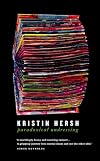
‘Going away is my only real talent. Betty’s right: I’m a reluctant performer...not a performer at all. I need to go away so the song can play itself.’
Paradoxical Undressing is a memoir by Kristin Hersh, the lead singer and guitarist from Throwing Muses, based on a diary she kept at the age of eighteen. She was very bright as a teenager, forming a band at fourteen and going to university at fifteen. The book is about one year in her life, around the time her band started to become show more well-known and were offered a record deal, when she began to suffer from mental illness and was diagnosed with schizophrenia and then bipolar. It is about her life as a musician, her creativity and the way she experiences the world, and explores in a very personal and fascinating way the boundaries between mental illness and artistic talent.
First, I have to tell you that this book is very funny. Despite what you may expect given the subject matter, it’s not miserable or self-pitying in any way; it’s above all an amusing read written in an idiosyncratic and passionate voice. From her time living in an empty apartment along with constantly arguing tribes of painters and musicians and a mysterious Animal none of them have ever seen, to an art therapy class full of hippies she attends at university, this book is full of entertaining scenes. Her observations and her turn of phrase really made me laugh.
It is also quite inspiring because, even as a teenager, Kristin Hersh was so dedicated to her work and sure of her own vision. I found it really interesting to read about how a shy person who already sometimes feels uncomfortable with others would choose to perform in such an emotional and intense way on stage. It seems as if, in Kristin Hersh’s case, the expression of the song itself is what matters to her, not that she (as a person) is communicating with the audience. If she manages to lose herself, the song is expressed through her, whether the audience is there or not.
Around this time, Kristin begins to experience frightening hallucinations and becomes isolated and out of touch with the world. She describes how she heard music constantly and couldn’t escape from it, suffered from terrible insomnia, and saw snakes and bees which she later describes as sound-images, suggesting that her illness is linked to her creativity. The music in her head seems to have been caused by an accident some time previously in which she was knocked off her bike by a woman in a car (who she sees as either a good or a bad witch), experienced concussion and was given the gift or curse of hearing songs. However, during her breakdown the music seems to become more intrusive and unbearable. She also sees these songs as evil or coming from an evil part of her, which she doesn’t control. However (and this is where the book is interesting about the madness/creativity boundary), once she has recovered from this extended manic episode, she is able to stop taking her medication and her symptoms seem to become less threatening, even though they are still there to some extent. She begins to see them as part of her as a musician rather than something that threatens to ruin her life.
One scene from the book I liked was when she went to see a psychiatrist who was very perceptive and was the first person who thought her explanation of the ‘snake’ in her bag as a ‘sound-image’ made sense. I liked what he said to her: ‘Art and dreams are very closely related and they’re worth listening to, as long as your hold on reality remains intact.’ It’s also interesting that she finds the sympathy and attention of the doctors to be a more important contribution than medication to her recovery:
‘This may be the real medicine they offer and it’s powerful. I watch them administer both their drugs and their kindness and the kindness seems just as effective to me, if not more so. Chemicals in the form of medication are interesting, ham-fisted tools, but humans themselves engage in myriad processes we haven’t yet measured. We really are a deeply social species.’ [2011] show less
Paradoxical Undressing is a memoir by Kristin Hersh, the lead singer and guitarist from Throwing Muses, based on a diary she kept at the age of eighteen. She was very bright as a teenager, forming a band at fourteen and going to university at fifteen. The book is about one year in her life, around the time her band started to become show more well-known and were offered a record deal, when she began to suffer from mental illness and was diagnosed with schizophrenia and then bipolar. It is about her life as a musician, her creativity and the way she experiences the world, and explores in a very personal and fascinating way the boundaries between mental illness and artistic talent.
First, I have to tell you that this book is very funny. Despite what you may expect given the subject matter, it’s not miserable or self-pitying in any way; it’s above all an amusing read written in an idiosyncratic and passionate voice. From her time living in an empty apartment along with constantly arguing tribes of painters and musicians and a mysterious Animal none of them have ever seen, to an art therapy class full of hippies she attends at university, this book is full of entertaining scenes. Her observations and her turn of phrase really made me laugh.
It is also quite inspiring because, even as a teenager, Kristin Hersh was so dedicated to her work and sure of her own vision. I found it really interesting to read about how a shy person who already sometimes feels uncomfortable with others would choose to perform in such an emotional and intense way on stage. It seems as if, in Kristin Hersh’s case, the expression of the song itself is what matters to her, not that she (as a person) is communicating with the audience. If she manages to lose herself, the song is expressed through her, whether the audience is there or not.
Around this time, Kristin begins to experience frightening hallucinations and becomes isolated and out of touch with the world. She describes how she heard music constantly and couldn’t escape from it, suffered from terrible insomnia, and saw snakes and bees which she later describes as sound-images, suggesting that her illness is linked to her creativity. The music in her head seems to have been caused by an accident some time previously in which she was knocked off her bike by a woman in a car (who she sees as either a good or a bad witch), experienced concussion and was given the gift or curse of hearing songs. However, during her breakdown the music seems to become more intrusive and unbearable. She also sees these songs as evil or coming from an evil part of her, which she doesn’t control. However (and this is where the book is interesting about the madness/creativity boundary), once she has recovered from this extended manic episode, she is able to stop taking her medication and her symptoms seem to become less threatening, even though they are still there to some extent. She begins to see them as part of her as a musician rather than something that threatens to ruin her life.
One scene from the book I liked was when she went to see a psychiatrist who was very perceptive and was the first person who thought her explanation of the ‘snake’ in her bag as a ‘sound-image’ made sense. I liked what he said to her: ‘Art and dreams are very closely related and they’re worth listening to, as long as your hold on reality remains intact.’ It’s also interesting that she finds the sympathy and attention of the doctors to be a more important contribution than medication to her recovery:
‘This may be the real medicine they offer and it’s powerful. I watch them administer both their drugs and their kindness and the kindness seems just as effective to me, if not more so. Chemicals in the form of medication are interesting, ham-fisted tools, but humans themselves engage in myriad processes we haven’t yet measured. We really are a deeply social species.’ [2011] show less
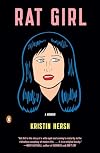
Rarely has a book been so ill-served by its title or by its American cover, a spare drawing of a worried young woman by Gilbert Hernandez after Charles Burns. The teenage narrator of "Rat Girl" doesn't waste a lot of time in apprehension, and she doesn't hang out with rats, much, alhough a snake makes a significant appearance. She's brave, naîve, wildly creative, and mostly upbeat—someone everybody would be better off knowing, even if they couldn't keep up with her for more than an hour show more in real life.
Based on a journal kept during the year before the release of the first Throwing Muses album, "Rat Girl" is a powerful and often hilarious portrait of a young artist like no other. Gifted (or cursed) with synesthesia and a sense of being literally possessed by sounds that have their own will and demand expression, young Kristin alternates between attending community college and living in squats. Her best friend at college is an aged movie queen, once on the cover of all the national magazines. Her father, remote in the book as one senses he was remote all through her childhood, is a hippie professor she calls "Dude." In the wee hours, Kristin stays up with her battered guitar, exorcising the music that will only torment her if not released. Her band plays clubs they're not allowed to attend; they are paid so little that it often costs them to play. One senses she'd be happy enough to go on like this forever, but life has its own plans and demands some tough choices.
The adult Hersh captures the voice of her young self so perfectly that it takes close reading to realize that the book wasn't merely channeled. Key details are revealed just when the reader needs to know them, and never before. Other characters' voices are perfectly rendered, sometimes sophisticated, occasionally wise, always unique to the person speaking. Although based on a journal, and firmly grounded in the perspective of the journal keeper, the book reads like the work of an assured author with several novels behind her. It's an amazing achievement. show less
Based on a journal kept during the year before the release of the first Throwing Muses album, "Rat Girl" is a powerful and often hilarious portrait of a young artist like no other. Gifted (or cursed) with synesthesia and a sense of being literally possessed by sounds that have their own will and demand expression, young Kristin alternates between attending community college and living in squats. Her best friend at college is an aged movie queen, once on the cover of all the national magazines. Her father, remote in the book as one senses he was remote all through her childhood, is a hippie professor she calls "Dude." In the wee hours, Kristin stays up with her battered guitar, exorcising the music that will only torment her if not released. Her band plays clubs they're not allowed to attend; they are paid so little that it often costs them to play. One senses she'd be happy enough to go on like this forever, but life has its own plans and demands some tough choices.
The adult Hersh captures the voice of her young self so perfectly that it takes close reading to realize that the book wasn't merely channeled. Key details are revealed just when the reader needs to know them, and never before. Other characters' voices are perfectly rendered, sometimes sophisticated, occasionally wise, always unique to the person speaking. Although based on a journal, and firmly grounded in the perspective of the journal keeper, the book reads like the work of an assured author with several novels behind her. It's an amazing achievement. show less
Lists
Awards


You May Also Like


Associated Authors
Statistics
- Works
- 23
- Members
- 687
- Popularity
- #36,815
- Rating
- 4.1
- Reviews
- 34
- ISBNs
- 32
- Languages
- 2
- Favorited
- 6
