
Tim Lewis (2)
Author of Land of Second Chances: The Impossible Rise of Rwanda's Cycling Team
For other authors named Tim Lewis, see the disambiguation page.
Works by Tim Lewis
La tierra de las segundas oportunidades: el imposible ascenso del equipo ciclista de Ruanda (2015) 2 copies, 1 review
Tagged
Common Knowledge
There is no Common Knowledge data for this author yet. You can help.
Members
Reviews
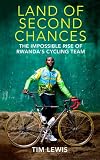
The second chances in the title of this book refer to three stories that come together in the Rwandan cycling program.
The biggest story of course is Rwanda's own comeback from the genocidal horrors beginning in 1994. The Rwandan cycling program, built upon the riders who survived that period as young children, is impressive in so many ways. It's unimaginable what these still young riders have been through -- witnessing the slaughter of family members, escaping, hiding, and now trying to be show more part of the country's excruciating attempt to deal with its past and rebuild.
The cycling program was jumpstarted by the efforts of two Americans in need of a fresh start themselves. Tom Ritchey was an extremely successful cycling innovator, but with a hollow personal life. Ritchey came to Rwanda to help with the "coffee bike," a bicycle he designed to withstand the rigors of muddy, rutted roads, endless hills, and the hundreds of pounds of coffee that Rwanda's farmers needed to transport quickly to maintain quality. Ritchey also recruited Jonathon Boyer, the first American to race in the Tour de France, to become coach of the new Rwandan cycling program. Boyer's story cannot evade his conviction as a sex offender, the outcome of his relationship with a 12 year old girl after his cycling career.
What a mess. And what you want is a feel-good story in which everyone is redeemed and succeeds beyond anyone's expectations. You don't completely get that. The riders come from everywhere, riding everything. These are not European or American kids growing up on progressively more sophisticated and expensive bikes. They often ride makeshift, dangerous contraptions, serving sometimes as bicycle taxi services. And Boyer faithfully coaches Rwanda's cyclists to respectability in the cycling world, demanding sacrifices and dedication from himself that many of us would envy.
But, in the end, the Rwandan cycling program doesn't reach the real heights. The riders show promise, but they plateau. The jury may still be out on Adrien Niyonshuti and others, but no international champions have emerged from the program, and Boyer has moved on to coach elsewhere in Africa, still in search of champions in the rough (although see Kimberly Coat's review here -- Kimberly Coats is currently on Team Rwanda's staff and reports that Boyer is still coaching the team).
Ritchey's coffee bike program has hit hard times as well. The bikes were great, but they were expensive, maybe too expensive for Rwanda's recovering economy.
But none of that is to say that Rwanda, Boyer, and Ritchey are not redeemed. Success in a context like this shouldn't be measured in race results. These are people, and a country, whose trajectories are very different now than they were before they came together and built upon each other.
Since the book's publication, Adrien Niyonshuti's new team, the South African team MTN-Qhubeka, has earned an invitation to the Giro d'Italia, the first African team to participate. From what I've read, there's no mention of Adrien among the likely riders to represent the team there. show less
The biggest story of course is Rwanda's own comeback from the genocidal horrors beginning in 1994. The Rwandan cycling program, built upon the riders who survived that period as young children, is impressive in so many ways. It's unimaginable what these still young riders have been through -- witnessing the slaughter of family members, escaping, hiding, and now trying to be show more part of the country's excruciating attempt to deal with its past and rebuild.
The cycling program was jumpstarted by the efforts of two Americans in need of a fresh start themselves. Tom Ritchey was an extremely successful cycling innovator, but with a hollow personal life. Ritchey came to Rwanda to help with the "coffee bike," a bicycle he designed to withstand the rigors of muddy, rutted roads, endless hills, and the hundreds of pounds of coffee that Rwanda's farmers needed to transport quickly to maintain quality. Ritchey also recruited Jonathon Boyer, the first American to race in the Tour de France, to become coach of the new Rwandan cycling program. Boyer's story cannot evade his conviction as a sex offender, the outcome of his relationship with a 12 year old girl after his cycling career.
What a mess. And what you want is a feel-good story in which everyone is redeemed and succeeds beyond anyone's expectations. You don't completely get that. The riders come from everywhere, riding everything. These are not European or American kids growing up on progressively more sophisticated and expensive bikes. They often ride makeshift, dangerous contraptions, serving sometimes as bicycle taxi services. And Boyer faithfully coaches Rwanda's cyclists to respectability in the cycling world, demanding sacrifices and dedication from himself that many of us would envy.
But, in the end, the Rwandan cycling program doesn't reach the real heights. The riders show promise, but they plateau. The jury may still be out on Adrien Niyonshuti and others, but no international champions have emerged from the program, and Boyer has moved on to coach elsewhere in Africa, still in search of champions in the rough (although see Kimberly Coat's review here -- Kimberly Coats is currently on Team Rwanda's staff and reports that Boyer is still coaching the team).
Ritchey's coffee bike program has hit hard times as well. The bikes were great, but they were expensive, maybe too expensive for Rwanda's recovering economy.
But none of that is to say that Rwanda, Boyer, and Ritchey are not redeemed. Success in a context like this shouldn't be measured in race results. These are people, and a country, whose trajectories are very different now than they were before they came together and built upon each other.
Since the book's publication, Adrien Niyonshuti's new team, the South African team MTN-Qhubeka, has earned an invitation to the Giro d'Italia, the first African team to participate. From what I've read, there's no mention of Adrien among the likely riders to represent the team there. show less
I just love the title of this book, everyone always roots for second chances and in the case of Rwanda even more so. The genocide that devastated their country is only a few decades in the past but Rwanda is using a sport, like Mandela did in South Africa, to unify his people and to further the progress that the country has already made. I found this fact very interesting, so many men were killed during the genocide that the country now has a Parliament where women hold the majority.
I show more learned so much about the history of this country, although at times I found the huge cast of characters somewhat confusing. In many South African countries, the youth look forward to earning their first bicycle, not their first car as in so many countries. Loved the stories in this book, but the history of cycling and how the bikes were made were only of secondary interest. Sometime I felt overwhelmed by all these details
One cannot help pulling and wishing the best for this country., Loved meeting Adrian and found his visit to America and its inherent culture shock very enlightening. They still have a way to go as a country but they are certainly on the right path. I can only wish this beautiful country and its people good things, they deserve it and I applaud all the effort they put into defying the odds. show less
I show more learned so much about the history of this country, although at times I found the huge cast of characters somewhat confusing. In many South African countries, the youth look forward to earning their first bicycle, not their first car as in so many countries. Loved the stories in this book, but the history of cycling and how the bikes were made were only of secondary interest. Sometime I felt overwhelmed by all these details
One cannot help pulling and wishing the best for this country., Loved meeting Adrian and found his visit to America and its inherent culture shock very enlightening. They still have a way to go as a country but they are certainly on the right path. I can only wish this beautiful country and its people good things, they deserve it and I applaud all the effort they put into defying the odds. show less
Inspiring story of Rwandan cyclists rising from the ashes of the genocide and rising to the level of competing with cyclists in Europe.
Das Buch behandelt den Aufbau des Radsports in Ruanda, einem Land, das damals noch stärker als heute vom Genozid geprägt war. Der Autor verfügt über hervorragende Kenntnisse über Ruanda, was sich in vielen anschaulichen und detailreichen Beschreibungen zeigt und mich den etwas „weißen Blick“ verzeihen lässt. Insgesamt kennt er das Land sehr gut und lässt vieles lebendig werden.
Ich bin keine große Radsport-Enthusiastin, insofern war manches im Buch für mich weniger interessant. show more Insgesamt hat es mir aber sehr gut gefallen, weil es Ruanda und seine Menschen sehr eindrücklich schildert. Auch die ruhige und zurückhaltende Art vieler Ruander:innen wird authentisch dargestellt. Der Autor kennt sich wirklich außerordentlich gut aus.
In Ruanda hat das Fahrradfahren einen ganz anderen Stellenwert als bei uns, denn es gibt dort nur wenige Autos. In Butare zum Beispiel – einer Stadt, die im Buch häufig vorkommt und in der ich selbst eine kurze Zeit lang an der Universität gearbeitet habe – ist es ruhig, nichts ist zugeparkt, und man bewegt sich gelassen durch die Straßen. Für uns Europäer:innen wirkt das angenehm entschleunigt, aber die Ruander:innen würden sich vermutlich mehr motorisierte Mobilität wünschen. show less
Ich bin keine große Radsport-Enthusiastin, insofern war manches im Buch für mich weniger interessant. show more Insgesamt hat es mir aber sehr gut gefallen, weil es Ruanda und seine Menschen sehr eindrücklich schildert. Auch die ruhige und zurückhaltende Art vieler Ruander:innen wird authentisch dargestellt. Der Autor kennt sich wirklich außerordentlich gut aus.
In Ruanda hat das Fahrradfahren einen ganz anderen Stellenwert als bei uns, denn es gibt dort nur wenige Autos. In Butare zum Beispiel – einer Stadt, die im Buch häufig vorkommt und in der ich selbst eine kurze Zeit lang an der Universität gearbeitet habe – ist es ruhig, nichts ist zugeparkt, und man bewegt sich gelassen durch die Straßen. Für uns Europäer:innen wirkt das angenehm entschleunigt, aber die Ruander:innen würden sich vermutlich mehr motorisierte Mobilität wünschen. show less
Awards

Statistics
- Works
- 3
- Members
- 37
- Popularity
- #390,571
- Rating
- 3.8
- Reviews
- 5
- ISBNs
- 24
- Languages
- 2