
Barry Kitson
Author of Fables, Vol. 20: Camelot
About the Author
Image credit: http://www.comicvine.com/barry-kitson/26-1251/
Series
Works by Barry Kitson
Supergirl and the Legion of Super-Heroes: Strange Visitor from Another Century (2006) — Illustrator — 96 copies, 2 reviews
Supergirl and the Legion of Super-Heroes: Adult Education (2007) — Illustrator — 75 copies, 2 reviews
Supergirl and The Legion of Super-Heroes [2005] #19 — Illustrator — 3 copies
Legion of Super-Heroes [2005] #13 — Illustrator — 3 copies
Legion of Super-Heroes [2005] #12 — Illustrator — 3 copies
Legion of Super-Heroes [2005] #11 — Illustrator — 3 copies
Legion of Super-Heroes [2005] #2 — Illustrator — 3 copies
L.E.G.I.O.N. Annual #3 2 copies
The Transformers 64: Second Generation! (Part 2: "Electric Dreams!") (1986) — Illustrator — 1 copy, 1 review
The Transformers 60: Robot Buster! (Part 2: "Baptism of Fire!") (1986) — Illustrator — 1 copy, 1 review
The Transformers 50: Dinobot Hunt! (Part 4: "The Final Rage!") (1986) — Illustrator — 1 copy, 1 review
Superman 026 1 copy
Legends Of The Legion 4 1 copy
L.E.G.I.O.N. (1989) #55 1 copy
L.E.G.I.O.N. '93 #s 48-61 1 copy
L.E.G.I.O.N. (1989) #40 1 copy
L.E.G.I.O.N. (1989) #41 1 copy
L.E.G.I.O.N. (1989) #42 1 copy
L.E.G.I.O.N. (1989) #43 1 copy
L.E.G.I.O.N. (1989) #44 1 copy
L.E.G.I.O.N. (1989) #45 1 copy
L.E.G.I.O.N. (1989) #46 1 copy
L.E.G.I.O.N. (1989) #47 1 copy
L.E.G.I.O.N. (1989) #48 1 copy
L.E.G.I.O.N. (1989) #49 1 copy
L.E.G.I.O.N. (1989) #52 1 copy
L.E.G.I.O.N. (1989) #53 1 copy
L.E.G.I.O.N. (1989) #54 1 copy
L.E.G.I.O.N. (1989) #57 1 copy
The Transformers 46: The Icarus Theory (Part 2: "Dreams Die Hard!") (1986) — Illustrator — 1 copy, 1 review
L.E.G.I.O.N. (1989) #58 1 copy
L.E.G.I.O.N. (1989) #59 1 copy
L.E.G.I.O.N. (1989) #60 1 copy
Showcase '95 #10 1 copy
Superman 034 1 copy
Superman 018 1 copy
Legends Of The Legion 3 1 copy
Legends Of The Legion 1 1 copy
Associated Works
9-11: The World's Finest Comic Book Writers & Artists Tell Stories to Remember (2002) — Illustrator — 256 copies, 1 review
The Amazing Spider-Man: The Gauntlet, Vol. 1 – Electro & Sandman (2010) — Illustrator — 67 copies, 3 reviews
The Amazing Spider-Man: The Gauntlet, Vol. 2 – Rhino & Mysterio (2010) — Illustrator — 61 copies, 1 review
Legion of Super-Heroes [2005] #8 — Cover artist — 3 copies
L.E.G.I.O.N. (1989) #10 — Penciler, some editions — 2 copies
L.E.G.I.O.N. (1989) #01 — Penciler, some editions — 2 copies
L.E.G.I.O.N. (1989) #13 — Writer, Penciler, some editions — 1 copy
L.E.G.I.O.N. (1989) #04 — Penciler, some editions — 1 copy
L.E.G.I.O.N. (1989) #38 — Writer, some editions — 1 copy
L.E.G.I.O.N. (1989) #34 — Writer, Penciler, Inker, some editions — 1 copy
The Transformers 138: Ladies' Night part two / Love and Steel! (part one) (1987) — Cover artist — 1 copy, 1 review
Halo Jones No. 7 — Illustrator — 1 copy
The Transformers 144: Spacehikers! part two / Brothers in Armour! (part three) (1987) — Cover artist — 1 copy, 1 review
Halo Jones No. 8 — Illustrator — 1 copy
Halo Jones No. 5 — Illustrator — 1 copy
The Transformers 54: Rock and Roll-Out! (part two) / The Special Teams Have Arrived (1986) — Illustrator — 1 copy, 1 review
The Transformers 132: Kup's Story! / Ring of Hate! (part three) (1987) — Illustrator — 1 copy, 1 review
The Transformers 145: Stargazing / Brothers in Armour! (part four) (1987) — Cover artist — 1 copy, 1 review
Halo Jones No. 4 — Illustrator — 1 copy
Tagged
Common Knowledge
- Gender
- male
Members
Reviews
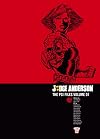
A bumper collection featuring twelve stories about the pretty young Psi Judge from 2000AD. The stories vary in length and come in the episodic style of British comics. This is a good thing as having to fill twenty pages, say, can lead to padding. Here each story is only as long as it needs to be.
The British origins also mean a blessed lack of soap opera themes. Instead there is black humour as in ‘Four Dark Judges’ when Judge Death is slaughtering the residents of the Ronald Reagan show more Block for the aged and infirm. ‘Dodder for it!’ cries an alarmed oldster. Alan Grant scripted most of these stories but John Wagner co-wrote the first three. Whoever’s responsible it’s a great line. The Dark Judges are from an alternate dimension and decided long ago that since only living people committed crime eradicating all life was the best policy. Logically they should have committed suicide once that was done. Instead they came to our dimension. They were defeated and this is their return. The second tale ‘The Possessed’ features demonic possession, which I find odd in a science-fiction setting but it was well done.
There are thirteen stories and to go through them all one by one would involve a tedious repetition of superlatives. Suffice to say they are all good and several are excellent. A short tale about Judge Corey and a whale entitled ‘Leviathan’s Farewell’ is probably the best in the book and also the best story of any kind I’ve read for a while. It should have won awards. ‘Engram’ is a longer story which gives us and Anderson revelations about her childhood. Very moving stuff for a ‘comic’.
Alan Grant does have fun too. ‘Triad’ features a murderous skeleton and the Block Ness monster so Anderson has to consult the Department of Fortean Events. ‘The Random Man’ has a chap who throws dice to decide what he will do next. Unfortunately the dice keep telling him to kill people. Anderson catches up with him in Luke Reinhart alley, for where Grant riffs and spoofs on other writers work he does acknowledge it.
‘Prepare to die, fleshy one!’ shouts killer ‘robot’ Bill as he attacks the Judge. This is unkind and untrue for she is slim and lovely. Bill, a.k.a. ‘The Prophet’ believes he is the chosen one, preparing the way for those who will come after by killing all the fleshy ones. Bill is bonkers but the story is fun.
The art is at least 80% of the graphic novel form, I think, and a great story won’t get transmitted without pleasing pictures. Happily Wagner and Grant are well served by the numerous talents gathered here. Brett Ewins deserves honourable mention for the first two tales and David Roach does a bang up job on several others. The honourable exception to my enjoyment was Carlos Ezquerra, though he only drew ’The Random Man’ so there wasn’t much of him. He’s honoured because he co-created Judge Dredd and the whole look of Mega-City one but I personally don’t much like his style.
2000AD has made a huge contribution to the genre over the last few decades and these bumper collections offer an excellent chance to grab the best of it at bargain rates. They are an Essential Showcase (geddit?) for the best of British and this one in particular is a really good read.
Eamonn Murphy
This review first appeared at https://www.sfcrowsnest.info/ show less
The British origins also mean a blessed lack of soap opera themes. Instead there is black humour as in ‘Four Dark Judges’ when Judge Death is slaughtering the residents of the Ronald Reagan show more Block for the aged and infirm. ‘Dodder for it!’ cries an alarmed oldster. Alan Grant scripted most of these stories but John Wagner co-wrote the first three. Whoever’s responsible it’s a great line. The Dark Judges are from an alternate dimension and decided long ago that since only living people committed crime eradicating all life was the best policy. Logically they should have committed suicide once that was done. Instead they came to our dimension. They were defeated and this is their return. The second tale ‘The Possessed’ features demonic possession, which I find odd in a science-fiction setting but it was well done.
There are thirteen stories and to go through them all one by one would involve a tedious repetition of superlatives. Suffice to say they are all good and several are excellent. A short tale about Judge Corey and a whale entitled ‘Leviathan’s Farewell’ is probably the best in the book and also the best story of any kind I’ve read for a while. It should have won awards. ‘Engram’ is a longer story which gives us and Anderson revelations about her childhood. Very moving stuff for a ‘comic’.
Alan Grant does have fun too. ‘Triad’ features a murderous skeleton and the Block Ness monster so Anderson has to consult the Department of Fortean Events. ‘The Random Man’ has a chap who throws dice to decide what he will do next. Unfortunately the dice keep telling him to kill people. Anderson catches up with him in Luke Reinhart alley, for where Grant riffs and spoofs on other writers work he does acknowledge it.
‘Prepare to die, fleshy one!’ shouts killer ‘robot’ Bill as he attacks the Judge. This is unkind and untrue for she is slim and lovely. Bill, a.k.a. ‘The Prophet’ believes he is the chosen one, preparing the way for those who will come after by killing all the fleshy ones. Bill is bonkers but the story is fun.
The art is at least 80% of the graphic novel form, I think, and a great story won’t get transmitted without pleasing pictures. Happily Wagner and Grant are well served by the numerous talents gathered here. Brett Ewins deserves honourable mention for the first two tales and David Roach does a bang up job on several others. The honourable exception to my enjoyment was Carlos Ezquerra, though he only drew ’The Random Man’ so there wasn’t much of him. He’s honoured because he co-created Judge Dredd and the whole look of Mega-City one but I personally don’t much like his style.
2000AD has made a huge contribution to the genre over the last few decades and these bumper collections offer an excellent chance to grab the best of it at bargain rates. They are an Essential Showcase (geddit?) for the best of British and this one in particular is a really good read.
Eamonn Murphy
This review first appeared at https://www.sfcrowsnest.info/ show less

Access a version of the below that includes illustrations (and discussion of the book's relevance to the Blackhawks) on my blog.
This book comes from a (somewhat odd, in retrospect) period of DC history where Batman, Superman, and Wonder Woman were not founding members of the Justice League, thanks to various changes in continuity introduced following Crisis on Infinite Earths. Thus, the main characters are the Flash (Barry Allen), Green Lantern (Hal Jordan), Black Canary (Dinah Laurel show more Lance), Aquaman, and the Martian Manhunter. The story chronicles the first year of the JLA, picking up from them fighting off an alien invasion. They organize as a group, face various crises, discover that the alien invasion they fought off is not quite over, try (and fail) to recruit Superman, and learn about each other and themselves and how to work as a team.
I loved it. This is, as far as I am concerned, perfect superhero comics. This should be of little surprise to anyone familiar with the other work of the creative team; Mark Waid is, in my opinion, one of the all-time greats, able to unite continuity with characterization in really compelling ways. I haven't read much by his frequent collaborator Brian Augustyn, but Waid sings his praises in the intro, so clearly they are simpatico. Definitely also simpatico is Barry Kitson; Kitson came out of the UK comics scene (specifically, of course, Transformers), but really won himself over to me with his amazing five-year run on L.E.G.I.O.N., where he went from pencilling the title to plotting it and then scripting it. That was, I believe, where he first worked with Waid, who scripted the title for a year. After JLA: Year One, the two would work together on the excellent Legion of Super-Heroes "threeboot".
All of this is to say, I think this creative team was entirely on the same page, and what was on that page is beautiful. I like my superhero comics to be character-driven and fun, and this is undoubtedly both. One of the benefits of this odd team is that they have a lot of good hooks for characterization, especially early in their superheroic careers. Aquaman is trying to adjust to living on the surface world, where he feels like an alien of sorts; I liked the idea that he mumbles compared to people from the surface because of how sound propagates more loudly underwater.
I think Hal is probably the one who gets the fewest character moments, actually, but he's fine, even if the playboy thing is laid on a bit thick. (I do, however, think the decision to call Tom Kalmaku "Pie" was not really any better than "Pieface" surely.)
Black Canary is a real highlight of the book, which as a Dinah Laurel Lance stan I very much appreciated. Post-Crisis, Black Canary was split into two characters: Dinah Drake (later Dinah Drake Lance), who was the Justice Society's Black Canary, and Dinah Laurel Lance, her daughter. But in most of the comics I've read, this is a fact of backstory, not something dealt with in the narrative; one of the benefits of going back to Black Canary's origin is actually seeing how she relates to her mother. The elder Dinah wants to mold the younger into her own image, but the younger Dinah must find her own path. There is a lot of good JSA stuff in the book; Dinah is often comparing her new colleagues to the heroes she grew up alongside, but also she discovers that those heroes weren't so perfect, as Waid and Augustyn make good use of the revelation from Starman that the elder Dinah had an affair with Ted Knight, the original Starman.
I think Barry Allen's thread is less involved than either Black Canary's or Martian Manhunter's, but Waid and Augustyn and Kitson do well by him. (Which I guess makes sense, as they cowrote an acclaimed and long run on The Flash, even if it was about Wally West.)
The other real highlight is Martian Manhunter, even more of an outsider than Aquaman, but also able to pass thanks to his shapeshifting and telepathy. His discomfort at seeing the way his teammates treat the aliens they fight, his need to better understand them that goes places that violate their privacy, his belief that they and humanity can do better, they're all very well done.
What really makes the characterization sing, though, is the interactions. There are lots of moments between them all: John and Aquaman, Hal and Barry, Barry and Dinah, and so on, all the permutations you can think of, perfectly rendered. This is a team of people, in their highs and their lows; you understand why the team (briefly) turns on Martian Manhunter, but the moment where he needs to tune himself telepathically into an alien device, and the whole team comes together to help him do it is a genuine punch-the-air moment, I loved it.
Beyond that, the book is just fun and inventive, taking those old Silver Age stories and filtering them through a modern perspective without being either overly nostalgic or cynical. (Weird to think, actually, that this book is now thirty years old, which is about how old the original Justice League stuff was when this was written.) We see Vandal Savage, we see the Doom Patrol, we see Snapper Carr, we get cameos from Oliver Queen and Maxwell Lord. At the end of the book, the invading aliens trap every superhero on Earth in a prison, which gives the JLA its chance to shine—but also means that once the JLA liberates the others, we get glimpses of all the superheroes of the Earth at this time. (In some cases, I suspect the continuity timing doesn't add up, but who cares.) I found that each issue of this series just flew by, perfect superhero comics. show less
This book comes from a (somewhat odd, in retrospect) period of DC history where Batman, Superman, and Wonder Woman were not founding members of the Justice League, thanks to various changes in continuity introduced following Crisis on Infinite Earths. Thus, the main characters are the Flash (Barry Allen), Green Lantern (Hal Jordan), Black Canary (Dinah Laurel show more Lance), Aquaman, and the Martian Manhunter. The story chronicles the first year of the JLA, picking up from them fighting off an alien invasion. They organize as a group, face various crises, discover that the alien invasion they fought off is not quite over, try (and fail) to recruit Superman, and learn about each other and themselves and how to work as a team.
I loved it. This is, as far as I am concerned, perfect superhero comics. This should be of little surprise to anyone familiar with the other work of the creative team; Mark Waid is, in my opinion, one of the all-time greats, able to unite continuity with characterization in really compelling ways. I haven't read much by his frequent collaborator Brian Augustyn, but Waid sings his praises in the intro, so clearly they are simpatico. Definitely also simpatico is Barry Kitson; Kitson came out of the UK comics scene (specifically, of course, Transformers), but really won himself over to me with his amazing five-year run on L.E.G.I.O.N., where he went from pencilling the title to plotting it and then scripting it. That was, I believe, where he first worked with Waid, who scripted the title for a year. After JLA: Year One, the two would work together on the excellent Legion of Super-Heroes "threeboot".
All of this is to say, I think this creative team was entirely on the same page, and what was on that page is beautiful. I like my superhero comics to be character-driven and fun, and this is undoubtedly both. One of the benefits of this odd team is that they have a lot of good hooks for characterization, especially early in their superheroic careers. Aquaman is trying to adjust to living on the surface world, where he feels like an alien of sorts; I liked the idea that he mumbles compared to people from the surface because of how sound propagates more loudly underwater.
I think Hal is probably the one who gets the fewest character moments, actually, but he's fine, even if the playboy thing is laid on a bit thick. (I do, however, think the decision to call Tom Kalmaku "Pie" was not really any better than "Pieface" surely.)
Black Canary is a real highlight of the book, which as a Dinah Laurel Lance stan I very much appreciated. Post-Crisis, Black Canary was split into two characters: Dinah Drake (later Dinah Drake Lance), who was the Justice Society's Black Canary, and Dinah Laurel Lance, her daughter. But in most of the comics I've read, this is a fact of backstory, not something dealt with in the narrative; one of the benefits of going back to Black Canary's origin is actually seeing how she relates to her mother. The elder Dinah wants to mold the younger into her own image, but the younger Dinah must find her own path. There is a lot of good JSA stuff in the book; Dinah is often comparing her new colleagues to the heroes she grew up alongside, but also she discovers that those heroes weren't so perfect, as Waid and Augustyn make good use of the revelation from Starman that the elder Dinah had an affair with Ted Knight, the original Starman.
I think Barry Allen's thread is less involved than either Black Canary's or Martian Manhunter's, but Waid and Augustyn and Kitson do well by him. (Which I guess makes sense, as they cowrote an acclaimed and long run on The Flash, even if it was about Wally West.)
The other real highlight is Martian Manhunter, even more of an outsider than Aquaman, but also able to pass thanks to his shapeshifting and telepathy. His discomfort at seeing the way his teammates treat the aliens they fight, his need to better understand them that goes places that violate their privacy, his belief that they and humanity can do better, they're all very well done.
What really makes the characterization sing, though, is the interactions. There are lots of moments between them all: John and Aquaman, Hal and Barry, Barry and Dinah, and so on, all the permutations you can think of, perfectly rendered. This is a team of people, in their highs and their lows; you understand why the team (briefly) turns on Martian Manhunter, but the moment where he needs to tune himself telepathically into an alien device, and the whole team comes together to help him do it is a genuine punch-the-air moment, I loved it.
Beyond that, the book is just fun and inventive, taking those old Silver Age stories and filtering them through a modern perspective without being either overly nostalgic or cynical. (Weird to think, actually, that this book is now thirty years old, which is about how old the original Justice League stuff was when this was written.) We see Vandal Savage, we see the Doom Patrol, we see Snapper Carr, we get cameos from Oliver Queen and Maxwell Lord. At the end of the book, the invading aliens trap every superhero on Earth in a prison, which gives the JLA its chance to shine—but also means that once the JLA liberates the others, we get glimpses of all the superheroes of the Earth at this time. (In some cases, I suspect the continuity timing doesn't add up, but who cares.) I found that each issue of this series just flew by, perfect superhero comics. show less

Access a version of the below that includes illustrations on my blog.
One of the clearest explanations of the Mark Waid/Barry Kitson Legion of Super-Heroes is found in the back of this book, where the Legionnaires answer mail from readers of the comic in character. This approach to the old tradition of the lettercol is a delight, and it allows the characters to sort of step outside themselves and describe the premise of the book directly to the reader: the United Planets "lives of quiet show more inaction where the free exchange of ideas has been supplanted with this notion that protocol and decorum are civilization’s most sacred ideals. […] [W]e’re all big fans of the era of Superman and Batman and Wonder Woman and other heroes who were taught that making a difference in society is a good thing. Who acted first and debated later and weren’t scared of putting some color back into the world." The Legion stands for color, against sterility, as embodied in the virtues of the heroes of the past.
Their virtues are put to the test in this volume, though, which depicts one of the few direct conflicts between the Legion and the society they seek to change. When a group of Legionnaires takes down a terrorist disguised as a Science Police officer outside the home of a guy called Klar who embodies the society they're trying to reform. Klar's wife considers him not "fully clothed" when he's wearing shirt and pants but not hood and goggles, and Klar communicates with his neighbors via screen. He complains the Legionnaires lack "decorum" and "traipse out of doors like savages"!
Here we see something of the dark side of the Legion, as they bully him, stealing his goggles, and mocking his age. This riles up Klar, who comes back with his neighbors to argue with the Legion, who only mock him further; one Legionnaire shouts, "Wow! It's like a geriatrics convention!", causing another to add, "I don't think they heard you. IT'S LIKE A GERIAT--" There's some irony here, of course: the Legion has inspired Klar and other social conservatives to interact face-to-face for apparently the first time ever, and Klar's declaration that there is strength in numbers is exactly how the Legion took down Terror Firma in the previous volume. Their revolution has inspired another social movement, yet Klar doesn't recognize that he's abandoning his principles to ostensibly fight for them. Is he becoming a superhero himself? (That's what Matthew from Legion Abstract posits in this nice reading of the scene.)
This is probably the most direct conflict we see between the Legion and society, and on one level, it's pretty harmless-- the Legion shouts out some ageist insults and goes on its way. No real violence is required for them to change society.
That said, it's important to know there's been a major status quo change by this point. The events of the previous volume have shown the United Planets 1) that the Legion of Super-Heroes isn't going anywhere and 2) that the Legion has been successful whereas they have not. So the U.P. changes tactics, and gives the Legion official standing. What happens when they revolutionaries become the establishment? Well, this conflict shows that it actually makes them bullies to a certain extent. The Legionnaires flaunt their newfound authority to intimidate Klar (like I said, they steal his goggles).
It's one thing to punch up, but it's another to punch down, and the Legion is only starting to come to grips with what it means to go from underdogs to establishment, and how you much reorient your attitude appropriately. They're not exactly living up to the virtues of their role models in this sequence, even if they are making the world more colorful, and I'm glad that Kitson and Waid explore that here. show less
One of the clearest explanations of the Mark Waid/Barry Kitson Legion of Super-Heroes is found in the back of this book, where the Legionnaires answer mail from readers of the comic in character. This approach to the old tradition of the lettercol is a delight, and it allows the characters to sort of step outside themselves and describe the premise of the book directly to the reader: the United Planets "lives of quiet show more inaction where the free exchange of ideas has been supplanted with this notion that protocol and decorum are civilization’s most sacred ideals. […] [W]e’re all big fans of the era of Superman and Batman and Wonder Woman and other heroes who were taught that making a difference in society is a good thing. Who acted first and debated later and weren’t scared of putting some color back into the world." The Legion stands for color, against sterility, as embodied in the virtues of the heroes of the past.
Their virtues are put to the test in this volume, though, which depicts one of the few direct conflicts between the Legion and the society they seek to change. When a group of Legionnaires takes down a terrorist disguised as a Science Police officer outside the home of a guy called Klar who embodies the society they're trying to reform. Klar's wife considers him not "fully clothed" when he's wearing shirt and pants but not hood and goggles, and Klar communicates with his neighbors via screen. He complains the Legionnaires lack "decorum" and "traipse out of doors like savages"!
Here we see something of the dark side of the Legion, as they bully him, stealing his goggles, and mocking his age. This riles up Klar, who comes back with his neighbors to argue with the Legion, who only mock him further; one Legionnaire shouts, "Wow! It's like a geriatrics convention!", causing another to add, "I don't think they heard you. IT'S LIKE A GERIAT--" There's some irony here, of course: the Legion has inspired Klar and other social conservatives to interact face-to-face for apparently the first time ever, and Klar's declaration that there is strength in numbers is exactly how the Legion took down Terror Firma in the previous volume. Their revolution has inspired another social movement, yet Klar doesn't recognize that he's abandoning his principles to ostensibly fight for them. Is he becoming a superhero himself? (That's what Matthew from Legion Abstract posits in this nice reading of the scene.)
This is probably the most direct conflict we see between the Legion and society, and on one level, it's pretty harmless-- the Legion shouts out some ageist insults and goes on its way. No real violence is required for them to change society.
That said, it's important to know there's been a major status quo change by this point. The events of the previous volume have shown the United Planets 1) that the Legion of Super-Heroes isn't going anywhere and 2) that the Legion has been successful whereas they have not. So the U.P. changes tactics, and gives the Legion official standing. What happens when they revolutionaries become the establishment? Well, this conflict shows that it actually makes them bullies to a certain extent. The Legionnaires flaunt their newfound authority to intimidate Klar (like I said, they steal his goggles).
It's one thing to punch up, but it's another to punch down, and the Legion is only starting to come to grips with what it means to go from underdogs to establishment, and how you much reorient your attitude appropriately. They're not exactly living up to the virtues of their role models in this sequence, even if they are making the world more colorful, and I'm glad that Kitson and Waid explore that here. show less

Created to change the United Planets, the Legion of Super-Heroes now finds itself in the position of having to save it. As a result, this volume of the Mark Waid/Barry Kitson Legion of Super-Heroes is much less about revolution the first one, drifting away somewhat from the series's unique selling point. Of course, Waid and Kitson are still masters of their craft, and there's lots to enjoy here, good twists and pay-offs and genuine character drama. Loved what happened to "Atom Girl," loved show more that Brainiac 5 used the slingshot of the original Robin, loved the role of Dream Girl in the proceedings. And much more.
There are points where revolution is discussed, though. Sun Boy, the only Legionnaire whose parents don't disapprove of his being a member, starts to realize that it's not really about the cause they're fighting for, but rather that he's "just an opportunity for them to relive their days as young radicals. Which sucks."
The book also explores the appropriate way to create social change, with both external and internal conflict. Brainiac 5 begins to chafe at Cosmic Boy's leadership of the Legion, believing that Cos is too accommodating of diverse perspectives. Cos would rather create a coalition of diverse interests united around common goals, while Brainiac favors a smaller group dedicated to his leadership of the Legion. Cos's beliefs are shown to have both pluses and minuses: the Legion is awe-inspiring in its size, but its open-door policy proves to be dangerous when it allows suicide bombers to enter into the Legion plaza without interference. I think Cos wins in the end, with his argument that "The Legion’s not twenty guys with corny names and costumes! It is everyone across the galaxy who has made any kind of sacrifice to take back the future! It is everyone who has ever worn this [the Legion symbol] knowing that it makes a difference!" The Legion followers end up fighting alongside the core group in battle, helping save the day. But Brainiac is right that diversity and acceptance comes with its own challenges, challenges that Cosmic Boy struggles to overcome in this book. (In fact, Cosmic Boy needs to be compelled into not leaving the Legion through subterfuge by Invisible Kid.)
Cos does make compromises. In the 31st century, all underagers are monitored on the communications network known as the Public Service; Cos has the opportunity to shut it down, but he ends up needing it communicate during the war against Terror Firma, when it turns out to be the only functioning communications system in the U.P. The revolution is forced to sacrifice some of its principles in order to survive, for better or for ill.
Finally, Terror Firma turns out to be a revolutionary movement itself, albeit a terrorist one (I guess the name is a clue). Made up of the descendants of U.P. citizens exiled to a now-forgotten prison planet, they want to change the corrupt society they were exiled from. But their methods and justifications, especially those of their leader, Praetor Lemnos, remind me of Ozymandias from Watchmen: Lemnos is the man who can shrug off the deaths of innocents to achieve utopia, due to his belief that rebuilding has to take place starting from a blank slate. The conflict between the Legion and Terror Firma thus reenacts an age-old philosophical dispute between revolutionaries: gradual reform vs. catastrophic restart. Perhaps even without thinking about it, the Legion throws their lot in with gradual reform. The implications of that choice will be explored in the series going forward. show less
There are points where revolution is discussed, though. Sun Boy, the only Legionnaire whose parents don't disapprove of his being a member, starts to realize that it's not really about the cause they're fighting for, but rather that he's "just an opportunity for them to relive their days as young radicals. Which sucks."
The book also explores the appropriate way to create social change, with both external and internal conflict. Brainiac 5 begins to chafe at Cosmic Boy's leadership of the Legion, believing that Cos is too accommodating of diverse perspectives. Cos would rather create a coalition of diverse interests united around common goals, while Brainiac favors a smaller group dedicated to his leadership of the Legion. Cos's beliefs are shown to have both pluses and minuses: the Legion is awe-inspiring in its size, but its open-door policy proves to be dangerous when it allows suicide bombers to enter into the Legion plaza without interference. I think Cos wins in the end, with his argument that "The Legion’s not twenty guys with corny names and costumes! It is everyone across the galaxy who has made any kind of sacrifice to take back the future! It is everyone who has ever worn this [the Legion symbol] knowing that it makes a difference!" The Legion followers end up fighting alongside the core group in battle, helping save the day. But Brainiac is right that diversity and acceptance comes with its own challenges, challenges that Cosmic Boy struggles to overcome in this book. (In fact, Cosmic Boy needs to be compelled into not leaving the Legion through subterfuge by Invisible Kid.)
Cos does make compromises. In the 31st century, all underagers are monitored on the communications network known as the Public Service; Cos has the opportunity to shut it down, but he ends up needing it communicate during the war against Terror Firma, when it turns out to be the only functioning communications system in the U.P. The revolution is forced to sacrifice some of its principles in order to survive, for better or for ill.
Finally, Terror Firma turns out to be a revolutionary movement itself, albeit a terrorist one (I guess the name is a clue). Made up of the descendants of U.P. citizens exiled to a now-forgotten prison planet, they want to change the corrupt society they were exiled from. But their methods and justifications, especially those of their leader, Praetor Lemnos, remind me of Ozymandias from Watchmen: Lemnos is the man who can shrug off the deaths of innocents to achieve utopia, due to his belief that rebuilding has to take place starting from a blank slate. The conflict between the Legion and Terror Firma thus reenacts an age-old philosophical dispute between revolutionaries: gradual reform vs. catastrophic restart. Perhaps even without thinking about it, the Legion throws their lot in with gradual reform. The implications of that choice will be explored in the series going forward. show less
Lists
Awards


You May Also Like
Associated Authors
Statistics
- Works
- 91
- Also by
- 78
- Members
- 2,442
- Popularity
- #10,506
- Rating
- 3.8
- Reviews
- 84
- ISBNs
- 79
- Languages
- 5