
Jennifer Kaufman
Author of Literacy and Longing in L.A.
About the Author
Works by Jennifer Kaufman
Chalice of repose a contemplative musician's approach to death and dying [video recording] (1996) — Director — 2 copies
Tagged
Common Knowledge
- Gender
- female
- Occupations
- freelance writer
staff writer - Organizations
- Los Angeles Times
- Awards and honors
- Penney-Missouri Journalism Award
- Places of residence
- Los Angeles, California, USA
- Associated Place (for map)
- California, USA
Members
Reviews
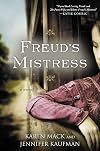
A richly imagined, historically based story
On every page Freud’s Mistress evokes the layered sights, sounds, fashions, and aromas of late 19th century Vienna, and that alone would have kept me reading, but I was drawn to the sensitively imagined story of two real sisters just as much. As it is for Jane Austen’s female characters, there are not a lot of life choices for Martha Freud and her sister Minna Bernays. Martha is financially comfortable, but she’s overwhelmed by the job of show more caring for her unruly children and stuck in a loveless marriage to Sigmund Freud, a man who doesn’t respect her and whose theories she finds repugnant. As an intelligent but unmarried woman Minna is forced to support herself as a governess or a ladies’ companion, a precarious life that puts her in an awkward, between castes position--not a master but not quite one of the servants either.
When principled insubordination causes Minna to lose both her job and living situation, Martha and Freud take her in, and Minna begins to care for and become attached to her many nieces and nephews. Minna doesn’t agree with all of Freud’s provocative new theories that put sexual disfunction at the root of every problem, but unlike her sister she is fascinated not repelled by his ideas and wants to discuss them. Her hunger to be a participant in the world of ideas sets the stage for the attraction between Minna and Freud--an attraction Minna resists since it would be a betrayal of her sister. Though Freud could be an unlikely love interest, self-centered and sometimes cruel, the excitement he stirs in in the minds of those around him make him believably charismatic.
I love the first two books by this author pair, and though Freud’s Mistress is a very different type of tale all three share intellectually rich stories, appealing settings, complex characterizations, and writing so beautiful it seems to glow. It makes me think there may be a benefit to having a writing partner because I found the same qualities in the Twisted Lit series by Kim Askew and Amy Helmes. show less
On every page Freud’s Mistress evokes the layered sights, sounds, fashions, and aromas of late 19th century Vienna, and that alone would have kept me reading, but I was drawn to the sensitively imagined story of two real sisters just as much. As it is for Jane Austen’s female characters, there are not a lot of life choices for Martha Freud and her sister Minna Bernays. Martha is financially comfortable, but she’s overwhelmed by the job of show more caring for her unruly children and stuck in a loveless marriage to Sigmund Freud, a man who doesn’t respect her and whose theories she finds repugnant. As an intelligent but unmarried woman Minna is forced to support herself as a governess or a ladies’ companion, a precarious life that puts her in an awkward, between castes position--not a master but not quite one of the servants either.
When principled insubordination causes Minna to lose both her job and living situation, Martha and Freud take her in, and Minna begins to care for and become attached to her many nieces and nephews. Minna doesn’t agree with all of Freud’s provocative new theories that put sexual disfunction at the root of every problem, but unlike her sister she is fascinated not repelled by his ideas and wants to discuss them. Her hunger to be a participant in the world of ideas sets the stage for the attraction between Minna and Freud--an attraction Minna resists since it would be a betrayal of her sister. Though Freud could be an unlikely love interest, self-centered and sometimes cruel, the excitement he stirs in in the minds of those around him make him believably charismatic.
I love the first two books by this author pair, and though Freud’s Mistress is a very different type of tale all three share intellectually rich stories, appealing settings, complex characterizations, and writing so beautiful it seems to glow. It makes me think there may be a benefit to having a writing partner because I found the same qualities in the Twisted Lit series by Kim Askew and Amy Helmes. show less
Freud has never been one of my favorite people from history; while I respect his genius in discovering the subconscious mind, conversion, and talk therapy, I never thought a lot of him as a person. He seemed egotistical and argumentative, dropping associates if they disagreed with him. All images I saw were of him as an older man, already bald, smoking a cigar. I knew nothing about his personal life. This historical novel shows us a younger man, one who could be charming when he wished to show more be. Sadly, he didn’t often wish to be.
The novel is told from the POV of Minna Bernays, sister to Martha Bernays, Sigmund Freud’s wife. Minna had spent her days working variously as governess or ladies companion; when she loses her job and knows she will get no good recommendation she goes to her sister’s house to stay for awhile. While she fears she’s a financial burden, both the Freud’s assure her she’s not, especially as she takes over the care of the six children for Martha, who was still recovering from the birth of her last child. It was at this time that the intellectual Minna became close to Sigmund, who seemed to respect and value her opinions, talking with her in his home office late into the night- something he did not do with is wife, who he treated as a servant. Minna becomes enamored of Sigmund, on both mental and physical levels. With Martha either in bed in pain or busy with errands and housework all the time, it is easy to see how an affair could start even in these close quarters. Minna tries, unsuccessfully, to leave, but Sigmund soon brings her back, with her sister’s blessing.
Not much is known about the real life Minna, but in the late 19th century, women didn’t have many choices in life. Women of Minna’s class would either marry or become a ladies companion or a governess, those offices which place the woman in the no-woman’s land of not being ‘good enough’ to be family but being ‘too genteel’ to be a true servant, leaving the woman with few, if any, people to associate freely with. Minna would have most likely have been lonely before she came to live with the Freuds, having had neither affection nor intellectual stimulation from her former employers. Perhaps this would have led her to fall for the first person to ask her opinion on something other than knitting or the ABCs? Or perhaps Sigmund was just that magnetic when he wished to charm someone- he’d charmed many before Minna, and would go on to charm many more, as friends, associates, and, presumably, lovers, before they disagreed with him or he got bored. The authors state right out that there is no completely solid proof Minna and Sigmund had a sexual relationship, but it was rumored during their lives and in 2006 proof was found in a resort hotel register that they had stayed there for several days as husband and wife. In those days, no upper class person would have done that just to avoid springing for a second hotel room!
In some ways, I found the story wonderful. The authors evoked fin-de-siecle Vienna in sights, sounds, smells and flavors; reading the book is an immersive experience. Minna’s life at the Freud’s feels claustrophobic; I could feel her confusion as she tried to figure out the right thing to do. But the book drags in places. I’m sure that the affair is something that Minna would have agonized over, but so many words were devoted to that agonizing that it became tedious. I think the book would have been better had it been a bit shorter. I enjoyed the ending and their version of what Martha might have thought about the whole thing.
Sadly, my opinion of Sigmund Freud as a human being didn’t improve- it actually got worse. show less
The novel is told from the POV of Minna Bernays, sister to Martha Bernays, Sigmund Freud’s wife. Minna had spent her days working variously as governess or ladies companion; when she loses her job and knows she will get no good recommendation she goes to her sister’s house to stay for awhile. While she fears she’s a financial burden, both the Freud’s assure her she’s not, especially as she takes over the care of the six children for Martha, who was still recovering from the birth of her last child. It was at this time that the intellectual Minna became close to Sigmund, who seemed to respect and value her opinions, talking with her in his home office late into the night- something he did not do with is wife, who he treated as a servant. Minna becomes enamored of Sigmund, on both mental and physical levels. With Martha either in bed in pain or busy with errands and housework all the time, it is easy to see how an affair could start even in these close quarters. Minna tries, unsuccessfully, to leave, but Sigmund soon brings her back, with her sister’s blessing.
Not much is known about the real life Minna, but in the late 19th century, women didn’t have many choices in life. Women of Minna’s class would either marry or become a ladies companion or a governess, those offices which place the woman in the no-woman’s land of not being ‘good enough’ to be family but being ‘too genteel’ to be a true servant, leaving the woman with few, if any, people to associate freely with. Minna would have most likely have been lonely before she came to live with the Freuds, having had neither affection nor intellectual stimulation from her former employers. Perhaps this would have led her to fall for the first person to ask her opinion on something other than knitting or the ABCs? Or perhaps Sigmund was just that magnetic when he wished to charm someone- he’d charmed many before Minna, and would go on to charm many more, as friends, associates, and, presumably, lovers, before they disagreed with him or he got bored. The authors state right out that there is no completely solid proof Minna and Sigmund had a sexual relationship, but it was rumored during their lives and in 2006 proof was found in a resort hotel register that they had stayed there for several days as husband and wife. In those days, no upper class person would have done that just to avoid springing for a second hotel room!
In some ways, I found the story wonderful. The authors evoked fin-de-siecle Vienna in sights, sounds, smells and flavors; reading the book is an immersive experience. Minna’s life at the Freud’s feels claustrophobic; I could feel her confusion as she tried to figure out the right thing to do. But the book drags in places. I’m sure that the affair is something that Minna would have agonized over, but so many words were devoted to that agonizing that it became tedious. I think the book would have been better had it been a bit shorter. I enjoyed the ending and their version of what Martha might have thought about the whole thing.
Sadly, my opinion of Sigmund Freud as a human being didn’t improve- it actually got worse. show less
In FREUD’S MISTRESS by Karen Mack and Jennifer Kaufman, Minna Bernays is a woman caught in between social changes. The revolutionary ideas that began to spark in earnest during the final years of the 20th century, ideas she firmly embraces, had not yet drilled down into women’s rights. For someone against the idea of marriage for marriage’s sake and against the very limited employment possibilities for single women, she has very little options in regards to hearth and income. Minna show more does what so many others have done before her and turns to her sister for help, only to be caught up in an unexpected and passionate relationship – with her husband’s sister.
It is worth noting that of the three figures in complicated love triangle, the one who generates the least sympathy is Freud himself. His cavalier attitude towards his wife as well as his obsessive adoration of one person at a time characterize someone who is supremely self-centered and oblivious to the feelings of others. He never loses this aspect of his personality, and yet, a reader’s feelings about each of the characters, including Freud, will evolve along with the dynamics of their relationships. As Martha shares with Minna the unspoken secrets of her long marriage, Sigmund’s behavior and attitudes become less repellant and more something that just is. Similarly, readers’ attitudes towards and opinions of the two sisters change and adapt to each new uncovered facet of their personalities and silent perseverance. In particular, Martha morphs from a shrewish, oblivious housewife into someone completely surprising. It is a brilliantly written example of the dangers of jumping to conclusions and a lovely little bit of irony given that Freud made his name by assuming all mental ailments are sexual in origin.
It should not come as any surprise that someone who made his name through his theories about sexual desire and deviance would come across as an absolute cad. His ideas were so far removed from the Victorian social mores to which he was bound, that there is bound to be friction between his actions – which follow his beliefs – and more conventional behavior. What is surprising is that Freud was married in the first place. It would stand to reason that someone who made a living developing theories about sexual impulses and had extremely progressive views on sexual behavior would be less inclined to enter into a traditionally monogamous relationship. Yet, his six children and long-lasting marriage prove otherwise.
Minna is quite the conundrum, and that really does not change as the story progresses. While Minna’s guilt and frustrations at the lack of prospects are completely understandable, her continuing presence in the Freud household serves to do nothing but compound her guilty feelings. This mental self-flagellation is easily explained and yet gets old as her time in the household progresses because it contradicts her progressive attitudes and opinions. As much as she is Freud’s victim, she is also his accomplice, and her remorse at her actions does not fit with her general outlook on marriage and women’s roles.
Ms. Mack and Ms. Kaufman excel at sharing the Freuds’ unusual lifestyle and its origins. Their seamless blending of fact with fiction creates a compelling story that explores the frustrations of living and loving a man ahead of his compatriots in terms of psychoanalysis and attitudes towards sex. Minna’s story also showcases that no matter how much one might delve into another person’s life story, it is impossible to discover their innermost secrets without their cooperation. Ironic, isn’t it? show less
It is worth noting that of the three figures in complicated love triangle, the one who generates the least sympathy is Freud himself. His cavalier attitude towards his wife as well as his obsessive adoration of one person at a time characterize someone who is supremely self-centered and oblivious to the feelings of others. He never loses this aspect of his personality, and yet, a reader’s feelings about each of the characters, including Freud, will evolve along with the dynamics of their relationships. As Martha shares with Minna the unspoken secrets of her long marriage, Sigmund’s behavior and attitudes become less repellant and more something that just is. Similarly, readers’ attitudes towards and opinions of the two sisters change and adapt to each new uncovered facet of their personalities and silent perseverance. In particular, Martha morphs from a shrewish, oblivious housewife into someone completely surprising. It is a brilliantly written example of the dangers of jumping to conclusions and a lovely little bit of irony given that Freud made his name by assuming all mental ailments are sexual in origin.
It should not come as any surprise that someone who made his name through his theories about sexual desire and deviance would come across as an absolute cad. His ideas were so far removed from the Victorian social mores to which he was bound, that there is bound to be friction between his actions – which follow his beliefs – and more conventional behavior. What is surprising is that Freud was married in the first place. It would stand to reason that someone who made a living developing theories about sexual impulses and had extremely progressive views on sexual behavior would be less inclined to enter into a traditionally monogamous relationship. Yet, his six children and long-lasting marriage prove otherwise.
Minna is quite the conundrum, and that really does not change as the story progresses. While Minna’s guilt and frustrations at the lack of prospects are completely understandable, her continuing presence in the Freud household serves to do nothing but compound her guilty feelings. This mental self-flagellation is easily explained and yet gets old as her time in the household progresses because it contradicts her progressive attitudes and opinions. As much as she is Freud’s victim, she is also his accomplice, and her remorse at her actions does not fit with her general outlook on marriage and women’s roles.
Ms. Mack and Ms. Kaufman excel at sharing the Freuds’ unusual lifestyle and its origins. Their seamless blending of fact with fiction creates a compelling story that explores the frustrations of living and loving a man ahead of his compatriots in terms of psychoanalysis and attitudes towards sex. Minna’s story also showcases that no matter how much one might delve into another person’s life story, it is impossible to discover their innermost secrets without their cooperation. Ironic, isn’t it? show less
 This review was written for LibraryThing Early Reviewers.
As the father of modern day psychoanalysis, Freud is such a large part of our cultural knowledge that it is almost hard to think of him as a real person. He developed the theory of the Oedipus complex, the theory of psychosexual development (penis envy and castration anxiety), he touted the efficacy of the "talking cure," and gave us the entertaining phrase "Sometimes a cigar is just a cigar," among other things. And yet he was not just the revered, larger than life neurologist and show more psychoanalyst of history, but was a real person with a family, wife, children, and a possible adulterous relationship with his single sister-in-law, Minna Bernays. It is this relationship that Karen Mack and Jennifer Kaufman bring to life in their engaging historical novel, Freud's Mistress.
Minna is an intelligent, curious, and over-educated lady's companion. When she seeks medical assistance for a lowly young kitchen maid in her mistress' house without permission, she is let go. While she found the job stifling and demeaning, it gave her a modicum of independence outside of marriage. But with her dismissal, she finds herself unemployed, unmarried, and completely destitute, giving her no option but to impose on her married sister. Having just had her sixth baby, her older sister, Martha, is married to Sigmund Freud, a professor and neurologist who works with troubled patients. They accept Minna into their modest home and she settles in to help Martha with the difficult and mundane business of raising children.
It has been many years since Martha cared to listen to her husband's theories about the mind or to pay him much attention, focused more on running the household and the blissful oblivion of opium. Minna, on the other hand, is captivated by the chance to exercise her brain after many years of only exchanging letters with the brilliant Dr. Freud. She is fascinated by his emerging theories, including those that the establishment finds perverse or unspeakable. She is not put off by his assertion that all problems stem from unacknowledged psychosexual aberations, in fact she is enthralled by the idea, even if she doesn't agree in its entirety. Her attraction to his brain and the challenges he presents quickly becomes an attraction to him, a dangerous proposition given her knowledge of the unhappy inner workings of his life and marriage to her sister. For Freud, it is appealing to have his sister-in-law worshipping him and stimulating his mind. He introduces her to medicinal cocaine and slowly seduces her, first intellectually (although never as his equal) and then physically, without any remorse for his infidelity or for the potential damage to her relationship with her sister.
Minna tries to fight her obsessive love for her sister's husband, struggling with a terrible guilt for the way in which she is betraying Martha, but unable to escape Freud's magnetic pull. She has few life options available to her as a gentlewoman of little means in fin de siècle Vienna and at 29, she is getting to an age where marriage will no longer be an option even should she desire it. So it is no surprise that she finds it exhilarating, intoxicating even, to be appreciated for her agile intelligence. She can only do so much to resist Freud's advances despite the heartache it promises and the potential it carries to destroy so many people about whom she cares deeply.
Mack and Kaufman have drawn Minna as a caring and thoughtful character, trapped by her own circumstances and the limited times in which she lives. She agonizes over her growing feelings for Freud and determines to do the right thing for her sister and the children; yet she is unable to escape the pull of her heart or the flattering attentions of her brother-in-law. Freud as a character is far less appealing than Minna. He is self-absorbed and rigid, certain that a relationship with Minna is not wrong since he and Martha are living a life of celibacy and sex, is, of course, necessary for a fully functioning life. He twists his own theories and beliefs to excuse and approve of what he wants, dragging Minna with him. He is sometimes dismissive and hostile to her, choosing to ignore her deeper feelings towards him, and in the end treating her as if she doesn't deserve even the common courtesy of cancelling their assignations when he has something more important to do. Martha Freud is not a terribly interesting character, constructing her life as suits her, often using her sister as an unpaid nanny or servant, alternately languishing in bed or acting as a martinet. She rarely makes an effort (to be kind, amenable, or grateful, to be anything really) and as a result, it is hard to understand Minna's loyalty to Martha.
Based on probable historical truth, Mack and Kaufman have done a wonderful job capturing Vienna of the time and the professional difficulties Freud faced with his controversial and "lewd" theories that ran so counter to the establishment's ideas. They've portrayed the often stultifying life choices available to smart women through Minna's dismal experiences, showing that even her affair with Freud was not a freedom but another shackle. The lonely life and feeling of imposing on family that faced spinsters of the time was incredibly well done. Because the novel is narrated from Minna's perspective, her character is complete and realistic. Freud, on the other hand, remains a rather unpleasant enigma and there will be more than one occasion where the reader wonders how and why Minna fell in love with him and remained so for so long. Mack and Kaufman have taken into consideration the scant historical evidence, from Carl Jung's early and unsubstantiated assertion that the affair happened to a recently discovered hotel guest book entry that appears to confirm Jung's statement and have drawn a fictionalized story that carries the seeds of an explosive scandal. But, as is evident from the historical information, that scandal never leaked out, if in fact it happened, and so the novel, remaining true to what we do in fact know, was left with an anticlimactic feel over all. A slow novel of secrets, guilt, and repressed emotion, it winds down to a quiet and unassuming end, in many ways mirroring much of Minna Bernays' life. Fans of historical fiction and those interested in the man behind the lionized Freud we read about in psychology classes will find this an interesting and worthwhile read. show less
Minna is an intelligent, curious, and over-educated lady's companion. When she seeks medical assistance for a lowly young kitchen maid in her mistress' house without permission, she is let go. While she found the job stifling and demeaning, it gave her a modicum of independence outside of marriage. But with her dismissal, she finds herself unemployed, unmarried, and completely destitute, giving her no option but to impose on her married sister. Having just had her sixth baby, her older sister, Martha, is married to Sigmund Freud, a professor and neurologist who works with troubled patients. They accept Minna into their modest home and she settles in to help Martha with the difficult and mundane business of raising children.
It has been many years since Martha cared to listen to her husband's theories about the mind or to pay him much attention, focused more on running the household and the blissful oblivion of opium. Minna, on the other hand, is captivated by the chance to exercise her brain after many years of only exchanging letters with the brilliant Dr. Freud. She is fascinated by his emerging theories, including those that the establishment finds perverse or unspeakable. She is not put off by his assertion that all problems stem from unacknowledged psychosexual aberations, in fact she is enthralled by the idea, even if she doesn't agree in its entirety. Her attraction to his brain and the challenges he presents quickly becomes an attraction to him, a dangerous proposition given her knowledge of the unhappy inner workings of his life and marriage to her sister. For Freud, it is appealing to have his sister-in-law worshipping him and stimulating his mind. He introduces her to medicinal cocaine and slowly seduces her, first intellectually (although never as his equal) and then physically, without any remorse for his infidelity or for the potential damage to her relationship with her sister.
Minna tries to fight her obsessive love for her sister's husband, struggling with a terrible guilt for the way in which she is betraying Martha, but unable to escape Freud's magnetic pull. She has few life options available to her as a gentlewoman of little means in fin de siècle Vienna and at 29, she is getting to an age where marriage will no longer be an option even should she desire it. So it is no surprise that she finds it exhilarating, intoxicating even, to be appreciated for her agile intelligence. She can only do so much to resist Freud's advances despite the heartache it promises and the potential it carries to destroy so many people about whom she cares deeply.
Mack and Kaufman have drawn Minna as a caring and thoughtful character, trapped by her own circumstances and the limited times in which she lives. She agonizes over her growing feelings for Freud and determines to do the right thing for her sister and the children; yet she is unable to escape the pull of her heart or the flattering attentions of her brother-in-law. Freud as a character is far less appealing than Minna. He is self-absorbed and rigid, certain that a relationship with Minna is not wrong since he and Martha are living a life of celibacy and sex, is, of course, necessary for a fully functioning life. He twists his own theories and beliefs to excuse and approve of what he wants, dragging Minna with him. He is sometimes dismissive and hostile to her, choosing to ignore her deeper feelings towards him, and in the end treating her as if she doesn't deserve even the common courtesy of cancelling their assignations when he has something more important to do. Martha Freud is not a terribly interesting character, constructing her life as suits her, often using her sister as an unpaid nanny or servant, alternately languishing in bed or acting as a martinet. She rarely makes an effort (to be kind, amenable, or grateful, to be anything really) and as a result, it is hard to understand Minna's loyalty to Martha.
Based on probable historical truth, Mack and Kaufman have done a wonderful job capturing Vienna of the time and the professional difficulties Freud faced with his controversial and "lewd" theories that ran so counter to the establishment's ideas. They've portrayed the often stultifying life choices available to smart women through Minna's dismal experiences, showing that even her affair with Freud was not a freedom but another shackle. The lonely life and feeling of imposing on family that faced spinsters of the time was incredibly well done. Because the novel is narrated from Minna's perspective, her character is complete and realistic. Freud, on the other hand, remains a rather unpleasant enigma and there will be more than one occasion where the reader wonders how and why Minna fell in love with him and remained so for so long. Mack and Kaufman have taken into consideration the scant historical evidence, from Carl Jung's early and unsubstantiated assertion that the affair happened to a recently discovered hotel guest book entry that appears to confirm Jung's statement and have drawn a fictionalized story that carries the seeds of an explosive scandal. But, as is evident from the historical information, that scandal never leaked out, if in fact it happened, and so the novel, remaining true to what we do in fact know, was left with an anticlimactic feel over all. A slow novel of secrets, guilt, and repressed emotion, it winds down to a quiet and unassuming end, in many ways mirroring much of Minna Bernays' life. Fans of historical fiction and those interested in the man behind the lionized Freud we read about in psychology classes will find this an interesting and worthwhile read. show less
Lists
Awards
You May Also Like


Associated Authors
Statistics
- Works
- 4
- Members
- 1,071
- Popularity
- #24,021
- Rating
- 3.3
- Reviews
- 76
- ISBNs
- 36
- Languages
- 8
