
Hilma Wolitzer
Author of An Available Man
About the Author
Hilma Wolitzer has taught writing at the University of Iowa, New York University, and Columbia University.
Image credit: Hilma Wolitzer
Works by Hilma Wolitzer
Associated Works
Writers on Writing: Collected Essays from the New York Times (2001) — Contributor — 480 copies, 5 reviews
About Women: An Anthology of Contemporary Fiction, Poetry, and Essays (1973) — Contributor — 25 copies
Tagged
Common Knowledge
- Birthdate
- 1930
- Gender
- female
- Occupations
- novelist
- Awards and honors
- American Academy of Arts and Letters Academy Award (Literature, 1981)
- Relationships
- Wolitzer, Meg (daughter)
- Short biography
- Hilma Wolitzer is the author of several novels, including Hearts, Ending, and Tunnel of Love, as well as the nonfiction book The Company of Writers. She is a recipient of Guggenheim and NEA fellowships, and an Award in Literature from the American Academy and Institute of Arts and Letters. She has taught writing at the University of Iowa, New York University, and Columbia University. Hilma Wolitzer lives in New York City.
- Nationality
- USA
- Birthplace
- Brooklyn, New York, USA
- Places of residence
- Manhattan, New York, USA
Long Island, New York, USA - Associated Place (for map)
- New York, USA
Members
Reviews

Before I forget to say it, I LOVED THIS BOOK! That out of the way, Why? Well, it's hard to say, except maybe, well, the characters here are just so damn HUman, you know? I was gonna say fallible, but that's the wrong word for Paulie and Howard, the recurring couple in these mostly linked stories. Fallible brings up images of the Pope, and all that Catholic doctrine crap I was force-fed for the first eighteen years of my life. Nope. Human is better. Especially in "Photographs," the story that show more introduces us to them, and begins with the line, "We were married in those dark ages before legalized abortion." That got my attention. And then Paulie, our narrator and guide in the story of this long and loving marriage (Were there fights and disagreements? Of course there were. Human! Remember?) goes on to tell us more about Howard and sex and "the glorious territory we had discovered together in such blind and blundering exploration." Ah yes, and weren't we all once such blundering explorers? But sex has a price, and Paulie soon finds herself "in trouble." A touchingly serious - and kinda funny - conversation between the two youthful explorers about their problem ensues, culminating in -
"'So that's it,' Howard said, and we were engaged."
The story gets even funnier from there, and I don't wanna spoil it. But remember the labor-delivery-room scene from that movie, "Angie" with Geena Davis? Kinda like that, only funnier. But POIGNant too, ya know?
There are a few stories here that are not about Paulie and Howard. The title story may be one, as the narrator and her husband are unnamed, but they COULDA been P and H, very easily. And there's one, "Bodies," about a woman whose husband has been arrested for exposing himself. Definitely NOT Howard. All of these stories are very good, no question, but it was Paulie's voice that captured me in these stories, many of them written forty or more years ago. Except the last one, "The Great Escape," written just last year. Paulie and Howard are near ninety now, and it's the year of Covid. That one just flat out broke my old heart. ...
Okay I'm back. I had to go walk the younger dog, and then help my wife give the older dog a much-needed haircut. And then I had to vacuum - all that dog hair. And then let both dogs out to piddle, and then back in for a cookie, and ... All that everyday human kinda stuff. And this "review" has begun to feel more like a letter, so what the hell.
Dear Hilma - Yes, I loved TODAY A WOMAN WENT MAD IN THE SUPERMARKET - and I mean ALL of the stories, but especially the Paulie ones. A book of linked short stories like this immediately reminded me of Elizabeth Strout's OLIVE KITTERIDGE, another book I loved, and maybe it's no coincidence that Strout wrote the Foreword that pulls all these old stories of yours together. And by the way, it's certainly no mean feat that the stories written in the 60s and 70s fit together so seamlessly - and are still so RELevant - with that final one, written just last year, which pulls us so painfully into the present and all the horrors and personal tragedies of the Covid pandemic. But back to Elizabeth. While I loved her stories about Olive and Henry, and came to appreciate Olive and her eccentricities, her couple was nowhere near as lovable as yours, Hilma. Human, yes. But lovable? Well, maybe, but in an entirely different category from Paulie and Howard. The OLIVE stories won Strout the Pulitzer, and well deserved too. In fact, I have read all of her books, and, not too long ago, I also appreciated the Introduction she wrote for a collection by the late Frederick Busch (yet ANOTHER writer I have admired and read for more than 30 years).
Okay. All these wonderful writers who have enriched my life for so long - they are all connected somehow in my old grey head. I just finished reading Adam Begley's marvelous biography of John Updike, a guy whose work I've read for over fifty years. And Begley's dad is Louis Begley, who wrote those terrific SCHMIDT books. So many books and writers I've read and want to read ... Updike and Begley and Busch, oh my! And Strout. And you too, Hilma. I did so love your novels AN AVAILABLE MAN and THE DOCTOR'S DAUGHTER. And now this lovely collection of stories, with the irrepressible Paulie. I loved her voice and her bawdy sense of humor. I wish she had a whole novel of her own. But if her stories here are all I get, well okay. Thank you so much for giving us Paulie, Hilma. I wish we could sit down over coffee and talk about books and writers. And about being human, and mortal.
I'll end where I started. I loved your book, Hilma. My very highest recommendation.
Sincerely,
Tim Bazzett
(author of BOOKLOVER, A memoir) show less
"'So that's it,' Howard said, and we were engaged."
The story gets even funnier from there, and I don't wanna spoil it. But remember the labor-delivery-room scene from that movie, "Angie" with Geena Davis? Kinda like that, only funnier. But POIGNant too, ya know?
There are a few stories here that are not about Paulie and Howard. The title story may be one, as the narrator and her husband are unnamed, but they COULDA been P and H, very easily. And there's one, "Bodies," about a woman whose husband has been arrested for exposing himself. Definitely NOT Howard. All of these stories are very good, no question, but it was Paulie's voice that captured me in these stories, many of them written forty or more years ago. Except the last one, "The Great Escape," written just last year. Paulie and Howard are near ninety now, and it's the year of Covid. That one just flat out broke my old heart. ...
Okay I'm back. I had to go walk the younger dog, and then help my wife give the older dog a much-needed haircut. And then I had to vacuum - all that dog hair. And then let both dogs out to piddle, and then back in for a cookie, and ... All that everyday human kinda stuff. And this "review" has begun to feel more like a letter, so what the hell.
Dear Hilma - Yes, I loved TODAY A WOMAN WENT MAD IN THE SUPERMARKET - and I mean ALL of the stories, but especially the Paulie ones. A book of linked short stories like this immediately reminded me of Elizabeth Strout's OLIVE KITTERIDGE, another book I loved, and maybe it's no coincidence that Strout wrote the Foreword that pulls all these old stories of yours together. And by the way, it's certainly no mean feat that the stories written in the 60s and 70s fit together so seamlessly - and are still so RELevant - with that final one, written just last year, which pulls us so painfully into the present and all the horrors and personal tragedies of the Covid pandemic. But back to Elizabeth. While I loved her stories about Olive and Henry, and came to appreciate Olive and her eccentricities, her couple was nowhere near as lovable as yours, Hilma. Human, yes. But lovable? Well, maybe, but in an entirely different category from Paulie and Howard. The OLIVE stories won Strout the Pulitzer, and well deserved too. In fact, I have read all of her books, and, not too long ago, I also appreciated the Introduction she wrote for a collection by the late Frederick Busch (yet ANOTHER writer I have admired and read for more than 30 years).
Okay. All these wonderful writers who have enriched my life for so long - they are all connected somehow in my old grey head. I just finished reading Adam Begley's marvelous biography of John Updike, a guy whose work I've read for over fifty years. And Begley's dad is Louis Begley, who wrote those terrific SCHMIDT books. So many books and writers I've read and want to read ... Updike and Begley and Busch, oh my! And Strout. And you too, Hilma. I did so love your novels AN AVAILABLE MAN and THE DOCTOR'S DAUGHTER. And now this lovely collection of stories, with the irrepressible Paulie. I loved her voice and her bawdy sense of humor. I wish she had a whole novel of her own. But if her stories here are all I get, well okay. Thank you so much for giving us Paulie, Hilma. I wish we could sit down over coffee and talk about books and writers. And about being human, and mortal.
I'll end where I started. I loved your book, Hilma. My very highest recommendation.
Sincerely,
Tim Bazzett
(author of BOOKLOVER, A memoir) show less

Hilma Wolitzer's SILVER (1988) is a sequel to her IN THE FLESH (1977), taking us back inside the fluctuating fortunes of the marriage of Paulie and Howard Flax, twenty years later, closing in on their 25th anniversary (hence the title, SILVER). Upfront disclosure: I was already a Wolitzer fan, so predisposed to love this book. And I did, although it was hard sometimes to to bear witness to some of the heartaches and hard times the Flax marriage was experiencing. Separation, affairs, problems show more with adult children, and heart problems - physically and emotionally. I couldn't help but remember the column in the Ladies Home Journal of the 1950s and 60s, "Can this Marriage Be Saved?" But don't get me wrong, there's nothing corny or contrived about SILVER. The Flax's story, with all of its ups and downs, is just as real as it can be, as we get alternating chapters told by Paulie and Howard. Here's a sample, from Paulie, on women and friendship -
"Bless friendship, I thought, as we sat together in the kitchen, sipping iced tea. Sometimes I think we bully men with the mystique of closeness between women, another phenomenon besides childbearing we can torment them with. But the affinity is real, whether the women are teenagers in perpetual crisis, or forty-five year-olds like us, surprised to still be in the thick of things."
Indeed, all true of women and friendship, although I have never felt "tormented" by that special skill women have. In fact I have always admired and envied the way my own wife had always been able to quickly make friends in all the places we have lived in our fifty-plus years of marriage - and been glad for her.
Here's Howard, on his aged parents, who used to fight like cats and dogs -
"As they got older, they both mellowed; I suppose even she saw how all quarrels eventually end. They moved down to Miami, to a smaller apartment, like a couple of newlyweds. They bought everything in pairs: Barcaloungers, place mats, heating pads. When their ailments started piling up, they grew really considerate of each other, keeping careful track of who took what pill, and when, from that drug arsenal on their kitchen table."
Quarrels, downsizing, pairs buying, and oh yeah, that "drug arsenal" on the kitchen table. I can check all those squares here too (those fifty-plus years, remember?). So yeah, I could relate (and so will my wife, when she reads this).
And that childbearing phenomenon is in here too, as Paulie and Howard prepare joyfully, if a bit uneasily (some complications), to be grandparents. Been there too.
I know this book is 'old' now, first published over thirty years ago, but hell, I'm old too, so I had no trouble understanding what was going on here. It all seemed way too familiar, in fact. I loved this book - LOVED it. Thanks, Hilma. It's a brave book, all about marriage, warts and all. My very highest recommendation.
- Tim Bazzett, author of the memoir, BOOKLOVER show less
"Bless friendship, I thought, as we sat together in the kitchen, sipping iced tea. Sometimes I think we bully men with the mystique of closeness between women, another phenomenon besides childbearing we can torment them with. But the affinity is real, whether the women are teenagers in perpetual crisis, or forty-five year-olds like us, surprised to still be in the thick of things."
Indeed, all true of women and friendship, although I have never felt "tormented" by that special skill women have. In fact I have always admired and envied the way my own wife had always been able to quickly make friends in all the places we have lived in our fifty-plus years of marriage - and been glad for her.
Here's Howard, on his aged parents, who used to fight like cats and dogs -
"As they got older, they both mellowed; I suppose even she saw how all quarrels eventually end. They moved down to Miami, to a smaller apartment, like a couple of newlyweds. They bought everything in pairs: Barcaloungers, place mats, heating pads. When their ailments started piling up, they grew really considerate of each other, keeping careful track of who took what pill, and when, from that drug arsenal on their kitchen table."
Quarrels, downsizing, pairs buying, and oh yeah, that "drug arsenal" on the kitchen table. I can check all those squares here too (those fifty-plus years, remember?). So yeah, I could relate (and so will my wife, when she reads this).
And that childbearing phenomenon is in here too, as Paulie and Howard prepare joyfully, if a bit uneasily (some complications), to be grandparents. Been there too.
I know this book is 'old' now, first published over thirty years ago, but hell, I'm old too, so I had no trouble understanding what was going on here. It all seemed way too familiar, in fact. I loved this book - LOVED it. Thanks, Hilma. It's a brave book, all about marriage, warts and all. My very highest recommendation.
- Tim Bazzett, author of the memoir, BOOKLOVER show less

I seem to be working my way backward and forward with Hilma Wolitzer's fiction for the past few years. Admittedly, I was late finding her, as her writing dates back to the sixties. First I read AN AVAILABLE MAN, then THE DOCTOR'S DAUGHTER (loved 'em both), then, more recently I read an advance copy of TODAY A WOMAN WENT MAD IN THE SUPERMARKET (again, loved it), which is a collection of her stories, some dating back to the sixties and seventies, with one brand new one. But I was caught up in show more the connected stories about Paulie and Howard Flax, with Paulie as narrator. She's a wife and mother (and frustrated poet), Howard a musician. Her voice is so real, original, funny, heartbreaking and utterly human, that I wanted more. So I was delighted to find IN THE FLESH, first published well over forty years ago, a whole NOVEL about ups and downs and trials and heartaches of Paulie and Howard, set in the 1950s and early 60s. There is a bit of everything in here - the excitement of first love, arguments and disagreements with parents, marriage and pregnancy, that first apartment, giving birth for the first time, infidelity, heartache and separation - and so much more. All in Paulie's voice, laced with her very quirky sense of humor and fierce determination to make this marriage work. I tried to remember another young couple in fiction to compare the Flaxes with. I thought of Emma and Flap Horton from McMurtry's TERMS OF ENDEARMENT - maybe. Then I thought of Annie and Carl from Betty Smith's JOY IN THE MORNING - close, but they were from an earlier era, and a lot more "innocent." I know I've read similar stuff, but I'm old now. Can't remember important stuff when I want to, or need to. Maybe Anne Roiphe's UP THE SANDBOX!? Closer, but more fanciful that Wolitzer, if I remember correctly. Nah. Paulie and Howard are kinda unique as characters, I think. And IN THE FLESH? It may seem dated to some readers, with its references to Weismueller, Gertrude Ederle, Duz, the ALICE "eat me" reference, Cugat, Shirley Temple, and even a "bundling board." But hell, I'm old enough to recognize all of these. So yeah, and I hate to sound like a broken record (a kid today would say, "A broken record? What's that mean?"), but I LOVED IT. My very highest recommendation.
- Tim Bazzett, author of the memoir, BOOKLOVER show less
- Tim Bazzett, author of the memoir, BOOKLOVER show less
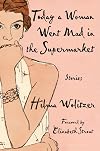
How have I gotten through life without having heard of Hilma Wolitzer? The stories in Today a Woman Went Mad in the Supermarket are so delicious! I laughed even when I guiltily recognized the truthful honesty behind these stories which first appeared in The Saturday Evening Post, Esquire, and literary magazines in the 1960s and 1970s.
When I found the title story online, shared by The Saturday Evening Post on their website and first published in the magazine in 1966, I knew I had to read show more more. A woman has a nervous breakdown in the grocery store, her son clinging to her skirts, her purse empty, while the pregnant narrator tries to help her. “You can’t mother the whole world,” her husband consoles his sorrowing wife. Oh, how many times have we seen a crisis and felt powerless? But where better to lose it than food shopping? Woman carry so much, especially in 1966, the family needing to be feed and the house cleaned and the dog walked and so on and so on. It’s enough to crush any woman’s spirit. The relentless need and the never ending futility of it all.
The story of Paulette and Howard is told through the stories: their shotgun wedding, the struggles of marriage, depression and anxiety, in-laws and kids, and finally, old age in the pandemic and the losses it inflicts.
I found myself glancing over to see if Howard was still alive, holding my breath while I watched for the shallow rise and fall of his, the way I had once watched for a promising rise in the bedclothes.
The last story, The Great Escape, opens with Paulie watching Howard sleeping, reminiscing of the days when she would wake him up for a quickie before the kids woke up. Now, she checks to see if he is still breathing. It is hilarious and heartbreaking all at once.
She captures the routine of old age, their days reduced to the same endless routine, “as if it would all go one forever in that exquisitely boring and beautiful way.”
The kids order them to stock up on toilet paper and hand sanitizer and to fill the freezer, the book club switched to Zoom meetings (as did the bar mitzvah), hair cuts are skipped, and masks and gloves became a part of their wardrobe.
It is like the story of my 2020 life, down to the Zoomed bar mitzvah attendance!
In the Foreword by Elizabeth Strout (Olive Kitteridge, My Name is Lucy Barton), she writes that Wolitzer “is largehearted in her work, judging no none.” And I loved that about these stories. Like Strout’s characters, Wolitzer writes about ordinary people, with great honesty and sympathy and insight. I loved these women and I loved these stories. Wolitzer’s brilliant writing is not to be missed.
I received a free egalley from the publisher through NetGalley. My review is fair and unbiased. show less
When I found the title story online, shared by The Saturday Evening Post on their website and first published in the magazine in 1966, I knew I had to read show more more. A woman has a nervous breakdown in the grocery store, her son clinging to her skirts, her purse empty, while the pregnant narrator tries to help her. “You can’t mother the whole world,” her husband consoles his sorrowing wife. Oh, how many times have we seen a crisis and felt powerless? But where better to lose it than food shopping? Woman carry so much, especially in 1966, the family needing to be feed and the house cleaned and the dog walked and so on and so on. It’s enough to crush any woman’s spirit. The relentless need and the never ending futility of it all.
The story of Paulette and Howard is told through the stories: their shotgun wedding, the struggles of marriage, depression and anxiety, in-laws and kids, and finally, old age in the pandemic and the losses it inflicts.
I found myself glancing over to see if Howard was still alive, holding my breath while I watched for the shallow rise and fall of his, the way I had once watched for a promising rise in the bedclothes.
The last story, The Great Escape, opens with Paulie watching Howard sleeping, reminiscing of the days when she would wake him up for a quickie before the kids woke up. Now, she checks to see if he is still breathing. It is hilarious and heartbreaking all at once.
She captures the routine of old age, their days reduced to the same endless routine, “as if it would all go one forever in that exquisitely boring and beautiful way.”
The kids order them to stock up on toilet paper and hand sanitizer and to fill the freezer, the book club switched to Zoom meetings (as did the bar mitzvah), hair cuts are skipped, and masks and gloves became a part of their wardrobe.
It is like the story of my 2020 life, down to the Zoomed bar mitzvah attendance!
In the Foreword by Elizabeth Strout (Olive Kitteridge, My Name is Lucy Barton), she writes that Wolitzer “is largehearted in her work, judging no none.” And I loved that about these stories. Like Strout’s characters, Wolitzer writes about ordinary people, with great honesty and sympathy and insight. I loved these women and I loved these stories. Wolitzer’s brilliant writing is not to be missed.
I received a free egalley from the publisher through NetGalley. My review is fair and unbiased. show less
Lists
Awards


You May Also Like


Associated Authors
Statistics
- Works
- 19
- Also by
- 3
- Members
- 1,424
- Popularity
- #18,066
- Rating
- 3.5
- Reviews
- 122
- ISBNs
- 107
- Languages
- 6
- Favorited
- 1
