
Ring Lardner, Jr. (1915–2000)
Author of M*A*S*H [1970 film]
About the Author
Disambiguation Notice:
Ring Lardner, 1885-1933, was the father of Ring Lardner, Jr., 1915-2000. Please do not combine these authors.
Works by Ring Lardner, Jr.
Associated Works
Mainstream : volume 9 number 11 December 1956 — Contributor — 1 copy
Tagged
Common Knowledge
- Canonical name
- Lardner, Ring, Jr.
- Legal name
- Lardner, Ringgold Wilmer, Jr. (birth name)
- Birthdate
- 1915-08-19
- Date of death
- 2000-10-31
- Gender
- male
- Education
- Princeton University
- Occupations
- screenwriter
reporter
novelist - Relationships
- Lardner, Ring (father)
Lardner, George (nephew)
Lardner, Kate (niece) - Short biography
- Ringgold Wilmer "Ring" Lardner, Jr. (August 19, 1915 – October 31, 2000) was an American journalist and screenwriter blacklisted by the Hollywood film studios during the Red Scare of the late 1940s and 1950s.
- Nationality
- USA
- Birthplace
- Chicago, Illinois, USA
- Place of death
- New York, New York, USA
- Disambiguation notice
- Ring Lardner, 1885-1933, was the father of Ring Lardner, Jr., 1915-2000. Please do not combine these authors.
- Associated Place (for map)
- USA
Members
Reviews
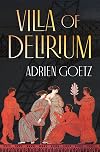
Rating: 4.5* of five
The Publisher Says: Along the French Riviera in the early 1900s, an illustrious family in thrall to classical antiquity builds a fabulous villa—a replica of a Greek palace, complete with marble columns and frescoes depicting mythological gods.
The Reinachs—related to other wealthy Jews like the Rothschilds and the Ephrussis—attempt to recreate "a pure beauty" lost in the 20th century. The narrator of this brilliant novel calls the imposing house “an act of show more delirium, above all an optimistic act, proof that one could reset time as one could reset a clock and resist the outside world." The story of the villa and its glamorous inhabitants is recounted by the son of a servant from the nearby estate of Gustave Eiffel, designer of the Paris tower, and the two contrasting structures present opposite responses to modernity. The son is adopted by the Reinachs, initiated into the era of Socrates and instructed in classical Greek. He joins a family pilgrimage to Athens, falls in love with a married woman, and survives the Nazi confiscation of the house and deportation to death camps of Reinach grandchildren.
This is a Greek epic for the modern era.
I RECEIVED A DRC FROM THE PUBLISHER VIA EDELWEISS+. THANK YOU.
My Review: I've been years without writing up my notes on this read. It's shameful. I'm so sorry not to have warbled about it...in my defense, it was COVID time.
First off I want to encourage you to take the virtual tour of the (real) villa itself. It definitely blurs the lines between reality and fantasy...both the fact there is a real place, built by real pre-war Jewish aesthetes, and the fact the novel (a roman à clef, surely, though I don't have the key) treats its subject as so close to the mythical world it embodies conspire to give the story a powerful impact. Attributed to the fictional creator pf the fictional villa is the epigraph: "The Greeks discovered glory, they discovered beauty, and they brought to this discovery such jubilation, such an overabundance of life, that a sense of youthful contagion can still be felt even after the passage of three or four thousand years."
As a statement of purpose for this novel that one is spot-on. It's a bit Tom Ripley/Line of Beauty/Saltburn-esque in its insertion of a young lad from an impoverished background into a world he could not even have dreamed up, still less entered. He learns vast amounts of cultural information not widely available to boys of his class as he companions, somewhat à la Patroclus, his wealthy young compatriot Adolphe.
Time passes; the education he gets by being whisked out of his dead-end life leads him to, on a trip with Adolphe and his uncle Theodore (benefactor of Achilles), to do something very wrong; in his turn, wrong is done to him by Theodore who dresses it up as redressing the balance. It is not that at all, it is greed. A set of scales falls from Achilles' eyes, and the reader's; being cultured, being educated and deeply humane, does not being a good person.
Time-jumping decades, we meet Achilles in his famous-artist phase. He might not have profited from his bad deed fortyish years before, but his connection to wealth and high culture is solid, and very useful. As it is 1956, the area is abuzz with the marriage of Grace Kelly to Prince Rainier of Monaco. Achilles uses this influx of strangers to mask his return to the now-derelict villa of his childhood. We all know what he has gone to look for: the object purloined by him, then stolen by Theodore.
Greed and the complicated desire to Win, to Beat Them, are deeply enmeshed with the self-justifying desire to be Right, to get the last word. Humans...such irredeemable scum. Recovering an object? No, no more than the madeleine was the object of Swann's memory palace. Recovering a moment once lived with intensity? Okay...recovering lost, doomed first love? Okay...all of these at once, reviving memory's mood board as it was being edited and stuck into place is rather the project of middle age. In Achilles' case it's quite a beautiful reconstruction. Do we trust him? Is he, in the confines of his mind that is this récit, editing, embellishing, altering the raw material of memory, cutting the scenes into the movie he wants to watch?
This is where the story becomes so much more than the sum of its beautiful parts. In any récit, we're not given the momentous clash between narrator and reality because there is only the one person speaking to us. In this story's case that means reckoning with the nature of memory, the pain of identity being formed as it must always be in tension with Other; it is Achilles' story, but of necessity it is only his story of the myriad he comes into consequential contact with. Author and translator let us be in the flow with Achilles, of sacred name, and hurry no revelations to keep us "engaged" by creating an unnatural action. It is meditative, it is dense, and it is going to be obvious to you in twenty pages if it's one for you pursue.
I'm now approaching Achilles' end-age. I see things as he does, in strobe-flashes of intense memory followed by blind black voids of time. I found Achilles and his remarkable life deeply pleasant company, telling me an involving story at an old man's pace.
It was a slow read. It kept calling me back. I was able to pick right back up after literal years away from it because I was that invested in the man. It's a story I think will reward the reader who can just...go with it. I hope you'll read a sample, see if it's for you or not. show less
The Publisher Says: Along the French Riviera in the early 1900s, an illustrious family in thrall to classical antiquity builds a fabulous villa—a replica of a Greek palace, complete with marble columns and frescoes depicting mythological gods.
The Reinachs—related to other wealthy Jews like the Rothschilds and the Ephrussis—attempt to recreate "a pure beauty" lost in the 20th century. The narrator of this brilliant novel calls the imposing house “an act of show more delirium, above all an optimistic act, proof that one could reset time as one could reset a clock and resist the outside world." The story of the villa and its glamorous inhabitants is recounted by the son of a servant from the nearby estate of Gustave Eiffel, designer of the Paris tower, and the two contrasting structures present opposite responses to modernity. The son is adopted by the Reinachs, initiated into the era of Socrates and instructed in classical Greek. He joins a family pilgrimage to Athens, falls in love with a married woman, and survives the Nazi confiscation of the house and deportation to death camps of Reinach grandchildren.
This is a Greek epic for the modern era.
I RECEIVED A DRC FROM THE PUBLISHER VIA EDELWEISS+. THANK YOU.
My Review: I've been years without writing up my notes on this read. It's shameful. I'm so sorry not to have warbled about it...in my defense, it was COVID time.
First off I want to encourage you to take the virtual tour of the (real) villa itself. It definitely blurs the lines between reality and fantasy...both the fact there is a real place, built by real pre-war Jewish aesthetes, and the fact the novel (a roman à clef, surely, though I don't have the key) treats its subject as so close to the mythical world it embodies conspire to give the story a powerful impact. Attributed to the fictional creator pf the fictional villa is the epigraph: "The Greeks discovered glory, they discovered beauty, and they brought to this discovery such jubilation, such an overabundance of life, that a sense of youthful contagion can still be felt even after the passage of three or four thousand years."
As a statement of purpose for this novel that one is spot-on. It's a bit Tom Ripley/Line of Beauty/Saltburn-esque in its insertion of a young lad from an impoverished background into a world he could not even have dreamed up, still less entered. He learns vast amounts of cultural information not widely available to boys of his class as he companions, somewhat à la Patroclus, his wealthy young compatriot Adolphe.
Time passes; the education he gets by being whisked out of his dead-end life leads him to, on a trip with Adolphe and his uncle Theodore (benefactor of Achilles), to do something very wrong; in his turn, wrong is done to him by Theodore who dresses it up as redressing the balance. It is not that at all, it is greed. A set of scales falls from Achilles' eyes, and the reader's; being cultured, being educated and deeply humane, does not being a good person.
Time-jumping decades, we meet Achilles in his famous-artist phase. He might not have profited from his bad deed fortyish years before, but his connection to wealth and high culture is solid, and very useful. As it is 1956, the area is abuzz with the marriage of Grace Kelly to Prince Rainier of Monaco. Achilles uses this influx of strangers to mask his return to the now-derelict villa of his childhood. We all know what he has gone to look for: the object purloined by him, then stolen by Theodore.
Greed and the complicated desire to Win, to Beat Them, are deeply enmeshed with the self-justifying desire to be Right, to get the last word. Humans...such irredeemable scum. Recovering an object? No, no more than the madeleine was the object of Swann's memory palace. Recovering a moment once lived with intensity? Okay...recovering lost, doomed first love? Okay...all of these at once, reviving memory's mood board as it was being edited and stuck into place is rather the project of middle age. In Achilles' case it's quite a beautiful reconstruction. Do we trust him? Is he, in the confines of his mind that is this récit, editing, embellishing, altering the raw material of memory, cutting the scenes into the movie he wants to watch?
This is where the story becomes so much more than the sum of its beautiful parts. In any récit, we're not given the momentous clash between narrator and reality because there is only the one person speaking to us. In this story's case that means reckoning with the nature of memory, the pain of identity being formed as it must always be in tension with Other; it is Achilles' story, but of necessity it is only his story of the myriad he comes into consequential contact with. Author and translator let us be in the flow with Achilles, of sacred name, and hurry no revelations to keep us "engaged" by creating an unnatural action. It is meditative, it is dense, and it is going to be obvious to you in twenty pages if it's one for you pursue.
I'm now approaching Achilles' end-age. I see things as he does, in strobe-flashes of intense memory followed by blind black voids of time. I found Achilles and his remarkable life deeply pleasant company, telling me an involving story at an old man's pace.
It was a slow read. It kept calling me back. I was able to pick right back up after literal years away from it because I was that invested in the man. It's a story I think will reward the reader who can just...go with it. I hope you'll read a sample, see if it's for you or not. show less

Laura is the film which made me fall in love with the movies. When Otto Preminger was told to take over this project from wunderkind Rouben Mamoulian, it was reportedly a mess. How much was already in the can has always been in dispute; some still maintain that the famous opening shots are director Mamoulian’s work. David Raksin’s famous score, however, so beautiful and haunting that it set the tone for the entire film, had not yet been written. Preminger told Raksin to take the weekend show more and come up with something or he would use Duke Ellington’s Sophisticated Lady instead.
Raksin’s marriage was falling apart at the time, and over the weekend he wrote the theme from Laura as much for his wife as for the film. Sadly, it did not save his marriage. It did, however, change forever this film. Raksin’s score was so haunting and beautiful that Preminger framed the entire picture around it, turning this into perhaps the greatest romantic noir film ever to grace a movie screen.
Dana Andrews had his greatest role as Detective Mark McPherson, assigned the murder of society girl Laura Hunt due to office politics. Wlado Lydecker is also the role for which Clifton Webb might best be remembered. He gives an outstanding performance as the deceased Laura’s vain and famous benefactor. Using his wit and intellect to destroy all of Laura’s suitors in his weekly column, we see everything played out in flashbacks told to McPherson during the investigation.
Vincent Price had arguably his best non-horror role as Shelby Carpenter, the one man Waldo could not drive away. Laura was to have been married to Carpenter, a heel with perfect manners. The more McPherson learns about Laura the more he wonders why such a sweet and down to earth girl ended up a society page murder mystery. She liked baseball and shares a favorite book with McPherson. Her portrait, painted by one of the suitors Lydecker destroyed in his column, hangs ominously above the chair where Mark McPherson reads her diary, searching for clues that will help him unravel the mystery of both her life, and her violent death.
Laura's fiercely loyal maid, Bessie, attempts to protect Laura’s reputation at every turn. McPherson is sympathetic and wants to protect her reputation also, because he has fallen in love with a ghost. David Raksin’s haunting score sets the atmosphere to every film buff's favorite murder mystery/noir/romance. Halfway through this film, on a rainy night in Laura’s apartment, the entire case will be turned upside down in one of the most famous twists in screen history.
This film was adapted from the terrific Vera Caspary novel and is a mystery classic as well. Both the novel and the film are timeless treasures to be cherished. This is one of the finest films ever made and one you simply have to see. It will make you fall in love with the movies. show less
Raksin’s marriage was falling apart at the time, and over the weekend he wrote the theme from Laura as much for his wife as for the film. Sadly, it did not save his marriage. It did, however, change forever this film. Raksin’s score was so haunting and beautiful that Preminger framed the entire picture around it, turning this into perhaps the greatest romantic noir film ever to grace a movie screen.
Dana Andrews had his greatest role as Detective Mark McPherson, assigned the murder of society girl Laura Hunt due to office politics. Wlado Lydecker is also the role for which Clifton Webb might best be remembered. He gives an outstanding performance as the deceased Laura’s vain and famous benefactor. Using his wit and intellect to destroy all of Laura’s suitors in his weekly column, we see everything played out in flashbacks told to McPherson during the investigation.
Vincent Price had arguably his best non-horror role as Shelby Carpenter, the one man Waldo could not drive away. Laura was to have been married to Carpenter, a heel with perfect manners. The more McPherson learns about Laura the more he wonders why such a sweet and down to earth girl ended up a society page murder mystery. She liked baseball and shares a favorite book with McPherson. Her portrait, painted by one of the suitors Lydecker destroyed in his column, hangs ominously above the chair where Mark McPherson reads her diary, searching for clues that will help him unravel the mystery of both her life, and her violent death.
Laura's fiercely loyal maid, Bessie, attempts to protect Laura’s reputation at every turn. McPherson is sympathetic and wants to protect her reputation also, because he has fallen in love with a ghost. David Raksin’s haunting score sets the atmosphere to every film buff's favorite murder mystery/noir/romance. Halfway through this film, on a rainy night in Laura’s apartment, the entire case will be turned upside down in one of the most famous twists in screen history.
This film was adapted from the terrific Vera Caspary novel and is a mystery classic as well. Both the novel and the film are timeless treasures to be cherished. This is one of the finest films ever made and one you simply have to see. It will make you fall in love with the movies. show less
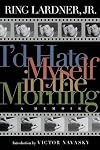
Written on his deathbed, Lardner looks back on a career largely as a Hollywood screenwriter involved in, including the M*A*S*H film. Largely this book reflects on the questioning that led to the title when Lardner appeared to the HUAC as one of the Hollywood Ten. He is open about the early appeal of socialism and even communism in the 30s. He has a brother James that fought and died in the Abraham Lincoln Brigade fighting fascism in Spain. Indeed, as with other memoirs, I see in the 20s show more through 30s much socialist though and activity in American was of the anti-fascist kind. While eventually disillusioned with communism through the realities of Stalinism, Lardner suffered personally from fascistic American government and commercial policies making for a cruel irony. Indeed, looking back as the "sole survivor" of The Ten, the confirmed atheist senses a resurgence in America through fundamentalist activism:
When I was young, I believed in the ability of people to organize themselves in their own interests but also in what seemed to me to be the larger interest of humanity. I thought we had at least the possibility of putting our fears and our superstitions behind us in the interests of creating a better world. When people ask me if I think we could ever end up with a new version of a Red scare-a nation wide purge of dissidents and a blacklist-my answer is usually no, not at least in exactly the same way. But perhaps nothing has surprised me more than the return of the irrational to our political and social life in the form of fundamentalist religious fervor.show less

A sports reporter marries an important journalist.
2/4 (Indifferent).
There are a handful of funny parts, and Tracy & Hepburn are good together. But it pushes the relationship problems too far to be redeemable. It might have made a good drama, with a very different ending.
(Jan. 2022)
2/4 (Indifferent).
There are a handful of funny parts, and Tracy & Hepburn are good together. But it pushes the relationship problems too far to be redeemable. It might have made a good drama, with a very different ending.
(Jan. 2022)
Lists
Awards


You May Also Like


Associated Authors
Statistics
- Works
- 9
- Also by
- 3
- Members
- 836
- Popularity
- #30,568
- Rating
- 3.9
- Reviews
- 15
- ISBNs
- 29
- Languages
- 1