
Tony Sullivan
Author of The Early Anglo-Saxon Kings
Works by Tony Sullivan
The Mountain Lord 1 copy
Bodhran Tutor 1 copy
Tagged
Common Knowledge
There is no Common Knowledge data for this author yet. You can help.
Members
Reviews
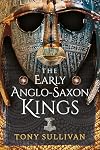
According to the standard story, the Romans left Britannia not long after 400. Soon the land was overrun by the Angles, Saxons, and Jutes, with only Wales still being controlled by the Romano-British.
In The Early Anglo-Saxon Kings, Tony Sullivan does a great job at complicating that narrative.
The author focused his efforts on the period from 400 to 700, with emphasis on the first two of those centuries. He well set forth how Roman Britannia came about; he considered all the available show more sources for what happened in the land afterward; he considered what took place in Gaul and among the Romano-Gallic population and made parallels with what might have taken place in Britain.
In short, the author well argues from all sources for a longer term persistence of “Roman” Britannia well into the sixth century. He showed from the earliest sources how challenging it is to imagine how the whole country would be overrun. He points out the evidence for the Battle of Badon Hill as a major British victory and how there is no real evidence for the Kingdom of Mercia until well into the sixth century. He set forth the likely possibility of the Roman British polities remaining for quite some time. Some of the southeastern areas might have been overrun sooner rather than later; in other parts, Germanic mercenaries might well have been maintained on the periphery as the major centers remained. It was only during the significant upheavals of the middle sixth century in which the Romano-British hold on what would become England fell apart and the polities would develop into the seven Anglo-Saxon kingdoms which would be in stronger evidence in the seventh century and beyond.
This book is no mere introduction, but satisfied my desire to learn more about how Roman Britain became Anglo-Saxon England. show less
In The Early Anglo-Saxon Kings, Tony Sullivan does a great job at complicating that narrative.
The author focused his efforts on the period from 400 to 700, with emphasis on the first two of those centuries. He well set forth how Roman Britannia came about; he considered all the available show more sources for what happened in the land afterward; he considered what took place in Gaul and among the Romano-Gallic population and made parallels with what might have taken place in Britain.
In short, the author well argues from all sources for a longer term persistence of “Roman” Britannia well into the sixth century. He showed from the earliest sources how challenging it is to imagine how the whole country would be overrun. He points out the evidence for the Battle of Badon Hill as a major British victory and how there is no real evidence for the Kingdom of Mercia until well into the sixth century. He set forth the likely possibility of the Roman British polities remaining for quite some time. Some of the southeastern areas might have been overrun sooner rather than later; in other parts, Germanic mercenaries might well have been maintained on the periphery as the major centers remained. It was only during the significant upheavals of the middle sixth century in which the Romano-British hold on what would become England fell apart and the polities would develop into the seven Anglo-Saxon kingdoms which would be in stronger evidence in the seventh century and beyond.
This book is no mere introduction, but satisfied my desire to learn more about how Roman Britain became Anglo-Saxon England. show less
A fresh eye looking at the period from the end of the Roman occupation of Britain to the establishment of the Anglo-Saxon kingdoms, comparing source material. It's not an easy period to understand, with far too many people called Aethel___! The book is more comprehensive than its title might suggest, perhaps more about the emergence of kingship following successive adventurer raids and settlements.
Statistics
- Works
- 22
- Members
- 72
- Popularity
- #243,042
- Rating
- 3.7
- Reviews
- 2
- ISBNs
- 26