
Nikita Gill
Author of Fierce Fairytales: Poems and Stories to Stir Your Soul
Series
Works by Nikita Gill
The Girl and the Goddess: Stories and Poems of Divine Wisdom (2020) — Author — 320 copies, 6 reviews
Hekate: The new immersive, electrifying Greek retelling from bestselling poet Nikita Gill (2025) 45 copies
Dragonhearts 7 copies
Associated Works
You Don't Have to Be Everything: Poems for Girls Becoming Themselves (2021) — Contributor — 84 copies, 2 reviews
Disconnected: Poems & Stories of Connection and Otherwise (2018) — Contributor — 36 copies, 4 reviews
Tagged
Common Knowledge
- Birthdate
- 1987
- Gender
- female
- Short biography
- Nikita Gill is a poet and writer. She has written and curated seven volumes of poetry. She uses social media to engage her audience and she has over 650,000 followers on Instagram. She has been described as one of the most successful Instapoets, and 'one of the most exciting young writers working today'.
- Nationality
- Northern Ireland (birth)
UK (birth)
India (citizenship) - Birthplace
- Belfast, Northern Ireland, UK
Members
Reviews
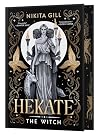
I always tell people I do not like poetry because I can never interpret the stanzas, which is 100 percent true. Give me a poem laden with hidden meaning, and I will miss all of it. Any poetry I voluntarily read will be in the form of a book. And wouldn't you know, those are almost always among my favorite books of the year. HEKATE by Nikita Gill is this year's choice for completing the poetry genre in a reading challenge, and I absolutely adored every line.
I don't know why I enjoy novels in show more verse so much, or why my brain finds it easier to interpret them versus the more traditional poetic format, but I do. In HEKATE, I appreciate the gorgeous imagery Ms. Gill's verse brings to her story. Plus, I find it much easier to understand and evoke the emotional turmoil of the story's main character through prose. That's a good thing because Hekate is experiencing major emotional turmoil at this stage in her life. From the loss of her mother to her missing powers to her unknown purpose, her early years are so very lonely. You ache while reading about it.
HEKATE also provides an excellent opportunity to bridge the gap between the end of the Titanomachy and the emergence of the more well-known Olympian gods with whom we are more familiar. The first thing we learn when studying the Olympian gods is that Zeus defeated his father. However, you never understand how complicated the war between the Titans and the lesser gods would have been when you remember they are all related to each other.
Ms. Gill remedies this lack by showing us the impact of the war on spouses, siblings, and more distant relatives. It is as complicated as everything about the gods is. Yet, it also provides a greater context that helps to make the complexity more understandable. More to the point, Hekate's life, as detailed or imagined by Ms. Gill, is fascinating. Living on the edges of the Underworld, neither a goddess nor mortal, her life on the fringe has a lasting impact on who she later becomes. She is an immensely likable character, something which entices you to keep reading to see what happens next in her story, which ends way too quickly for my liking.
HEKATE is the first book in a trilogy about the goddesses of the Underworld. Each book is essentially a standalone novel, exploring one goddess at a time. Given how much I enjoyed HEKATE, I will most definitely read the next book in the trilogy. I'm sad to see my time with the young goddess come to an end, but I appreciate the care Ms. Gill took to craft her story. Hekate is one of those entities whose identity has been tarnished in modern times with its association with witchcraft and, therefore, with darkness. Ms. Gill banishes that connection with her beautiful story of a young girl who wants a place where she belongs. That she does so using verse makes it that much more impressive a story. show less
I don't know why I enjoy novels in show more verse so much, or why my brain finds it easier to interpret them versus the more traditional poetic format, but I do. In HEKATE, I appreciate the gorgeous imagery Ms. Gill's verse brings to her story. Plus, I find it much easier to understand and evoke the emotional turmoil of the story's main character through prose. That's a good thing because Hekate is experiencing major emotional turmoil at this stage in her life. From the loss of her mother to her missing powers to her unknown purpose, her early years are so very lonely. You ache while reading about it.
HEKATE also provides an excellent opportunity to bridge the gap between the end of the Titanomachy and the emergence of the more well-known Olympian gods with whom we are more familiar. The first thing we learn when studying the Olympian gods is that Zeus defeated his father. However, you never understand how complicated the war between the Titans and the lesser gods would have been when you remember they are all related to each other.
Ms. Gill remedies this lack by showing us the impact of the war on spouses, siblings, and more distant relatives. It is as complicated as everything about the gods is. Yet, it also provides a greater context that helps to make the complexity more understandable. More to the point, Hekate's life, as detailed or imagined by Ms. Gill, is fascinating. Living on the edges of the Underworld, neither a goddess nor mortal, her life on the fringe has a lasting impact on who she later becomes. She is an immensely likable character, something which entices you to keep reading to see what happens next in her story, which ends way too quickly for my liking.
HEKATE is the first book in a trilogy about the goddesses of the Underworld. Each book is essentially a standalone novel, exploring one goddess at a time. Given how much I enjoyed HEKATE, I will most definitely read the next book in the trilogy. I'm sad to see my time with the young goddess come to an end, but I appreciate the care Ms. Gill took to craft her story. Hekate is one of those entities whose identity has been tarnished in modern times with its association with witchcraft and, therefore, with darkness. Ms. Gill banishes that connection with her beautiful story of a young girl who wants a place where she belongs. That she does so using verse makes it that much more impressive a story. show less
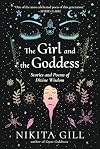
There are poets of note, and then there’s Nikita Gill - who is something else entirely. Between her work which is regularly posted on Instagram and her published volumes that have made their way into my library, I’ve come to expect a certain tone from her; one that is wolf-filled, wisdom-rich, and woeful to the men who think they can wrong women. While this volume is all that (and more), it was still a surprising delight because it shirked her usual style of succinct poems that weave show more together moreso in theme than in narrative story and gave us instead a full-fledged coming of age story. Our protagonist takes us on a journey from pre-partition India and a childhood in Delhi, where she begins to unravel her queerness, to an arts program halfway across the world in London, where she must find a new kind of family and learn to stand on her own two feet. Written in a continually changing style of poetic verse, the innate creative nature and continual circular metamorphosis of Gill’s narrator shines brightly as her voice chronicles her story, which is far from ordinary. As the title promises, on her journey towards enlightenment and self-acceptance, she meets nine goddesses and gods from Hindu lore - each familiar from the stories her family told her as an infant, but whom she must reckon with once again as a growing person to fully learn their lessons. Gill’s story is full of the wry observations that make her poetry so powerful, and seeing her sink her teeth into the mythology of her motherland results in nothing less than a book filled with radiance. While I may not get all of her references and subtleties here (I’m sadly deficient in the mythology of that region, and definitely need to do some further reading), the inspirational themes and cultural motifs still resonate beautifully. Whenever I am having moments of doubt that I actually enjoy poetry, I need to remind myself to come back to Gill’s work; rather than making me clench my teeth and furrow my brow at the arcane language and lack of narration, it’s always a pleasure to be able to delight in poetic narration like this - whether it’s in Instagram-perfect bite-size form, or a full meal like this which I can’t help but devour in a few short evenings. show less
How much do I adore reading poetry (especially stuff that’s as powerful as Nikita Gill’s is)? The limit does not exist. How much do I still hate trying to sum up poetry collections in a concise review, even if they are comprised of moment after moment of brilliance? See previous answer. But once again, we’ll give it our best shot. I came to Gill’s poetry via her Instagram, shared (I’m sure) by one of my many weird and wonderfully witchy friends, and was immediately hooked by the show more powerful narrative quality of her poems, which often centred on themes of feminism, myth, and magic. Even at their most heartbreaking, her poems hold a strength in their honesty, laying bare the harsh truths of the world we live in and bringing the reader to a familiar place recognizable by all Wild Women. This collection is one of her earliest, but still spans topics and themes that will be familiar to any fan of her work will be drawn to - treading steps from the heart’s graveyards to the far reaches of the sparkling and silent stars before settling home in each reader’s own inevitably changed mind. There are so many poems in this collection that stuck to my soul, and I’m sure with subsequent re-readings my favourites will change, but there are a few that I’m sure will continue speaking throughout the years. The reminder in “Endings”, that every ugly ending sparks a magical new beginning; the ultimate Wild Woman manifesto that is “Artemis”; and the haunting rendition of a heart’s death in “Ghost Story” are just a few moments of magic held herein, but maybe the most important one is her reminder that “[we] can strive to be perfect[,]/Or you can strive to be art.” I know which one I choose; forever and always. show less
Many of us only know of Hekate through her appearance as the leader of the three witches in Shakespeare’s Macbeth. This story of a young girl who grows up to become a powerful goddess of the Underworld is far more textured and interesting. Gill’s retelling, written in verse, provides the story behind the goddess of witchcraft and crossroads.
Hekate, daughter of the Titans Asteria and Perses, flees her home with her mother during the Titanomachy, the war between the original gods and the show more Olympians. Asteria brings Hekate to the underworld for protection and then leaves her, abandoning her with love and hope for her safety.
This story is divided into three parts and told from Hekate’s view: as a child of war, through a perilous youth, and ultimately, as a woman of power. Along her journey, the reader encounters other gods from Greek mythology, such as Zeus, Styx, Charon, Hades, and Thanatos. Her story involves heartbreak and fierce determination. All Hekate wants is to learn what her power is. But as Hekate grows from a sad child to a goddess of great and frightening ability, it becomes apparent that it is not only mortals who fear her power; some of the other gods do, too.
Hekate is an easy read and one that anyone who enjoys Greek mythology will want to savor. It is the first in a planned trilogy; presumably each book will focus on a different goddess of the underworld. show less
Hekate, daughter of the Titans Asteria and Perses, flees her home with her mother during the Titanomachy, the war between the original gods and the show more Olympians. Asteria brings Hekate to the underworld for protection and then leaves her, abandoning her with love and hope for her safety.
This story is divided into three parts and told from Hekate’s view: as a child of war, through a perilous youth, and ultimately, as a woman of power. Along her journey, the reader encounters other gods from Greek mythology, such as Zeus, Styx, Charon, Hades, and Thanatos. Her story involves heartbreak and fierce determination. All Hekate wants is to learn what her power is. But as Hekate grows from a sad child to a goddess of great and frightening ability, it becomes apparent that it is not only mortals who fear her power; some of the other gods do, too.
Hekate is an easy read and one that anyone who enjoys Greek mythology will want to savor. It is the first in a planned trilogy; presumably each book will focus on a different goddess of the underworld. show less
Lists
Awards


You May Also Like


Associated Authors
Statistics
- Works
- 20
- Also by
- 4
- Members
- 2,760
- Popularity
- #9,294
- Rating
- 4.1
- Reviews
- 55
- ISBNs
- 68
- Languages
- 2
- Favorited
- 2