
About the Author
Justin Welby is the Archbishop of Canterbury. Before ordination, he worked in the oil industry, becoming group treasurer of a large British exploration and production company. He has for many years been closely involved in reconciliation work, both at home and overseas. He is the author of show more Dethroning Mammon: The Archbishop of Canterbury's Lent Book 2017. show less
Works by Justin Welby
Dethroning Mammon: Making Money Serve Grace: The Archbishop of Canterbury’s Lent Book 2017 (2016) 98 copies, 1 review
Associated Works
Taking Sides: Clashing Views on Controversial Issues in Business Ethics and Society (1990) — Contributor, some editions — 76 copies, 1 review
Looking Through the Cross: The Archbishop of Canterbury's Lent Book 2014 (2013) — Foreword — 47 copies, 2 reviews
In God's Hands: The Archbishop of Canterbury's Lent Book 2015 (2014) — Foreword — 45 copies, 1 review
Managing the Church?: Order and Organization in a Secular Age (Lincoln Studies in Religion and Society) (2000) — Contributor — 5 copies
Tagged
Common Knowledge
- Birthdate
- 1956
- Gender
- male
- Education
- Trinity College, Cambridge
Cranmer Hall, Durham
St. John's College, Durham - Occupations
- oil company executive
Anglican priest
Dean of Liverpool
Bishop of Durham
Archbishop of Canterbury - Organizations
- Church of England
Société Nationale Elf Aquitaine
Privy Council
Enterprise Oil - Relationships
- Williams, Charles [4] (stepfather)
- Nationality
- UK
- Birthplace
- London, England, UK
- Places of residence
- Southam, England, UK
Coventry, Warwickshire, England, UK - Associated Place (for map)
- England, UK
Members
Discussions
Welby says it is 'wonderful' to convert to Catholicism in Catholic Tradition (February 2019)
Justin Welby: what should we do about ISIS? in Christianity (November 2014)
Archbishop of Canterbury admits doubts about existence of God in Christianity (September 2014)
'Catholic' confession good for the soul: Archbishop of Canterbury in Christianity (October 2013)
Next archbishop of Canterbury is… Justin Welby in Christianity (November 2012)
Reviews
Dethroning Mammon: Making Money Serve Grace: The Archbishop of Canterbury’s Lent Book 2017 by Justin Welby
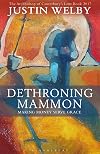
The Archbishop, a former group treasurer of the French oil company Elf Aquitaine and a student of history and law, issues a loud call to repentance in this book. Dethroning Mammon urges Christians to turn aside from worshiping a god of wealth and returning to one that calls us to love and care for our fellow creatures and the place where we all live. He characterizes the contemporary Mammon in two aspects which he calls homo economicus whom he nicknames "Cony" and his brother homo show more financiarius whom he nicknames "Fin" in other words, economics and finance, as the false idols of the 21st century.
Noting that it is not money, but the love of money, that causes us problems, and quoting extensively from the last chapters of the Gospel of John he calls attention to Mary, Joseph of Arimathea, and Nicodemus, people who freely and extravagantly gave their wealth without expecting a return from what they gave. They acted out of love not calculating a return on their investment. While addressing his remarks primarily to his flock in the United Kingdom, when he sums up his argument in the final chapter, "What we master brings us joy," he cites an example from America which is worth quoting at length.
"The 1776 Declaration of Independence by the 13 colonies that would become the United States of America was revolutionary, not merely in throwing off the authority of King George III, but also because it talked of the right of every human being (or at least, at that time, of every white male human being to 'Life, Liberty, and the pursuit of Happiness.' That breathtaking sentence, which has echoed around the world ever since, promotes the idea of autonomy, of being in charge of ourselves. Yet personal autonomy is an impossibility that conceals the enthroning of Mammon. In personal terms, autonomy assumes its own slavery—slavery to Mammon."
Returning to the UK he goes on to apply this principle to tax policy and the language used to describe it.
"We need to say positively what tax should do for human flourishing, and to say it in a way that enables policy to be decided simply and clearly. We can challenge this language of tax 'liabilities', dethroning Mammon by saying that the ultimate aim of taxation is to provide money to enable the state to ensure the dignity, safety, health, and education of all citizens, which guarantees our common good, and allows us to show solidarity abroad."
Then he pointedly asks, "Are you proud to pay tax?" before concluding with a note on individual spending decisions by asking, "How are you using your spending power to enthrone Christ in the economy around you?" show less
Noting that it is not money, but the love of money, that causes us problems, and quoting extensively from the last chapters of the Gospel of John he calls attention to Mary, Joseph of Arimathea, and Nicodemus, people who freely and extravagantly gave their wealth without expecting a return from what they gave. They acted out of love not calculating a return on their investment. While addressing his remarks primarily to his flock in the United Kingdom, when he sums up his argument in the final chapter, "What we master brings us joy," he cites an example from America which is worth quoting at length.
"The 1776 Declaration of Independence by the 13 colonies that would become the United States of America was revolutionary, not merely in throwing off the authority of King George III, but also because it talked of the right of every human being (or at least, at that time, of every white male human being to 'Life, Liberty, and the pursuit of Happiness.' That breathtaking sentence, which has echoed around the world ever since, promotes the idea of autonomy, of being in charge of ourselves. Yet personal autonomy is an impossibility that conceals the enthroning of Mammon. In personal terms, autonomy assumes its own slavery—slavery to Mammon."
Returning to the UK he goes on to apply this principle to tax policy and the language used to describe it.
"We need to say positively what tax should do for human flourishing, and to say it in a way that enables policy to be decided simply and clearly. We can challenge this language of tax 'liabilities', dethroning Mammon by saying that the ultimate aim of taxation is to provide money to enable the state to ensure the dignity, safety, health, and education of all citizens, which guarantees our common good, and allows us to show solidarity abroad."
Then he pointedly asks, "Are you proud to pay tax?" before concluding with a note on individual spending decisions by asking, "How are you using your spending power to enthrone Christ in the economy around you?" show less
Lists
TLS 6010 (1)
Awards


You May Also Like
Associated Authors
Statistics
- Works
- 8
- Also by
- 7
- Members
- 175
- Popularity
- #122,546
- Rating
- 3.5
- Reviews
- 1
- ISBNs
- 15