
Works by Toni Rhodes
Tagged
Common Knowledge
Members
Reviews
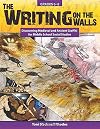
The Writing on the Walls: Discovering Medieval and Ancient Graffiti for Middle School Social Studies by Toni Rhodes
What students of medieval history need to learn about graffiti is not this book, it's a teacher that knows what is wrong with this book.
I will confess that I'm only on page ten, and already I'm really cranky. No wonder people keep complaining about our schools! I'll keep reading, and perhaps revise this review, but I've already spotted so many errors that I feel it my duty to give immediate warning.
Page 1: "Paper... wasn't widely available until the eighteenth century." Um -- Gutenberg show more Bible, anyone? Best guess is that at least 80% of the copies were on paper and no more than 20% on parchment (animal skins). Printing wouldn't have been economically viable without paper; there wasn't enough parchment to print on. By the thirteenth century, paper was a major writing material in Europe, and it was dominant by the fifteenth.
Page 7: "In medieval England, only about 1,200 priests, monks, and nuns could read and write." Despite slight modification in the following sentences, this gives an utterly wrong impression. The Middle Ages are considered to end in England in 1485. It is true that, in Norman times, only a handful of experts were literate. But literacy was widespread by the fifteenth century. Look at the Paston Letters. Or the copies of Chaucer. Or William Caxton, the first English printer. He was printing things like the Morte d'Arthur for popular reading, not scholars -- which implies lots and lots of middle class readers.
Page 7: "England converted to Christianity in the 500s." England did not exist in the 500s. As for the region that is now England, it had been Christian in the Roman period, then was paganized during the Anglo-Saxon conquest, when it broke up into many kingdoms. Kent, in the southeast, was Christianized in the 500s -- but King Penda of Mercia was still a pagan when he died in 655 -- and Mercia was at that time the strongest and probably the most populous of the kingdoms. The correct statement is "What would later be England began to return to Christianity in the 500s."
Page 10: Anglo-Norman was not a "mix of French and English." It was a dialect of Old French spoken in England by the Normans.
Flipping through to page 51, I see a reference to the Greek hero Ajax. The book is referring to Telamonian Ajax, but doesn't even make a note that he should be distinguished from Ajax son of Oileus. Or mention that he is mentioned in the Iliad and is the hero of a play by Sophocles.
Those are factual errors. In just ten pages, many of them consisting of illustrations. And the illustrations have their problems, too -- e.g. Figure 1.6, on page nine. The caption gives a source citation, but does not give a text (and moderns generally won't be able to read that secretary hand), nor a translation, nor a paleographic date. Indeed, by this time, the book should have described paleography -- the dating of inscriptions based on the writing style and characteristics -- and it hasn't. It appears many of the other illustrations have this same problem. What's the point of an inscription the students can't understand?
And, since one big chapter is about Greek graffiti, how about some information about the Greek alphabet and language?
I like the idea of this book; graffiti really do tell us a lot about daily life in the past, and a good instructional text could be very useful for middle school students. But the text needs to be reliable. This isn't really my field -- but I could improve this thing with no internet access and half my library locked away. Doesn't anyone use proofreaders any more?
Addendum: As I said, I kept reading. I was doing better in the section on Pompeii -- until I came to Figure 2.12 on page 40. This says, "C * I * Polybium, IIvir Of." In other words, "C[aius] [or Cnaeus, or something] I[ulius] [or Iuventus, or something] Polybius, duumvir," with an additional symbol that isn't entirely clear. This short message -- a name and an office -- is rendered on p. 39, "Election notice for the office of duumvir, the highest political office in Pompeii. I entreat you to elect Gaius Iulius Polybius as duumvir." So this "translation" inserts "Election notice for the office of," "the highest political office in Pompeii," and "I entreat you to elect." It also reads what is clearly a "C" as a "G," and makes two plausible but uncertain guesses as to what names the initials stand for. At that point, I quit. This book is too unreliable to be used in any instructional setting. I still like the idea. I hope someone who understands the meaning of the word "accuracy" will write it. I hope, even more, that the publishers will withdraw this piece of semi-fiction. show less
I will confess that I'm only on page ten, and already I'm really cranky. No wonder people keep complaining about our schools! I'll keep reading, and perhaps revise this review, but I've already spotted so many errors that I feel it my duty to give immediate warning.
Page 1: "Paper... wasn't widely available until the eighteenth century." Um -- Gutenberg show more Bible, anyone? Best guess is that at least 80% of the copies were on paper and no more than 20% on parchment (animal skins). Printing wouldn't have been economically viable without paper; there wasn't enough parchment to print on. By the thirteenth century, paper was a major writing material in Europe, and it was dominant by the fifteenth.
Page 7: "In medieval England, only about 1,200 priests, monks, and nuns could read and write." Despite slight modification in the following sentences, this gives an utterly wrong impression. The Middle Ages are considered to end in England in 1485. It is true that, in Norman times, only a handful of experts were literate. But literacy was widespread by the fifteenth century. Look at the Paston Letters. Or the copies of Chaucer. Or William Caxton, the first English printer. He was printing things like the Morte d'Arthur for popular reading, not scholars -- which implies lots and lots of middle class readers.
Page 7: "England converted to Christianity in the 500s." England did not exist in the 500s. As for the region that is now England, it had been Christian in the Roman period, then was paganized during the Anglo-Saxon conquest, when it broke up into many kingdoms. Kent, in the southeast, was Christianized in the 500s -- but King Penda of Mercia was still a pagan when he died in 655 -- and Mercia was at that time the strongest and probably the most populous of the kingdoms. The correct statement is "What would later be England began to return to Christianity in the 500s."
Page 10: Anglo-Norman was not a "mix of French and English." It was a dialect of Old French spoken in England by the Normans.
Flipping through to page 51, I see a reference to the Greek hero Ajax. The book is referring to Telamonian Ajax, but doesn't even make a note that he should be distinguished from Ajax son of Oileus. Or mention that he is mentioned in the Iliad and is the hero of a play by Sophocles.
Those are factual errors. In just ten pages, many of them consisting of illustrations. And the illustrations have their problems, too -- e.g. Figure 1.6, on page nine. The caption gives a source citation, but does not give a text (and moderns generally won't be able to read that secretary hand), nor a translation, nor a paleographic date. Indeed, by this time, the book should have described paleography -- the dating of inscriptions based on the writing style and characteristics -- and it hasn't. It appears many of the other illustrations have this same problem. What's the point of an inscription the students can't understand?
And, since one big chapter is about Greek graffiti, how about some information about the Greek alphabet and language?
I like the idea of this book; graffiti really do tell us a lot about daily life in the past, and a good instructional text could be very useful for middle school students. But the text needs to be reliable. This isn't really my field -- but I could improve this thing with no internet access and half my library locked away. Doesn't anyone use proofreaders any more?
Addendum: As I said, I kept reading. I was doing better in the section on Pompeii -- until I came to Figure 2.12 on page 40. This says, "C * I * Polybium, IIvir Of." In other words, "C[aius] [or Cnaeus, or something] I[ulius] [or Iuventus, or something] Polybius, duumvir," with an additional symbol that isn't entirely clear. This short message -- a name and an office -- is rendered on p. 39, "Election notice for the office of duumvir, the highest political office in Pompeii. I entreat you to elect Gaius Iulius Polybius as duumvir." So this "translation" inserts "Election notice for the office of," "the highest political office in Pompeii," and "I entreat you to elect." It also reads what is clearly a "C" as a "G," and makes two plausible but uncertain guesses as to what names the initials stand for. At that point, I quit. This book is too unreliable to be used in any instructional setting. I still like the idea. I hope someone who understands the meaning of the word "accuracy" will write it. I hope, even more, that the publishers will withdraw this piece of semi-fiction. show less
 This review was written for LibraryThing Early Reviewers.
The Writing on the Walls: Discovering Medieval and Ancient Graffiti for Middle School Social Studies by Toni Rhodes
I like the premise of this book and I can see a lot of possible connections to historical analysis, integrated curriculum, and general learning of history. Sadly, I feel this book misses the mark. The most prominent visual on the cover is of cave art, which is not discussed at all in the text (my spouse teaches about rock art at the university level, and there are great learning possibilities for middle school students). There seem to be numerous factual errors in the text. I was continually show more frustrated that images discussed in the text were pages away, and did not contain translations of the graffiti within the captions.
However, where I found myself the most frustrated was the lack of connection between the learning activities and…well, learning. Yes, they are fun activities. Yes, students would enjoy them. No, they often do not connect well to the reading and at times, are about topics or skills never mentioned in the text. Of the 9 activities listed, 6 are not related to graffiti, the analysis of this type of historical artifact, or the topics discussed in the reading. (On a side note, I want to add that the archaeologists and historical preservationists I know discourage gravestone rubbings because these can damage the stones over time.) As a history teacher, one of the most difficult challenges I face is having the time to teach everything required. I don’t have the luxury of time for activities that do not tie directly into learning objectives or that don’t help my students improve their skills. For every class activity, it is important to ask the question, “how does this impact student learning?” I felt continually let down when asking this question as I went through this book. I think historical graffiti is a great topic. With some reworking, this could be a very useful teaching tool.
Note: I received a free copy of this book from the LibraryThing's Early Reviewers program. show less
However, where I found myself the most frustrated was the lack of connection between the learning activities and…well, learning. Yes, they are fun activities. Yes, students would enjoy them. No, they often do not connect well to the reading and at times, are about topics or skills never mentioned in the text. Of the 9 activities listed, 6 are not related to graffiti, the analysis of this type of historical artifact, or the topics discussed in the reading. (On a side note, I want to add that the archaeologists and historical preservationists I know discourage gravestone rubbings because these can damage the stones over time.) As a history teacher, one of the most difficult challenges I face is having the time to teach everything required. I don’t have the luxury of time for activities that do not tie directly into learning objectives or that don’t help my students improve their skills. For every class activity, it is important to ask the question, “how does this impact student learning?” I felt continually let down when asking this question as I went through this book. I think historical graffiti is a great topic. With some reworking, this could be a very useful teaching tool.
Note: I received a free copy of this book from the LibraryThing's Early Reviewers program. show less
This review was written for LibraryThing Early Reviewers.The Writing on the Walls: Discovering Medieval and Ancient Graffiti for Middle School Social Studies by Toni Rhodes
"Writing on the Walls" is a barely adequate work which contains several historical inaccuracies and simplifications which do not serve the interests of the students it claims to serve. The author appears to have a very low opinion of the reading ability of 6-8 graders, as she talks down to them as if they were half a decade younger.
The content is poorly organized, consisting mostly of line-drawn figures (as opposed to the original graffiti) along with explanations which are rarely on the show more same page. This explanatory content often comes along with the author's own value judgments--such as when she described the "silly" medieval fashion of long, pointed-toe shoes. All in good fun, one might think, except for the fact that it is not the job of the historian to tell a student how to feel about history, even at the ages of 11 to 13.
The text will quickly become dated, as references to Facebook and other modern forms of communication may have a limited expiration date. Other attempts to bring the material into relevance for the students are well-intentioned, but would have been better left to a teacher's guide rather than in the text that the students are expected to read.
I gave the work two stars instead of one thanks to the quality of the exercises at the end of each chapter. These seemed spot on to engage the students with the material, and would make for dynamic classroom interaction. From this, I would guess that the author is an excellent educator, but is an inexperienced or amateur historian.
I doubt that the author had much input on the cover of the book, so this was not incorporated into my rating, but the cover prominently displays cave paintings, which did not appear in the book. That element of the cover design would have been better served by Pompeiian graffiti, which was otherwise unrepresented there. show less
The content is poorly organized, consisting mostly of line-drawn figures (as opposed to the original graffiti) along with explanations which are rarely on the show more same page. This explanatory content often comes along with the author's own value judgments--such as when she described the "silly" medieval fashion of long, pointed-toe shoes. All in good fun, one might think, except for the fact that it is not the job of the historian to tell a student how to feel about history, even at the ages of 11 to 13.
The text will quickly become dated, as references to Facebook and other modern forms of communication may have a limited expiration date. Other attempts to bring the material into relevance for the students are well-intentioned, but would have been better left to a teacher's guide rather than in the text that the students are expected to read.
I gave the work two stars instead of one thanks to the quality of the exercises at the end of each chapter. These seemed spot on to engage the students with the material, and would make for dynamic classroom interaction. From this, I would guess that the author is an excellent educator, but is an inexperienced or amateur historian.
I doubt that the author had much input on the cover of the book, so this was not incorporated into my rating, but the cover prominently displays cave paintings, which did not appear in the book. That element of the cover design would have been better served by Pompeiian graffiti, which was otherwise unrepresented there. show less
This review was written for LibraryThing Early Reviewers.The Writing on the Walls: Discovering Medieval and Ancient Graffiti for Middle School Social Studies by Toni Rhodes
I was excited to read this, as I am a middle school teacher. Many of the explanations were not detailed enough. But, the actual activities that were included in detail were fun, though not all of them seem focused on Common Core. I still really like the premise behind this book and feel that there is some material that I might be able to take from for my own classroom.
This review was written for LibraryThing Early Reviewers.Statistics
- Works
- 2
- Members
- 20
- Popularity
- #589,234
- Rating
- 2.7
- Reviews
- 12
- ISBNs
- 2
