
John George Pearson (1930–2021)
Author of The Profession of Violence: the Rise and Fall of the Kray Twins
About the Author
Works by John George Pearson
Associated Works
Tagged
Common Knowledge
- Birthdate
- 1930-10-05
- Date of death
- 2021-11-13
- Gender
- male
- Nationality
- UK
- Associated Place (for map)
- UK
Members
Discussions
James Bond is real book in Name that Book (July 2011)
Reviews

This is quite an angry book from a man who, clearly with some regret, kick-started the popular fashion for true crime in the United Kingdom with his first biography of the Kray Twins back in the 1960s.
'The Profession of Violence' is, like the 'The Wicker Man' in film and 'The Communist Manifesto' in politics, an example of the remorselessness of the law of unintended consequences.
This book should be read as the 'most considered' account of the Kray Twins thirty five years on but also as an show more exercise in self-reflexion on the popular biographers' art by a doyen of the trade.
His anger may be a little with himself but it is most reasonably expressed as anger at the two sides of the Kray Twins' coin.
There is an anger with both the sheer violence and (certainly in Ron Kray's case) psychopathy of the Krays' world and with the way that the establishment connived at their celebrity game in order to avoid scandal.
Sometimes, it is hard to know which is more evil - the thuggery of the Krays making their way up from the slums or the protection of truly psychopathic, narcissistic and weak men like Driberg and Boothby by their own class in both major parties.
If I had to choose a poster boy for true social evil, I am afraid that I would have to choose Arnold, Lord Goodman over Reg Kray any day. Goodman epitomises the intellectual manipulation of power and rules to protect a pack of social jackals - Ron's perverted desires seem small feed in comparison.
These ruminations are not merely historical. As we write, good policemen and women and good journalists - notably those at www.exaronews.com with whom I am proud to be associated but also many others - are digging in the slime of similar cover-ups related to child abuse only a decade or two later.
The child abuse scandals of the 1970s and 1980s (and perhaps beyond as they morph into internet rings) can now be seen as natural extensions of a total world of abuse in which the Krays are really a mere incident.
What underlay the exploitative evil of the Krays was the convergence of a culture of sexual repression (in terms of homosexuality) where the laws were not enforced where they existed, a hypocritical ruling order where 'bad' conduct needed to be repressed but was otherwise accepted amongst their own and the usefulness of outsiders, raised in social neglect to be totally self-regarding, as allies and tools.
This was a culture that pragmatically kept a lid on things that perhaps could not have been ordered in any other way given the society and politics of the country but which became extremely deviant at its dark edges.
Narscisitic gay psychopaths converged on one another and built networks and alliances which the 'establishment', where it knew of these things, preferred to turn a blind eye. It became too easy for the deviants to exploit the vulnerable and to feel that they could do so with impunity, This is Poliakoff country.
For be in no doubt that the Krays were 'peculiar' in many senses. There are other gangland familes and networks which are perhaps only now being addressed by the formation of the National Crime Agency but these never sought the celebrity of the Krays. They were and are primarily 'business men' like the mafia, not 'legends'.
Pearson is good on the influence of the American gangster film and the allure of the mafia (this was the mafia's high point of global influence) for Reg and Ron but it is clear that our native born thugs were little more than occasionally useful tools for their sophisticated counterparts from New York - somewhat of a metaphor for the British relationship with the US after Suez!
The only caveat I would have with the book is that the psychological profiling of the Twins, while plausible in many ways, is over-played.
Pearson is part-establishment himself - he was famously biographer of Ian Fleming and 'James Bond' - and he remains, like all his journalistic ilk, rather weak on the 'sociology' of resistance to the system implicit in organised crime.
Yes, organised crime is wolf-like, opportunistic and psychopathic but it does not arise from nothing. These systems are businesses organised by the more or less intelligent to provide real services for alienated and bulied populations as well as cruel and vicious exploitative ones.
Even the cruelty and exploitation is more morally ambiguous than any abstract believer in justice may think. Famously, Capone did more to eliminate adulteration of milk for children than the lack-lustre local government.
If the State dumps disturbed kids in hell-holes and abandons them, then being noticed by gangsters and given a chance to relieve their misery or get money may still be preferable to being trained to be a grunt in the military or a shelf-stacker in a retail chain.
Even sex workers who were introduced to the 'industry' by these grim routes are not simple victims but have sometimes seized a chance to use their assets for lives that they would now consider themselves to have chosen.
Indeed, many now fear that criminalisation of their trade by do-gooding establishment dim-wits whose cruelty is no less than the gangsters will slash their incomes and throw them back into the hands of the underworld.
Gang and state, state and gang, sometimes two sides of the same coin, drones and pub-shootings, taxes and protection money, the law of the street and no snitching or the law of the state and no whistleblowing.
The real route to crime of the Krays was their own natures as violent psychopaths but in the context of localities completely abandoned by the middle classes but where enough of the middle classes still wanted things that their own 'values' denied them.
Repressive cultures combined with class neglect inevitable lead to collusive relationships between weak ruling classes and the wolves at the bottom.
In this case, we had the collusion extending to the narratives of eager journalists, photographers and film-makers who wished to tell the tale in terms of glamour - of Camelot, if you like.
Pearson cannot be accused of this - or, if he once glamourised the Krays, it was out of youthful naivete. This book makes ample amends.
He writes well. The account of the murder of Frank Mitchell is genuinely moving and has all the hall-marks of a Greek tragedy.
Even the Krays, without moral complicity (and when he is not getting angry and spouting cod-psychology), come across as complex persons rather than mere monsters. That is no mean achievement.
He adds as an appendix photographs of his own correspondence from Ron Kray in prison. His poor education, street intelligence and sentimentality cast a different light on the man without diminishing the horror of his conduct as killer and exponent of GBH.
But the question remains, while other gangsters run multinational businesses and prepare for war with the National Crime Agency, there is no doubt that the Krays are not forgotten in the white working classes of London, even today.
Their funerals were pure theatre, 20,000-40,000 being prepared to attend the last one. Their criminal associates and rivals have given themselves pensions on well-selling true crime memoirs.
Figures like Freddy Foreman and 'Mad' Frankie Fraser have iconic status and even some sympathy when true tales of 'toughness' in standing up to the old prison system are recounted.
If people can think like that - as they think of the murderous Salvatore Giuliani in Sicily - then something is going on that must be understood before it is condemned by armchair moralists.
Recent 'cop killings' in the UK have exposed a culture of hate for the police at the margins of society. The official news narrative is countered with a social media narrative of deep resentment and a preparedness for self-immolation that reminds one of Jean-Paul Belmondo's last scene in 'Breathless'.
There is a dialectic here between popular culture (film and now video games) and criminality that is not a simple one of cause and effect. The 'rage' in the machine is prior to the popular culture which lives off it - the popular culture merely gives it theatrical form in real life.
Millions lose themselves in the rage or the fantasy without acting on it in the world. A few are so filled with anger and resentment that they code their suicidal actions in the language of the Joker or Get Carter.
This should not be taken overly seriously but it should also not be ignored or over-simplified. Something is going on 'out there' and the London Riots, a narrative heavily suppressed and rewritten in the last two years, are part of the story.
John Pearson gives us no answers here but his personal re-evaluation of his own relationship with these iconic organised crime figures must be added to the raw material from which an analysis will come.
And not only in relation to the origins of resentment but also to the handling of collusion.
The Boothby-Driberg scandal involving the undoubted sustained sexual exploitation of teenage boys must be put in the scales with Kincora as a sexual exploitation story in which some people at very high levels were collusive and complicit in covering up what took place.
As we write, child abuse investigations have now extended from the celebrities who were permitted excesses by a 'see no evil' BBC to the care home system which we have all known for far too long have been grooming grounds for the underground sex industry.
The question is not the free choice of disturbed youngsters to engage in that industry as their way into the world but the collusion of their carers in driving them into that world without informed consent and of sections of the political and law enforcement community in protecting and even providing custom.
Beyond that, despite the publicity, the 'establishment' still shies clear of investigating the cruelties and brutalities not only within the Catholic Church but other institutional structures that are politically powerful.
Only this weekend, the BBC reports our much-loved RAF finding itself embroiled in an old scandal. In short, this culture of exploitation was endemic at the margins of institutional life and the victims have been ignored and bullied for far too long.
In this brutal context of humiliation and abuse, the Krays start to look like minor excesses in a rotten system, even perhaps as a form of undirected revenge by the humiliated as a class on their ultimate humiliators, the worst parts of the ruling order.
So, we may expect attempts at cover-ups and damage limitation (and weaselly demands for 'closure' and 'drawing a line under the past'), but the story is out.
Perhaps, at the end of all this, we will see the gangsters at the top and those at the bottom for what they really are ... somehow, I think both sets of hyena will survive this crisis and reappear in a different form. For that is the way of the world ... show less
'The Profession of Violence' is, like the 'The Wicker Man' in film and 'The Communist Manifesto' in politics, an example of the remorselessness of the law of unintended consequences.
This book should be read as the 'most considered' account of the Kray Twins thirty five years on but also as an show more exercise in self-reflexion on the popular biographers' art by a doyen of the trade.
His anger may be a little with himself but it is most reasonably expressed as anger at the two sides of the Kray Twins' coin.
There is an anger with both the sheer violence and (certainly in Ron Kray's case) psychopathy of the Krays' world and with the way that the establishment connived at their celebrity game in order to avoid scandal.
Sometimes, it is hard to know which is more evil - the thuggery of the Krays making their way up from the slums or the protection of truly psychopathic, narcissistic and weak men like Driberg and Boothby by their own class in both major parties.
If I had to choose a poster boy for true social evil, I am afraid that I would have to choose Arnold, Lord Goodman over Reg Kray any day. Goodman epitomises the intellectual manipulation of power and rules to protect a pack of social jackals - Ron's perverted desires seem small feed in comparison.
These ruminations are not merely historical. As we write, good policemen and women and good journalists - notably those at www.exaronews.com with whom I am proud to be associated but also many others - are digging in the slime of similar cover-ups related to child abuse only a decade or two later.
The child abuse scandals of the 1970s and 1980s (and perhaps beyond as they morph into internet rings) can now be seen as natural extensions of a total world of abuse in which the Krays are really a mere incident.
What underlay the exploitative evil of the Krays was the convergence of a culture of sexual repression (in terms of homosexuality) where the laws were not enforced where they existed, a hypocritical ruling order where 'bad' conduct needed to be repressed but was otherwise accepted amongst their own and the usefulness of outsiders, raised in social neglect to be totally self-regarding, as allies and tools.
This was a culture that pragmatically kept a lid on things that perhaps could not have been ordered in any other way given the society and politics of the country but which became extremely deviant at its dark edges.
Narscisitic gay psychopaths converged on one another and built networks and alliances which the 'establishment', where it knew of these things, preferred to turn a blind eye. It became too easy for the deviants to exploit the vulnerable and to feel that they could do so with impunity, This is Poliakoff country.
For be in no doubt that the Krays were 'peculiar' in many senses. There are other gangland familes and networks which are perhaps only now being addressed by the formation of the National Crime Agency but these never sought the celebrity of the Krays. They were and are primarily 'business men' like the mafia, not 'legends'.
Pearson is good on the influence of the American gangster film and the allure of the mafia (this was the mafia's high point of global influence) for Reg and Ron but it is clear that our native born thugs were little more than occasionally useful tools for their sophisticated counterparts from New York - somewhat of a metaphor for the British relationship with the US after Suez!
The only caveat I would have with the book is that the psychological profiling of the Twins, while plausible in many ways, is over-played.
Pearson is part-establishment himself - he was famously biographer of Ian Fleming and 'James Bond' - and he remains, like all his journalistic ilk, rather weak on the 'sociology' of resistance to the system implicit in organised crime.
Yes, organised crime is wolf-like, opportunistic and psychopathic but it does not arise from nothing. These systems are businesses organised by the more or less intelligent to provide real services for alienated and bulied populations as well as cruel and vicious exploitative ones.
Even the cruelty and exploitation is more morally ambiguous than any abstract believer in justice may think. Famously, Capone did more to eliminate adulteration of milk for children than the lack-lustre local government.
If the State dumps disturbed kids in hell-holes and abandons them, then being noticed by gangsters and given a chance to relieve their misery or get money may still be preferable to being trained to be a grunt in the military or a shelf-stacker in a retail chain.
Even sex workers who were introduced to the 'industry' by these grim routes are not simple victims but have sometimes seized a chance to use their assets for lives that they would now consider themselves to have chosen.
Indeed, many now fear that criminalisation of their trade by do-gooding establishment dim-wits whose cruelty is no less than the gangsters will slash their incomes and throw them back into the hands of the underworld.
Gang and state, state and gang, sometimes two sides of the same coin, drones and pub-shootings, taxes and protection money, the law of the street and no snitching or the law of the state and no whistleblowing.
The real route to crime of the Krays was their own natures as violent psychopaths but in the context of localities completely abandoned by the middle classes but where enough of the middle classes still wanted things that their own 'values' denied them.
Repressive cultures combined with class neglect inevitable lead to collusive relationships between weak ruling classes and the wolves at the bottom.
In this case, we had the collusion extending to the narratives of eager journalists, photographers and film-makers who wished to tell the tale in terms of glamour - of Camelot, if you like.
Pearson cannot be accused of this - or, if he once glamourised the Krays, it was out of youthful naivete. This book makes ample amends.
He writes well. The account of the murder of Frank Mitchell is genuinely moving and has all the hall-marks of a Greek tragedy.
Even the Krays, without moral complicity (and when he is not getting angry and spouting cod-psychology), come across as complex persons rather than mere monsters. That is no mean achievement.
He adds as an appendix photographs of his own correspondence from Ron Kray in prison. His poor education, street intelligence and sentimentality cast a different light on the man without diminishing the horror of his conduct as killer and exponent of GBH.
But the question remains, while other gangsters run multinational businesses and prepare for war with the National Crime Agency, there is no doubt that the Krays are not forgotten in the white working classes of London, even today.
Their funerals were pure theatre, 20,000-40,000 being prepared to attend the last one. Their criminal associates and rivals have given themselves pensions on well-selling true crime memoirs.
Figures like Freddy Foreman and 'Mad' Frankie Fraser have iconic status and even some sympathy when true tales of 'toughness' in standing up to the old prison system are recounted.
If people can think like that - as they think of the murderous Salvatore Giuliani in Sicily - then something is going on that must be understood before it is condemned by armchair moralists.
Recent 'cop killings' in the UK have exposed a culture of hate for the police at the margins of society. The official news narrative is countered with a social media narrative of deep resentment and a preparedness for self-immolation that reminds one of Jean-Paul Belmondo's last scene in 'Breathless'.
There is a dialectic here between popular culture (film and now video games) and criminality that is not a simple one of cause and effect. The 'rage' in the machine is prior to the popular culture which lives off it - the popular culture merely gives it theatrical form in real life.
Millions lose themselves in the rage or the fantasy without acting on it in the world. A few are so filled with anger and resentment that they code their suicidal actions in the language of the Joker or Get Carter.
This should not be taken overly seriously but it should also not be ignored or over-simplified. Something is going on 'out there' and the London Riots, a narrative heavily suppressed and rewritten in the last two years, are part of the story.
John Pearson gives us no answers here but his personal re-evaluation of his own relationship with these iconic organised crime figures must be added to the raw material from which an analysis will come.
And not only in relation to the origins of resentment but also to the handling of collusion.
The Boothby-Driberg scandal involving the undoubted sustained sexual exploitation of teenage boys must be put in the scales with Kincora as a sexual exploitation story in which some people at very high levels were collusive and complicit in covering up what took place.
As we write, child abuse investigations have now extended from the celebrities who were permitted excesses by a 'see no evil' BBC to the care home system which we have all known for far too long have been grooming grounds for the underground sex industry.
The question is not the free choice of disturbed youngsters to engage in that industry as their way into the world but the collusion of their carers in driving them into that world without informed consent and of sections of the political and law enforcement community in protecting and even providing custom.
Beyond that, despite the publicity, the 'establishment' still shies clear of investigating the cruelties and brutalities not only within the Catholic Church but other institutional structures that are politically powerful.
Only this weekend, the BBC reports our much-loved RAF finding itself embroiled in an old scandal. In short, this culture of exploitation was endemic at the margins of institutional life and the victims have been ignored and bullied for far too long.
In this brutal context of humiliation and abuse, the Krays start to look like minor excesses in a rotten system, even perhaps as a form of undirected revenge by the humiliated as a class on their ultimate humiliators, the worst parts of the ruling order.
So, we may expect attempts at cover-ups and damage limitation (and weaselly demands for 'closure' and 'drawing a line under the past'), but the story is out.
Perhaps, at the end of all this, we will see the gangsters at the top and those at the bottom for what they really are ... somehow, I think both sets of hyena will survive this crisis and reappear in a different form. For that is the way of the world ... show less
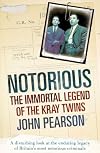
Notorious: The Immortal Legend of the Kray Twins by John Pearson I guess all of us have heard the name The Krays, for most of our lives if you are older and all of your lives if you are younger.
Talking about the Kray twins is like talking about The Beatles. There is so much already written, known, believed, suspected or guessed at already, albeit true or false, that attempting to write anything new or interesting or intelligent is a very brave undertaking.John Pearson was the "official" show more biographer of the Krays. They asked him to write their story after Truman Capote refused!
This is his second biography of the twins. He wrote the first one, A Profession of Violence when they were near the peak of their "success". After they read it he went into hiding because the twins did not like it and they were going to kill him. But within a short period of time the book became an outrageous best seller and that made the the name Kray a household word in England. So they forgave him because the book gave them what they wanted. They wanted to be famous.There were two problems with the twins. They were homosexual at a time and a place where that was the last thing you would want to be. Ronnie Kray was a psychopathic paranoid schizophrenic and a very dangerous man.Not only did Ronnie think everyone was out to kill him, he made a list of who they were and systematically worked his way down that list and killed them first. When he took his meds he was OK, which was most of the time. From everything in the book life around Ronnie was fraught.I am not going to run through the many apocryphal Kray stories that have served to glorify their existence. This book is full of them, but that is not the point of the book. This book paints a picture that is based in a time and place that allowed the Krays to become what they were destined to be. This book allows anyone who reads it to understand not only how the Krays came about but how they got to be so famous and how they managed to mess it all up.Of the two brothers Reggie was more circumspect about his sexuality and tried sadly to become "straight". Ronnie by contrast came out with a statement that reads like this, "I am a giver see, not a taker, so I am not a queer, I am a 'omosexual". Ronnie was into young men but was not that fussy. The Krays were famous during the "swinging sixties" and Ronnie took copious notes and the occasional photograph which "might come in handy later". He kept all these in a small brown suitcase at his mother's house. His most famous partner was Lord Boothby and it was this famous liaison that gave the Krays an opportunity not seen since until the recent Jimmy Saville scandal.There was a famous showdown between the Daily Mirror and the establishment. The Mirror claimed to have photos detailing a peer of the realm's involvement with a well known gangster. When push came to shove the entire British establishment faced the Mirror down and got them to pay out a small fortune for libel to Lord Boothby despite their claims being completely factual.This in effect meant that the Krays were untouchable because they could prove that the state had lied to the public. This was their golden chance and they took it with both hands and pulled hard. The police left them alone for over 3 years. On the odd occasion when the police started asking questions, Lord Boothby would raise questions in the House of Lords about Police harassment.I mentioned the Jimmy Saville affair because he too was reputedly tied into the sordid procuring ring that served both house of parliament at the time. On that subject the depravity is endless.Interestingly, at the end of their time at large when they sat through the court hearings of their once friends and acolytes giving evidence against them. These were the trials that put them away for the rest of their lives and yet they never gave away the secret of the big lie perpetrated by the establishment over the Lord Boothby affair.Whilst this would have blown the lid off many things it would not have saved them and they were within a hairs breadth of achieving another of their main goals. Why become remembered as as a pair of homosexual gangsters? when they could remain silent in court of and become known as the most ruthless pair of criminals ever seen in England.This is John Pearson's revisit to the myth and legend of the Kray twins. This book is incredibly well written given the enormous amount of material available, and what could have become just a massive list of events that glorified the Krays, this book actually leads to some kind of understanding of them as humans, of the time in which they lived and the place that gave rise to them. A formidable achievement in anyone's terms.Footnote: In London to this very day there is graffiti and street art being created that continues to maintain the legend of the Krays. They have achieved their final goal and have truly have become immortal. show less
Talking about the Kray twins is like talking about The Beatles. There is so much already written, known, believed, suspected or guessed at already, albeit true or false, that attempting to write anything new or interesting or intelligent is a very brave undertaking.John Pearson was the "official" show more biographer of the Krays. They asked him to write their story after Truman Capote refused!
This is his second biography of the twins. He wrote the first one, A Profession of Violence when they were near the peak of their "success". After they read it he went into hiding because the twins did not like it and they were going to kill him. But within a short period of time the book became an outrageous best seller and that made the the name Kray a household word in England. So they forgave him because the book gave them what they wanted. They wanted to be famous.There were two problems with the twins. They were homosexual at a time and a place where that was the last thing you would want to be. Ronnie Kray was a psychopathic paranoid schizophrenic and a very dangerous man.Not only did Ronnie think everyone was out to kill him, he made a list of who they were and systematically worked his way down that list and killed them first. When he took his meds he was OK, which was most of the time. From everything in the book life around Ronnie was fraught.I am not going to run through the many apocryphal Kray stories that have served to glorify their existence. This book is full of them, but that is not the point of the book. This book paints a picture that is based in a time and place that allowed the Krays to become what they were destined to be. This book allows anyone who reads it to understand not only how the Krays came about but how they got to be so famous and how they managed to mess it all up.Of the two brothers Reggie was more circumspect about his sexuality and tried sadly to become "straight". Ronnie by contrast came out with a statement that reads like this, "I am a giver see, not a taker, so I am not a queer, I am a 'omosexual". Ronnie was into young men but was not that fussy. The Krays were famous during the "swinging sixties" and Ronnie took copious notes and the occasional photograph which "might come in handy later". He kept all these in a small brown suitcase at his mother's house. His most famous partner was Lord Boothby and it was this famous liaison that gave the Krays an opportunity not seen since until the recent Jimmy Saville scandal.There was a famous showdown between the Daily Mirror and the establishment. The Mirror claimed to have photos detailing a peer of the realm's involvement with a well known gangster. When push came to shove the entire British establishment faced the Mirror down and got them to pay out a small fortune for libel to Lord Boothby despite their claims being completely factual.This in effect meant that the Krays were untouchable because they could prove that the state had lied to the public. This was their golden chance and they took it with both hands and pulled hard. The police left them alone for over 3 years. On the odd occasion when the police started asking questions, Lord Boothby would raise questions in the House of Lords about Police harassment.I mentioned the Jimmy Saville affair because he too was reputedly tied into the sordid procuring ring that served both house of parliament at the time. On that subject the depravity is endless.Interestingly, at the end of their time at large when they sat through the court hearings of their once friends and acolytes giving evidence against them. These were the trials that put them away for the rest of their lives and yet they never gave away the secret of the big lie perpetrated by the establishment over the Lord Boothby affair.Whilst this would have blown the lid off many things it would not have saved them and they were within a hairs breadth of achieving another of their main goals. Why become remembered as as a pair of homosexual gangsters? when they could remain silent in court of and become known as the most ruthless pair of criminals ever seen in England.This is John Pearson's revisit to the myth and legend of the Kray twins. This book is incredibly well written given the enormous amount of material available, and what could have become just a massive list of events that glorified the Krays, this book actually leads to some kind of understanding of them as humans, of the time in which they lived and the place that gave rise to them. A formidable achievement in anyone's terms.Footnote: In London to this very day there is graffiti and street art being created that continues to maintain the legend of the Krays. They have achieved their final goal and have truly have become immortal. show less

I read this as a great fan of the television show on which it's based, but I should rate it as a stand alone piece first, I suppose. As such, it is a solid effort, but not especially engaging. The writing is facile and accessible but not touching or memorable. It's hard not to be colored by being a fan of the show, which is probably the best audience for this book. If you want an epic family-based historical drama - even specifically Edwardian - there are much better books to spend time show more on.
Essentially the story is told from the point of view of Richard Bellamy. As RB was probably one of the drier and, to me, least interesting characters on the show, I applaud the author for trying to give him some flavor and paint him as a complex, quiet hero of sorts. Not sure I buy it, but it was interesting. Unfortunately it seems to come at the cost of relegating Marjorie Bellamy - one of my favorite characters, maybe most to do with her nuanced portrayal by the actress - to a second tier, sort of bland state. She didn't have much depth and seemed only to exist in the story as either catalyst or foil for Richard's changing emotional states.
In fact, Marjorie's portrayal is part of a bigger issue I had with the book as a whole. I didn't much care for the slightly, and sometimes not so slight, misogynistic tone to the characterization of the female characters. All cues were taken from the television series to be sure, and he didn't drastically change anybody but his alterations bugged me. Marjorie is extremely shallow here, oftentimes conniving and shown as being less intelligent than Richard. That doesn't jibe with my take on her at all from the show, since she always seemed to know more than everyone even if she hid it behind a cool front and diplomatic manner. Her mother is a drunken monster of operatic proportion. Hudson is referred to more than once as a "genius" and while he may have been it was demonstrated in the book by his being so much more astute than (and, frankly, superior to) Rose and Mrs Bridges who are always on the inevitably "wrong" side of the argument because they are guided only by their emotions. Even doofy Edward is given the privilege of being smarter than both of them. Hazel is, of course, ennobled a bit because she puts up with her husband's maltreatment. But even she doesn't escape censure when it is suggested that her unhappiness with her terrible (I say abusive) marriage and her inability to control her temper made her miscarriage her own fault. Hazel's mother is domineering, James' sweetheart Diana is described as an "arch-bitch" and even Elizabeth loses her shine in Richard's eyes when he visits her in NYC because she seems to dominate her husband. Only when he realizes she has met her match and her husband can keep her in her place a bit does he relax. Worst of all, in my opinion, is Prudence, a personal favorite of mine onscreen. She could be catty on the show (sometimes hilariously so) but here she is downright despicable a lot of the time. A harpy who is described as trying to prey on Richard's troubles and moods so she can steal him away for her own spouse. There was so much great material to mine with the ladies of the show and he turns them all into cardboard cliches.
The second half of the book covers the entirety of the events of the television series. It seems unneeded - especially considering there exist novelizations of the series - and, worse, begins to simply feel like a catalog of events. I liked that the author tried to write in between the elliptical gaps in the show's chronology. So instead of simply recounting all the events already known to fans, he showed linking moments in their lives, and other perspectives. It was nice, also, to get a few more scenes with Elizabeth, however brief, which was impossible on the show. In the end though, it all feels very thin. It took me about twice as long to read the second half of the book as the first. I feel like a novel of this sort could have solely concentrated on their lives leading up to the start of the show's timeline. So many cool tidbits of personal history were dropped in the characters' dialogue onscreen that were here either brushed over or only just fleshed out.
Overall, the book seems to drop the ball in a lot of ways. Unlike the promises of the cover blurb, we get no real atmosphere from the Parisian bits or Eaton Place either. We get name dropping of figures from the political and art world of the time, but no real use is made of them or the climate. I felt like the strongest imagery came from Southwold, which was a nice touch but since most of the action never occurred there it would have been nice to feel the other places exist in the same manner. Although it claims to chronicle the story of the servants as extended family, they are much lesser players and we learn nothing new about them. In fact, aside from maybe Hudson, had I not known them from the show already I might have forgotten them instantly so little depth did they have. There isn't much in the way of “romance” either, so even if one wanted that, it's tepid at best. I'm glad to have it as a keepsake of a show I love, and it was definitely nice to revisit characters I hadn't been with in years, but I can't recommend it to people who are looking for more than that. show less
Essentially the story is told from the point of view of Richard Bellamy. As RB was probably one of the drier and, to me, least interesting characters on the show, I applaud the author for trying to give him some flavor and paint him as a complex, quiet hero of sorts. Not sure I buy it, but it was interesting. Unfortunately it seems to come at the cost of relegating Marjorie Bellamy - one of my favorite characters, maybe most to do with her nuanced portrayal by the actress - to a second tier, sort of bland state. She didn't have much depth and seemed only to exist in the story as either catalyst or foil for Richard's changing emotional states.
In fact, Marjorie's portrayal is part of a bigger issue I had with the book as a whole. I didn't much care for the slightly, and sometimes not so slight, misogynistic tone to the characterization of the female characters. All cues were taken from the television series to be sure, and he didn't drastically change anybody but his alterations bugged me. Marjorie is extremely shallow here, oftentimes conniving and shown as being less intelligent than Richard. That doesn't jibe with my take on her at all from the show, since she always seemed to know more than everyone even if she hid it behind a cool front and diplomatic manner. Her mother is a drunken monster of operatic proportion. Hudson is referred to more than once as a "genius" and while he may have been it was demonstrated in the book by his being so much more astute than (and, frankly, superior to) Rose and Mrs Bridges who are always on the inevitably "wrong" side of the argument because they are guided only by their emotions. Even doofy Edward is given the privilege of being smarter than both of them. Hazel is, of course, ennobled a bit because she puts up with her husband's maltreatment. But even she doesn't escape censure when it is suggested that her unhappiness with her terrible (I say abusive) marriage and her inability to control her temper made her miscarriage her own fault. Hazel's mother is domineering, James' sweetheart Diana is described as an "arch-bitch" and even Elizabeth loses her shine in Richard's eyes when he visits her in NYC because she seems to dominate her husband. Only when he realizes she has met her match and her husband can keep her in her place a bit does he relax. Worst of all, in my opinion, is Prudence, a personal favorite of mine onscreen. She could be catty on the show (sometimes hilariously so) but here she is downright despicable a lot of the time. A harpy who is described as trying to prey on Richard's troubles and moods so she can steal him away for her own spouse. There was so much great material to mine with the ladies of the show and he turns them all into cardboard cliches.
The second half of the book covers the entirety of the events of the television series. It seems unneeded - especially considering there exist novelizations of the series - and, worse, begins to simply feel like a catalog of events. I liked that the author tried to write in between the elliptical gaps in the show's chronology. So instead of simply recounting all the events already known to fans, he showed linking moments in their lives, and other perspectives. It was nice, also, to get a few more scenes with Elizabeth, however brief, which was impossible on the show. In the end though, it all feels very thin. It took me about twice as long to read the second half of the book as the first. I feel like a novel of this sort could have solely concentrated on their lives leading up to the start of the show's timeline. So many cool tidbits of personal history were dropped in the characters' dialogue onscreen that were here either brushed over or only just fleshed out.
Overall, the book seems to drop the ball in a lot of ways. Unlike the promises of the cover blurb, we get no real atmosphere from the Parisian bits or Eaton Place either. We get name dropping of figures from the political and art world of the time, but no real use is made of them or the climate. I felt like the strongest imagery came from Southwold, which was a nice touch but since most of the action never occurred there it would have been nice to feel the other places exist in the same manner. Although it claims to chronicle the story of the servants as extended family, they are much lesser players and we learn nothing new about them. In fact, aside from maybe Hudson, had I not known them from the show already I might have forgotten them instantly so little depth did they have. There isn't much in the way of “romance” either, so even if one wanted that, it's tepid at best. I'm glad to have it as a keepsake of a show I love, and it was definitely nice to revisit characters I hadn't been with in years, but I can't recommend it to people who are looking for more than that. show less

A limited edition collecting many of John Pearson’s notes from numerous interviews while researching his biography of Ian Fleming (see book # 89). It's both a fascinating look into the author’s process, yet at the same time frustrating as it gives hints as to the biography Pearson could have written if he hadn't been tied by getting the approval of the Fleming family. Not that it would have been anti-Fleming, but there are so many ideas, notes, and directions of enquiry hinted at that, show more if they were followed, never saw light in the final product. The notes take some sifting through and demand the reader balance many conflicting views and stories, but if you do the view of Fleming that emerges is a rawer one that’s probably closer to the truth than the legend. show less
Awards


You May Also Like
Associated Authors
Statistics
- Works
- 27
- Also by
- 1
- Members
- 1,399
- Popularity
- #18,363
- Rating
- 3.5
- Reviews
- 31
- ISBNs
- 132
- Languages
- 7