

Rupert Matthews
Author of Explorer (Eyewitness Books)
About the Author
Rupert Matthews loves to study dinosaurs and other prehistoric creatures. He is especially interested in learning about which dinosaurs were the weirdest!
Series
Works by Rupert Matthews
You Wouldn't Want to Be an Assyrian Soldier!: An Ancient Army You'd Rather Not Join (2007) — Author — 100 copies, 1 review
You Wouldn't Want to Be a Mayan Soothsayer!: Fortunes You'd Rather Not Tell (2007) 90 copies, 1 review
You Wouldn't Want to be a Chicago Gangster!: Some Dangerous Characters You'd Better Avoid (2010) 75 copies, 4 reviews
Jack the Ripper's Streets of Terror: Life during the reign of Victorian London's most brutal killer (2013) 62 copies
Alien Encounters: True-Life Stories of UFOs and other Extra-Terrestrial Phenomena. With New Pentagon Files (2008) 38 copies
Dinosaurs: A Picture Dictionary: A Colorful Guide from Albertosaurus to Zephryosaurus (1990) 19 copies
Conquerors: From the Age of Legions, Empires and Kings, 3000 Years of Conquest and Rule (Warrios Age of Conquerors) (2009) 18 copies, 1 review
Dinosaurs: Answers to Questions About Prehistoric Past (Know How Know Why) (2004) 9 copies, 1 review
Extra-Terrestrials: A History of Alien Activity from First Sightings to 21st-Century Encounters (2024) 6 copies
The Royal Family (Originally published In Celebration of The Queen Mother's 90th Birthday) (1990) 3 copies
Upptäcktsresor : [följ upptäckare under 3000 år - över kontinenterna, ner i havsdjupen och ut i rymden] (1993) 3 copies
Ireland 1 copy
The Cretaceous Dinosaurs 1 copy
Encuentros Alienígenas 1 copy
Perjumpaan dengan alien 1 copy
Hampshire Past & Present (Britain in Old Photographs) (Britain in Old Photographs (History Press)) (2011) 1 copy
Kanadas Wildtiere. 1 copy
Animals of Australia 1 copy
Atlante delle meraviglie naturali: guida ai piu spettacolari fenomeni naturali del mondo (1998) 1 copy
Colourful Britain 1 copy
Dinosaur Dig: Dinosaur Food 1 copy
Tagged
Common Knowledge
- Birthdate
- 1961-12-05
- Gender
- male
- Nationality
- UK
- Associated Place (for map)
- UK
Members
Reviews
The Atlas of Natural Wonders: A Guide to the World's Most Spectacular Natural Phenomena by Rupert O. Matthews

A fascinating guide to some of the most remarkable natural wonders on our planet, this is a book which captivated me when I was a young kid. I read it again today, partly for nostalgia but also because it is really good. It has lots of interesting facts and evocative photographs of each wonder. Both as a kid and now as an adult, I am quite taken by the beauty of many of these places and hope to visit them at some point in my life. The Norwegian fjord of Sognefjord, the Königssee lake in show more the Bavarian Alps, Milford Sound in New Zealand and the Iguaçu Falls on the Brazil/Argentina border have always been at the top of my wish-list of places to visit, simply because as a kid I was entranced by their beauty and tranquillity as captured in this book.
It is not a traveller's guide, and focuses more on the geographical and geological side of how these wonders were formed over millennia. This is what I am most fascinated by: the awesome power of nature in forging these striking places. The sheer scale of the Grand Canyon has always been staggering, and consequently Arizona has always been high on my wish-list, particularly as it is also home to other intriguing wonders detailed here, including Meteor Crater and Monument Valley. One can never cease to be impressed by how our world was formed, and the human imagination cannot truly comprehend the true might and force of tectonic plates crashing together, forming mountains, never mind the changes wrought over millions of years by rivers, like the mighty Colorado forging the Grand Canyon. Though Rupert Matthews, the author of this atlas, sticks to facts and figures, he nevertheless conveys this, the awesome power of nature, very well and allows you to marvel and indeed wonder at these phenomena.
The author also draws on anthropology and archaeology to address the human impact on these natural wonders, and there is an awareness of environmental and conservation issues which is earnest but, refreshingly, never preachy. Matthews just demonstrates how remarkable these wonders are and, simply by virtue of their beauty, power or uniqueness, you reflexively agree with any attempt to ensure they remain unspoilt. He also notes, through the text and also extremely helpful diagrams, how these wonders have formed and how, over time, they will change. Niagara Falls, for example, will in about 25,000 years have retreated fully into the Great Lakes. Lake Baikal in Russia (or the USSR, as the atlas - showing its age - refers to it) will in a few million years split Asia into two. It is stuff like this which really gives you an appreciation for the changing nature of our world and an understanding of just how small a space humankind occupies on a timeline of the Earth's existence. The natural phenomena that this atlas describes really show you that the world was undergoing mind-boggling changes long before we were here, and will long after we are gone. Our race will be witness to just a tiny moment of that evolution, but it is fascinating for us to even contemplate such changes.
These were the kind of thoughts that were swirling around in my head while I was reading this book, and I imagine it is a book that will give any reader an appreciation of the staggering power and beauty of the natural world. Overall, the atlas was an illuminating guide to a choice selection of natural phenomena, which will engage any reader in feelings of awe and wanderlust. show less
It is not a traveller's guide, and focuses more on the geographical and geological side of how these wonders were formed over millennia. This is what I am most fascinated by: the awesome power of nature in forging these striking places. The sheer scale of the Grand Canyon has always been staggering, and consequently Arizona has always been high on my wish-list, particularly as it is also home to other intriguing wonders detailed here, including Meteor Crater and Monument Valley. One can never cease to be impressed by how our world was formed, and the human imagination cannot truly comprehend the true might and force of tectonic plates crashing together, forming mountains, never mind the changes wrought over millions of years by rivers, like the mighty Colorado forging the Grand Canyon. Though Rupert Matthews, the author of this atlas, sticks to facts and figures, he nevertheless conveys this, the awesome power of nature, very well and allows you to marvel and indeed wonder at these phenomena.
The author also draws on anthropology and archaeology to address the human impact on these natural wonders, and there is an awareness of environmental and conservation issues which is earnest but, refreshingly, never preachy. Matthews just demonstrates how remarkable these wonders are and, simply by virtue of their beauty, power or uniqueness, you reflexively agree with any attempt to ensure they remain unspoilt. He also notes, through the text and also extremely helpful diagrams, how these wonders have formed and how, over time, they will change. Niagara Falls, for example, will in about 25,000 years have retreated fully into the Great Lakes. Lake Baikal in Russia (or the USSR, as the atlas - showing its age - refers to it) will in a few million years split Asia into two. It is stuff like this which really gives you an appreciation for the changing nature of our world and an understanding of just how small a space humankind occupies on a timeline of the Earth's existence. The natural phenomena that this atlas describes really show you that the world was undergoing mind-boggling changes long before we were here, and will long after we are gone. Our race will be witness to just a tiny moment of that evolution, but it is fascinating for us to even contemplate such changes.
These were the kind of thoughts that were swirling around in my head while I was reading this book, and I imagine it is a book that will give any reader an appreciation of the staggering power and beauty of the natural world. Overall, the atlas was an illuminating guide to a choice selection of natural phenomena, which will engage any reader in feelings of awe and wanderlust. show less
You Wouldn't Want to Be a Chicago Gangster!: Some Dangerous Characters You'd Better Avoid by Rupert Matthews
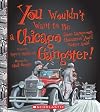
This is part of a great series we have at the libraries--"You Wouldn't Want to......" They're non-fiction books that tell bits about history, but put them into a more comical, interesting format. I've been meaning to read one for a long time, just never remembered to grab one. This book landed in front of me today, and because I've always had an interest in gangsters AND in Chicago, it was a perfect choice for me. The artwork is delightful, and there were several "Handy Hints" show more throughout--like, "Stay out of the way of the men packing heat. They are not likely to be nice to you." Uh, duh! LOL! Good fun while reading about scary times! show less

This basically looks to be aimed at younger readers... not quite at children, but certainly at elementary students. There are illustrations of some of the more obscure dinos, which is why I bought it despite already having lots of "real" / "adult" dino books. Some examples of obscure ones (many in the pterosaur field) include Sharovipteryx, Dsungaripterus, Ctenochasma, Germanodactylus, Anurognathus, Phobetor, Ornithodesmus, Tuojiangosaurus, Adryosaurus, Saltopus and Leaellynasaura. My show more problem is that many (and I do mean many) of the images are stomach-burningly graphic depictions of dinos being eaten alive in some of the most grisly ways possible. For example, right on page 5 is a Coelophysis eating one of its young, specifically its head and upper torso, with blood dripping from its severed body. And oh, how could I have missed page 4, which is a huge depiction of some raptors chowing down on a terrified ceratopsid. (All illustrations in the book are credited to Studio Salio.) So be sure to skim through this book before putting it under little Johnny or Kayla's Xmas tree. show less

Like the analogously named books about World War I and World War II, this small book on the Tudors is replete with excellent pictures, entertaining fact-boxes, and reader-friendly infographics.
I was eager to read this book. I didn't make it through Hilary Mantel's acclaimed book Wolf Hall because I couldn’t tell all the Thomas' apart. Or the Catherines, Elizabeths, Henrys, or Richards. Who can keep them straight? So I was excited for any new enlightenment I could get from this new entry in show more the “50 Things You Should Know” series.
The era of Tudor monarchs in England lasted from 1485 to 1603. This book provides nice background on the wars between branches of the royal family: the Lancasters (which included the Tudors) and the Yorks.
I would have liked to see more on the 1485 Battle of Bosworth, one of the most interesting battles in British history, in my opinion. This is where Richard III was betrayed and hacked up by supporters of Henry Tudor. Richard, as you may know, is the one who (allegedly) arranged for the murder of his two nephews (aged 9 and 12) in the Tower of London. Richard was supposed to be their “protector.” [Shakespeare’s depiction of Richard III as a monster, albeit one with great lines ("Now is the winter of our discontent
made glorious summer by this sun of York..."), and his fingering of Richard for the crime had a great influence on the historical record.]
How Henry Tudor managed this battlefield victory is a riveting story of greed for power and land, insecurity, fear, paranoia and bribery, and goes far to illustrate the nature of political life in this period. (Historian Desmond Seward goes into great detail on these issues in a number of books on the Tudors. Another good resource is Richard III: The Maligned King by Annette Carson.)
Henry VIII gets a lot of play in this book. There is, for example, a spread entitled “Marriage Troubles.” [One of those troubles probably would not have been getting the names wrong of his wives, since there were two Annes and three Catherines (albeit spelled differently). One additional wife, Jane Seymour, might have worked out since she actually produced an heir for Henry, but she died soon after childbirth.]
Henry’s attitude toward marriage was never without repercussions. He declared war on Scotland to force agreement to a marriage between his son Edward and the infant Mary, Queen of Scots. (Since Edward himself was only nine when he became king, there wasn’t much of an age difference…)
There were also a number of religious wars, initiated after Parliament - at Henry VIII’s instigation - made him head of the Church of England, so he could carry on with his annulments and remarriages.
And religious turmoil was not only related to Henry VIII’s interest in serial marriages. This was also the era of the Reformation and Martin Luther, as well as a considerable ruckus over a new Book of Common Prayer. Then there was the religious see-sawing. When the Catholic Mary I came into power in 1553, she decided to bring back Catholicism, and ordered hundreds of executions, earning the nickname “Bloody Mary.” Her successor, Elizabeth I, was a Protestant. Now Catholic services were outlawed, and this time it was the Catholics’ turn to be drawn and quartered.
When Elizabeth died in 1603, King James VI of Scotland came to London to rule as King James I and the Tudor period was said to be at an end. Even though James VI was the great-grandson of Margaret Tudor, he was thus a Tudor by virtue of his female descendants, which didn't seem to count. He was descended in the male line from the House of Stuart. The author does not explain, however, how consideration of this fact made James a “Stuart” rather than a “Tudor.” But the book makes up for brevity by all the fascinating trivia and factoids it includes.
For what it’s worth, after reading this book, I still couldn’t tell you which Henry or Edward was which, in spite of the inclusion of a “Who’s Who Family Tree.” But that is my own failing, or perhaps that of all these historical parents: couldn’t they come up with different names? Thank heavens for the 20th and 21st centuries, when we have more distinctive names for kids like Apple and North and so on. [It's too bad no one we know of before 2015 (Lil' Kim, we're looking at you), came up with the potentially great Tudor name for a baby, "Royal Reign."]
Evaluation: There is good reason for the continuing popularity of books and television series and movies about the Tudors - between the political machinations, religious turmoil, sex, violence, assassinations, plotting, jealousies and betrayals, there is really never a dull moment. The author found many ways to include engrossing aspects of a huge subject. I don’t think anyone is going to be bored by the history lessons in this book. show less
I was eager to read this book. I didn't make it through Hilary Mantel's acclaimed book Wolf Hall because I couldn’t tell all the Thomas' apart. Or the Catherines, Elizabeths, Henrys, or Richards. Who can keep them straight? So I was excited for any new enlightenment I could get from this new entry in show more the “50 Things You Should Know” series.
The era of Tudor monarchs in England lasted from 1485 to 1603. This book provides nice background on the wars between branches of the royal family: the Lancasters (which included the Tudors) and the Yorks.
I would have liked to see more on the 1485 Battle of Bosworth, one of the most interesting battles in British history, in my opinion. This is where Richard III was betrayed and hacked up by supporters of Henry Tudor. Richard, as you may know, is the one who (allegedly) arranged for the murder of his two nephews (aged 9 and 12) in the Tower of London. Richard was supposed to be their “protector.” [Shakespeare’s depiction of Richard III as a monster, albeit one with great lines ("Now is the winter of our discontent
made glorious summer by this sun of York..."), and his fingering of Richard for the crime had a great influence on the historical record.]
How Henry Tudor managed this battlefield victory is a riveting story of greed for power and land, insecurity, fear, paranoia and bribery, and goes far to illustrate the nature of political life in this period. (Historian Desmond Seward goes into great detail on these issues in a number of books on the Tudors. Another good resource is Richard III: The Maligned King by Annette Carson.)
Henry VIII gets a lot of play in this book. There is, for example, a spread entitled “Marriage Troubles.” [One of those troubles probably would not have been getting the names wrong of his wives, since there were two Annes and three Catherines (albeit spelled differently). One additional wife, Jane Seymour, might have worked out since she actually produced an heir for Henry, but she died soon after childbirth.]
Henry’s attitude toward marriage was never without repercussions. He declared war on Scotland to force agreement to a marriage between his son Edward and the infant Mary, Queen of Scots. (Since Edward himself was only nine when he became king, there wasn’t much of an age difference…)
There were also a number of religious wars, initiated after Parliament - at Henry VIII’s instigation - made him head of the Church of England, so he could carry on with his annulments and remarriages.
And religious turmoil was not only related to Henry VIII’s interest in serial marriages. This was also the era of the Reformation and Martin Luther, as well as a considerable ruckus over a new Book of Common Prayer. Then there was the religious see-sawing. When the Catholic Mary I came into power in 1553, she decided to bring back Catholicism, and ordered hundreds of executions, earning the nickname “Bloody Mary.” Her successor, Elizabeth I, was a Protestant. Now Catholic services were outlawed, and this time it was the Catholics’ turn to be drawn and quartered.
When Elizabeth died in 1603, King James VI of Scotland came to London to rule as King James I and the Tudor period was said to be at an end. Even though James VI was the great-grandson of Margaret Tudor, he was thus a Tudor by virtue of his female descendants, which didn't seem to count. He was descended in the male line from the House of Stuart. The author does not explain, however, how consideration of this fact made James a “Stuart” rather than a “Tudor.” But the book makes up for brevity by all the fascinating trivia and factoids it includes.
For what it’s worth, after reading this book, I still couldn’t tell you which Henry or Edward was which, in spite of the inclusion of a “Who’s Who Family Tree.” But that is my own failing, or perhaps that of all these historical parents: couldn’t they come up with different names? Thank heavens for the 20th and 21st centuries, when we have more distinctive names for kids like Apple and North and so on. [It's too bad no one we know of before 2015 (Lil' Kim, we're looking at you), came up with the potentially great Tudor name for a baby, "Royal Reign."]
Evaluation: There is good reason for the continuing popularity of books and television series and movies about the Tudors - between the political machinations, religious turmoil, sex, violence, assassinations, plotting, jealousies and betrayals, there is really never a dull moment. The author found many ways to include engrossing aspects of a huge subject. I don’t think anyone is going to be bored by the history lessons in this book. show less
Lists
You May Also Like


Associated Authors
Statistics
- Works
- 332
- Members
- 5,387
- Popularity
- #4,625
- Rating
- 3.8
- Reviews
- 46
- ISBNs
- 840
- Languages
- 14