
George Dom
Author of High-Trust Leadership: Building High Performance Teams
Works by George Dom
Minigids Zelf dokteren 1 copy
Tagged
Common Knowledge
There is no Common Knowledge data for this author yet. You can help.
Members
Reviews

This is one of the best books I've won through Early Reviewers in a while and changed my entire perspective on what trust can be. The idea that trust is a spectrum that can be improved indefinitely was life-changing for me. This concept is disarming. If trust is not black or white and can always be improved, the defensiveness that accompanies "distrust" evaporates, allowing for a growth mindset.
A common trend I see among non-classically trained authors is to refer to their writing as show more non-academic to make the book seem more accessible to their mostly non-academic audience. However, as an academic, I have a different interpretation: When an author calls their book non-academic, they unwittingly imply it is not empirical or that it lacks the authority of an academic source. Claims like this downplay the importance of the contribution to our knowledge base. Why should we consider a PhD more authoritative than a veteran in matters of trust? This would be a mistake, so I suggest we consider reevaluating what we claim to be "academic." Dom is certainly an expert in this area; there is no doubt in my mind that this book should count as a scholarly contribution given its compatibility with trauma-informed care. Dom speaks to a level of trust that we do not see outside of life and death contexts and he's right: Why shouldn't we cultivate that level of trust in all our institutions?
This book responds to the dual crises of trust and legitimacy in U.S. society. Its publication is timely and the exercises in some chapters have the capacity to make a real difference in organizational culture. For that reason, I recommend giving it a read. It will make you think differently about your professional relationships. In my case, reading this book shaped an important professional decision that led to cutting ties with an organization that did not meet these standards of high trust leadership. show less
A common trend I see among non-classically trained authors is to refer to their writing as show more non-academic to make the book seem more accessible to their mostly non-academic audience. However, as an academic, I have a different interpretation: When an author calls their book non-academic, they unwittingly imply it is not empirical or that it lacks the authority of an academic source. Claims like this downplay the importance of the contribution to our knowledge base. Why should we consider a PhD more authoritative than a veteran in matters of trust? This would be a mistake, so I suggest we consider reevaluating what we claim to be "academic." Dom is certainly an expert in this area; there is no doubt in my mind that this book should count as a scholarly contribution given its compatibility with trauma-informed care. Dom speaks to a level of trust that we do not see outside of life and death contexts and he's right: Why shouldn't we cultivate that level of trust in all our institutions?
This book responds to the dual crises of trust and legitimacy in U.S. society. Its publication is timely and the exercises in some chapters have the capacity to make a real difference in organizational culture. For that reason, I recommend giving it a read. It will make you think differently about your professional relationships. In my case, reading this book shaped an important professional decision that led to cutting ties with an organization that did not meet these standards of high trust leadership. show less
 This review was written for LibraryThing Early Reviewers.
I found this book an engaging read, which is something I don't often find in this genre of literature. There is a practicle framework that is easy to understand and put into practice. It is easy yet so few leaders engage with the specifics of trust. The author also provides information about other works that serve to reinforce and provide opportunities to go deeper. This framework was forged due to the work environment that the service men and women live and thrive in. This environment show more creates a serious consequence if a team member is not performing at a very high level. Trust is built and earned by a leader and is also bi-directional with the team members a leader works with. This book is one that I will keep and refer to frequently as I continue to grow my teams and look to the future state of my company. A wonderful resource and a wonderful book. show less
This review was written for LibraryThing Early Reviewers.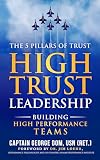
“High Trust Leadership” by George Dom is a must-read of how trust is the focus and foundation of any high-performing teams including your own family. Drawing on his long and distinguished experience as a naval officer and leader of the Blue Angels, the author provides a detailed recipe for building a culture of trust within any type of organization. The book emphasizes the importance of being transparent, accountable, using authentic communication. The author illustrates these principles show more with a real-world example from both worlds of a military and business context. It’s a must-read for anyone looking to enhance their leadership skills and foster a more cohesive, high trust environment. show less
This review was written for LibraryThing Early Reviewers.High-trust leadership is such a fascinating topic, one that is sorely needed in many teams today! Captain George Dom describes the essential core truths that have kept the Blue Angels at the pinnacle for so many decades, even as the planned turnover of pilots and personnel is 33-50% every year. Trust is paramount because the high-risk, split-second maneuvers these pilots create in the air need to be flawless.
Five pillars of trust are baked into the Blue Angels organization: character, show more commitment, competence, connection, and communication. For each of these, Dom provides a simple question to remember. He believes character and commitment are required first, even before competence should be considered, for any leader to be successful.
Character - “Do you walk your talk?”
Commitment - “Will you be with us when times are tough?”
Competence - “Are you skilled and relevant?”
Connection - “Do you understand me?”
Communication - “Can I understand you?”
Some of Dom’s ideas were surprising. For instance, who is best at telling you the truth, other than your spouse and children? Those people who don’t like you very much. Why? They don’t care how you feel about receiving negative feedback. (Ha, ha.) Yes, I guess that’s true. But on a more serious note, he says, “Find somebody you trust, who possesses wisdom, who can be painfully objective, and who has nothing to lose professionally from this relationship, and let them serve you in this role on a regular basis.”
A few of my favorite quotes:
“Embrace a learner’s mindset; be humble; check your ego at the door; accept mistakes as part of the process; be patient; don’t get discouraged. Practice outside your comfort zone; focus on challenging gaps in performance; keep raising the bar. Be consistent; not just now and then, but every time, always. Seek and welcome feedback; engage in a candid, constructive, thorough debrief after every flight.”
“A HIGH-TRUST leader must be able to see the world through their teammates’ eyes, stepping away from his or her window to look through theirs from time to time.”
“Leaders must be very clear, concise, consistent, and direct to cut through the noise. The biggest problem with communication for leaders is the presumption that it has occurred.”
“High performance individuals, businesses, and organizations are like sharks - they must keep moving forward to survive and succeed — adapting and improving, pushing the limits, and taking advantage of unexpected opportunities.” (I love this concept of being a shark. Change and growth is required to thrive.)
The end of the book provides extra perspective on leadership and teamwork from pilots in every position in the flying formation. As I’ve never imagined myself flying with the Blue Angels, it was less important to me but would be valuable to any potential pilots who’d love to be flying with them someday. show less
Five pillars of trust are baked into the Blue Angels organization: character, show more commitment, competence, connection, and communication. For each of these, Dom provides a simple question to remember. He believes character and commitment are required first, even before competence should be considered, for any leader to be successful.
Character - “Do you walk your talk?”
Commitment - “Will you be with us when times are tough?”
Competence - “Are you skilled and relevant?”
Connection - “Do you understand me?”
Communication - “Can I understand you?”
Some of Dom’s ideas were surprising. For instance, who is best at telling you the truth, other than your spouse and children? Those people who don’t like you very much. Why? They don’t care how you feel about receiving negative feedback. (Ha, ha.) Yes, I guess that’s true. But on a more serious note, he says, “Find somebody you trust, who possesses wisdom, who can be painfully objective, and who has nothing to lose professionally from this relationship, and let them serve you in this role on a regular basis.”
A few of my favorite quotes:
“Embrace a learner’s mindset; be humble; check your ego at the door; accept mistakes as part of the process; be patient; don’t get discouraged. Practice outside your comfort zone; focus on challenging gaps in performance; keep raising the bar. Be consistent; not just now and then, but every time, always. Seek and welcome feedback; engage in a candid, constructive, thorough debrief after every flight.”
“A HIGH-TRUST leader must be able to see the world through their teammates’ eyes, stepping away from his or her window to look through theirs from time to time.”
“Leaders must be very clear, concise, consistent, and direct to cut through the noise. The biggest problem with communication for leaders is the presumption that it has occurred.”
“High performance individuals, businesses, and organizations are like sharks - they must keep moving forward to survive and succeed — adapting and improving, pushing the limits, and taking advantage of unexpected opportunities.” (I love this concept of being a shark. Change and growth is required to thrive.)
The end of the book provides extra perspective on leadership and teamwork from pilots in every position in the flying formation. As I’ve never imagined myself flying with the Blue Angels, it was less important to me but would be valuable to any potential pilots who’d love to be flying with them someday. show less
This review was written for LibraryThing Early Reviewers.Statistics
- Works
- 2
- Members
- 25
- Popularity
- #508,560
- Rating
- 4.6
- Reviews
- 19
- ISBNs
- 1
