

Harry Kurnitz (1908–1968)
Author of Witness for the Prosecution [1957 film]
About the Author
Disambiguation Notice:
Psuedonymn for Harry Kurnitz
Works by Harry Kurnitz
ROUBO NA GALERIA DE ARTE 1 copy
Associated Works
Tagged
Common Knowledge
- Canonical name
- Kurnitz, Harry
- Legal name
- Kurnitz, Harry
- Other names
- Page, Marco
- Birthdate
- 1908-01-05
- Date of death
- 1968-03-18
- Gender
- male
- Occupations
- reporter
screenwriter - Short biography
- A former reporter, Harry Kurnitz arrived in Hollywood in 1938 after being hired to write the screenplay for his own story, "Fast Company." He stayed to become a prolific screenwriter, working on everything from Errol Flynn swashbucklers to Danny Kaye comedies. He also found time to become a successful novelist and playwright ("A Shot in the Dark", "Once More with Feeling").
IMDb Mini Biography By: frankfob2@yahoo.com
Trivia
American Playwright
Was nominated for Broadway's 1964 Tony Award as Best Author (Musical), along with his collaborator Noel Coward, for "The Girl Who Came to Supper." - Nationality
- USA
- Birthplace
- New York, New York, USA
- Place of death
- Los Angeles, California, USA
- Disambiguation notice
- Psuedonymn for Harry Kurnitz
- Associated Place (for map)
- USA
Members
Reviews

1938 novel set in New York's community of rare-book dealers.
Joel Glass is one of those dealers, and he has a small sideline as a sort of detective, helping insurance companies to track down books that have fraudulently been reported as stolen. When one particularly unscrupulous dealer is murdered, Joel's detective work takes a darker turn.
"Darker" is relative, of course, and Page's tone is relatively light and breezy. You might be reminded of the Thin Man movies. Like Nick and Nora Charles, show more Joel and Garda Glass do a lot of bantering while chugging smart cocktails.
In fact, Page was one of the writers on two of the Thin Man sequels, under his real name, Harry Kunitz. He also wrote the screenplays for the film version of Fast Company and its two sequels (not based on novels). Oddly enough, Joel and Garda were played by a different pair of actors in each of the three movies.
With novels of this era, modern readers are likely to worry about social attitudes and language, which are mostly OK. There are two or three ethnic slurs that wouldn't be acceptable today (including one use of the n-word). The female characters aren't merely decorative; they have intelligence and agency, and Garda has a few crucial moments in the solving of the mystery. And while a large number of the book dealers have Jewish-sounding names, that feels more like an accurate reflection of the business than like ethnic stereotyping, and there is never a suggestion that any character's villainy is connected to their ethnicity or religion.
The cast of characters is large -- half a dozen book dealers, the dead man's secretary, an insurance investigator, police officers and lawyers -- but Page does a good job of giving each of them just enough distinctive personality that I never struggled to keep them all straight. The pace is brisk -- the book is just over 200 pages -- and the screwball-ish moments work better than such things usually do in print.
I enjoyed the book, and it's a shame that it's fallen so far into obscurity. Neither of my large urban libraries had a copy, and it's no longer in print; I was able to find a reasonably priced copy on the used book market. show less
Joel Glass is one of those dealers, and he has a small sideline as a sort of detective, helping insurance companies to track down books that have fraudulently been reported as stolen. When one particularly unscrupulous dealer is murdered, Joel's detective work takes a darker turn.
"Darker" is relative, of course, and Page's tone is relatively light and breezy. You might be reminded of the Thin Man movies. Like Nick and Nora Charles, show more Joel and Garda Glass do a lot of bantering while chugging smart cocktails.
In fact, Page was one of the writers on two of the Thin Man sequels, under his real name, Harry Kunitz. He also wrote the screenplays for the film version of Fast Company and its two sequels (not based on novels). Oddly enough, Joel and Garda were played by a different pair of actors in each of the three movies.
With novels of this era, modern readers are likely to worry about social attitudes and language, which are mostly OK. There are two or three ethnic slurs that wouldn't be acceptable today (including one use of the n-word). The female characters aren't merely decorative; they have intelligence and agency, and Garda has a few crucial moments in the solving of the mystery. And while a large number of the book dealers have Jewish-sounding names, that feels more like an accurate reflection of the business than like ethnic stereotyping, and there is never a suggestion that any character's villainy is connected to their ethnicity or religion.
The cast of characters is large -- half a dozen book dealers, the dead man's secretary, an insurance investigator, police officers and lawyers -- but Page does a good job of giving each of them just enough distinctive personality that I never struggled to keep them all straight. The pace is brisk -- the book is just over 200 pages -- and the screwball-ish moments work better than such things usually do in print.
I enjoyed the book, and it's a shame that it's fallen so far into obscurity. Neither of my large urban libraries had a copy, and it's no longer in print; I was able to find a reasonably priced copy on the used book market. show less
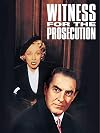
Laughton steals the show as a barrister just out of the hospital after a heart attack who takes on the case of Power, who is accused of killing an older woman who has left him 80,000 pounds in her will. The case turns on the testimony of Power's German wife played by Marlene Dietrich. While Power, who is clearly not British, seems very out of place, the rest of the cast excels in a very well-written script that perhaps has one twist too many, but is still quite effective, engrossing, and show more amusing. show less

A man's wife testifies against him at his murder trial.
Very entertaining, especially Laughton's performance. I think snarky wit is the foundation of the English legal process. I never would have seen the ending coming even if I'd had reason to expect a twist - but I didn't have reason, because it still would have been a good movie without the twist.
Very entertaining, especially Laughton's performance. I think snarky wit is the foundation of the English legal process. I never would have seen the ending coming even if I'd had reason to expect a twist - but I didn't have reason, because it still would have been a good movie without the twist.
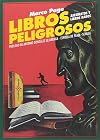
Novela entretenida, pero la edición española es de vergüenza: erratas para dar y regalar que no solo te sacan de la lectura sino que en ocasiones dificultan el entender lo que se está leyendo. Vamos, que la edición es de 1 estrella, y porque no hay menos.
Lists
Awards


You May Also Like
Associated Authors
Statistics
- Works
- 12
- Also by
- 7
- Members
- 302
- Popularity
- #77,841
- Rating
- 3.7
- Reviews
- 9
- ISBNs
- 21
- Languages
- 2