
Daniel Fox (1) (1959–)
Author of Dragon in Chains
For other authors named Daniel Fox, see the disambiguation page.
Daniel Fox (1) has been aliased into Chaz Brenchley.
Series
Works by Daniel Fox
Works have been aliased into Chaz Brenchley.
How She Dances [short fiction] 2 copies
El Sueño de la Razón 1 copy
Associated Works
Works have been aliased into Chaz Brenchley.
In the Shadow of Frankenstein: Tales of the Modern Prometheus (2016) — Contributor — 58 copies, 1 review
Tagged
Common Knowledge
Members
Reviews
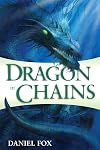
A coup forces boy emperor, Chien Hua, to retreat to the source of his jade - the small island of Taishu. Jade can only be possessed by the emperor himself due to its inherent properties. It has always been transported, protected and controlled, by wealthy jade masters but with the emperor so close at hand, why shouldn't the miner clans profit from the transaction themselves?
Li Ton, captain of the pirate ship Shalla, has just put all the monks of The Forge to the sword. He's never believed show more the tales that they ensorcelled a dragon beneath the harbor with their power but he does think their prayers to the old gods keep the fishermen and tradesmen safe. A protection he wants removed, his cargo bays all the better for it.
General Tunghai Wang has all his soldiers in place, ready to cross the harbor, ready to face the emperor and take the jade throne. All that remains is the boat crossing.
And then there's the dragon. She is real, powerful and angry…and free.
Chinese fantasy is not something I’ve read before and I wasn't sure what to expect. The world building is lovely, so packed and concise and the language witty and unexpectedly lyrical at times. Will definitely read book two. show less
Li Ton, captain of the pirate ship Shalla, has just put all the monks of The Forge to the sword. He's never believed show more the tales that they ensorcelled a dragon beneath the harbor with their power but he does think their prayers to the old gods keep the fishermen and tradesmen safe. A protection he wants removed, his cargo bays all the better for it.
General Tunghai Wang has all his soldiers in place, ready to cross the harbor, ready to face the emperor and take the jade throne. All that remains is the boat crossing.
And then there's the dragon. She is real, powerful and angry…and free.
Chinese fantasy is not something I’ve read before and I wasn't sure what to expect. The world building is lovely, so packed and concise and the language witty and unexpectedly lyrical at times. Will definitely read book two. show less

Why are the second books of trilogies so difficult? Jade Man's Skin is the second book of Moshui: The Books of Stone and Water, a series set in an alternate China where dragons are real and jade has the power to make an emperor nearly invincible. I greatly enjoyed Dragon in Chains, the first in this series. And I can’t say that I didn’t enjoy Jade Man's Skin; only that I enjoyed it less. It seems to start somewhere and end somewhere, but there is a great deal of chatter in between.
The show more dragon inhabiting the strait between the mainland of the empire (which is clearly China, though it is not given a name) and Taishu (which appears to be Taiwan in our world) has been mostly unchained, but is not entirely free. Not only is she somehow bound to the boy, Han, whose own chains, once stricken, unleashed the dragon, but she is also forbidden to act whenever she chooses by the goddess of the strait, the Li-goddess. The Li-goddess’s sympathies appear to lie with the young emperor, Chien Hua, but that is not entirely clear; indeed, it seems that her sympathies are most explicitly with the fisherman, Old Yen, the grandfather of Mei Ling, who is the emperor’s first – and so far, only – concubine.
Almost everyone is at odds with everyone else in this chapter of Fox’s trilogy. General Ping Wen wants the emperor’s throne, but he is ostensibly the emperor’s principal protector at the moment, the one in charge of the armed forces who remain loyal to Chien Hua. Tunghai Wang, the soldier who led the rebellion again the emperor that forced him to flee to Taishu, does not know of Ping Wen’s ambitions, but relies upon him to assassinate the emperor. Mei Ling and the emperor’s mother know of Ping Wen’s treachery, but are unable to convince the emperor, who wants to follow Ping Wen’s advice to launch an assault on the mainland.
Yes, there are many different characters and story arcs to keep track of in this book. Some characters who played significant roles in Dragon in Chains, such as the jade master, Guangli, and the pirate, Li Ton, have only walk-on roles here, as the epic grows beyond what can be contained in a single volume. New characters appear, like the eunuch Jung, and Siew Ren, of whom we only heard tangentially in the first book. It soon becomes difficult to remember who everyone is in this vast cast of characters. It is difficult to pay the close attention necessary to keep everyone in his or her place, as the story sags under its own weight and, it must be said, even becomes boring through the middle half of the book. Things pick up considerably as we approach the final battle, but until then, there is much squabbling and talking with little action, and little resolved.
This is so common in trilogies that it is almost not worth reporting. But one must wonder: why do writers write trilogies if they don’t have enough story to fill two books? Why not write a duology and keep it exciting throughout? I’m quite sure that the answer is simply financial, the theory being that three books will earn more money than two, but (while I am not privy to publishing figures on the question) I tend to doubt that that is the case. Surely readers who are disappointed in the second book will not buy the third.
I enjoy that Fox’s trilogy is sent in the Far East, a culture with which I have little familiarity, either in life or in fiction (or even in fantasy). I enjoy the magic system at work here, and I particularly enjoy the realization that Chinese dragons do not have wings, though they fly. Think about the depictions of Chinese dragons you’ve seen on scrolls or kimonos; no wings, see? For all my life, that has eluded me somehow, and now it’s clear to me that Chinese dragons seem to swim through the air, flying by a means of propulsion unknown in the West. Even if I did not enjoy the problems that arise in the romance between Mei Feng and Chien Hua (though I did); even if I did not enjoy Chung’s romantic dilemma (though I did); even if I were not interested in Han’s relationship with the dragon (though I was); I would find the time I put into reading this book repaid by this new knowledge of Chinese dragons. Sometimes the smallest details can enchant completely. And certainly, any trilogy will provide any reader with a plethora of details; it only takes one to fascinate. show less
The show more dragon inhabiting the strait between the mainland of the empire (which is clearly China, though it is not given a name) and Taishu (which appears to be Taiwan in our world) has been mostly unchained, but is not entirely free. Not only is she somehow bound to the boy, Han, whose own chains, once stricken, unleashed the dragon, but she is also forbidden to act whenever she chooses by the goddess of the strait, the Li-goddess. The Li-goddess’s sympathies appear to lie with the young emperor, Chien Hua, but that is not entirely clear; indeed, it seems that her sympathies are most explicitly with the fisherman, Old Yen, the grandfather of Mei Ling, who is the emperor’s first – and so far, only – concubine.
Almost everyone is at odds with everyone else in this chapter of Fox’s trilogy. General Ping Wen wants the emperor’s throne, but he is ostensibly the emperor’s principal protector at the moment, the one in charge of the armed forces who remain loyal to Chien Hua. Tunghai Wang, the soldier who led the rebellion again the emperor that forced him to flee to Taishu, does not know of Ping Wen’s ambitions, but relies upon him to assassinate the emperor. Mei Ling and the emperor’s mother know of Ping Wen’s treachery, but are unable to convince the emperor, who wants to follow Ping Wen’s advice to launch an assault on the mainland.
Yes, there are many different characters and story arcs to keep track of in this book. Some characters who played significant roles in Dragon in Chains, such as the jade master, Guangli, and the pirate, Li Ton, have only walk-on roles here, as the epic grows beyond what can be contained in a single volume. New characters appear, like the eunuch Jung, and Siew Ren, of whom we only heard tangentially in the first book. It soon becomes difficult to remember who everyone is in this vast cast of characters. It is difficult to pay the close attention necessary to keep everyone in his or her place, as the story sags under its own weight and, it must be said, even becomes boring through the middle half of the book. Things pick up considerably as we approach the final battle, but until then, there is much squabbling and talking with little action, and little resolved.
This is so common in trilogies that it is almost not worth reporting. But one must wonder: why do writers write trilogies if they don’t have enough story to fill two books? Why not write a duology and keep it exciting throughout? I’m quite sure that the answer is simply financial, the theory being that three books will earn more money than two, but (while I am not privy to publishing figures on the question) I tend to doubt that that is the case. Surely readers who are disappointed in the second book will not buy the third.
I enjoy that Fox’s trilogy is sent in the Far East, a culture with which I have little familiarity, either in life or in fiction (or even in fantasy). I enjoy the magic system at work here, and I particularly enjoy the realization that Chinese dragons do not have wings, though they fly. Think about the depictions of Chinese dragons you’ve seen on scrolls or kimonos; no wings, see? For all my life, that has eluded me somehow, and now it’s clear to me that Chinese dragons seem to swim through the air, flying by a means of propulsion unknown in the West. Even if I did not enjoy the problems that arise in the romance between Mei Feng and Chien Hua (though I did); even if I did not enjoy Chung’s romantic dilemma (though I did); even if I were not interested in Han’s relationship with the dragon (though I was); I would find the time I put into reading this book repaid by this new knowledge of Chinese dragons. Sometimes the smallest details can enchant completely. And certainly, any trilogy will provide any reader with a plethora of details; it only takes one to fascinate. show less
Most epic fantasy written in English has its basis in Western culture. While the worlds created in these books are not our world, they are generally recognizable: the use of language is comfortable, the foods are what we or our ancestors ate, the customs are basically familiar. Even mythological creatures look the way we expect them to, so that unicorns have horns and dragons have wings. When there are exceptions to these rules, the author is certain to provide an explanation, and the show more exception is often integral to the tale.
In recent years, however, the Far East has begun to appear in fantasy more and more often. Daniel Abraham’s Long Price Quartet, for instance, is set in a vaguely Far Eastern milieu. R. Scott Bakker’s The Prince of Nothing series has a Far Eastern feel. And now Daniel Fox’s new series, Moshui: The Books of Stone and Water is explicitly set in China – not quite our China, and not quite Pu-Yi, the last emperor in our universe, but in China in some alternate universe. A I have learned for the first time that Chinese dragons can fly, but do not have wings.
The first book of the series, Dragon in Chains, is set in Taiwan and the strait in between in and mainland China. The young emperor has fled to this island in the face of a rebellion by one of his generals, who has considerable military backing. Taiwan – here called Taishu-island – is his last refuge. It is not at all clear how or even if he will be able to reclaim his empire, even though he has the Jade Throne with him, a furnishing that is essential to anyone who would claim to be emperor.
Although the rebellion is the frame for this novel, the picture in the frame is considerably more complex and populated by numerous interesting characters and subplots. One such character is Han, who is a scribe’s servant when the book opens but quickly becomes both more and less than that as fate wraps its arms around him. Old Yen and his granddaughter, Mei Feng, fish in the strait on the boat that is their family’s only valuable possession – even more valuable in a time of war, and especially when commandeered to carry the emperor. Li Ton, a brutal pirate, has his own agenda that seems to have nothing to do with the rebellion, politics or the emperor, but looks can be deceiving – especially in his case. Yu Shan is a member of a clan that mines jade in the interior of the island; all jade belongs to the emperor, by law, but Yu Shan is part of jade, and jade a part of him, and it has properties that make him an unusual young man. And overlying all of them is the dragon, chained to the bottom of the sea, angry at her captivity and eager to take her revenge.
The stories of all these characters, and several more, are woven together with skill by Fox. He is able to follow several related themes at once without confusing the reader, and ultimately to bring them together in a conclusion that, upon reading, seems inevitable.
Fox writes especially well about how war affects the people who live in a city that comes under attack. I found it difficult to read about Ma Lin and her family, and came away from the book admiring her most greatly among the characters. In fact, Fox’s women seem generally to be very resilient individuals, smart beyond their apparent stations in life, and very much survivors no matter what the odds. Fox’s men seem often to be led by the women, usually without their knowledge, giving the women in this patriarchal society much more power than is immediately apparent.
I was not surprised to read that Fox has written several dozen books, hundreds of short stories, poetry and plays, because he is clearly not a new writer; the assurance with which this book is written makes that clear. I assume that “Daniel Fox” is a pseudonym, because I cannot seem to find any of these books, stories, etc., which is rather a pity because I’d seek them, having so much enjoyed Dragon in Chains.
Right now, though, I’m happy enough to be able to read Jade Man's Skin, which will be followed this coming March by Hidden Cities. Ably written and with an uncommon setting, this fantasy series is worth reading. show less
In recent years, however, the Far East has begun to appear in fantasy more and more often. Daniel Abraham’s Long Price Quartet, for instance, is set in a vaguely Far Eastern milieu. R. Scott Bakker’s The Prince of Nothing series has a Far Eastern feel. And now Daniel Fox’s new series, Moshui: The Books of Stone and Water is explicitly set in China – not quite our China, and not quite Pu-Yi, the last emperor in our universe, but in China in some alternate universe. A I have learned for the first time that Chinese dragons can fly, but do not have wings.
The first book of the series, Dragon in Chains, is set in Taiwan and the strait in between in and mainland China. The young emperor has fled to this island in the face of a rebellion by one of his generals, who has considerable military backing. Taiwan – here called Taishu-island – is his last refuge. It is not at all clear how or even if he will be able to reclaim his empire, even though he has the Jade Throne with him, a furnishing that is essential to anyone who would claim to be emperor.
Although the rebellion is the frame for this novel, the picture in the frame is considerably more complex and populated by numerous interesting characters and subplots. One such character is Han, who is a scribe’s servant when the book opens but quickly becomes both more and less than that as fate wraps its arms around him. Old Yen and his granddaughter, Mei Feng, fish in the strait on the boat that is their family’s only valuable possession – even more valuable in a time of war, and especially when commandeered to carry the emperor. Li Ton, a brutal pirate, has his own agenda that seems to have nothing to do with the rebellion, politics or the emperor, but looks can be deceiving – especially in his case. Yu Shan is a member of a clan that mines jade in the interior of the island; all jade belongs to the emperor, by law, but Yu Shan is part of jade, and jade a part of him, and it has properties that make him an unusual young man. And overlying all of them is the dragon, chained to the bottom of the sea, angry at her captivity and eager to take her revenge.
The stories of all these characters, and several more, are woven together with skill by Fox. He is able to follow several related themes at once without confusing the reader, and ultimately to bring them together in a conclusion that, upon reading, seems inevitable.
Fox writes especially well about how war affects the people who live in a city that comes under attack. I found it difficult to read about Ma Lin and her family, and came away from the book admiring her most greatly among the characters. In fact, Fox’s women seem generally to be very resilient individuals, smart beyond their apparent stations in life, and very much survivors no matter what the odds. Fox’s men seem often to be led by the women, usually without their knowledge, giving the women in this patriarchal society much more power than is immediately apparent.
I was not surprised to read that Fox has written several dozen books, hundreds of short stories, poetry and plays, because he is clearly not a new writer; the assurance with which this book is written makes that clear. I assume that “Daniel Fox” is a pseudonym, because I cannot seem to find any of these books, stories, etc., which is rather a pity because I’d seek them, having so much enjoyed Dragon in Chains.
Right now, though, I’m happy enough to be able to read Jade Man's Skin, which will be followed this coming March by Hidden Cities. Ably written and with an uncommon setting, this fantasy series is worth reading. show less

Disclaimer: Daniel Fox is a friend of mine. However, I didn’t review the book just because he’s a friend — I whined shamelessly for an ARC because having read the first book in the trilogy, I very badly wanted to read the next one as soon as it was available in edited form, rather than waiting until it was on sale.
~~~
Daniel Fox keeps up the quality and the pace in the second volume of his fantasy trilogy inspired by mediaeval China. The first volume, “Dragon In Chains”, told the show more tale of the boy Emperor’s flight from a rebel army, and the stories of some of those touched by the war. Now the Emperor has reached safety on the remote island of Taishu on the very fringe of the Empire.
Taishu may be remote, but no would-be usurper can afford to leave the Emperor there in exile. The island holds the jade mines that are the source of imperial power — and in this world, that isn’t just symbolic. This volume explores in greater depth the subtle magic that underpins imperial rule. And there is more than imperial magic. There are other intelligences in this world, and the human forces which are arrayed against one another are starting to learn just what it means to tangle such creatures into human battles.
It’s hard to review this book in any depth without giving major spoilers for the first one (which I’ve reviewed previously), because this trilogy really is a single novel in three volumes, not a series of three interlinked novels. But what I can say is that it follows each of the major characters and threads from the first volume, developing each strand of the story in a satisfying way. This is no wish-fulfillment story wherein the Hero is noble simply because he is the Hero, but a careful consideration of the cumulative effects of power — on those who have it, whether in name only or in reality, on those who desire it, and on those who are simply in its path. And like the first volume, it neither flinches from showing the horror of war, nor wallows in gratuituous gore.
This is a complex story with equally complex characters, which genuinely needs the three volumes to do justice to the tales it has to tell. But it’s beautifully constructed, and told in stunningly good prose. If you’ve not read the first book, don’t start with this one. It really is worth your while finding “Dragon in Chains” and reading that first, not least because part of the pleasure is watching how the characters are changing and growing in response to the upheavals in their world. But there’s no need to wait for the final book to come out, as “Jade Man’s Skin” offers enough intermediate resolution of plot threads to leave a reader feeling satisfied while still wanting to hear the end of the story. Go buy them now — this series is breathtaking, in concepts, in story and in prose.
Comment thread for this review at my Livejournal. show less
~~~
Daniel Fox keeps up the quality and the pace in the second volume of his fantasy trilogy inspired by mediaeval China. The first volume, “Dragon In Chains”, told the show more tale of the boy Emperor’s flight from a rebel army, and the stories of some of those touched by the war. Now the Emperor has reached safety on the remote island of Taishu on the very fringe of the Empire.
Taishu may be remote, but no would-be usurper can afford to leave the Emperor there in exile. The island holds the jade mines that are the source of imperial power — and in this world, that isn’t just symbolic. This volume explores in greater depth the subtle magic that underpins imperial rule. And there is more than imperial magic. There are other intelligences in this world, and the human forces which are arrayed against one another are starting to learn just what it means to tangle such creatures into human battles.
It’s hard to review this book in any depth without giving major spoilers for the first one (which I’ve reviewed previously), because this trilogy really is a single novel in three volumes, not a series of three interlinked novels. But what I can say is that it follows each of the major characters and threads from the first volume, developing each strand of the story in a satisfying way. This is no wish-fulfillment story wherein the Hero is noble simply because he is the Hero, but a careful consideration of the cumulative effects of power — on those who have it, whether in name only or in reality, on those who desire it, and on those who are simply in its path. And like the first volume, it neither flinches from showing the horror of war, nor wallows in gratuituous gore.
This is a complex story with equally complex characters, which genuinely needs the three volumes to do justice to the tales it has to tell. But it’s beautifully constructed, and told in stunningly good prose. If you’ve not read the first book, don’t start with this one. It really is worth your while finding “Dragon in Chains” and reading that first, not least because part of the pleasure is watching how the characters are changing and growing in response to the upheavals in their world. But there’s no need to wait for the final book to come out, as “Jade Man’s Skin” offers enough intermediate resolution of plot threads to leave a reader feeling satisfied while still wanting to hear the end of the story. Go buy them now — this series is breathtaking, in concepts, in story and in prose.
Comment thread for this review at my Livejournal. show less
Lists
al.vick-series (1)
Awards


You May Also Like
Associated Authors
Statistics
- Works
- 5
- Also by
- 6
- Members
- 298
- Popularity
- #78,714
- Rating
- 3.8
- Reviews
- 13
- ISBNs
- 23
- Languages
- 1