

Guenter B. Risse (–2026)
Author of Mending Bodies, Saving Souls: A History of Hospitals
About the Author
Guenter B. Risse is Professor Emeritus of the History of Health Sciences at the University of California, San Francisco, and an Affiliate Professor at the University of Washington, Seattle.
Works by Guenter B. Risse
Driven by Fear: Epidemics and Isolation in San Francisco's House of Pestilence (History of Emotions) (2015) 5 copies
Hospital life in Enlightenment Scotland : care and teaching at the Royal Infirmary of Edinburgh (1986) 2 copies
Tagged
Common Knowledge
- Date of death
- 2026-02-15
Members
Reviews
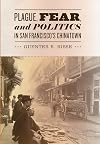
I thought that politicizing health care was a modern thing. Was I ever wrong about that! This book, which on the surface is about bubonic plague in 1900s San Francisco, is really about the political machinations that took place because of it.
In 1900, a few cases of bubonic plague were discovered in San Francisco’s Chinatown. Chinatown back then was not a pretty, tourist friendly, place. It was dirty, crowded beyond belief, ill-built, rundown, and almost completely poor- more of a ghetto show more than anything else- and infested with rats. At this time, the method of transmission of the plague by rats and fleas was not understood. The general belief was that it was carried on a ‘miasma’ such as occurred in damp, dirty places. But people knew it could be wildly contagious.
The reaction of the city and the state was not to try and help the people of Chinatown- most Americans of the time were quite prejudiced against the Chinese. And San Francisco was a transportation hub at the time, with freight coming and going by train and by ship. If the city were to be quarantined or be avoided in favor of Seattle, the economic consequences could be disastrous. The plague deaths were immediately hushed up, with the deaths blamed on all sorts of disease other than bubonic. When news of the deaths did get out, Chinatown itself was quarantined. The health of the Chinese in the city was not considered by most of the politicians and the moneyed people who owned them, just the health of the economy. The Chinese didn’t trust or want the American doctors and health agents coming around Chinatown. They wanted to treat the plague victims with their traditional system of medicine, and autopsies were considered desecration. Federal health agents sent by President Roosevelt were denied access in most cases and when they did manage to take samples from the bodies and found plague bacillus they were declared to be wrong.
I expected the book to be about medical issues, but it really isn’t. It’s more about social and political history. This is not a history written for light reading; the author delved deeply into records in both English and Chinese. It’s a meticulously written, sometimes slow moving, document about how money corrupts government and how prejudice can destroy lives. show less
In 1900, a few cases of bubonic plague were discovered in San Francisco’s Chinatown. Chinatown back then was not a pretty, tourist friendly, place. It was dirty, crowded beyond belief, ill-built, rundown, and almost completely poor- more of a ghetto show more than anything else- and infested with rats. At this time, the method of transmission of the plague by rats and fleas was not understood. The general belief was that it was carried on a ‘miasma’ such as occurred in damp, dirty places. But people knew it could be wildly contagious.
The reaction of the city and the state was not to try and help the people of Chinatown- most Americans of the time were quite prejudiced against the Chinese. And San Francisco was a transportation hub at the time, with freight coming and going by train and by ship. If the city were to be quarantined or be avoided in favor of Seattle, the economic consequences could be disastrous. The plague deaths were immediately hushed up, with the deaths blamed on all sorts of disease other than bubonic. When news of the deaths did get out, Chinatown itself was quarantined. The health of the Chinese in the city was not considered by most of the politicians and the moneyed people who owned them, just the health of the economy. The Chinese didn’t trust or want the American doctors and health agents coming around Chinatown. They wanted to treat the plague victims with their traditional system of medicine, and autopsies were considered desecration. Federal health agents sent by President Roosevelt were denied access in most cases and when they did manage to take samples from the bodies and found plague bacillus they were declared to be wrong.
I expected the book to be about medical issues, but it really isn’t. It’s more about social and political history. This is not a history written for light reading; the author delved deeply into records in both English and Chinese. It’s a meticulously written, sometimes slow moving, document about how money corrupts government and how prejudice can destroy lives. show less
Statistics
- Works
- 8
- Members
- 58
- Popularity
- #284,345
- Rating
- 3.5
- Reviews
- 1
- ISBNs
- 17