
Peter Hayman (1) (1930–)
Author of Shorebirds: An Identification Guide to the Waders of the World
For other authors named Peter Hayman, see the disambiguation page.
Works by Peter Hayman
The Larger Illustrated Guide to Birds of Southern Africa: The Most Comprehensively Illustrated Guide to the Region's Birds (1996) — Illustrator — 35 copies, 1 review
The Pocket Guide to the Coastal Birds of Britain and Europe (Mitchell Beazley Nature) (2005) 8 copies
Alle vogels van Europa: strandvogels, broedvogels, doortrekkers, wintergasten, dwaalgasten (2009) 7 copies
Vogel... hoe heet je? 1 copy
Associated Works
The Handbook of Bird Identification for Europe and the Western Palearctic (1998) — Illustrator — 48 copies, 1 review
Tagged
Common Knowledge
- Canonical name
- Hayman, Peter
- Birthdate
- 1930-02-17
- Gender
- male
- Occupations
- ornithologist
illustrator - Nationality
- UK
- Birthplace
- Uxbridge, Middlesex, England, UK
- Associated Place (for map)
- England, UK
Members
Reviews
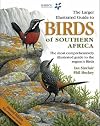
Basics: 2005, 2nd edition, softcover, 463 pages, 198 color photos, 950 species, range maps
This is a larger version (9 ½ x 7 ¾ inches) of nearly the same book by these authors. This larger version is meant to be more of an at-home reference -- unless you don't mind carrying a slightly oversized field guide in your vehicle or in your backpack.
Of the various field guides for southern Africa, this is my favorite for four reasons. One, is its excellent illustrations and their variety of poses. show more Two, are the larger illustrations due to the size of the book. Three, is the crisper color reproduction. And, four, are the small identification tips written next to the illustrations.
Like most similar guides, you’ll be able to use this in the southern six countries plus the south half of Mozambique. The range maps give good detail. However, just like other guides, I do not like the practice of creating an artificial boundary where the bird’s range crosses the border of Angola or Zambia. If the natural range advances (which many do), then show it. One last quirk of these range maps is the lack of a legend. Unlike its smaller predecessor, these maps contain white grids over parts of the range. The book makes no mention of what this signifies. Summer? Visitor? Rare? Dispersal?
As for the text, this offers good but brief identification notes. Only scant information is given for the bird’s status and calls. The back of the book contains a very nice addendum called “Identifying Problem Species”. These 13 pages focus on fourteen groups of problematic species such as large brown pipits, glossy starlings, or small migrant reed-warblers.
I highly recommend this book for your trip to southern Africa, despite its size. The slightly smaller (but thicker and same weight) version might be handier, but it lacks some of the newer plates and some additional extralimital species.
Other Related Books:
1) Illustrated Guide to the Birds of Southern Africa by Sinclair/Hockey/Tarboton
2) Roberts Bird Guide by Chittenden
3) Field Guide to the Birds of Southern Africa by Sinclair
4) Birds of Africa South of the Sahara by Sinclair/Ryan
5) Newman's Birds of Southern Africa by Newman
6) The Complete Book of Southern African Birds by Ginn/McIlleron, Milstein
7) Southern African Birds: A Photographic Guide by Sinclair/Davidson show less
This is a larger version (9 ½ x 7 ¾ inches) of nearly the same book by these authors. This larger version is meant to be more of an at-home reference -- unless you don't mind carrying a slightly oversized field guide in your vehicle or in your backpack.
Of the various field guides for southern Africa, this is my favorite for four reasons. One, is its excellent illustrations and their variety of poses. show more Two, are the larger illustrations due to the size of the book. Three, is the crisper color reproduction. And, four, are the small identification tips written next to the illustrations.
Like most similar guides, you’ll be able to use this in the southern six countries plus the south half of Mozambique. The range maps give good detail. However, just like other guides, I do not like the practice of creating an artificial boundary where the bird’s range crosses the border of Angola or Zambia. If the natural range advances (which many do), then show it. One last quirk of these range maps is the lack of a legend. Unlike its smaller predecessor, these maps contain white grids over parts of the range. The book makes no mention of what this signifies. Summer? Visitor? Rare? Dispersal?
As for the text, this offers good but brief identification notes. Only scant information is given for the bird’s status and calls. The back of the book contains a very nice addendum called “Identifying Problem Species”. These 13 pages focus on fourteen groups of problematic species such as large brown pipits, glossy starlings, or small migrant reed-warblers.
I highly recommend this book for your trip to southern Africa, despite its size. The slightly smaller (but thicker and same weight) version might be handier, but it lacks some of the newer plates and some additional extralimital species.
Other Related Books:
1) Illustrated Guide to the Birds of Southern Africa by Sinclair/Hockey/Tarboton
2) Roberts Bird Guide by Chittenden
3) Field Guide to the Birds of Southern Africa by Sinclair
4) Birds of Africa South of the Sahara by Sinclair/Ryan
5) Newman's Birds of Southern Africa by Newman
6) The Complete Book of Southern African Birds by Ginn/McIlleron, Milstein
7) Southern African Birds: A Photographic Guide by Sinclair/Davidson show less

Only if you have the right sort of pocket, but a good guide.
You May Also Like


Associated Authors
Statistics
- Works
- 25
- Also by
- 1
- Members
- 552
- Popularity
- #45,211
- Rating
- 3.9
- Reviews
- 3
- ISBNs
- 72
- Languages
- 12