
Jon L. Dunn
Author of National Geographic Field Guide to the Birds of North America
About the Author
Jon Dunn is a natural history writer, photographer, and wildlife tour leader. His writing has appeared in a number of magazines, including BBC Wildlife. He is the author of three previous books, including Orchid Summer. He lives on his croft on the remote Shetland Islands.
Series
Works by Jon L. Dunn
National Geographic Field Guide to the Birds of North America (1983) — Editor — 2,354 copies, 15 reviews
National Geographic Field Guide to the Birds of Eastern North America (National Geographic Field Guide to Birds) (2008) — Editor — 127 copies
Associated Works
National Geographic Complete Birds of North America (2005) — Editor, some editions — 340 copies, 3 reviews
Tagged
Common Knowledge
- Birthdate
- 1954
- Gender
- male
- Awards and honors
- Alan M. Craig Award (2024)
- Nationality
- USA
- Birthplace
- Los Angeles County, California, USA
- Places of residence
- Bishop, California, USA
- Map Location
- California, USA
Members
Reviews
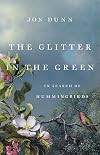
Obsessions can make for fascinating books. In Jon Dunn’s The Glitter in the Green, his obsession with hummingbirds takes him from his native and hummingbirdless Shetland Islands to the Americas, where literally thousands of hummingbird species are hanging on. It is a great trip, with history, folk tales and biology percolating throughout. There’s even the occasional dash of danger. But not from the hummingbirds.
Hummingbirds are a western hemisphere phenomenon. They live from the farthest show more reaches of Alaska to the tip of South America at Tierra del Fuego, up mountains and down at sea level, and Dunn booked himself a top to bottom trip to see the rarest of the rare, and if possible, photograph them.
This is far better than what his predecessor obsessives used to do, which was kill them, stuff them and collect their dead bodies in their homes. Hummingbirds have been a horrifically big industry. Hundreds of thousands of tiny hummingbird bodies have gone into women’s hats, for example, and they are still sold as pendants and amulets promising health and happiness to wearers. It got to the point where fraudsters made up their own species. They pieced together feathers and skins from different birds, and sold them as new or (extremely) rare species. Some of the best museums in the world fell for it.
If destroying their habitats weren’t enough, poisoning them with neonicotinoid pesticides and children shooting them with slingshots have made it a miracle they’re around at all. Cats, a billion strong around the world, love to snatch the life from them, because they are too tame and trusting. Rats invade their tiny nests. Agriculture reduces their living space. But plumage hunters have nearly done them in. A hundred fifty years ago, Lord Strathmore noted: “The activities of the plumage hunters have cut the number of species of hummingbird species in Trinidad from nineteen to five,” for example.
It is actually fortunate that so many people are obsessed with hummingbirds, because they set up feeders for them all up and down the continents. While some bemoan the new dependency on feeders instead of (or in addition to) harder foraging, it might be the case that manmade feeders have become completely critical to their migrations and survival.
Hummingbirds migrate. This is something Man has only recently discovered, by tagging a leg and examining the same bird up to 3500 miles elsewhere. From Alaska to Florida, in this case. They can still do it because feeders along the way are charging stations. The dearth of natural flora, tied to the steep decline of pollinators as well as industrial takeovers of all useful land, makes their travels iffy without human intervention.
The birds need an astonishing amount of such fuel to thrive. They live in the fast lane. Their wings beat at 50-200 times per second; their hearts pump at 1200 beats per minute. To do this, they burn 4000 calories an hour, spending their lives feeding and resting, feeding and resting. They flick their long tongues at nectar 16 times a second, allowing the snatch and grab feeding that keeps them from being in one exposed place for too long. They don’t slurp so much as snatch. Their tongues are actually two pieces, which they purse into a tube to capture nectar.
Dunn begins at the top of the world, in Alaska, where he sets the pace. Birders are very supportive of each other. They will help if they possibly can. They will go out of their way to aid a birder in search of his or her holy grail. Dunn gets to network and meet all kinds of helpful and supportive people along the way, making each country he visits into a successful foray despite the weather, the climate, the terrain or, as in Bolivia, nationwide turmoil over the federal election where Evo Morales tried to cook the books.
Dunn’s journey, a trip most of us would consider the adventure of a lifetime, took him down from Alaska through the western American states, through Mexico, over to Cuba, back to Costa Rica, Colombia, Ecuador, Bolivia, Peru, Brazil, Chile and Argentina, where he ended up at the tip of South America, to find a rare hummingbird just as it got too cold for the bird to stay much longer. Each country has its own story and marvelous people who help. By then end, readers would be justified in feeling that birders should be running things – everything.
He spends time on Robinson Crusoe Island, a rock of terrible weather, festooned with feral cats, rats, and brambles, all of which are invasive species brought in by residents to improve things. It doesn’t take a genius to predict that the opposite happened, as the cats kill the hummingbirds, the rats eat their eggs and the brambles wreak havoc with the native fauna. Oh-for-three is a typical score when people tamper with nature.
Four rabbits were let loose in Tierra del Fuego in 1936, and at last count, in 1953, there were 30 million. The government brought in beavers(!) to create a fur industry, which never took off, but the beavers, with no natural enemies to control their numbers, have changed the environment completely. The result is reduced habitat for hummingbirds, something Dunn finds all over the hemisphere.
Hummingbirds are represented by so many species, they are all too often limited to a tiny territory with very specific characteristics. They are often simply endemic to a tiny area of a country and nowhere else. Destroy those environmental conditions, and the hummingbirds could vanish. They migrate to another tiny area in order to satisfy the need for energy food when the seasons dictate. We can only hope they come back.
Fortunately, residents and some whole countries (such as Costa Rica) are noticing the value of ecotourism. Birders in particular seem to be wealthier, leisurely, friendly, harmless and passionate. Catering to their needs and whims is proving worthwhile. Setting out a fenceline full of feeders in the right neighborhood sees flocks of birders assembling daily. The word spreads fast among them. Hummingbird-friendly homes become targets of pilgrimages.
The birds range in size from tiny – the size of a bumblebee, to dragonfly size, to “gigantic” – finch size. Some supplement their nectar diet with insects, sucking them out of woodpecker-drilled holes, or catching them in the air like dragonflies do.
For the most part, they come in shockingly brilliant, iridescent colors, often clashingly and obnoxiously so. (This is how they ended up decorating hats and books, among other things.) Some have furry boots, outrageously long tail feathers, and personalities to match. One hummingbird was constantly bullied by a fiercer species, to the point where it complained to the feeders’ owner. It hovered in front of the man’s face until he agreed to go over to a feeder and cup his hands around it so that only the complainer could (finally) feed in peace there. Now of course, the owner is well trained and has to do this all day. He complains he can’t go anywhere any more.
There are placid hummingbirds, and territorial hummingbirds, that will chase all others away and/or fight them to the death. Some have serrated beaks for doing battle. Some will sit on a person’s finger and sip at leisure from a thimbleful of sugar water. Some will even enter the house to be so fed. It is a whole society, with every personality we are familiar with.
Obsessives today collect memories rather than stuffed bodies. Dunn makes a point of remembering every aspect of his many sightings, and relates them in terrific detail. He describes another obsessive, Sandy Komito, who set out to see as many as he could, and logged 725 different species of them in just one year. That’s two different hummingbirds a day, every day, for a year. There is much to see in the world of hummingbirds.
So the book is part travelogue, part nature study, part history and part trivia, a great combination that keeps it moving, not perhaps at hummingbird speed, but with plenty of zigs and zags to keep readers turning the pages.
David Wineberg show less
Hummingbirds are a western hemisphere phenomenon. They live from the farthest show more reaches of Alaska to the tip of South America at Tierra del Fuego, up mountains and down at sea level, and Dunn booked himself a top to bottom trip to see the rarest of the rare, and if possible, photograph them.
This is far better than what his predecessor obsessives used to do, which was kill them, stuff them and collect their dead bodies in their homes. Hummingbirds have been a horrifically big industry. Hundreds of thousands of tiny hummingbird bodies have gone into women’s hats, for example, and they are still sold as pendants and amulets promising health and happiness to wearers. It got to the point where fraudsters made up their own species. They pieced together feathers and skins from different birds, and sold them as new or (extremely) rare species. Some of the best museums in the world fell for it.
If destroying their habitats weren’t enough, poisoning them with neonicotinoid pesticides and children shooting them with slingshots have made it a miracle they’re around at all. Cats, a billion strong around the world, love to snatch the life from them, because they are too tame and trusting. Rats invade their tiny nests. Agriculture reduces their living space. But plumage hunters have nearly done them in. A hundred fifty years ago, Lord Strathmore noted: “The activities of the plumage hunters have cut the number of species of hummingbird species in Trinidad from nineteen to five,” for example.
It is actually fortunate that so many people are obsessed with hummingbirds, because they set up feeders for them all up and down the continents. While some bemoan the new dependency on feeders instead of (or in addition to) harder foraging, it might be the case that manmade feeders have become completely critical to their migrations and survival.
Hummingbirds migrate. This is something Man has only recently discovered, by tagging a leg and examining the same bird up to 3500 miles elsewhere. From Alaska to Florida, in this case. They can still do it because feeders along the way are charging stations. The dearth of natural flora, tied to the steep decline of pollinators as well as industrial takeovers of all useful land, makes their travels iffy without human intervention.
The birds need an astonishing amount of such fuel to thrive. They live in the fast lane. Their wings beat at 50-200 times per second; their hearts pump at 1200 beats per minute. To do this, they burn 4000 calories an hour, spending their lives feeding and resting, feeding and resting. They flick their long tongues at nectar 16 times a second, allowing the snatch and grab feeding that keeps them from being in one exposed place for too long. They don’t slurp so much as snatch. Their tongues are actually two pieces, which they purse into a tube to capture nectar.
Dunn begins at the top of the world, in Alaska, where he sets the pace. Birders are very supportive of each other. They will help if they possibly can. They will go out of their way to aid a birder in search of his or her holy grail. Dunn gets to network and meet all kinds of helpful and supportive people along the way, making each country he visits into a successful foray despite the weather, the climate, the terrain or, as in Bolivia, nationwide turmoil over the federal election where Evo Morales tried to cook the books.
Dunn’s journey, a trip most of us would consider the adventure of a lifetime, took him down from Alaska through the western American states, through Mexico, over to Cuba, back to Costa Rica, Colombia, Ecuador, Bolivia, Peru, Brazil, Chile and Argentina, where he ended up at the tip of South America, to find a rare hummingbird just as it got too cold for the bird to stay much longer. Each country has its own story and marvelous people who help. By then end, readers would be justified in feeling that birders should be running things – everything.
He spends time on Robinson Crusoe Island, a rock of terrible weather, festooned with feral cats, rats, and brambles, all of which are invasive species brought in by residents to improve things. It doesn’t take a genius to predict that the opposite happened, as the cats kill the hummingbirds, the rats eat their eggs and the brambles wreak havoc with the native fauna. Oh-for-three is a typical score when people tamper with nature.
Four rabbits were let loose in Tierra del Fuego in 1936, and at last count, in 1953, there were 30 million. The government brought in beavers(!) to create a fur industry, which never took off, but the beavers, with no natural enemies to control their numbers, have changed the environment completely. The result is reduced habitat for hummingbirds, something Dunn finds all over the hemisphere.
Hummingbirds are represented by so many species, they are all too often limited to a tiny territory with very specific characteristics. They are often simply endemic to a tiny area of a country and nowhere else. Destroy those environmental conditions, and the hummingbirds could vanish. They migrate to another tiny area in order to satisfy the need for energy food when the seasons dictate. We can only hope they come back.
Fortunately, residents and some whole countries (such as Costa Rica) are noticing the value of ecotourism. Birders in particular seem to be wealthier, leisurely, friendly, harmless and passionate. Catering to their needs and whims is proving worthwhile. Setting out a fenceline full of feeders in the right neighborhood sees flocks of birders assembling daily. The word spreads fast among them. Hummingbird-friendly homes become targets of pilgrimages.
The birds range in size from tiny – the size of a bumblebee, to dragonfly size, to “gigantic” – finch size. Some supplement their nectar diet with insects, sucking them out of woodpecker-drilled holes, or catching them in the air like dragonflies do.
For the most part, they come in shockingly brilliant, iridescent colors, often clashingly and obnoxiously so. (This is how they ended up decorating hats and books, among other things.) Some have furry boots, outrageously long tail feathers, and personalities to match. One hummingbird was constantly bullied by a fiercer species, to the point where it complained to the feeders’ owner. It hovered in front of the man’s face until he agreed to go over to a feeder and cup his hands around it so that only the complainer could (finally) feed in peace there. Now of course, the owner is well trained and has to do this all day. He complains he can’t go anywhere any more.
There are placid hummingbirds, and territorial hummingbirds, that will chase all others away and/or fight them to the death. Some have serrated beaks for doing battle. Some will sit on a person’s finger and sip at leisure from a thimbleful of sugar water. Some will even enter the house to be so fed. It is a whole society, with every personality we are familiar with.
Obsessives today collect memories rather than stuffed bodies. Dunn makes a point of remembering every aspect of his many sightings, and relates them in terrific detail. He describes another obsessive, Sandy Komito, who set out to see as many as he could, and logged 725 different species of them in just one year. That’s two different hummingbirds a day, every day, for a year. There is much to see in the world of hummingbirds.
So the book is part travelogue, part nature study, part history and part trivia, a great combination that keeps it moving, not perhaps at hummingbird speed, but with plenty of zigs and zags to keep readers turning the pages.
David Wineberg show less
Jon Dunn, British birder, writer, naturalist, and photographer, grew up on the side of the world where there are no hummingbirds – except dead ones in the hummingbird cabinet in London’s Natural History Museum. “Dipped in rainbows,” they mesmerized him and he was well and truly hooked. His first sight of a live hummer, in Arizona’s Madera Canyon, was literally magnificent: big, bold, dark, glowing, its wings issuing a “sonorous buzz” – it was a Magnificent (now called a show more Rivoli’s) hummingbird. And so he plans a journey, from the northernmost tip to the southernmost extreme of hummingbird territory, from Alaska to Tierra del Fuego, to see as many hummers as he can, in all their haunts and habitats, from deserts to glaciers to jungles. And lucky us: we get to go with him.
Dunn is a genial, dedicated (obsessed?), and infinitely knowledgeable guide. He will tell you everything you ever wanted to know about these physiological miracles (a hummer can require 4000 calories an hour to nourish a heart that beats 1200 times a minute, and that climate change is affecting their ranges to the extent that an Anna’s hummingbird has been seen feeding in Alaska in January). He will tell you about the historical naturalists who studied, identified, named, and killed them in vast numbers. There are elaborate images in art museums like the portrait of Christ made entirely of hummingbird feathers; tiny desiccated chuparosas are sold by the packet as love charms in a foul, stinking Mexican wildlife market as bad as anything in Wuhan, China. Darwin, Dickens, Edward Lear (The Owl and the Pussycat man, who was also a fine bird painter), Fidel Castro, Teddy Roosevelt, Gerald Durrell, David Attenborough – all make cameo appearances. If there’s a hummingbird connection, Dunn has found it. There’s even a flight in a rickety plane over the famous Peruvian Nazca glyph of a hummingbird, and speculation about what precise species it may be. The place of hummingbirds in history, folklore, poetry, fashion, art… it’s all here, enthusiastically described and you can’t help but be charmed.
And then, of course, the birds themselves. Dunn has to dig deep to find the words to describe them: emerald, sapphire, ruby, topaz; shimmer, sparkle, blaze, flame, glow. The names alone (largely thanks to John Gould, an otherwise thoroughly unpleasant man) are something out of fairy tales: Fiery Topaz, Velvet Purple Coronet, the particularly ferocious Black Jacobin, Green-Throated Mango, Tourmaline Sunangel, Festive Coquette, Sapphire-vented Puffleg… What this book desperately needs is pictures. Dunn is a fine photographer; I would have hoped some of these creatures would have shown their faces in the pages, but I had to settle for Googling. And I promise you, every image for every one of these wondrous names will make you gasp, smile, and say, “wow!”
Dunn must be an affable fellow, and I assume he must speak good Spanish, for he engages a cast of guides, drivers, lodgekeepers, and locals in his quest who are dedicated and generous. He discusses the protections afforded birds in areas threatened by development (Brazil is a horrifying example) or climate change, and asks (pre-Covid!): “Were the ecotourism to dry up, what would happen to the Marvelous Spatuletail?” What, indeed? Huembo Lodge’s Facebook page says they are open with all “biosecurity protocols” for Covid in place – let us hope for the best.
Not a field guide, not an ornithological treatise. History, adventure travel, quest, obsession, with effusive language to share the wonderment of these tiny, hovering, fierce, glorious birds. One evening, Dunn lingers in a clearing high in the Ecuadorean forest. His fellow birders have returned to the lodge. There is a “deep throbbing hum” in the shadows. A waft of air brushes his cheek, and a dark hummingbird is hovering inches from his face. The bird shifts to face him, and the inky plumage suddenly turns to an “overpowering imperial purple,” and the late light “exploded into myriad sparks… coruscating… glittering.” He and the bird “share some sort of communion,” the bird deliberately looking him in the eye. Dunn’s first Velvet-Purple Coronet, and his desire to share that moment with us makes this book a lovely and endearing pleasure.
Thanks to NetGalley for an advance e-copy in exchange for an honest review. show less
Dunn is a genial, dedicated (obsessed?), and infinitely knowledgeable guide. He will tell you everything you ever wanted to know about these physiological miracles (a hummer can require 4000 calories an hour to nourish a heart that beats 1200 times a minute, and that climate change is affecting their ranges to the extent that an Anna’s hummingbird has been seen feeding in Alaska in January). He will tell you about the historical naturalists who studied, identified, named, and killed them in vast numbers. There are elaborate images in art museums like the portrait of Christ made entirely of hummingbird feathers; tiny desiccated chuparosas are sold by the packet as love charms in a foul, stinking Mexican wildlife market as bad as anything in Wuhan, China. Darwin, Dickens, Edward Lear (The Owl and the Pussycat man, who was also a fine bird painter), Fidel Castro, Teddy Roosevelt, Gerald Durrell, David Attenborough – all make cameo appearances. If there’s a hummingbird connection, Dunn has found it. There’s even a flight in a rickety plane over the famous Peruvian Nazca glyph of a hummingbird, and speculation about what precise species it may be. The place of hummingbirds in history, folklore, poetry, fashion, art… it’s all here, enthusiastically described and you can’t help but be charmed.
And then, of course, the birds themselves. Dunn has to dig deep to find the words to describe them: emerald, sapphire, ruby, topaz; shimmer, sparkle, blaze, flame, glow. The names alone (largely thanks to John Gould, an otherwise thoroughly unpleasant man) are something out of fairy tales: Fiery Topaz, Velvet Purple Coronet, the particularly ferocious Black Jacobin, Green-Throated Mango, Tourmaline Sunangel, Festive Coquette, Sapphire-vented Puffleg… What this book desperately needs is pictures. Dunn is a fine photographer; I would have hoped some of these creatures would have shown their faces in the pages, but I had to settle for Googling. And I promise you, every image for every one of these wondrous names will make you gasp, smile, and say, “wow!”
Dunn must be an affable fellow, and I assume he must speak good Spanish, for he engages a cast of guides, drivers, lodgekeepers, and locals in his quest who are dedicated and generous. He discusses the protections afforded birds in areas threatened by development (Brazil is a horrifying example) or climate change, and asks (pre-Covid!): “Were the ecotourism to dry up, what would happen to the Marvelous Spatuletail?” What, indeed? Huembo Lodge’s Facebook page says they are open with all “biosecurity protocols” for Covid in place – let us hope for the best.
Not a field guide, not an ornithological treatise. History, adventure travel, quest, obsession, with effusive language to share the wonderment of these tiny, hovering, fierce, glorious birds. One evening, Dunn lingers in a clearing high in the Ecuadorean forest. His fellow birders have returned to the lodge. There is a “deep throbbing hum” in the shadows. A waft of air brushes his cheek, and a dark hummingbird is hovering inches from his face. The bird shifts to face him, and the inky plumage suddenly turns to an “overpowering imperial purple,” and the late light “exploded into myriad sparks… coruscating… glittering.” He and the bird “share some sort of communion,” the bird deliberately looking him in the eye. Dunn’s first Velvet-Purple Coronet, and his desire to share that moment with us makes this book a lovely and endearing pleasure.
Thanks to NetGalley for an advance e-copy in exchange for an honest review. show less
Love Letter To Hummingbirds. This is a travel/ bird spotting book following the author's adventures as he seeks to see as many hummingbirds as possible in their natural (ish) settings, from pole to pole. The narrative structure follows the author as he starts in Alaska chasing down a particular bird that was reportedly seen there - that had been originally tagged in Tallahassee, Florida. A bird that weighs just a few ounces, making a flight that many of its far larger brethren would never show more imagine. We continue to follow the hummingbirds into the US, spending a fair amount of time in Arizona and Mexico, and we continue all the way down to Tiego Del Fuego - the bottom of the world (as far as hummingbirds go, where here they share their habitat with penguins!). Part ornithological expedition, part history, part current events commentary, this is a solidly written - if a bit esoteric - book perfect for bird watchers and related enthusiasts. Even as a generic travel book, this still works well as Dunn so completely describes the environs he finds himself in - including an up close and personal encounter with a puma! Very well done, and very much recommended. show less
Canada is home to such a limited number of hummingbirds, so the variety portrayed in this book is simply stunning - the diversity of colours and sizes, the elaborate headdress on the Rufous-crested Coquette, the fancy "earrings" on the Sparkling Violetear, and the amazing tail on the Marvellous Spatuletail have to be seen to be believed. And then there's the beak almost as long as the body on the Sword-billed Hummingbird. These are feisty little birds with a very long history. Dunn delves show more into the mythology and the commerce surrounding hummingbirds to provide a rounded picture of these birds place in our universe. show less
Lists
Awards


You May Also Like


Associated Authors
Statistics
- Works
- 11
- Also by
- 1
- Members
- 3,171
- Popularity
- #8,055
- Rating
- 4.2
- Reviews
- 31
- ISBNs
- 40
- Languages
- 1