
Jonathan Alderfer
Author of National Geographic Field Guide to the Birds of North America
About the Author
Series
Works by Jonathan Alderfer
National Geographic Field Guide to the Birds of North America (1983) — Editor — 2,356 copies, 15 reviews
National Geographic Backyard Guide to the Birds of North America (National Geographic Backyard Guides) (2019) 150 copies
National Geographic Field Guide to the Birds of Eastern North America (National Geographic Field Guide to Birds) (2008) — Editor — 128 copies
Birds of the San Joaquin Wildlife Sanctuary — Illustrator — 1 copy
Tagged
Common Knowledge
- Canonical name
- Alderfer, Jonathan
- Birthdate
- c. 1960
- Gender
- male
- Education
- Cooper Union School of Art
- Nationality
- USA
- Birthplace
- Pennsylvania, USA
- Places of residence
- Maine, USA
- Map Location
- USA
Members
Reviews
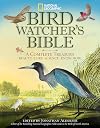
One of my favorite birding field guides is published by National Geographic so it’s no surprise I thoroughly enjoyed paging through the recently published Bird Watcher’s Bible. Natural history writers and bird experts have joined together to share their knowledge in this beautiful volume.
The book presents a variety of information laid out in an attractive, enticing format, perfect for browsing through the pages. This is not intended as a field guide to identify birds. It is more like a show more modern-day encyclopedia with a wealth of information. The artwork is gorgeous with beautiful color photos and illustrations. The text consists of brief narratives and, scattered throughout, numerous sidebars containing interesting facts, anecdotes and lists.
One of the recurring sidebar factoids I enjoyed was a series on the derivation of a bird’s name. If you listen closely, some birds will tell you their names. For example, the eastern Phoebe calls out fee-be, the Eastern Wood Pewee says pee-a-wee, and the Blue Jay shrieks a piercing jay, jay jay.
Enjoyable, entertaining and at times amusing, this very readable book is not just for bird enthusiasts. Highly recommended for readers of all ages and levels who enjoy nature and the wonder and joy of birds. show less
The book presents a variety of information laid out in an attractive, enticing format, perfect for browsing through the pages. This is not intended as a field guide to identify birds. It is more like a show more modern-day encyclopedia with a wealth of information. The artwork is gorgeous with beautiful color photos and illustrations. The text consists of brief narratives and, scattered throughout, numerous sidebars containing interesting facts, anecdotes and lists.
One of the recurring sidebar factoids I enjoyed was a series on the derivation of a bird’s name. If you listen closely, some birds will tell you their names. For example, the eastern Phoebe calls out fee-be, the Eastern Wood Pewee says pee-a-wee, and the Blue Jay shrieks a piercing jay, jay jay.
Enjoyable, entertaining and at times amusing, this very readable book is not just for bird enthusiasts. Highly recommended for readers of all ages and levels who enjoy nature and the wonder and joy of birds. show less
National Geographic Complete Birds of North America, 3rd Edition: Featuring More Than 1,000 Species With the Most Detailed Information Found in a Single Volume by Jonathan Alderfer
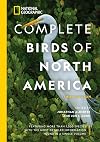
National Geographic Complete Birds of North America, 3rd Edition: Featuring More Than 1,000 Species With the Most Detailed Information Found in a Single Volume edited by Jonathan Alderfer, Jon Dunn is a very highly recommended desk reference guide to every bird species found in the continental USA, Canada, and Greenland. Think of this guide as an encyclopedia of birds. The guide opens with the Table of Contents listing the page number of the birds by families. The introduction follows and show more provides an overview of the additional information provided in this updated guide by ornithologists and artists. This includes updated range maps. The contents follow the latest taxonomic sequencing and naming conventions adopted by the American Ornithological Society as of July 2018. The introduction also includes information on plumage variation, feather topography, and abundance terms and codes.
For anyone interested in ornithology, National Geographic Complete Birds of North America, 3rd Edition is a wonderful reference guide. As expected the artwork is impeccable and finely detailed. The entry for each bird family provides points of identification based on structure, behavior, plumage, distribution, taxonomy, and conservation. Then the individual genus and species are presented covering identification and plumage distinctions based on gender and age, feather topography, as well as the bird in flight. Similar species are presented, as are the voice calls and songs. There is a status and distribution map and a note on the population. Included at the back are two pages on birds found in Greenland and Bermuda that are not from Canada or the USA. Following that is the list of contributors with a brief biography of each, the credits for illustrations, art and photographs and a detailed index.
After receiving the guide, I immediately put it to work identifying a hawk who decided to eat a lunch of raccoon on a deck post at my house. (It was a Krinder's Red Tail Hawk, sometimes treated by some as a subspecies, kriderii.) The illustrations were perfect and helped me enormously. And yes, the voice was a husky scream, shee-eeee-arrr. Then I was off identifying another bird from a photo (Golden-Crowned Kinglet). The National Geographic Complete Birds of North America, 3rd Edition was an ease to use.
Disclosure: My review copy was courtesy of National Geographic for TLC Book Tours. http://www.shetreadssoftly.com/ on 11/15/21
https://www.goodreads.com/review/show/4333371156 show less
For anyone interested in ornithology, National Geographic Complete Birds of North America, 3rd Edition is a wonderful reference guide. As expected the artwork is impeccable and finely detailed. The entry for each bird family provides points of identification based on structure, behavior, plumage, distribution, taxonomy, and conservation. Then the individual genus and species are presented covering identification and plumage distinctions based on gender and age, feather topography, as well as the bird in flight. Similar species are presented, as are the voice calls and songs. There is a status and distribution map and a note on the population. Included at the back are two pages on birds found in Greenland and Bermuda that are not from Canada or the USA. Following that is the list of contributors with a brief biography of each, the credits for illustrations, art and photographs and a detailed index.
After receiving the guide, I immediately put it to work identifying a hawk who decided to eat a lunch of raccoon on a deck post at my house. (It was a Krinder's Red Tail Hawk, sometimes treated by some as a subspecies, kriderii.) The illustrations were perfect and helped me enormously. And yes, the voice was a husky scream, shee-eeee-arrr. Then I was off identifying another bird from a photo (Golden-Crowned Kinglet). The National Geographic Complete Birds of North America, 3rd Edition was an ease to use.
Disclosure: My review copy was courtesy of National Geographic for TLC Book Tours. http://www.shetreadssoftly.com/ on 11/15/21
https://www.goodreads.com/review/show/4333371156 show less
National Geographic Complete Birds of North America, 3rd Edition: Featuring More Than 1,000 Species With the Most Detailed Information Found in a Single Volume by Jonathan Alderfer
National Geographic calls Complete Birds of North America ''an ideal companion" to their Field Guide to the Birds of North America. Edited by two leading experts on North American birds, this book is not a field guide, rather it is more of an encyclopedia.
This is a book for serious birders, filled with detailed scientific descriptions and classifications including Plumage, Behavior, Distribution (including maps), Taxonomy, Similiar Species and Conservation. The full-color illustrations of show more the birds, both at rest and in flight, are simply stunning. You'll see some incredible photos as well, and the one of the vulture is a little scary. (I have no desire to see that bird up close and in person, thank you.) The introduction to this comprehensive book explains all the terms inside and the manner of organization of the book.
Over 1000 species of birds are described in complete detail. You'll discover there are 33 variations of sparrows and 11 different wrens. I've spent much time in Southern Florida where pelicans are in abundance, and I found it fascinating to learn that they can spend up to 21 hours a day resting, and that they are gregarious birds. You can often them in groups of hundreds and even thousands.
If you have an orinthologist on your holiday gift list, buy them this book which will give them many hours of not only serious information but entertainment as well. It will look beautiful on the bookshelf as well.
Thanks to TLC Tours for putting me on the tour. show less
This is a book for serious birders, filled with detailed scientific descriptions and classifications including Plumage, Behavior, Distribution (including maps), Taxonomy, Similiar Species and Conservation. The full-color illustrations of show more the birds, both at rest and in flight, are simply stunning. You'll see some incredible photos as well, and the one of the vulture is a little scary. (I have no desire to see that bird up close and in person, thank you.) The introduction to this comprehensive book explains all the terms inside and the manner of organization of the book.
Over 1000 species of birds are described in complete detail. You'll discover there are 33 variations of sparrows and 11 different wrens. I've spent much time in Southern Florida where pelicans are in abundance, and I found it fascinating to learn that they can spend up to 21 hours a day resting, and that they are gregarious birds. You can often them in groups of hundreds and even thousands.
If you have an orinthologist on your holiday gift list, buy them this book which will give them many hours of not only serious information but entertainment as well. It will look beautiful on the bookshelf as well.
Thanks to TLC Tours for putting me on the tour. show less
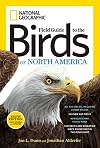
This is an excellent reference book, invaluable for both the novice and expert birder. The brief but informative introduction is well written and well illustrated. The thumb tabs for the major bird families help speed access to the desired species. The individual descriptions of species include an overview, range maps and data, voice characteristics, and clear, colorful illustrations. My only gripe is that the book is a bit too big and cumbersome, for me at least, to comfortably use out in show more the field. show less
Awards


You May Also Like


Associated Authors
Statistics
- Works
- 18
- Members
- 3,859
- Popularity
- #6,570
- Rating
- 4.2
- Reviews
- 28
- ISBNs
- 49
- Languages
- 1