
Paul R. Ehrlich (1932–2026)
Author of The Birder's Handbook: A Field Guide to the Natural History of North American Birds
About the Author
Paul Ehrlich, founder and first president of the Zero Population Growth organization, was born in Philadelphia, Pennsylvania. He received a B.A. in zoology from the University of Pennsylvania in 1953 and an M.A. and Ph.D. from the University of Kansas in 1955 and 1957, respectively. He became a show more member of the faculty at Stanford University in 1959 and was named Bing Professor of Population Studies in 1976. He is a recipient of a MacArthur Foundation fellowship, and in 1990 he was awarded Sweden's Crafoord Prize, created by the Royal Swedish Academy of Sciences to honor researchers in those disciplines not covered by the Nobel Prize. An expert in population biology, ecology, evolution, and behavior, Ehrlich has published more than 600 articles and scientific papers. He is perhaps best known for his environmental classic The Population Bomb (1968). Paul Ehrlich and his wife Anne began working together shortly after their marriage in 1954. Anne Ehrlich received her B.S. in biology from the University of Kansas. As senior research associate in biology and associate director of the Center for Conservation Biology at Stanford University, she has lectured widely and written on various environmental issues, including the environmental consequences of nuclear war. Together, the Ehrlichs have written six books and dozens of magazine articles. (Bowker Author Biography) show less
Disambiguation Notice:
This is the author page for Paul R. Ehrlich, the entomologist and population scientist. For Paul Ehrlich (no middle initial), the Nobel Prize winner for Physiology or Medicine, please see this author page. Thank you.
Works by Paul R. Ehrlich
The Birder's Handbook: A Field Guide to the Natural History of North American Birds (1988) 543 copies, 2 reviews
Betrayal of Science and Reason: How Anti-Environmental Rhetoric Threatens Our Future (1996) 129 copies
Birds in Jeopardy: The Imperiled and Extinct Birds of the United States and Canada (1992) 46 copies, 1 review
Humanity on a Tightrope: Thoughts on Empathy, Family, and Big Changes for a Viable Future (2010) 22 copies
Killing the Koala and Poisoning the Prairie: Australia, America, and the Environment (2015) 9 copies
Brazil: Flight to the Cities 1 copy
India: Life on the Edge 1 copy
Hungary: A Static Society 1 copy
China: Back from the Brink 1 copy
Teachers Manual. Population Resources Environment. Issues in Human Ecology. 2nd Edition. 1972 Ex-library Edition. 30 pages (1972) 1 copy
Associated Works
Ants, Indians, and Little Dinosaurs: A Celebration of Man & Nature for the 75th Anniversary of Natural History Magazine (1975) — Contributor — 203 copies, 1 review
A Better Future for the Planet Earth Vol II: Lectures by the Winners of the Blue Planet Prize 1997-2001 (2002) — Contributor — 3 copies
Principles of Green Bioethics: Sustainability in Health Care (2019) — Foreword, some editions — 1 copy
Tagged
Common Knowledge
- Canonical name
- Ehrlich, Paul R.
- Legal name
- Ehrlich, Paul Ralph
- Birthdate
- 1932-05-29
- Date of death
- 2026-03-13
- Gender
- male
- Education
- University of Kansas (PhD | 1957)
University of Pennsylvania (BA | 1953)
University of Kansas (MA | 1955) - Occupations
- entomologist
ecologist
lepidopterist
birder - Organizations
- Stanford University, Department of Biological Sciences (Bing Professor of Population Studies)
- Awards and honors
- Crafoord Prize (1990)
Ramon Margalef Prize in Ecology (2009)
Fellow of the Royal Society (2012)
American Academy of Arts and Sciences (Fellow)
American Association for the Advancement of Science (Fellow) - Relationships
- Ehrlich, Anne H (wife)
- Nationality
- USA
- Birthplace
- Philadelphia, Pennsylvania, USA
- Places of residence
- Philadelphia, Pennsylvania, USA
Stanford, California, USA - Disambiguation notice
- This is the author page for Paul R. Ehrlich, the entomologist and population scientist. For Paul Ehrlich (no middle initial), the Nobel Prize winner for Physiology or Medicine, please see this author page. Thank you.
- Associated Place (for map)
- USA
Members
Reviews

I hate to admit this, but until I read "The Population Explosion" I did not believe humans were causing the global climate change. Assuming it was a natural phenomena, how could humans alter the outcome? And don’t scientists have a tendency to exaggerate the trend using simulated computer graphs that have been known to produce erroneous data? In some ways that cynical feeling persists, although it is now obvious that change is occurring in the eco-system, and perhaps it can be altered but show more it will be a long, hard battle.
This is a worthwhile read. It looks beyond the controversial political arena and explains from a scientific perspective the evolution of the eco-system over millions of years. Citing population statistics - going from 3.5 billion people on earth in 1968 to 5.3 billion in 1990 (the year this book was published). And since then there have been an addition of 2.1 billion totaling 8 billion today. It is a proven fact that depleting resources on earth will not continue to sustain the growing population. There is barely enough today to serve all mankind.
Topics include in depth inspection of global food and water supplies, soil erosion, pollution, weather and climate, disease, and environmental disasters. Persistent attempts are being made to slow down the crisis - including the use of solar energy, fertilizers, and genetically engineered crops - none of which are ideal or widely effective.
So what is the solution? The topic no one wants to address - population control that mostly applies to under developed countries. The highly developed countries are better at population control but are the biggest consumers of resources and energy so they must bear responsibility. Suggestions are made for improving the situation; plant trees, use more efficient appliances, eat less beef, use less paper.
The author’s credentials are impressive. They both have published books and numerous articles in their fields. And they both have accumulated honors of recognition. They know of what they speak. They both ended up at Stanford - Paul as a Professor and Anne as a Senior Research Associate. The book cites 41 pages of sources used in the research of the material presented.
The question remains - what can we do? Maybe we need to give up our dish washers. Or start hanging our laundry outside to dry on wash lines like our ancestors did. Anyone interested? I know I don’t plan on eating less beef. I won’t get an electric car. I don’t want a windmill in my back yard. And I am a poor candidate for promoting less use of paper. I refuse to read e-books and I’m still adding (real) books to by library. Maybe I could plant a tree - or 2 - in the spring. Maybe. "The Population Explosion" was informative, but understanding the threat is only half the problem. solving the problem is something entirely different.
Rated 4 Stars January 2025 show less
This is a worthwhile read. It looks beyond the controversial political arena and explains from a scientific perspective the evolution of the eco-system over millions of years. Citing population statistics - going from 3.5 billion people on earth in 1968 to 5.3 billion in 1990 (the year this book was published). And since then there have been an addition of 2.1 billion totaling 8 billion today. It is a proven fact that depleting resources on earth will not continue to sustain the growing population. There is barely enough today to serve all mankind.
Topics include in depth inspection of global food and water supplies, soil erosion, pollution, weather and climate, disease, and environmental disasters. Persistent attempts are being made to slow down the crisis - including the use of solar energy, fertilizers, and genetically engineered crops - none of which are ideal or widely effective.
So what is the solution? The topic no one wants to address - population control that mostly applies to under developed countries. The highly developed countries are better at population control but are the biggest consumers of resources and energy so they must bear responsibility. Suggestions are made for improving the situation; plant trees, use more efficient appliances, eat less beef, use less paper.
The author’s credentials are impressive. They both have published books and numerous articles in their fields. And they both have accumulated honors of recognition. They know of what they speak. They both ended up at Stanford - Paul as a Professor and Anne as a Senior Research Associate. The book cites 41 pages of sources used in the research of the material presented.
The question remains - what can we do? Maybe we need to give up our dish washers. Or start hanging our laundry outside to dry on wash lines like our ancestors did. Anyone interested? I know I don’t plan on eating less beef. I won’t get an electric car. I don’t want a windmill in my back yard. And I am a poor candidate for promoting less use of paper. I refuse to read e-books and I’m still adding (real) books to by library. Maybe I could plant a tree - or 2 - in the spring. Maybe. "The Population Explosion" was informative, but understanding the threat is only half the problem. solving the problem is something entirely different.
Rated 4 Stars January 2025 show less
One of the odder things about me is that I used to believe that dinosaurs still roamed the earth.
As in RIGHT NOW. And that there was a vast scientific conspiracy to keep this irrefutable fact under wraps.
This belief was essentially the outcome of two factors in my childhood/adolescence: 1) I was an extremely fundamentalist Christian. 2) I also had a burning interest in science. I wanted to know why things were the way they were.
These two factors aren't really mutually exclusive. In fact, I show more came upon many people in my congregation, and in similar congregations, who also nurtured an interest in science. A popular activity at church campouts were astronomy courses. Biology -- minus evolution, of course -- was a popular major choice among my churchgoing friends.
But, the fact is that "mainstream" or "secular" science doesn't really jibe with the literalist Christian worldview: astronomists eventually must deal with the Big Bang and biologists inevitably bump into Darwin.
Enter the various science workshops for fundamentalists, aimed at addressing those issues in a way that fits in with a literal-Biblical worldview. It was in one of these workshops that a "respected" scientist explained away dinosaur fossils and carbon-dating by telling us that there was scientific proof that dinosaurs still existed. In Sri Lanka.
By my sophomore year in college, though, I began to have doubts about my worldview. I was reading more than Christian fiction. I was taking biology courses from professors who were unapologetic about evolution -- unlike the biology teachers in high school, whose teachings on the subject were regulated. I couldn't study an "alternate" form of species biology any longer, and brought face to face with Darwin, I was finally convinced.
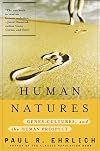
So began my fascination with evolution in general and human evolution in particular. I've become quite a connoisseur of the genre. Paul Ehrlich's Human Natures: Genes, Cultures & The Human Prospect is so far my favorite book on this topic.
Ehrlich's book covers the standard genetic evolution of our species, but he does so while simultaneously examining our "cultural evolution": the distinctly human behaviors that also have affected our current biological and behavioral selves.
The result is a book that tells us humanity is not the sum result of its genes; instead, the decisions we make about how we relate to one another, how we organize ourselves, and how we go about living our lives have much more influence on the future of the species.
Ehrlich's book is very accessible for the novice scientist, without sacrificing hard facts and references. His interdisciplinary approach seems to me a far more accurate rendering of human nature than the many reductionist human evolution tomes out there -- and I've read and enjoyed plenty of those.
Ehrlich's theory is also so appealing for the optimistic view it has on humanity's future -- though we have made mistakes in the past, we are not beholden to these behaviors. We are not bound to pettiness, violence and waste because of unalterable genetics. Instead, we can make decisions to alter our future course.
Among the many human evolution primers out there, Ehrlich's narrative of humanity's journey is exceptionally written and researched, leaving the reader with the unshakable feeling that Ehrlich is certainly on to something. show less
As in RIGHT NOW. And that there was a vast scientific conspiracy to keep this irrefutable fact under wraps.
This belief was essentially the outcome of two factors in my childhood/adolescence: 1) I was an extremely fundamentalist Christian. 2) I also had a burning interest in science. I wanted to know why things were the way they were.
These two factors aren't really mutually exclusive. In fact, I show more came upon many people in my congregation, and in similar congregations, who also nurtured an interest in science. A popular activity at church campouts were astronomy courses. Biology -- minus evolution, of course -- was a popular major choice among my churchgoing friends.
But, the fact is that "mainstream" or "secular" science doesn't really jibe with the literalist Christian worldview: astronomists eventually must deal with the Big Bang and biologists inevitably bump into Darwin.
Enter the various science workshops for fundamentalists, aimed at addressing those issues in a way that fits in with a literal-Biblical worldview. It was in one of these workshops that a "respected" scientist explained away dinosaur fossils and carbon-dating by telling us that there was scientific proof that dinosaurs still existed. In Sri Lanka.
By my sophomore year in college, though, I began to have doubts about my worldview. I was reading more than Christian fiction. I was taking biology courses from professors who were unapologetic about evolution -- unlike the biology teachers in high school, whose teachings on the subject were regulated. I couldn't study an "alternate" form of species biology any longer, and brought face to face with Darwin, I was finally convinced.
So began my fascination with evolution in general and human evolution in particular. I've become quite a connoisseur of the genre. Paul Ehrlich's Human Natures: Genes, Cultures & The Human Prospect is so far my favorite book on this topic.
Ehrlich's book covers the standard genetic evolution of our species, but he does so while simultaneously examining our "cultural evolution": the distinctly human behaviors that also have affected our current biological and behavioral selves.
The result is a book that tells us humanity is not the sum result of its genes; instead, the decisions we make about how we relate to one another, how we organize ourselves, and how we go about living our lives have much more influence on the future of the species.
Ehrlich's book is very accessible for the novice scientist, without sacrificing hard facts and references. His interdisciplinary approach seems to me a far more accurate rendering of human nature than the many reductionist human evolution tomes out there -- and I've read and enjoyed plenty of those.
Ehrlich's theory is also so appealing for the optimistic view it has on humanity's future -- though we have made mistakes in the past, we are not beholden to these behaviors. We are not bound to pettiness, violence and waste because of unalterable genetics. Instead, we can make decisions to alter our future course.
Among the many human evolution primers out there, Ehrlich's narrative of humanity's journey is exceptionally written and researched, leaving the reader with the unshakable feeling that Ehrlich is certainly on to something. show less
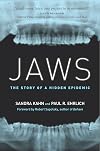
This is an important book for parents or would-be parents of young children. I have read other work that addreses the issue of how nutritional, dental health, and overall health intersect (books by Weston Price, Patrick McKeown, and George Catlin's 18th century (!) work), but this is the most up-to-date and comprehensive look at the topic I've seen. It does finally seem to answer something that I've been wondering about, which is why mouth-breathing might be more common in modern society show more than in the past.
This book addresses a topic -- the confluence of breathing technique, oral posture, dental health, and overall health -- that has been almost completely ignored in health literature up until now. As such, it's hard not to recommend this to anyone interested in optimizing health for themselves and (especially) for their children. Strongly recommended. show less
This book addresses a topic -- the confluence of breathing technique, oral posture, dental health, and overall health -- that has been almost completely ignored in health literature up until now. As such, it's hard not to recommend this to anyone interested in optimizing health for themselves and (especially) for their children. Strongly recommended. show less

I would like to thank Dr. Ehrlich
For digging deep asking the tough questions and purposing the hard choices. He did a fine job of explaining the sources of angst among humanity, the dire threats to human-kind and the impending suffering that looms for us all if no actions are taken to ensure a brighter future for the coming generations.
Yet, with all the graphic descriptions of the poisons, pesticides, plagues and prophecies, this scholarly gentleman, who obviously believes in the Most-High, show more Lord, God, Jehovah, has failed to target the genuine, root cause of all the calamity – which is not over-population, but the greed of the 1% who desire world domination at the expense of Billions of lives.
When Jehovah mandated that we “Go forth and multiply,” He knew what He was doing. Hunger is not the result of too many mouths to feed, but of a system that deems most of humanity unworthy of wealth, prosperity, comfort and/or joy.
Consider the many technologies that have the power to suppress suffering, propel mankind into unlimited knowledge and harmony: Clean-renewable, FREE energy, vast organic nutrition, applications that desalinate sea water and systems to share information on massive scales.
Instead, our world is monopolized by a monstrous few who use propaganda, fear and pharmacology to keep the masses stressed, weak and oppressed. Their tools are the media, controls of currency and inferior educational standards. These are the true weapons of mass destruction.
Dr. Ehrlich knows the truth; he states it emphatically! show less
For digging deep asking the tough questions and purposing the hard choices. He did a fine job of explaining the sources of angst among humanity, the dire threats to human-kind and the impending suffering that looms for us all if no actions are taken to ensure a brighter future for the coming generations.
Yet, with all the graphic descriptions of the poisons, pesticides, plagues and prophecies, this scholarly gentleman, who obviously believes in the Most-High, show more Lord, God, Jehovah, has failed to target the genuine, root cause of all the calamity – which is not over-population, but the greed of the 1% who desire world domination at the expense of Billions of lives.
When Jehovah mandated that we “Go forth and multiply,” He knew what He was doing. Hunger is not the result of too many mouths to feed, but of a system that deems most of humanity unworthy of wealth, prosperity, comfort and/or joy.
Consider the many technologies that have the power to suppress suffering, propel mankind into unlimited knowledge and harmony: Clean-renewable, FREE energy, vast organic nutrition, applications that desalinate sea water and systems to share information on massive scales.
Instead, our world is monopolized by a monstrous few who use propaganda, fear and pharmacology to keep the masses stressed, weak and oppressed. Their tools are the media, controls of currency and inferior educational standards. These are the true weapons of mass destruction.
Dr. Ehrlich knows the truth; he states it emphatically! show less
Lists
Awards


You May Also Like


Associated Authors
Statistics
- Works
- 58
- Also by
- 12
- Members
- 3,055
- Popularity
- #8,357
- Rating
- 3.6
- Reviews
- 27
- ISBNs
- 140
- Languages
- 7