

Kirby Larson
Author of Hattie Big Sky
About the Author
Series
Works by Kirby Larson
Two Bobbies: A True Story of Hurricane Katrina, Friendship, and Survival (2008) 902 copies, 84 reviews
Associated Works
The Creativity Project: An Awesometastic Story Collection (2018) — Contributor — 114 copies, 3 reviews
Tagged
Common Knowledge
- Birthdate
- 1954-08-17
- Gender
- female
- Education
- Western Washington State College (BA)
University of Washington (MA) - Occupations
- children's book author
- Agent
- Jill Grinberg
- Nationality
- USA
- Birthplace
- Seattle, Washington, USA
- Places of residence
- Kenmore, Washington, USA
- Associated Place (for map)
- Washington, USA
Members
Reviews
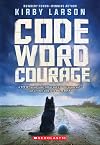
Set over the course of several months from 1944-1945, and switching perspectives every chapter between fifth-grader Billie and Diné Marine Denny, Billie's older brother Leo's friend from boot camp. Leo and Denny visit once before shipping out, and they bring an injured dog with them; Denny dubs him Bear, and Billie begs her great-aunt Doff to keep him.
In addition to worrying about her brother, and wondering if her father will ever come back, Billie is having friend troubles: her former best show more friend Hazel has ditched her for another girl, and Billie tries to win her back before realizing it's hopeless - and not worth it. Fortunately, the astronomy-obsessed new kid, Mexican-American Tito, proves a true friend.
Meanwhile, Denny is in the Pacific, storming the beaches of Iwo Jima and sending coded messages for air support. In a way, it's Bear who saves both humans, and in a rushed epilogue (Billie is in her 40s), Billie (with a dog in tow - Bear's descendant?) visits Denny on the reservation, having discovered his true role in the war: "I can't get over it....When you were little, they tried to prevent you from speaking Navajo, and then the language ends up winning the war for us." (232)
Quotes
"Wishing to be friends is quick work, but friendship is a slow-ripening fruit." --Aristotle (epigraph to Part Two, p. 81) show less
In addition to worrying about her brother, and wondering if her father will ever come back, Billie is having friend troubles: her former best show more friend Hazel has ditched her for another girl, and Billie tries to win her back before realizing it's hopeless - and not worth it. Fortunately, the astronomy-obsessed new kid, Mexican-American Tito, proves a true friend.
Meanwhile, Denny is in the Pacific, storming the beaches of Iwo Jima and sending coded messages for air support. In a way, it's Bear who saves both humans, and in a rushed epilogue (Billie is in her 40s), Billie (with a dog in tow - Bear's descendant?) visits Denny on the reservation, having discovered his true role in the war: "I can't get over it....When you were little, they tried to prevent you from speaking Navajo, and then the language ends up winning the war for us." (232)
Quotes
"Wishing to be friends is quick work, but friendship is a slow-ripening fruit." --Aristotle (epigraph to Part Two, p. 81) show less
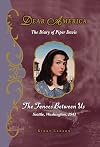
Hmph. That was frustrating, if my updates didn't give away indication of that.
There's an author's note at the end, where Kirby Larson explains why she wanted to write this story- although born and raised in the Seattle area, she didn't learn about Japanese American incarceration until her college years in the 1970s, and while making up for lost time she learned about Pastor Emery "Andy" Andrews, a Baptist minister who followed his Seattle Japantown congregation to Twin Falls, ID and show more continued his ministry. What a story of hope! Just not one that lends itself well to the teenage-girl-diary format, so let's invent a fictionalized version with a teenage daughter...
Pastor Andrews is an important story of people doing good in the face of apathy. Piper Davis IS apathy. In the first third of the book she's primarily concerned with boys and school and being mad at her dad for not letting her wear lipstick. Then, the Pearl Harbor attacks happen and she becomes afraid for her brother, stationed there on the Arizona. Meanwhile, a church acquaintance (friend would be generous at this point) gets bullied and spat on by boys outside her junior high, but Piper walks on because, "what would those boys think if I stopped?" She bemoans the fact that her father helps so publicly that the newspapers mention him and they get angry phone calls at night- "why can't he help our friends without being so out there?" is essentially one of the entries.
Eventually, the order comes for all people of Japanese descent to leave their homes for remote camps. Piper's father makes the decision to follow his flock and help out where he can. Piper takes this news BADLY because she was looking forward to such a FUN eighth grade year (pausing briefly to consider her church friend Betty living with her family in a one room converted horse stall at the Puyallup fairgrounds, before going back to giving her dad the silent treatment). When they move to Twin Falls, ID, they find that not all the locals are pleased to have sympathetic people in town and it just isn't fair.
While Piper does eventually learn the meaning of friendship, I kept thinking this book would work so much better if it were from Betty Sato's perspective. I'm guessing it isn't so because Kirby Larson probably didn't feel comfortable filling the shoes an #ownvoices author could've used but... c'mon. Telling the story of Japanese American incarceration through a white pastor's kid is like talking about the family detention centers on the border through the eyes of a white pastor's kid in El Paso- glad to see you can meet minimum standards of empathy, but it's hard to take you seriously when you gush about the yellow wallpaper of your new house and then soberly reflect on Betty's camp conditions, briefly. I recognize the argument that maybe this fills a void in white-perspectives-on-Japanese-American-incarceration, but did that gap need to be filled? Do readers that don't know a history need a similar, unaware proxy to learn how to empathize, OR could they read an account by the affected and listen, then reflect?
I was more into The Royal Diaries than Dear America so I don't remember if epilogues saying where characters ended up after they grew up are a thing, but this one irritated me by killing off the friendly guy in camp who showed romantic interest in Piper but she shut down because he filled that big brother void in her life. It sounds like Betty writes the fictional version of [b:Farewell to Manzanar: A True Story of Japanese American Experience During and After the World War II Internment|649361|Farewell to Manzanar A True Story of Japanese American Experience During and After the World War II Internment|Jeanne Wakatsuki Houston|https://i.gr-assets.com/images/S/compressed.photo.goodreads.com/books/1481673039l/649361._SY75_.jpg|807858] (which came out in 1973! HOW DID KIRBY NOT KNOW ABOUT THIS). I see on other reviews [b:Torn Apart: The Internment Diary of Mary Kobayashi|12505783|Torn Apart The Internment Diary of Mary Kobayashi (Dear Canada)|Susan Aihoshi|https://i.gr-assets.com/images/S/compressed.photo.goodreads.com/books/1316410750l/12505783._SX50_.jpg|17491343] is suggested as equivalent but that's for the Canadian equivalent camps- action taken after the US government decided to incarcerate our citizens. Japanese Americans are citizens too- why are they Othered in a book about them?? show less
There's an author's note at the end, where Kirby Larson explains why she wanted to write this story- although born and raised in the Seattle area, she didn't learn about Japanese American incarceration until her college years in the 1970s, and while making up for lost time she learned about Pastor Emery "Andy" Andrews, a Baptist minister who followed his Seattle Japantown congregation to Twin Falls, ID and show more continued his ministry. What a story of hope! Just not one that lends itself well to the teenage-girl-diary format, so let's invent a fictionalized version with a teenage daughter...
Pastor Andrews is an important story of people doing good in the face of apathy. Piper Davis IS apathy. In the first third of the book she's primarily concerned with boys and school and being mad at her dad for not letting her wear lipstick. Then, the Pearl Harbor attacks happen and she becomes afraid for her brother, stationed there on the Arizona. Meanwhile, a church acquaintance (friend would be generous at this point) gets bullied and spat on by boys outside her junior high, but Piper walks on because, "what would those boys think if I stopped?" She bemoans the fact that her father helps so publicly that the newspapers mention him and they get angry phone calls at night- "why can't he help our friends without being so out there?" is essentially one of the entries.
Eventually, the order comes for all people of Japanese descent to leave their homes for remote camps. Piper's father makes the decision to follow his flock and help out where he can. Piper takes this news BADLY because she was looking forward to such a FUN eighth grade year (pausing briefly to consider her church friend Betty living with her family in a one room converted horse stall at the Puyallup fairgrounds, before going back to giving her dad the silent treatment). When they move to Twin Falls, ID, they find that not all the locals are pleased to have sympathetic people in town and it just isn't fair.
While Piper does eventually learn the meaning of friendship, I kept thinking this book would work so much better if it were from Betty Sato's perspective. I'm guessing it isn't so because Kirby Larson probably didn't feel comfortable filling the shoes an #ownvoices author could've used but... c'mon. Telling the story of Japanese American incarceration through a white pastor's kid is like talking about the family detention centers on the border through the eyes of a white pastor's kid in El Paso- glad to see you can meet minimum standards of empathy, but it's hard to take you seriously when you gush about the yellow wallpaper of your new house and then soberly reflect on Betty's camp conditions, briefly. I recognize the argument that maybe this fills a void in white-perspectives-on-Japanese-American-incarceration, but did that gap need to be filled? Do readers that don't know a history need a similar, unaware proxy to learn how to empathize, OR could they read an account by the affected and listen, then reflect?
I was more into The Royal Diaries than Dear America so I don't remember if epilogues saying where characters ended up after they grew up are a thing, but this one irritated me by killing off the friendly guy in camp who showed romantic interest in Piper but she shut down because he filled that big brother void in her life. It sounds like Betty writes the fictional version of [b:Farewell to Manzanar: A True Story of Japanese American Experience During and After the World War II Internment|649361|Farewell to Manzanar A True Story of Japanese American Experience During and After the World War II Internment|Jeanne Wakatsuki Houston|https://i.gr-assets.com/images/S/compressed.photo.goodreads.com/books/1481673039l/649361._SY75_.jpg|807858] (which came out in 1973! HOW DID KIRBY NOT KNOW ABOUT THIS). I see on other reviews [b:Torn Apart: The Internment Diary of Mary Kobayashi|12505783|Torn Apart The Internment Diary of Mary Kobayashi (Dear Canada)|Susan Aihoshi|https://i.gr-assets.com/images/S/compressed.photo.goodreads.com/books/1316410750l/12505783._SX50_.jpg|17491343] is suggested as equivalent but that's for the Canadian equivalent camps- action taken after the US government decided to incarcerate our citizens. Japanese Americans are citizens too- why are they Othered in a book about them?? show less
Dear America: The Fences Between Us: The Diary of Piper Davis: Seattle, Washington, 1941 (Playaway Children) by Kirby Larson
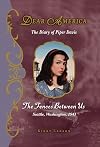
This book was great! I wish these Dear America books had been around when I was a little girl. It's like an improvement on the American Girls Collection books. It has the same basic plot format as they do - a slice of life story about a girl living at a certain key point in history - in this case, World War II. It also presents historical non-fiction information about the time period after the story, just like American Girl. But, it includes an epilogue, letting you know what 'happened' to show more the character when she grew up, and an activity - in this instance, a recipe for oatmeal cookies that she baked during the story. Young me would have loved this. My daughter, at almost 8, may not be quite old enough. She was initially thrilled by it, and then appeared to lose interest - though that could just be because she's reading four books at once.
It told the story of Japanese internment during World War II, as seen through the eyes of the daughter of a white pastor with a Japanese congregation. It was appalling. I can't believe we did this to our own citizens. And yet, I look at some of the things going on today, and our attitude towards, say, Middle Easterners, and I CAN believe it, unfortunately. Growing up, I always believed the message school had sent - that one of the reasons America came to exist was to save people from just such persecution - that we were free, and tolerant, and would never judge anyone by the color of their skin, or their religion, nationality, or anything other than their own demonstrated behavior. The older I get, the more it seems like our country is no better than many other countries in that department. It seems like most countries just have good times where they are very tolerant, and bad times, where they are very closed-minded. Perhaps I'm letting go of the idea that individual actions make a difference on that continuum, except at a very local level. I guess philosophically, I wonder whether presenting information like this to kids makes them disheartened too young. And on the other hand, I think it's a story that people have a right to tell, and a responsibility to be familiar with. show less
It told the story of Japanese internment during World War II, as seen through the eyes of the daughter of a white pastor with a Japanese congregation. It was appalling. I can't believe we did this to our own citizens. And yet, I look at some of the things going on today, and our attitude towards, say, Middle Easterners, and I CAN believe it, unfortunately. Growing up, I always believed the message school had sent - that one of the reasons America came to exist was to save people from just such persecution - that we were free, and tolerant, and would never judge anyone by the color of their skin, or their religion, nationality, or anything other than their own demonstrated behavior. The older I get, the more it seems like our country is no better than many other countries in that department. It seems like most countries just have good times where they are very tolerant, and bad times, where they are very closed-minded. Perhaps I'm letting go of the idea that individual actions make a difference on that continuum, except at a very local level. I guess philosophically, I wonder whether presenting information like this to kids makes them disheartened too young. And on the other hand, I think it's a story that people have a right to tell, and a responsibility to be familiar with. show less
 This review was written for LibraryThing Early Reviewers.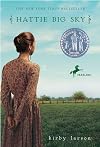
Sixteen-year-old Hattie inherits a homestead in Montana. There's only one catch: she has to "prove" her claim. That means outsmarting a bad-tempered cow named "Violet", digging holes for fence posts to fence in an area as big as 40 football fields, and surviving the freezing winter, muddy spring, and sizzling summer. All while living in a rackety tiny shed that her uncle put up to serve as a house.
While Hattie is fighting the good fight against all of these challenges, World War I is show more changing people's opinions about their German neighbors. Standing up for her new friends takes a completely different kind of courage.
Note for sensitive readers: This story has a childbirth scene and there is a death in the family. show less
While Hattie is fighting the good fight against all of these challenges, World War I is show more changing people's opinions about their German neighbors. Standing up for her new friends takes a completely different kind of courage.
Note for sensitive readers: This story has a childbirth scene and there is a death in the family. show less
Lists
Awards


You May Also Like


Associated Authors
Statistics
- Works
- 30
- Also by
- 1
- Members
- 7,933
- Popularity
- #3,056
- Rating
- 4.1
- Reviews
- 328
- ISBNs
- 198
- Languages
- 3
- Favorited
- 1
