
Maurice Carlos Ruffin
Author of We Cast a Shadow: A Novel
About the Author
Image credit: pulled from an interview in www.lareviewofbooks.org
Works by Maurice Carlos Ruffin
Associated Works
Four Hundred Souls: A Community History of African America, 1619-2019 (2021) — Contributor — 1,157 copies, 25 reviews
Tagged
Common Knowledge
- Birthdate
- 20th century
- Gender
- male
- Education
- University of New Orleans (MFA)
- Organizations
- Peauxdunque Writers Alliance
Melanated Writers of New Orleans - Nationality
- USA
- Birthplace
- New Orleans, Louisiana, USA
- Places of residence
- New Orleans, Louisiana, USA
- Associated Place (for map)
- New Orleans, Louisiana, USA
Members
Reviews
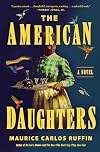
In antebellum New Orleans, a woman and her young daughter are sold to a man who wants them to care for his townhouse. He spends much of his time at his slave labor camp, called a plantation, a day's ride from the city with his family. I don't want to give any of the plot away, except that it encompasses both terrible hardship and abuse, as well as love and women in unendurable circumstances finding ways to fight back. The novel changes in tone decidedly partway through, one half being an show more account of a girl growing up enslaved, and the second part being a rousing adventure story.
The center of this book is the city of New Orleans, a place where slavery thrived, human beings were bought and sold, but also a place where some Black people were free and had a vibrant culture of their own. Maurice Carlos Ruffin excels in both making the horror of slavery evident, without that horror feeling exploitative, and in emphasizing the agency and humanity of those who were enslaved. And I love the title, The American Daughters, and how it claims that title for its brave Black women, both enslaved and free, working to prevent the Confederacy from winning the war. show less
The center of this book is the city of New Orleans, a place where slavery thrived, human beings were bought and sold, but also a place where some Black people were free and had a vibrant culture of their own. Maurice Carlos Ruffin excels in both making the horror of slavery evident, without that horror feeling exploitative, and in emphasizing the agency and humanity of those who were enslaved. And I love the title, The American Daughters, and how it claims that title for its brave Black women, both enslaved and free, working to prevent the Confederacy from winning the war. show less
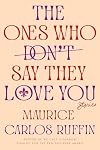
This is a collection of short stories by Maurice Carlos Ruffin. Ruffin's first novel was a satire but these stories fully inhabit the present, even when Ruffin pulls things into the near future. These are also stories set in and about New Orleans, but not the one the tourists or wealthy in-comers see, but a New Orleans of people just getting by, of hustlers and kids and working folk. Many of the stories are vignettes, short pieces of just a page or two but for all their brevity, they didn't show more feel like fragments.
Ruffin inhabits different characters with an easy grace that comes of keen observation, but he's at his best in writing from the point of view of children trying to get by in a world where they have very little control over what happens around them. A few of the stories reminded me of Jamel Brinkley's A Lucky Man and my favorite story is the one that closes out the book, about a woman trying to save her house while her neighborhood is gentrifying around her. Tip hotel housekeeping, guys! show less
Ruffin inhabits different characters with an easy grace that comes of keen observation, but he's at his best in writing from the point of view of children trying to get by in a world where they have very little control over what happens around them. A few of the stories reminded me of Jamel Brinkley's A Lucky Man and my favorite story is the one that closes out the book, about a woman trying to save her house while her neighborhood is gentrifying around her. Tip hotel housekeeping, guys! show less

A black lawyer, living in the city in a near future United States, has worked his entire life to assimilate properly, obeying every rule. Now he's up for a big promotion, one that will give him the financial resources to give his son the one thing that will save his life and allow him to succeed. He wants to buy his son a medical procedure that will make him white.
This is a hard book to characterize. It's certainly satire, and dystopian fiction. It's a book about racism that at first feels show more like hyperbole, but as I read, the world that Maurice Carlos Ruffin built felt less and less exaggerated, being so based in how society works today. And it feels warmer than satire usually does. The narrator may be compromised. He may be rationalizing his own complicity as well as being eager to attribute the actions of the state to flaws in the morals of the people crushed by it, but he is so motivated by a fierce love for his son that it's impossible not to feel for him, even as he consistently hurts those around him, even the ones he cares for the most.
I'll be thinking about this one for some time. show less
This is a hard book to characterize. It's certainly satire, and dystopian fiction. It's a book about racism that at first feels show more like hyperbole, but as I read, the world that Maurice Carlos Ruffin built felt less and less exaggerated, being so based in how society works today. And it feels warmer than satire usually does. The narrator may be compromised. He may be rationalizing his own complicity as well as being eager to attribute the actions of the state to flaws in the morals of the people crushed by it, but he is so motivated by a fierce love for his son that it's impossible not to feel for him, even as he consistently hurts those around him, even the ones he cares for the most.
I'll be thinking about this one for some time. show less
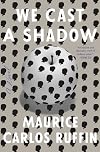
I don't know if it's fair to compare anything at all to Invisible Man but I can't think of another novel that includes the same mix of high satire and terrifying truth as does this debut from Maurice Carlos Ruffin.
Ellison is clearly on Ruffin's mind here. Ruffin's opening sentences pay homage to the first lines of Invisible Man--only, Ruffin's opening is far more cynical and without hope about the health of black identity within a white-majority culture.
Here is Ellison:
I am an invisible show more man. No, I am not a spook like those who haunted Edgar Allan Poe; nor am I one of your Hollywood-movie ectoplasms...I am invisible, understand, simply because people refuse to see me.
and Ruffin:
My name doesn't matter. All you need to know is that I'm a phantom, a figment...
Ellison's unnamed protagonist knows he is a man and not a ghost--he is asserting his personhood even though white people consistently try to erase him. Ruffin's unnamed protagonist, in contrast, insists he is a ghost--he has accepted and embraced his lack of personhood and has bought into these racist ideas of the white culture he lives in.
What follows is satire so close to the truth that it hurts to laugh. The satirical jabs here cause pain even when they are extraordinarily funny. And at first they are funny, the way only the most true satire can be. But then at some point the novel stops being funny. Maybe it's right around the time when the unnamed narrator daubs his son with skin bleach that burns like battery acid while telling his son that it's for his own good. You discover that you've been led through a landscape that you only mistook for satire, and what you're reading now is an unrelenting indictment of the caustic affects of racism on a black man's selfhood and dignity.
Some works tackle the subject of racism in a way that allows white people to feel really good about themselves in the end. Others don't leave space for white readers to reasonably separate themselves from the racism depicted in their pages, or to come away with "I'm one of the good guys" feelings, because in real life there are no white-people exceptions to systemic racism. This novel is the second kind of achievement. It may sell fewer books because of it, but it's a braver book because of it.
We Cast a Shadow is not as tightly perfect as Invisible Man but for me it had more human heartbreak in it. show less
Ellison is clearly on Ruffin's mind here. Ruffin's opening sentences pay homage to the first lines of Invisible Man--only, Ruffin's opening is far more cynical and without hope about the health of black identity within a white-majority culture.
Here is Ellison:
I am an invisible show more man. No, I am not a spook like those who haunted Edgar Allan Poe; nor am I one of your Hollywood-movie ectoplasms...I am invisible, understand, simply because people refuse to see me.
and Ruffin:
My name doesn't matter. All you need to know is that I'm a phantom, a figment...
Ellison's unnamed protagonist knows he is a man and not a ghost--he is asserting his personhood even though white people consistently try to erase him. Ruffin's unnamed protagonist, in contrast, insists he is a ghost--he has accepted and embraced his lack of personhood and has bought into these racist ideas of the white culture he lives in.
What follows is satire so close to the truth that it hurts to laugh. The satirical jabs here cause pain even when they are extraordinarily funny. And at first they are funny, the way only the most true satire can be. But then at some point the novel stops being funny. Maybe it's right around the time when the unnamed narrator daubs his son with skin bleach that burns like battery acid while telling his son that it's for his own good. You discover that you've been led through a landscape that you only mistook for satire, and what you're reading now is an unrelenting indictment of the caustic affects of racism on a black man's selfhood and dignity.
Some works tackle the subject of racism in a way that allows white people to feel really good about themselves in the end. Others don't leave space for white readers to reasonably separate themselves from the racism depicted in their pages, or to come away with "I'm one of the good guys" feelings, because in real life there are no white-people exceptions to systemic racism. This novel is the second kind of achievement. It may sell fewer books because of it, but it's a braver book because of it.
We Cast a Shadow is not as tightly perfect as Invisible Man but for me it had more human heartbreak in it. show less
Lists
Awards


You May Also Like


Associated Authors
Statistics
- Works
- 4
- Also by
- 3
- Members
- 674
- Popularity
- #37,467
- Rating
- 4.0
- Reviews
- 31
- ISBNs
- 21
- Languages
- 1
