
Tessa Allen
Author of Sometimes People March
Works by Tessa Allen
Tagged
Common Knowledge
There is no Common Knowledge data for this author yet. You can help.
Members
Reviews

Amazon Category: 90-Minute Fiction (Mystery) Read.
Ethan Harrington, owner of Harrington Books, is deeply troubled by the fact that he was one of the last people to speak with Eleanor Blackwood, a long-time book club member. With a section dedicated to historical records, Ethan knows of Eleanor's strong interest in the history of the founding families. However, as he reflects on her remarks during the previous night's meeting and their subsequent conversation, he cannot shake the concern that show more someone might be trying to erase the past—or, at the very least, that they want the past to remain forgotten.
The attractive book cover caught my attention with its irresistible title, prompting me to delve into the story without even reading the description. I read the novelette in one sitting, completely captivated by the mystery surrounding a granddaughter's discovery in her grandmother's attic, a reporter’s interest in the founding families, and the loss of a book club member—all of which are connected to Ridgewood's history. I thoroughly enjoyed the suspenseful storyline, which includes elements of intrigue and sets the stage for a promising new cozy mystery series. The true treasure lies in the characters' dialogue as they explore themes of history and truth.
I'm looking forward to the continued development of this series. show less
Ethan Harrington, owner of Harrington Books, is deeply troubled by the fact that he was one of the last people to speak with Eleanor Blackwood, a long-time book club member. With a section dedicated to historical records, Ethan knows of Eleanor's strong interest in the history of the founding families. However, as he reflects on her remarks during the previous night's meeting and their subsequent conversation, he cannot shake the concern that show more someone might be trying to erase the past—or, at the very least, that they want the past to remain forgotten.
The attractive book cover caught my attention with its irresistible title, prompting me to delve into the story without even reading the description. I read the novelette in one sitting, completely captivated by the mystery surrounding a granddaughter's discovery in her grandmother's attic, a reporter’s interest in the founding families, and the loss of a book club member—all of which are connected to Ridgewood's history. I thoroughly enjoyed the suspenseful storyline, which includes elements of intrigue and sets the stage for a promising new cozy mystery series. The true treasure lies in the characters' dialogue as they explore themes of history and truth.
I'm looking forward to the continued development of this series. show less
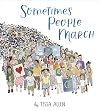
"Simple, direct statements are paired with watercolor illustrations to highlight some of the rallying causes for organized marches throughout the history of the United States.
The text and art begin with two marches that will reemerge as metaphor later in the book: a long line of ants marching to and from a piece of watermelon, and members of a blue-and-gold–clad marching band following their leader’s baton. As the band recedes on the verso, across the gutter an extremely diverse group of show more people similar to the crowds marching across the book’s cover advances toward readers on recto. Here the text repeats the book’s title. Next, negative space surrounds a small group of women and children—obviously from an earlier time—holding a protest sign. The text explains that sometimes people march “to resist injustice.” The facing page shows a contemporary family gazing with chagrin at a polluted beach; they will march because they “notice a need for change.” The text continues to offer simple explanations of why people march, eventually moving to other peaceful means of resistance, including signs, boycotts, strikes, sit-ins, and “taking a knee.” Hardship in the form of physical and psychic exhaustion is mentioned, but police and other legally sanctioned violence against protest is not—the general mood is uplifting encouragement to young, potential activists. This timely book combines rudimentary facts about peaceful resistance with art that depicts organized actions from the 19th century through today, and endnotes reveal more specifics about each illustration, including historic figures represented.
Effectively argues that “People are more powerful together.” (Informational picture book. 4-8)" From Kirkus, www.kirkusreviews.com show less
The text and art begin with two marches that will reemerge as metaphor later in the book: a long line of ants marching to and from a piece of watermelon, and members of a blue-and-gold–clad marching band following their leader’s baton. As the band recedes on the verso, across the gutter an extremely diverse group of show more people similar to the crowds marching across the book’s cover advances toward readers on recto. Here the text repeats the book’s title. Next, negative space surrounds a small group of women and children—obviously from an earlier time—holding a protest sign. The text explains that sometimes people march “to resist injustice.” The facing page shows a contemporary family gazing with chagrin at a polluted beach; they will march because they “notice a need for change.” The text continues to offer simple explanations of why people march, eventually moving to other peaceful means of resistance, including signs, boycotts, strikes, sit-ins, and “taking a knee.” Hardship in the form of physical and psychic exhaustion is mentioned, but police and other legally sanctioned violence against protest is not—the general mood is uplifting encouragement to young, potential activists. This timely book combines rudimentary facts about peaceful resistance with art that depicts organized actions from the 19th century through today, and endnotes reveal more specifics about each illustration, including historic figures represented.
Effectively argues that “People are more powerful together.” (Informational picture book. 4-8)" From Kirkus, www.kirkusreviews.com show less
Awards


Statistics
- Works
- 2
- Members
- 152
- Popularity
- #137,197
- Rating
- 4.6
- Reviews
- 2
- ISBNs
- 3