
Carrie Firestone
Author of Dress Coded
Works by Carrie Firestone
Tagged
Common Knowledge
- Gender
- female
- Agent
- Sara Crowe
Members
Reviews
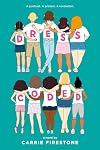
So much to say. Dress Coded, a 2021 Lone Star novel, discusses courage, kindness, equality, acceptance, responsibility, and growing up. I know, that's a lot. Is it perfect? No--it presents a narrow view of an important problem without covering the opposition. With that said, it's unimportant because the novel is laser-focused. That's why. It's not meant to show all sides of an issue. It's making one valid point for one side of an argument, making it a home run.
At Fisher Middle School, girls show more receive different treatment. At one point, a character comments that they used to have so much fun as kids--no one expected anything except them to be kids and they only talk about the good times as kids. They want more good times, but they feel the stresses of their age. Middle school can be challenging. The stresses include the threat of school violence, such as a shooter, weather disasters, bears, bullies, liking someone who doesn't like you back, problems at home, mean siblings, homework, and fitting in. The main stress involves the dress code. Girls are "pulled over" frequently--usually the girls who are more developed. Girls who still look like little girls can wear whatever they want. Boys are never "pulled over." The event that starts it all happens with Olivia. Olivia, blamed for canceling the camping trip, feels mortified. When "pulled over," she refuses to put her sweatshirt on to cover up her shoulders which are showing because she has a tank top on. She can't put it on because she started her period and has on white pants. She's waiting for his sister to bring her new pants. As she cries, the two men who enforce the dress code yell at her. Everyone points their anger at Olivia for cancelling the trip. This incident sets Molly off on her campaign.
Molly spends her time trying to make things right. She wants her mom and dad to not worry about her, so she remains the "good kid." She wants her brother to actually like her, but he's got many, many problems that take up her parents' time. Molly has great friends and reconnects with friends she hasn't spent much time with during her advocacy. Molly never gets "pulled over" because she still looks like a kid. They're eighth graders but she is still small and has not developed; therefore, she's ignored. She's so mad that Olivia was treated so badly and then bullied by Nick that she starts a podcast called Dress Coded. She invites girls to talk about how they've been treated. The inequality stands out. Via a whisper campaign after interviewing Olive, the truth comes out and the girls no longer blame Olivia for the cancelled trip; the boys remain silent. As the podcast grows, so do Molly's circle of friends. She discovers wonderful girls who all have problems and the dress code causes even more angst. They lose their self-confidence. They don't feel good in anything they are allowed to wear. They feel defeated and judged.. There's no joy. There's no one building them up with words of encouragement or ways to grow into a better human: "you did great," "congratulations," etc. Instead of becoming strong girls, they become beaten down females who feel unworthy. There's the stereotypical bully who doesn't help. Molly pays absolutely little attention to him. After living with her brother, I can't imagine he could cause her more problems.
I really enjoyed the novel. There are so many sentences to take out and use as universal truths. Molly, almost too good to be true, finds a voice. She quietly goes about at her house because her brother takes up a lot of oxygen, but she finds her voice, visibility, and meaning which makes the novel so uplifting. I especially like that her parents support her. Yes, they spend a lot of time with Molly's brother, but they recognize Molly's advocacy and cheer for her. Molly is also friends with just about everyone: Tom who had a traumatic brain injury and Megan who has Cerebral Palsy. The bullying that happens to these kids who are different makes you even angrier. Molly doesn't judge but enjoys knowing everyone. She listens and asks how they feel. Everyone wants to be seen, have a voice, reveal their feelings, and feel part of a group. Molly does that. As all these stresses take little pieces out of us, coming together can pull those pieces back. It's a really great, uplifting novel asking us to see each other, be kind, and accept one another so that we can make good memories now and not just look back. Oh, and, don't vape! show less
At Fisher Middle School, girls show more receive different treatment. At one point, a character comments that they used to have so much fun as kids--no one expected anything except them to be kids and they only talk about the good times as kids. They want more good times, but they feel the stresses of their age. Middle school can be challenging. The stresses include the threat of school violence, such as a shooter, weather disasters, bears, bullies, liking someone who doesn't like you back, problems at home, mean siblings, homework, and fitting in. The main stress involves the dress code. Girls are "pulled over" frequently--usually the girls who are more developed. Girls who still look like little girls can wear whatever they want. Boys are never "pulled over." The event that starts it all happens with Olivia. Olivia, blamed for canceling the camping trip, feels mortified. When "pulled over," she refuses to put her sweatshirt on to cover up her shoulders which are showing because she has a tank top on. She can't put it on because she started her period and has on white pants. She's waiting for his sister to bring her new pants. As she cries, the two men who enforce the dress code yell at her. Everyone points their anger at Olivia for cancelling the trip. This incident sets Molly off on her campaign.
Molly spends her time trying to make things right. She wants her mom and dad to not worry about her, so she remains the "good kid." She wants her brother to actually like her, but he's got many, many problems that take up her parents' time. Molly has great friends and reconnects with friends she hasn't spent much time with during her advocacy. Molly never gets "pulled over" because she still looks like a kid. They're eighth graders but she is still small and has not developed; therefore, she's ignored. She's so mad that Olivia was treated so badly and then bullied by Nick that she starts a podcast called Dress Coded. She invites girls to talk about how they've been treated. The inequality stands out. Via a whisper campaign after interviewing Olive, the truth comes out and the girls no longer blame Olivia for the cancelled trip; the boys remain silent. As the podcast grows, so do Molly's circle of friends. She discovers wonderful girls who all have problems and the dress code causes even more angst. They lose their self-confidence. They don't feel good in anything they are allowed to wear. They feel defeated and judged.. There's no joy. There's no one building them up with words of encouragement or ways to grow into a better human: "you did great," "congratulations," etc. Instead of becoming strong girls, they become beaten down females who feel unworthy. There's the stereotypical bully who doesn't help. Molly pays absolutely little attention to him. After living with her brother, I can't imagine he could cause her more problems.
I really enjoyed the novel. There are so many sentences to take out and use as universal truths. Molly, almost too good to be true, finds a voice. She quietly goes about at her house because her brother takes up a lot of oxygen, but she finds her voice, visibility, and meaning which makes the novel so uplifting. I especially like that her parents support her. Yes, they spend a lot of time with Molly's brother, but they recognize Molly's advocacy and cheer for her. Molly is also friends with just about everyone: Tom who had a traumatic brain injury and Megan who has Cerebral Palsy. The bullying that happens to these kids who are different makes you even angrier. Molly doesn't judge but enjoys knowing everyone. She listens and asks how they feel. Everyone wants to be seen, have a voice, reveal their feelings, and feel part of a group. Molly does that. As all these stresses take little pieces out of us, coming together can pull those pieces back. It's a really great, uplifting novel asking us to see each other, be kind, and accept one another so that we can make good memories now and not just look back. Oh, and, don't vape! show less
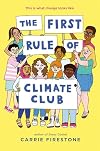
How delightful! I wish middle school were really like this novel. Carrie Firestone also wrote Dress Coded, which I thoroughly enjoyed as well! Some of the same characters appear in this novel as side characters, so it isn't necessary to have read Dress Coded before this book.
The First Rule of Climate Club is to show up--in so many ways! Mary Kate Murphy and her best friend Lucy wrote their essays to be admitted into the first Climate Class of Fisher Middle School. Accepted! Yes! show more Unfortunately, there's a big problem. Lucy feels too bad to attend school; she constantly sees doctors as her family try to discover what's wrong with her. While Lucy can barely stay awake and feels pain constantly, Mary Kate still must attend school. Without her best friend. She doesn't have any other friends. Then, she goes to her Climate Class. Mr. Lu acts nothing like a regular teacher and pulls the class together into a cohesive unit, working together on day one. Side note: I love that they crawl out of his classroom window almost every day and have a place to sit in nature. With security in all of our middle schools, this freedom seems wishful. We do have a courtyard; I can just imagine seeing kids crawling out windows! Back on track......The class needs to find a project, a way to message people about climate change. They throw out everything they are concerned about regarding the environment until there's a way to combine projects. These students show up every day full of energy, ideas, and the will to make change.
Mary Kate's family represent the generations of Americans and how life changes over time creating generation gaps. Mary Kate was a "surprise" kid, so her siblings are much older; I believe 27 and 30 while her parents are upper 50s-ish; Mary Kate is 12. Her sister, Sarah, has a new baby and Mary Kate is the baby's god mother. Her brother appears briefly at the end of the novel. The parents are older, so Sarah does a lot of translating to help Mary Kate understand her parents. They don't understand systemic racism and are embarrassed when Mary Kate calls the mayor out for being racist. None of them like the mayor and hope Sarah's best friend Charlotte Lane (Mary Kate's English teacher) will be elected instead. Her parents own a bookstore, wear Birkenstocks and really don't understand the generation but love seeing Mary Kate's enthusiasm (as long as it's within bounds). It's amusing how Mary Kate will text Sarah telling her how her parents don't get it (whatever "it" is at the moment) and Sarah has great advice.
There's a lot on Mary Kate's plate. She's most worried about Lucy because the adults think it's all in Lucy's head when it absolutely is not. She is seriously ill. Mary Kate refuses to give up on Lucy! Mary Kate wants Ms. Lane to be elected mayor, so Mary Kate knocks on doors and helps campaign. In addition, she really cares about the climate. She discovers from her dad that the mayor is offering $10,000 to anyone who can present the best project for the city or part of the city. Perfect! The class wants the money to start composting at their school. Most kids throw away their food; the trash is FULL of uneaten food. They need $3500. They prepare for the presentation, working together. There's a lot to juggle. You also meet all of the club members and read their essays to learn what their climate concern is. You WANT to help these kids and do all of the actions for which they advocate. Mary Kate says that good days always follow bad, so keep positive affirmations all the time. When she needs a breather, she walks in the preserve next to house for nature medicine.
I truly loved this novel. Yes, it's very "pie in the sky" because we would never have a class like this in our middle school because you have to teach the TEKS in Texas. The teachers and librarian are lovely and realistic in a sense but real teachers are super exhausted and don't have as much energy that these teachers have. I love that Mary Kate often eats in the library. She and the librarian have a great relationship. They have 30 seconds of small talk and then each takes care of their own business. This novel makes you want to change. It makes you smile. It gives you hope. It's positive. It shows that action works. Go out and make a difference! Everyone can if you have the village helping! show less
The First Rule of Climate Club is to show up--in so many ways! Mary Kate Murphy and her best friend Lucy wrote their essays to be admitted into the first Climate Class of Fisher Middle School. Accepted! Yes! show more Unfortunately, there's a big problem. Lucy feels too bad to attend school; she constantly sees doctors as her family try to discover what's wrong with her. While Lucy can barely stay awake and feels pain constantly, Mary Kate still must attend school. Without her best friend. She doesn't have any other friends. Then, she goes to her Climate Class. Mr. Lu acts nothing like a regular teacher and pulls the class together into a cohesive unit, working together on day one. Side note: I love that they crawl out of his classroom window almost every day and have a place to sit in nature. With security in all of our middle schools, this freedom seems wishful. We do have a courtyard; I can just imagine seeing kids crawling out windows! Back on track......The class needs to find a project, a way to message people about climate change. They throw out everything they are concerned about regarding the environment until there's a way to combine projects. These students show up every day full of energy, ideas, and the will to make change.
Mary Kate's family represent the generations of Americans and how life changes over time creating generation gaps. Mary Kate was a "surprise" kid, so her siblings are much older; I believe 27 and 30 while her parents are upper 50s-ish; Mary Kate is 12. Her sister, Sarah, has a new baby and Mary Kate is the baby's god mother. Her brother appears briefly at the end of the novel. The parents are older, so Sarah does a lot of translating to help Mary Kate understand her parents. They don't understand systemic racism and are embarrassed when Mary Kate calls the mayor out for being racist. None of them like the mayor and hope Sarah's best friend Charlotte Lane (Mary Kate's English teacher) will be elected instead. Her parents own a bookstore, wear Birkenstocks and really don't understand the generation but love seeing Mary Kate's enthusiasm (as long as it's within bounds). It's amusing how Mary Kate will text Sarah telling her how her parents don't get it (whatever "it" is at the moment) and Sarah has great advice.
There's a lot on Mary Kate's plate. She's most worried about Lucy because the adults think it's all in Lucy's head when it absolutely is not. She is seriously ill. Mary Kate refuses to give up on Lucy! Mary Kate wants Ms. Lane to be elected mayor, so Mary Kate knocks on doors and helps campaign. In addition, she really cares about the climate. She discovers from her dad that the mayor is offering $10,000 to anyone who can present the best project for the city or part of the city. Perfect! The class wants the money to start composting at their school. Most kids throw away their food; the trash is FULL of uneaten food. They need $3500. They prepare for the presentation, working together. There's a lot to juggle. You also meet all of the club members and read their essays to learn what their climate concern is. You WANT to help these kids and do all of the actions for which they advocate. Mary Kate says that good days always follow bad, so keep positive affirmations all the time. When she needs a breather, she walks in the preserve next to house for nature medicine.
I truly loved this novel. Yes, it's very "pie in the sky" because we would never have a class like this in our middle school because you have to teach the TEKS in Texas. The teachers and librarian are lovely and realistic in a sense but real teachers are super exhausted and don't have as much energy that these teachers have. I love that Mary Kate often eats in the library. She and the librarian have a great relationship. They have 30 seconds of small talk and then each takes care of their own business. This novel makes you want to change. It makes you smile. It gives you hope. It's positive. It shows that action works. Go out and make a difference! Everyone can if you have the village helping! show less
Mary Kate is part of a pilot class on climate change. The kids put together a school composting proposal for a community grant but the mayor disqualifies the proposal because one of the students (who is Black) does not reside in Honey Hill. Coming off of that disappointment, the kids turn to planning a festival that promotes sustainability and raises awareness of climate change. During all of this Mary learns about systemic racism, and social and environmental justice while also worrying show more about her best friend Lucy who appears to be having a mental breakdown. I'm appreciating the growing number of activist fiction being published for young readers, putting voice to the concerns kids today have and illustrating avenues for solutions. Mary's learning arc feels authentic without being pedantic. show less
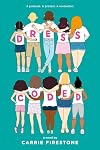
Dress Coded focuses on the (sometimes) overwhelming negativity that young girls in middle school face today when it comes to their clothing choices. The book follows Molly, a young girl who decides to start her own podcast after her friend, Olivia, is humiliated by their school Dean and Principal and who becomes a social pariah. One of the many important aspects of the book, is the fact that young girls in middle school are going through a lot; especially when it comes to puberty. Olivia was show more shamed for wearing a tank top, after removing her sweatshirt in order to cover up her pants, after she realized all too late, that she had gotten her period. Instead of the Dean and Principal hearing her out, they shamed her for exposing skin and cancelled the class field trip because of her supposed "insubordination." With this podcast, many other students, both past and present, come to Molly and Olivia's side to tell their stories of being shamed for their clothing choices, or getting in trouble when the dress code was never explained. Molly is also dealing with personal family issues; a brother who has been caught vaping, and parents who are so hyperfocused on his day-to-day activities, that their interest in Molly takes a back seat. This is a great book for middle school girls, but especially boys too, because there are so many times when boys will even make fun of girls for what they are wearing, how they are wearing something, etc., and not even realize that their classmates might be going through a bit of a crises, like Olivia. It teaches kids to come together and to fight for what's right and to stand up to bullying, even if the bullies are adults. show less
Lists
Awards


You May Also Like


Associated Authors
Statistics
- Works
- 5
- Members
- 579
- Popularity
- #43,292
- Rating
- 3.9
- Reviews
- 36
- ISBNs
- 34
- Languages
- 2