
Matthew Futterman
Author of Running to the Edge: A Band of Misfits and the Guru Who Unlocked the Secrets of Speed
Works by Matthew Futterman
Running to the Edge: A Band of Misfits and the Guru Who Unlocked the Secrets of Speed (2019) 51 copies, 2 reviews
Players: The Story of Sports and Money, and the Visionaries Who Fought to Create a Revolution (2016) 30 copies, 3 reviews
Tagged
Common Knowledge
- Gender
- male
- Education
- Union College, Schenectady, New York, USA
- Organizations
- New York Times
Wall Street Journal
Newark Star-Ledger - Nationality
- USA
- Places of residence
- New York, New York, USA
Larchmont, New York, USA
Schenectady, New York, USA - Map Location
- USA
Members
Reviews
Running to the edge : a band of misfits and the guru who unlocked the secrets of speed by Matthew Futterman
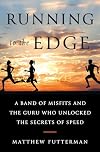
The first half of the book is excellent, painting a vivid portrait of the early life and career of running coach Bob Larsen (the guru in the subtitle). It does a great job of describing the innovations in training methods, as coaches struggled to incorporate new and contradictory approaches into their programs, decades before there was any actual sports science to support one way or the other.
In this telling, Larsen is one of the pioneers who first pieced together the best compromise show more between speed and endurance and figured out how to apply it in practice to get the most out of his athletes. The profiles of the "band of misfits" were interesting, as they progressed from kids through high school and then into college level competition and beyond (all the way to the Olympics).
But then the page turns and suddenly it's decades later, and the focus is on two entirely different athletes, Deena Kastor and Meb Keflezighi, with the latter hogging 90% of the attention. Both have written their own books, and their stories are already well known, so the choice to drop everyone else from the narrative is disappointing. Especially since Larsen himself is relegated to the sidelines, and it's really just a rehashed account of Meb's career. Although a couple of the other contemporary prominent coaches are mentioned (e.g. Alberto Salazar), there is no comparison of their coaching styles or effectiveness. Come to think of it, even early on the other significant coaches (e.g. Jack Daniels) were also ignored. And there is no discussion of how Larsen continued to evolve his programme over the decades as the sports science progressed (e.g. heart rate zones, lactate thresholds, power meters, etc.) So the whole story is really incomplete and unbalanced.
The author tries to tie it all together with vignettes from his own running, but these add almost nothing and felt extremely self-indulgent, like if he was going to write a book about running
he couldn't help but brag about qualifying for the Boston Marathon.
He belatedly tried to pull the disparate pieces together in the conclusion, but it felt like an afterthought demanded by the publisher after reviewing the first draft and rejecting it for being disjointed and not as advertised. It summed up what he was trying to say, but reinforced the fact that he didn't do a good job of it. show less
In this telling, Larsen is one of the pioneers who first pieced together the best compromise show more between speed and endurance and figured out how to apply it in practice to get the most out of his athletes. The profiles of the "band of misfits" were interesting, as they progressed from kids through high school and then into college level competition and beyond (all the way to the Olympics).
But then the page turns and suddenly it's decades later, and the focus is on two entirely different athletes, Deena Kastor and Meb Keflezighi, with the latter hogging 90% of the attention. Both have written their own books, and their stories are already well known, so the choice to drop everyone else from the narrative is disappointing. Especially since Larsen himself is relegated to the sidelines, and it's really just a rehashed account of Meb's career. Although a couple of the other contemporary prominent coaches are mentioned (e.g. Alberto Salazar), there is no comparison of their coaching styles or effectiveness. Come to think of it, even early on the other significant coaches (e.g. Jack Daniels) were also ignored. And there is no discussion of how Larsen continued to evolve his programme over the decades as the sports science progressed (e.g. heart rate zones, lactate thresholds, power meters, etc.) So the whole story is really incomplete and unbalanced.
The author tries to tie it all together with vignettes from his own running, but these add almost nothing and felt extremely self-indulgent, like if he was going to write a book about running
he couldn't help but brag about qualifying for the Boston Marathon.
He belatedly tried to pull the disparate pieces together in the conclusion, but it felt like an afterthought demanded by the publisher after reviewing the first draft and rejecting it for being disjointed and not as advertised. It summed up what he was trying to say, but reinforced the fact that he didn't do a good job of it. show less
Running to the Edge: A Band of Misfits and the Guru Who Unlocked the Secrets of Speed by Matthew Futterman
I feel like earlier this year I binge-read a bunch of running books and adored them all and then hit a wall when I'd read the good ones and have been struggling since then to find more of high quality. This one scratched my itch, even though it didn't really put much new on the table. It was more a fascinating history of the past few decades of running in the United States.
This was quite well-written though, and maybe it's because I'm a total sap, but there were multiple occasions where show more runners won their races and I totally teared up.
Listened to the audiobook which inspired me to bike faster on chilly days. show less
This was quite well-written though, and maybe it's because I'm a total sap, but there were multiple occasions where show more runners won their races and I totally teared up.
Listened to the audiobook which inspired me to bike faster on chilly days. show less
Players: The Story of Sports and Money, and the Visionaries Who Fought to Create a Revolution by Matthew Futterman
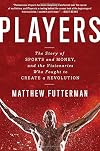
great at marshalling his facts and laying out a timeline of changes to the business of sports, good at linking each step in the changes. less good at making an argument at what has been good and bad for sports and the public, less good at what the future may hold
Players: The Story of Sports and Money, and the Visionaries Who Fought to Create a Revolution by Matthew Futterman
A special thank you to Simon & Schuster and NetGalley for an ARC in exchange for an honest review. Bold impressive cover!
Matthew Futterman, a senior special writer for sports with the Wall Street Journal; who better to tell readers of this incredible journey-PLAYERS, The Story of Sports and Money, and the Visionaries Who Fought to Create a Revolution a well-researched, gripping and insightful look at "big business" American professional sports industry.
From the fifties to the essential show more shift in the 1960s, with the first eight decades of the twentieth century—a profession largely one of exploitation—to its driving force today. How we arrived.
Timely, and newsworthy, a story of sports, history, revenues, power, money, greed—those courageous individuals who helped make the rise of modern sports, and its transformation to today. A wide-ranging cast of characters, from athletes, agents, TV executives, and league officials who together created the dominating and multifaceted sports industry.
Futterman delves into the history as far back as Mark McCormack with his simple ideas. "Sports stars were about athletes." They needed gasoline to make them go. People wanted to connect with them. They were a salable commodity that was being undervalued, and by doing so, the industry was preventing these athletes and the sports from being as good as they could be. They were being held back in so many areas.
McCormack wasn’t about just higher salaries for athletes. He wanted to uncover ways to enrich the clients he represented. His philosophy was about creating an environment where television networks could give fans the convenience of watching competitions, from all over the world, in the comfort of their homes.
More control and freedom-leaving athletes more time for training, ultimately improving quality of the competition—more valuable to the industry as a whole as well as the entertainment industry. More from leagues and event organizers to invest in the experience for fans, stadiums, arenas, and be able to charge higher prices. He was determined to make life better for everyone.
The first part of the book is focused on Mark McCormack, (the man who invented sports), a Cleveland lawyer who moved into the full time sport agent, starting with Arnold Palmer, with much success. (my favorite part). For those who are fans, and history buffs, will enjoy the nostalgia, back as early as the late fifties. Being a Georgia girl, enjoyed the connection in Atlanta.
Readers also learn of McCormack’s childhood; two loves: golf and making money—which I found fascinating. He desired a way to combine them. Using his experience, he could represent a professional golfer the same way as he represented other clients. We learn how this came about with a simple handshake, the legend- and an integral part in changing the history of sports and its players.
We also learn about Roger Staubach, (Henry S. Miller --being from a commercial real estate media background, Staubach, now Jones Lang LaSalle-a former client of mine). A success story-Staubach joined the Dallas Cowboys in 1969 as a 27-year-old rookie with a salary of $25,000. In comparison to a quarterback today making $18 million a year!
From Palmer and golf to baseball pitcher James “Catfish” Hunter. Where the name meant something. The image sells. From the challenges, the ups and downs, politics to McCormack’s death in 2003.
Beyond the numbers, the lesson he taught the world’s greatest athletes and the corporations—they represented the essence of sports. They needed to be empowered. By empowering them, he allowed them to transform modern sports. He set into motion, a path which continues today.
From here we shift into baseball, tennis, soccer, basketball and football. From Olympics, endorsements, contracts, media, royalties, Nike, IMG, ESPN, NFL, and networks--to the big business of Major League sports today—from athletes, greed, and power.
As Futterman reiterates, money in sports isn’t on its own, a bad thing. But when money becomes the motivating goal and main purpose in sports-- a bad thing. When a player whose sneaker contracts is more important than his team’s win total, and therefore bad for an owner or a league whose teams become little than a commodity to be traded for a big-pay television contract. From enablers, handlers, corporate sponsors—anyone in the position of power—exploitation.
What about the fans who have sustained the industry for a century and a half—the ability to enjoy the games the love and the athletes they admire without getting ripped off, lied to, or insulted by either the athletes, who play the sports or the people who run them. A fan’s love of sports is precious, unique, and not something to be trifled with, or used as a tool.
PLAYERS A "must read" for all sport enthusiasts, from a writer with the credentials and expertise to tell the "insider (behind the scenes)" story--- from entertainment business, media, historic, financial, economics; interviews, research, to exclusive and engaging content!
"An athlete cannot run with money in his pockets. He must run with hope in his heart and dreams in his head." -Emil Zatopek 1952 Olympic Champion
JDCMustReadBooks show less
Matthew Futterman, a senior special writer for sports with the Wall Street Journal; who better to tell readers of this incredible journey-PLAYERS, The Story of Sports and Money, and the Visionaries Who Fought to Create a Revolution a well-researched, gripping and insightful look at "big business" American professional sports industry.
From the fifties to the essential show more shift in the 1960s, with the first eight decades of the twentieth century—a profession largely one of exploitation—to its driving force today. How we arrived.
Timely, and newsworthy, a story of sports, history, revenues, power, money, greed—those courageous individuals who helped make the rise of modern sports, and its transformation to today. A wide-ranging cast of characters, from athletes, agents, TV executives, and league officials who together created the dominating and multifaceted sports industry.
Futterman delves into the history as far back as Mark McCormack with his simple ideas. "Sports stars were about athletes." They needed gasoline to make them go. People wanted to connect with them. They were a salable commodity that was being undervalued, and by doing so, the industry was preventing these athletes and the sports from being as good as they could be. They were being held back in so many areas.
McCormack wasn’t about just higher salaries for athletes. He wanted to uncover ways to enrich the clients he represented. His philosophy was about creating an environment where television networks could give fans the convenience of watching competitions, from all over the world, in the comfort of their homes.
More control and freedom-leaving athletes more time for training, ultimately improving quality of the competition—more valuable to the industry as a whole as well as the entertainment industry. More from leagues and event organizers to invest in the experience for fans, stadiums, arenas, and be able to charge higher prices. He was determined to make life better for everyone.
The first part of the book is focused on Mark McCormack, (the man who invented sports), a Cleveland lawyer who moved into the full time sport agent, starting with Arnold Palmer, with much success. (my favorite part). For those who are fans, and history buffs, will enjoy the nostalgia, back as early as the late fifties. Being a Georgia girl, enjoyed the connection in Atlanta.
Readers also learn of McCormack’s childhood; two loves: golf and making money—which I found fascinating. He desired a way to combine them. Using his experience, he could represent a professional golfer the same way as he represented other clients. We learn how this came about with a simple handshake, the legend- and an integral part in changing the history of sports and its players.
We also learn about Roger Staubach, (Henry S. Miller --being from a commercial real estate media background, Staubach, now Jones Lang LaSalle-a former client of mine). A success story-Staubach joined the Dallas Cowboys in 1969 as a 27-year-old rookie with a salary of $25,000. In comparison to a quarterback today making $18 million a year!
From Palmer and golf to baseball pitcher James “Catfish” Hunter. Where the name meant something. The image sells. From the challenges, the ups and downs, politics to McCormack’s death in 2003.
Beyond the numbers, the lesson he taught the world’s greatest athletes and the corporations—they represented the essence of sports. They needed to be empowered. By empowering them, he allowed them to transform modern sports. He set into motion, a path which continues today.
From here we shift into baseball, tennis, soccer, basketball and football. From Olympics, endorsements, contracts, media, royalties, Nike, IMG, ESPN, NFL, and networks--to the big business of Major League sports today—from athletes, greed, and power.
As Futterman reiterates, money in sports isn’t on its own, a bad thing. But when money becomes the motivating goal and main purpose in sports-- a bad thing. When a player whose sneaker contracts is more important than his team’s win total, and therefore bad for an owner or a league whose teams become little than a commodity to be traded for a big-pay television contract. From enablers, handlers, corporate sponsors—anyone in the position of power—exploitation.
What about the fans who have sustained the industry for a century and a half—the ability to enjoy the games the love and the athletes they admire without getting ripped off, lied to, or insulted by either the athletes, who play the sports or the people who run them. A fan’s love of sports is precious, unique, and not something to be trifled with, or used as a tool.
PLAYERS A "must read" for all sport enthusiasts, from a writer with the credentials and expertise to tell the "insider (behind the scenes)" story--- from entertainment business, media, historic, financial, economics; interviews, research, to exclusive and engaging content!
"An athlete cannot run with money in his pockets. He must run with hope in his heart and dreams in his head." -Emil Zatopek 1952 Olympic Champion
JDCMustReadBooks show less
Awards

Statistics
- Works
- 3
- Members
- 82
- Popularity
- #220,760
- Rating
- 3.9
- Reviews
- 5
- ISBNs
- 13