
Lindsay Eagar
Author of Hour of the Bees
Works by Lindsay Eagar
Tagged
Common Knowledge
- Gender
- female
Members
Reviews

Rory King's entire high school career has been leading up to this point: spring musical, senior year. She's paid her dues. She's put in her time. And everyone knows that Pam only casts seniors in lead roles. Rory is determined that this time, it's going to be her. She's behind the scenes, pulling all the strings, so subtly that not even her best friends suspect the lengths she will go to in order to get what she wants...
This YA retelling of Shakespeare's Richard III works so perfectly in the show more world of a highly competitive high school theatre department. If the reader is familiar with the source material, there are lots of cool Easter eggs hidden in the text, but if not, it's still a brilliant story of an ambitious anti-hero. Recommended. show less
This YA retelling of Shakespeare's Richard III works so perfectly in the show more world of a highly competitive high school theatre department. If the reader is familiar with the source material, there are lots of cool Easter eggs hidden in the text, but if not, it's still a brilliant story of an ambitious anti-hero. Recommended. show less
"Hour Of The Bees", the third book in my journey across fictional America, takes me to the Painted Desert in New Mexico.
New Mexico is one of my favourite States. It's managed to keep its wild beauty. The Painted Desert is one of the most spectacular places I've visited. It manages to be both stark and welcoming, as if it's daring you to have the courage to live there
Despite this, I found myself delaying starting "Hour Of The Bees". I even considered finding an alternative book in my TBR pile show more to continue my journey.
Why?
Well, the blurb sounds a little miserable, a twelve year old girl forced to spend the summer with a grand father she barely know and who is sinking into the quicksands of dementia. I've already lost someone to dementia. It's a very grim business.
I'm ashamed to admit that I was also put off by the cover. Could the publishers have put any less effort into it? It's bland, amateur, and not even slightly intriguing.
So why did I read it? It's read by Almarie Guerra, who did a wonderful job with "The Water Knife".
She does a beautiful job with "Hour Of The Bees" and I soon found myself absorbed into the world of twelve-year-old Hispanic girl, spending the summer on a dying ranch in the desert, preparing to move her soon-to-be-lost-to-dementia grandfather for a move to a home.
During the summer, her grandfather tells her the story of his life, starting always with "Once upon a time". The story has strong elements of magical realism or perhaps allegory would be a kinder description, which I normally find tiresome because it so far removed from reality and is obsessed with being clever. Lindsay Eager showed me that it doesn't have to be like that.
She introduces a splendid ambiguity to the storytelling by having the tale told by an old man with dementia to a girl with limited experience of life. This ambiguity left me to make up my own mind and helped me to concentrate on the emotional truths of the novel: that life must be embraced to be lived, that love is the anchor of hope and that a place can have a soul that we can push roots into and be nurtured by.
This is a summer of change for the young girl, making her re-examine who she is and who she wants to become. We see her relationship with her (step)sister shift shape from day to day, her empathy for her parents deepen and her love for her grandfather and the land he's given his life to blossom. She focuses on time and how we measure it and comes to understand that our approach to time changes who we are.
The pace of the story-telling is perfect: slow enough to give the sense of time passing on a remote desert ranch and fast enough to keep you wondering what will happen next. Each moment is threaded between the pearls of "Once upon a time..." storytelling that change the context of the present moment and the meaning of everything that passed before.
"Hours Of The Bees" is a fresh, original and pleasantly non-didactic book that made me think, cry and occasionally laugh. I was surprised to see that it's being marketed (and winning prizes) as a children's book, not because it isn't a good book for children to read, but because I think its range and appeal is much broader than that.
I enjoyed my summer on this ranch in the Painted Desert. I recommend you spend some time there. show less
New Mexico is one of my favourite States. It's managed to keep its wild beauty. The Painted Desert is one of the most spectacular places I've visited. It manages to be both stark and welcoming, as if it's daring you to have the courage to live there
Despite this, I found myself delaying starting "Hour Of The Bees". I even considered finding an alternative book in my TBR pile show more to continue my journey.
Why?
Well, the blurb sounds a little miserable, a twelve year old girl forced to spend the summer with a grand father she barely know and who is sinking into the quicksands of dementia. I've already lost someone to dementia. It's a very grim business.
I'm ashamed to admit that I was also put off by the cover. Could the publishers have put any less effort into it? It's bland, amateur, and not even slightly intriguing.
So why did I read it? It's read by Almarie Guerra, who did a wonderful job with "The Water Knife".
She does a beautiful job with "Hour Of The Bees" and I soon found myself absorbed into the world of twelve-year-old Hispanic girl, spending the summer on a dying ranch in the desert, preparing to move her soon-to-be-lost-to-dementia grandfather for a move to a home.
During the summer, her grandfather tells her the story of his life, starting always with "Once upon a time". The story has strong elements of magical realism or perhaps allegory would be a kinder description, which I normally find tiresome because it so far removed from reality and is obsessed with being clever. Lindsay Eager showed me that it doesn't have to be like that.
She introduces a splendid ambiguity to the storytelling by having the tale told by an old man with dementia to a girl with limited experience of life. This ambiguity left me to make up my own mind and helped me to concentrate on the emotional truths of the novel: that life must be embraced to be lived, that love is the anchor of hope and that a place can have a soul that we can push roots into and be nurtured by.
This is a summer of change for the young girl, making her re-examine who she is and who she wants to become. We see her relationship with her (step)sister shift shape from day to day, her empathy for her parents deepen and her love for her grandfather and the land he's given his life to blossom. She focuses on time and how we measure it and comes to understand that our approach to time changes who we are.
The pace of the story-telling is perfect: slow enough to give the sense of time passing on a remote desert ranch and fast enough to keep you wondering what will happen next. Each moment is threaded between the pearls of "Once upon a time..." storytelling that change the context of the present moment and the meaning of everything that passed before.
"Hours Of The Bees" is a fresh, original and pleasantly non-didactic book that made me think, cry and occasionally laugh. I was surprised to see that it's being marketed (and winning prizes) as a children's book, not because it isn't a good book for children to read, but because I think its range and appeal is much broader than that.
I enjoyed my summer on this ranch in the Painted Desert. I recommend you spend some time there. show less
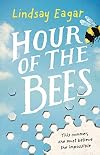
Hour of the Bees by Lindsay Eagar is a thoughtful and gently magical novel for middle-grade readers.
Twelve-year-old Carol is less than thrilled when her family spends the summer at her grandfather Serge’s sheep ranch in the harsh New Mexico desert. Their plan is practical but painful: move him into a care facility due to his dementia and sell the ranch. At first, the story feels grounded in reality, focusing on family tensions and difficult decisions.
But as Carol grows closer to her show more grandfather, the narrative begins to shift. Serge tells strange, fantastical stories about the desert—stories that may or may not be true. Gradually, the line between reality and magic blurs, drawing Carol (and the reader) into something deeper and more mysterious.
The novel explores themes of life and death, bullying, family roots, and the idea that endings are often just new beginnings. At its heart, it’s a story about identity, belonging, and learning to believe in something larger than yourself—all seen through the perspective of a young girl on the edge of growing up.
A quiet but powerful read, this book balances emotional realism with touches of magical wonder. show less
Twelve-year-old Carol is less than thrilled when her family spends the summer at her grandfather Serge’s sheep ranch in the harsh New Mexico desert. Their plan is practical but painful: move him into a care facility due to his dementia and sell the ranch. At first, the story feels grounded in reality, focusing on family tensions and difficult decisions.
But as Carol grows closer to her show more grandfather, the narrative begins to shift. Serge tells strange, fantastical stories about the desert—stories that may or may not be true. Gradually, the line between reality and magic blurs, drawing Carol (and the reader) into something deeper and more mysterious.
The novel explores themes of life and death, bullying, family roots, and the idea that endings are often just new beginnings. At its heart, it’s a story about identity, belonging, and learning to believe in something larger than yourself—all seen through the perspective of a young girl on the edge of growing up.
A quiet but powerful read, this book balances emotional realism with touches of magical wonder. show less
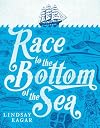
In a fantasy world that resembles a steampunk historical fiction, 11-year-old Fidelia Quail is devastated by the loss of her parents to a strong winter storm at sea. Trying to adjust to her new life living with her librarian aunt, Fidelia’s fortunes only get worse when she is kidnapped by pirates who demand she help them recover treasure from the bottom of the ocean floor. As this unlikely crew hits the open seas with the Navy on their heels and death rattling for the pirate captain, show more Fidelia has to race against the clock to finish her invention that will help her breathe underwater to dive for the treasure.
So, this book got some glowing reviews from professional reviewers, but I can’t help but think they were viewing this book as their adult selves and not as the intended audience of young readers. There are a LOT of reasons I think kids won’t like this book.
For starters, this book is 423 pages long. That’s intimidating, and most kids aren’t going to pick up something that long unless it’s part of a popular series or from a best-selling author (neither are the case here). The book jacket flap summary begins with "When her parents, the great marine scientists Dr. and Dr. Quail, are killed in a tragic accident, eleven-year-old Fidelia Quail is racked by grief." Although it goes on to describe pirate attacks and adventure, that first line might be enough for potential readers to close the book.
Chapter one begins with a detailed description of making chum out of mashed fish guts and gallons of blood. While many middle-grade readers are obsessed with the 'gross' and bodily functions, those kids aren't always the same ones wanting to read lengthy tomes. On its own, this wouldn't be a sticking point, but combined with all the factors, it gives me pause...
This continues on with numerous other far too descriptive passages of violence against the human body. For example, a description of a cannon fight between the pirates and the navy is thusly written: "The slick of his deck boards, blood rolling along their surface and dripping off into the sea. The sight of a head lolling against his feet -- one of his crew members, but drenched, and disfigured, like a bruised fruit. The sounds -- oh, god, the sounds of the slaughter. ... The cries of his crew -- grown men and women who had lost limbs for him over the years, and tattooed their skin with the tips of their blades on a wavering sea, and survived the near starvation and mental torture of long journeys. Never, never had Merrick heard them cry like this -- the wail of beasts, trapped and awaiting their certain death." Or another passage from the admiral of the navy: "But I've never seen a monster like Merrick. He didn't just abandon rank and leave the base as any decent officer would have done. No, he had to make a grand exit. He and that -- that fiend, Charlie, they took one of the frigates one night and threw its crew overboard. They set off explosions all along the fort. Those who weren't blown completely into pieces had to search for their own legs among the debris." This passages are well written -- for adults. This is not the kind of language I would recommend for children; it is just far too disturbing in its details.
Other bits of the writing style are even less compelling. For instance, on page 7, the narration describes the child protagonist as the "loin fruit" of her parents. I'm pretty sure I rolled my eyes at this point. Page 25 introduces the "catchphrase" to describe the dastardly storm: "During the Undertow, anything can happen." So catchy that I probably rolled my eyes again.
An interlude between chapters 3 and 4 goes back in time two years to introduce a character we haven't heard of yet. These "two years earlier" interludes continue throughout the book and feature only adult characters; many of them concern a love/lost love story between the pirate captain and an unnamed lady. While I found these some of the most interesting parts of the book personally, they aren't really the type of thing to appeal to young readers. The 'big reveal' from this part is also predictable by about a mile away, although I do have to admit seeing if I was right (I was) was one thing that kept me reading to the end -- that and my inability to just let a book go, no matter how bad it is or how little I am enjoying it. In a much further flashback, the meeting of these two star-crossed lovers is described with a little bit of innuendo, including the use of the word "sensuous." Not hardcore by any stretch of the imagination, but again perhaps not the best language for the target audience.
Speaking of chapters, many of the chapters in this book, especially right at the beginning, tend to be on the longer side (15-20 pages), which I always think is a mistake whether in a book for children, teens, or adults. Short chapters make a book more of a page turner (and could help compensate for the fact that it's more than 400 pages long!). Lengthier chapters make for a slower pace, adding to the feeling that the book is interminably long.
Despite how I usually enjoy when a villain is humanized, the pirate captain here is given too much sympathy and forgiveness. At the end of the day, he is still an arsonist, thief, and murderer. It doesn't matter that he loved a good person wholeheartedly or that he didn't actually hurt Fidelia (when he needed her expertise to get something anyway). He was still a bad person, and the book gives way too much heroism to him.
On the flip side, Admiral Bridgewater is made into too much of a villain; his character is almost comically one note. Furthermore, since he is the nominal 'bad guy,' he is predictably a fat person. Repeatedly the only thing used to describe him is his "bulk." Worse still, the description given to his girth most often involve animalistic characteristics -- piggie eyes, ham head, sausage fingers. This isn't the only book to do this but for goodness's sake, children's authors need to cease equating evil with fat and good with thin. Just stop already.
On the plus side, the book does show women being fearless and in roles that defy gender stereotypes -- Bloody Elle is a fierce and strong pirate/crew member; Fidelia is an inventor; Fidelia's mother was a Ph.D. level marine biologist. However, as is too often the case, the author does occasionally fall into some gender traps such as describing "manning a ship." Oh well, these things happen....
The steampunk setting may be striking to some, but again I think that tends to be a genre that has more appeal to adults than children. It may not be super obvious to some of the younger readers that this is indeed a fantasy world and not a historical one, especially if they don’t grasp the nuances (e.g., “nine seas” instead of seven).
By the end of the book, many seemingly inconsequential bits from the beginning of the book all the way on through come together. While I did like that, it felt like there was just too long of a wait for this payoff. This book really could have been about a hundred pages shorter and been just as good -- indeed, it would probably be better with much tighter writing and a more compelling flow. Instead, it was clunky and took a lot of effort to convince myself to keep picking it up and finally finish it. I can’t imagine kids will be more into it, although there might be some who just really enjoy pirates, sharks, and all things oceans enough to want to read this -- and stick with it all the way until the end. show less
So, this book got some glowing reviews from professional reviewers, but I can’t help but think they were viewing this book as their adult selves and not as the intended audience of young readers. There are a LOT of reasons I think kids won’t like this book.
For starters, this book is 423 pages long. That’s intimidating, and most kids aren’t going to pick up something that long unless it’s part of a popular series or from a best-selling author (neither are the case here). The book jacket flap summary begins with "When her parents, the great marine scientists Dr. and Dr. Quail, are killed in a tragic accident, eleven-year-old Fidelia Quail is racked by grief." Although it goes on to describe pirate attacks and adventure, that first line might be enough for potential readers to close the book.
Chapter one begins with a detailed description of making chum out of mashed fish guts and gallons of blood. While many middle-grade readers are obsessed with the 'gross' and bodily functions, those kids aren't always the same ones wanting to read lengthy tomes. On its own, this wouldn't be a sticking point, but combined with all the factors, it gives me pause...
This continues on with numerous other far too descriptive passages of violence against the human body. For example, a description of a cannon fight between the pirates and the navy is thusly written: "The slick of his deck boards, blood rolling along their surface and dripping off into the sea. The sight of a head lolling against his feet -- one of his crew members, but drenched, and disfigured, like a bruised fruit. The sounds -- oh, god, the sounds of the slaughter. ... The cries of his crew -- grown men and women who had lost limbs for him over the years, and tattooed their skin with the tips of their blades on a wavering sea, and survived the near starvation and mental torture of long journeys. Never, never had Merrick heard them cry like this -- the wail of beasts, trapped and awaiting their certain death." Or another passage from the admiral of the navy: "But I've never seen a monster like Merrick. He didn't just abandon rank and leave the base as any decent officer would have done. No, he had to make a grand exit. He and that -- that fiend, Charlie, they took one of the frigates one night and threw its crew overboard. They set off explosions all along the fort. Those who weren't blown completely into pieces had to search for their own legs among the debris." This passages are well written -- for adults. This is not the kind of language I would recommend for children; it is just far too disturbing in its details.
Other bits of the writing style are even less compelling. For instance, on page 7, the narration describes the child protagonist as the "loin fruit" of her parents. I'm pretty sure I rolled my eyes at this point. Page 25 introduces the "catchphrase" to describe the dastardly storm: "During the Undertow, anything can happen." So catchy that I probably rolled my eyes again.
An interlude between chapters 3 and 4 goes back in time two years to introduce a character we haven't heard of yet. These "two years earlier" interludes continue throughout the book and feature only adult characters; many of them concern a love/lost love story between the pirate captain and an unnamed lady. While I found these some of the most interesting parts of the book personally, they aren't really the type of thing to appeal to young readers. The 'big reveal' from this part is also predictable by about a mile away, although I do have to admit seeing if I was right (I was) was one thing that kept me reading to the end -- that and my inability to just let a book go, no matter how bad it is or how little I am enjoying it. In a much further flashback, the meeting of these two star-crossed lovers is described with a little bit of innuendo, including the use of the word "sensuous." Not hardcore by any stretch of the imagination, but again perhaps not the best language for the target audience.
Speaking of chapters, many of the chapters in this book, especially right at the beginning, tend to be on the longer side (15-20 pages), which I always think is a mistake whether in a book for children, teens, or adults. Short chapters make a book more of a page turner (and could help compensate for the fact that it's more than 400 pages long!). Lengthier chapters make for a slower pace, adding to the feeling that the book is interminably long.
Despite how I usually enjoy when a villain is humanized, the pirate captain here is given too much sympathy and forgiveness. At the end of the day, he is still an arsonist, thief, and murderer. It doesn't matter that he loved a good person wholeheartedly or that he didn't actually hurt Fidelia (when he needed her expertise to get something anyway). He was still a bad person, and the book gives way too much heroism to him.
On the flip side, Admiral Bridgewater is made into too much of a villain; his character is almost comically one note. Furthermore, since he is the nominal 'bad guy,' he is predictably a fat person. Repeatedly the only thing used to describe him is his "bulk." Worse still, the description given to his girth most often involve animalistic characteristics -- piggie eyes, ham head, sausage fingers. This isn't the only book to do this but for goodness's sake, children's authors need to cease equating evil with fat and good with thin. Just stop already.
On the plus side, the book does show women being fearless and in roles that defy gender stereotypes -- Bloody Elle is a fierce and strong pirate/crew member; Fidelia is an inventor; Fidelia's mother was a Ph.D. level marine biologist. However, as is too often the case, the author does occasionally fall into some gender traps such as describing "manning a ship." Oh well, these things happen....
The steampunk setting may be striking to some, but again I think that tends to be a genre that has more appeal to adults than children. It may not be super obvious to some of the younger readers that this is indeed a fantasy world and not a historical one, especially if they don’t grasp the nuances (e.g., “nine seas” instead of seven).
By the end of the book, many seemingly inconsequential bits from the beginning of the book all the way on through come together. While I did like that, it felt like there was just too long of a wait for this payoff. This book really could have been about a hundred pages shorter and been just as good -- indeed, it would probably be better with much tighter writing and a more compelling flow. Instead, it was clunky and took a lot of effort to convince myself to keep picking it up and finally finish it. I can’t imagine kids will be more into it, although there might be some who just really enjoy pirates, sharks, and all things oceans enough to want to read this -- and stick with it all the way until the end. show less
Lists
Awards


You May Also Like


Associated Authors
Statistics
- Works
- 7
- Members
- 828
- Popularity
- #30,824
- Rating
- 3.9
- Reviews
- 68
- ISBNs
- 59
