
Jennifer Richard Jacobson
Author of Small as an Elephant
About the Author
Jennifer Richard Jacobson is the author of Winnie Dancing on Her Own and Truly Winnie, illustrated by Alissa Imre Geis, and Moon Sandwich Mom, illustrated by Benrei Huang
Series
Works by Jennifer Richard Jacobson
The Big Book of Reproducible Graphic Organizers: 50 Great Templates to Help Kids Get More Out of Reading, Writing, Social Studies and More (1999) 92 copies
50 Graphic Organizers for the Interactive Whiteboard: Whiteboard-Ready Graphic Organizers for Reading, Writing, Math, and More (Grades 2-5) (2010) 11 copies
Reading Response for Nonfiction Graphic Organizers & Mini-Lessons: 20 Graphic Organizers With Mini-Lessons to Help Students Respond Meaningfully to ... Skills (Best Practices in… (2008) 7 copies, 1 review
Gabriel's Fall 2 copies
What Goes Around... (Santorno, #4) — Editor — 2 copies
Calm Sally 1 copy
Making a Plate 1 copy
Graphic Organizers for the Overhead: Reading and Writing: 25 Overhead Transparencies * Mini-Lessons * Reproducibles (2007) 1 copy
Andy Shane 1 copy
Kagittan Seyler 1 copy
Andy Shane Hero at Last 1 copy
Tagged
Common Knowledge
- Legal name
- Jacobson, Jennifer Richard
- Gender
- female
- Occupations
- writer
teacher
Educational Consultant
speaker - Nationality
- USA
- Places of residence
- Cumberland, Maine, USA
- Associated Place (for map)
- Maine, USA
Members
Reviews
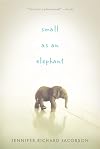
Eleven year old Jack Martel is looking forward to camping out with his mother over Labor Day weekend in Maine’s Acadia National Park. When he wakes up the first morning he discovers he is alone. His mother has disappeared along with the car and all their food. We learn from Jack that his mother is “spinning”, which lets the reader know she is most likely suffering from mental health issues. He's afraid the police will send his mother to jail if he calls them and that Social Services show more will take him away from his home. He decides to walk the 248 miles back home to Massachusetts and see if his mother is there. Jack is obsessed with elephants and decides to head in the direction of a sanctuary to see Lydia, Maine’s only elephant. Along the way he runs into several sticky situations that require him to think on his feet.
I thought this was just a lovely book. Told through the eyes of a boy who loves his mother, it also addressed mental illness in a positive light. The book is recommended for ages 10 and up but I found it quite compelling for the adult reader. You are rooting for Jack all along the journey and have the opportunity to view the world through his eyes. Each chapter begins with informative elephant quotes that show that elephants and humans share many of the same qualities.
I recommend this book to all readers for a sweet story does a great job making you feel like you are a part of the journey. show less
I thought this was just a lovely book. Told through the eyes of a boy who loves his mother, it also addressed mental illness in a positive light. The book is recommended for ages 10 and up but I found it quite compelling for the adult reader. You are rooting for Jack all along the journey and have the opportunity to view the world through his eyes. Each chapter begins with informative elephant quotes that show that elephants and humans share many of the same qualities.
I recommend this book to all readers for a sweet story does a great job making you feel like you are a part of the journey. show less

The bravery of people always surprises me because I don't consider myself particularly brave. Choosing to uproot to a small town where job prospects are few, the work to do is endless, and the people are conflicted about whether they even want you there ... that takes courage. The adventures of Lowen and his family are engaging - I found myself rooting for them and wondering how they would manage to cope with everything. On top of that I felt such empathy for Lowen who was trying to cope show more with the tragic loss of his friend and his own guilt about how he treated that friend at times. The ending says a lot about how real success is found. show less
 This review was written for LibraryThing Early Reviewers.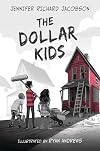
*I was provided a free copy of this book from the publisher through LibraryThing’s Early Reviewers program in exchange for an honest review.*
The Dollar Kids starts off strong, with the first scene happening in comic-book format; the main character’s friend is shot during a trip to the corner store. It was a bit abrupt for me, and I was worried about how dark the book was going to be overall, but I shouldn’t have worried at all, because while this provides the backdrop for everything show more that follows, the story as a whole is genuinely heartwarming, focusing on family and the importance of helping others out.
The Grover family decides to buy a house in a small town for just $1 in exchange for them fixing up the house and contributing to helping the town stay afloat, by having their kids participate in school sports and by boosting the local economy. In part, they do it to help Lowen heal from his best friend’s death, but also to get a new start for themselves. They are joined by a few other families who also buy dollar-houses for various reasons.
I loved all the characters in this; I appreciated that Jacobson includes a diverse cast of characters who come from a variety of racial and socioeconomic backgrounds. I especially appreciated how finances are dealt with in this story; most of the characters are going through tough times and Jacobson does a good job in portraying the delicate situations that surrounds competing businesses, or how someone can be embarrassed to need help. All of this rang true to me, and I just loved how “real-life” this story seemed. It’s about real issues and is incredibly well constructed.
One of my favorite parts about this novel is that Lowen likes drawing comics; however, after his friend Abe dies, he stops drawing for a while. Except for the beginning scene, we don’t see comics in the first part of the book. However, as Lowen starts to process his trauma and starts to heal from what happened to his friend, we see more of his comics throughout the novel; it’s a brilliant visual way to show Lowen’s growth and healing process and I found it very effective. The illustrations are absolutely wonderful and add so much to the story.
There are so many great lessons packed into this story, and it all feels completely organic and just well done. I never once felt like anything was forced just to teach a lesson, which is what makes this book great. It’s genuine and heartwarming and feels so real. I would highly recommend this for any lovers of middle grade and also think it would be an amazing classroom library addition.
Also posted on Purple People Readers. show less
The Dollar Kids starts off strong, with the first scene happening in comic-book format; the main character’s friend is shot during a trip to the corner store. It was a bit abrupt for me, and I was worried about how dark the book was going to be overall, but I shouldn’t have worried at all, because while this provides the backdrop for everything show more that follows, the story as a whole is genuinely heartwarming, focusing on family and the importance of helping others out.
The Grover family decides to buy a house in a small town for just $1 in exchange for them fixing up the house and contributing to helping the town stay afloat, by having their kids participate in school sports and by boosting the local economy. In part, they do it to help Lowen heal from his best friend’s death, but also to get a new start for themselves. They are joined by a few other families who also buy dollar-houses for various reasons.
I loved all the characters in this; I appreciated that Jacobson includes a diverse cast of characters who come from a variety of racial and socioeconomic backgrounds. I especially appreciated how finances are dealt with in this story; most of the characters are going through tough times and Jacobson does a good job in portraying the delicate situations that surrounds competing businesses, or how someone can be embarrassed to need help. All of this rang true to me, and I just loved how “real-life” this story seemed. It’s about real issues and is incredibly well constructed.
One of my favorite parts about this novel is that Lowen likes drawing comics; however, after his friend Abe dies, he stops drawing for a while. Except for the beginning scene, we don’t see comics in the first part of the book. However, as Lowen starts to process his trauma and starts to heal from what happened to his friend, we see more of his comics throughout the novel; it’s a brilliant visual way to show Lowen’s growth and healing process and I found it very effective. The illustrations are absolutely wonderful and add so much to the story.
There are so many great lessons packed into this story, and it all feels completely organic and just well done. I never once felt like anything was forced just to teach a lesson, which is what makes this book great. It’s genuine and heartwarming and feels so real. I would highly recommend this for any lovers of middle grade and also think it would be an amazing classroom library addition.
Also posted on Purple People Readers. show less
This review was written for LibraryThing Early Reviewers.After Lowen's friend is killed in a random shooting, he discovers an article describing a program in which families can apply to receive a home in a declining mill town for only one dollar. Lowen is surprised when his family agrees to apply and is accepted into the program. It's a difficult transition. His father stays on in their old town of Flintlock to continue earning money, while Lowen, his older brother, younger sister, and mother work to fix up their dilapidated new home and get his show more mother's new family business up and running. Lowen hoped that the move would ease his mind after Abe's death, but life in Millville offers troubles of its own,
"Whereas Mum's shop was going to be a take-out place, the Busy Bee had around ten tables and a small bar. A sign at the door advised them to seat themselves; they settled into the one remaining booth on the side of the room. As they did, the noise level dropped to a whisper and all heads turned their way. If Dad were there, he'd probably wave to the onlookers or introduce the family to the people at the closest table. But that wasn't Mum's way. She dropped her eyes to the menu, willing others to be polite and look away. Anneth pulled out her phone and began texting. Lowen reached to examine the bee-shaped salt and pepper shakers and wished for a moment that he hadn't complained about being hungry.
A man and a woman came in and, noticing that there were no booths left, resigned themselves to a center table. It didn't make sense, but Lowen felt like his family had sat down where they didn't belong."
The Dollar Kids touches on several themes including (but not limited to) moving, friendship, gun violence, grief, and perseverance, but it never gets bogged down and never feels forced. These things are merely part of a difficult period in the life of Lowen Grover's family. The story feels real and forces the reader to consider things from multiple points of view. There is often a rational motivation for behaviors that we might find hurtful or even inexplicable.
The setting and premise for the book is unique, but its best feature is Jacobson's storytelling format. The book begins with a multi-page comic drawn by Lowen, a talented artist. (Artist Ryan Andrews created the comic artwork.) It is through the comic that we learn the circumstances of Abe's death. Following the murder, Lowen refuses to draw. Later, as he comes to terms with life in Millville, he slowly begins to draw again and his comics appear sporadically in the latter half of the book. A letter and a final comic bring touching closure to a great story.
This is a tightly woven story, recommended by the publisher for ages 10-14. I thoroughly enjoyed it.
Due on a shelf near you in August! (My copy was provided by the publisher.)
https://shelf-employed.blogspot.com
(revised 6/6/18 to correct typos) show less
"Whereas Mum's shop was going to be a take-out place, the Busy Bee had around ten tables and a small bar. A sign at the door advised them to seat themselves; they settled into the one remaining booth on the side of the room. As they did, the noise level dropped to a whisper and all heads turned their way. If Dad were there, he'd probably wave to the onlookers or introduce the family to the people at the closest table. But that wasn't Mum's way. She dropped her eyes to the menu, willing others to be polite and look away. Anneth pulled out her phone and began texting. Lowen reached to examine the bee-shaped salt and pepper shakers and wished for a moment that he hadn't complained about being hungry.
A man and a woman came in and, noticing that there were no booths left, resigned themselves to a center table. It didn't make sense, but Lowen felt like his family had sat down where they didn't belong."
The Dollar Kids touches on several themes including (but not limited to) moving, friendship, gun violence, grief, and perseverance, but it never gets bogged down and never feels forced. These things are merely part of a difficult period in the life of Lowen Grover's family. The story feels real and forces the reader to consider things from multiple points of view. There is often a rational motivation for behaviors that we might find hurtful or even inexplicable.
The setting and premise for the book is unique, but its best feature is Jacobson's storytelling format. The book begins with a multi-page comic drawn by Lowen, a talented artist. (Artist Ryan Andrews created the comic artwork.) It is through the comic that we learn the circumstances of Abe's death. Following the murder, Lowen refuses to draw. Later, as he comes to terms with life in Millville, he slowly begins to draw again and his comics appear sporadically in the latter half of the book. A letter and a final comic bring touching closure to a great story.
This is a tightly woven story, recommended by the publisher for ages 10-14. I thoroughly enjoyed it.
Due on a shelf near you in August! (My copy was provided by the publisher.)
https://shelf-employed.blogspot.com
(revised 6/6/18 to correct typos) show less
Lists
Awards


You May Also Like


Associated Authors
Statistics
- Works
- 72
- Members
- 4,304
- Popularity
- #5,830
- Rating
- 3.8
- Reviews
- 118
- ISBNs
- 245
- Favorited
- 1
