
Antonio Benítez Rojo (1931–2005)
Author of The repeating island : the Caribbean and the postmodern perspective
About the Author
Works by Antonio Benítez Rojo
Un siglo del relato latinoamericano — Editor — 2 copies
Quince relatos de la América Latina — Editor — 2 copies
El escudo de hojas secas 2 copies
Heroica 1 copy
Tute de reyes 1 copy
A mulher em traje de guerra 1 copy
Woman in Battle Dress 1 copy
Tierra y el cielo 1 copy
Associated Works
Tagged
Common Knowledge
- Canonical name
- Benítez Rojo, Antonio
- Birthdate
- 1931-03-14
- Date of death
- 2005-01-05
- Gender
- male
- Occupations
- professor
novelist
essayist
short story writer - Nationality
- Cuba
- Birthplace
- Havana, Cuba
- Places of residence
- Havana, Cuba
USA - Associated Place (for map)
- Havana, Cuba
Members
Reviews
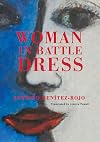
Woman in Battle Dress by Cuban author Antonio Benitez Rojo is based on the true story of Henriette Faber. Henriette was born in Switzerland in 1791. In 1809, at the age of 18 and at a time when women were prohibited from studying medicine, she enrolled in medical school disguised as a man. She was drafted into the Napoleonic army and took part in the 1812 retreat in Russia. She eventually emigrated to Cuba where she continued to practice medicine. She eventually married a woman. Three years show more later, the woman turned her into the authorities and she became the subject of one of Cuba’s most sensational trials.
Henriette was a woman who refused to accept the limitations of her time and was willing to suffer the same hardships that would have been considered heroic in a man. Instead, she was humiliated, stripped of her license, imprisoned, forced to dress in women’s clothes, and eventually exiled. Yet little has ever been heard of her outside of Cuba. In Woman in Battle Dress, Rojo has taken the bare outlines of her life and written a truly sweeping and engrossing historical novel.
The story is admittedly slow but slow doesn’t always mean bad or boring and certainly not in this case. I found myself rereading passages and pages not because I missed something but because I wanted to experience it again. Rojo does an impeccable job of recreating not only Henriette’s life but her voice. This was especially true when writing about her experience as she takes part in the army’s retreat in the dead of a cold Russian winter – Henriette speaks with the clarity and objectivity of a scientist but despite or perhaps because of this, this section of the novel is truly as chilling as the landscape and experiences she is describing.
Woman in Battle Dress is written in the style of a memoir supposedly as she is on her way to exile in Louisiana and in the dense prose of the era, a style that may be off-putting to some readers. However, for any who are fans of historical novels or the classics, I cannot recommend it highly enough.
4.5 show less
Henriette was a woman who refused to accept the limitations of her time and was willing to suffer the same hardships that would have been considered heroic in a man. Instead, she was humiliated, stripped of her license, imprisoned, forced to dress in women’s clothes, and eventually exiled. Yet little has ever been heard of her outside of Cuba. In Woman in Battle Dress, Rojo has taken the bare outlines of her life and written a truly sweeping and engrossing historical novel.
The story is admittedly slow but slow doesn’t always mean bad or boring and certainly not in this case. I found myself rereading passages and pages not because I missed something but because I wanted to experience it again. Rojo does an impeccable job of recreating not only Henriette’s life but her voice. This was especially true when writing about her experience as she takes part in the army’s retreat in the dead of a cold Russian winter – Henriette speaks with the clarity and objectivity of a scientist but despite or perhaps because of this, this section of the novel is truly as chilling as the landscape and experiences she is describing.
Woman in Battle Dress is written in the style of a memoir supposedly as she is on her way to exile in Louisiana and in the dense prose of the era, a style that may be off-putting to some readers. However, for any who are fans of historical novels or the classics, I cannot recommend it highly enough.
4.5 show less
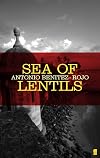
Intense and extreme set of four tales of the Spanish discovery and exploitation of the Americas. The text is particularly vivid and layered, at times hard to follow but well worth the effort. The history is relentlessly bloody in recounting the carve-up of Hispaniola and decimation of the indigenous people there. Other little-known stories weave in the early development of the slave trade in complicity with the English and the extermination of a French huguenot colony in Florida. All show more juxtaposed with the memories of Philip II on his deathbed. All up, a harrowing but rewarding find from the bookshop in Old Street tube. show less
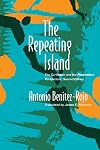
In this second edition of The Repeating Island, Antonio Benítez-Rojo, a master of the historical novel, short story, and critical essay, continues to confront the legacy and myths of colonialism. This co-winner of the 1993 MLA Katherine Singer Kovacs Prize has been expanded to include three entirely new chapters that add a Lacanian perspective and a view of the carnivalesque to an already brilliant interpretive study of Caribbean culture. As he did in the first edition, Benítez-Rojo show more redefines the Caribbean by drawing on history, economics, sociology, cultural anthropology, psychoanalysis, literary theory, and nonlinear mathematics. His point of departure is chaos theory, which holds that order and disorder are not the antithesis of each other in nature but function as mutually generative phenomena. Benítez-Rojo argues that within the apparent disorder of the Caribbean—the area’s discontinuous landmasses, its different colonial histories, ethnic groups, languages, traditions, and politics—there emerges an “island” of paradoxes that repeats itself and gives shape to an unexpected and complex sociocultural archipelago. Benítez-Rojo illustrates this unique form of identity with powerful readings of texts by Las Casas, Guillén, Carpentier, García Márquez, Walcott, Harris, Buitrago, and Rodríguez Juliá. show less

En las últimas décadas hemos visto detallarse de manera cada vez más clara un número de naciones americanas con experiencias coloniales distintas, que hablan lenguas distintas, pero que son agrupadas bajo una misma denominación. Me refiero a los países que solemos llamar -caribeños- o -de la cuenca del Caribe-. Esta denominación obedece tanto a razones exógenas -digamos, el deseo de las grandes potencias de recodificar continuamente el mundo con objeto de conocerlo mejor, de show more territorializarlo mejor- como a razones locales, de índole autorreferencial, encaminadas a encuadrar en lo posible la furtiva imagen de su Ser colectivo. En todo caso, para uno u otro fin, la urgencia por intentar la sistematización de las dinámicas políticas, económicas, sociales y culturales de la región es cosa muy reciente. Se puede asegurar que la cuenca del Caribe, a pesar de comprender las primeras tierras de América en ser conquistadas y colonizadas por Europa, es todavía, sobre todo en términos culturales, una de las regiones menos conocidas del Continente. Los principales obstáculos que ha de vencer cualquier estudio global de las sociedades insulares y continentales que integran el Caribe son, precisamente, aquéllos que por lo general enumeran los científicos para definir el área: su fragmentación, su inestabilidad, su recíproco aislamiento, su desarraigo, su complejidad cultural, su dispersa historiografía, su contingencia y su provisionalidad. Esta inesperada conjunción de obstáculos y propiedades no es, por supuesto, casual. Ocurre que el mundo contemporáneo navega el Caribe con juicios y propósitos semejantes a los de Cristóbal Colón: esto es, desembarca ideólogos, tecnólogos, espe- cialistas e inversores (los nuevos descubridores) que vienen con la intención de aplicar -acá- los métodos y dogmas de -allá- , sin tomarse la molestia de sondear la profundidad sociocultural del área. Así, se acostumbra definir el Caribe en términos de su resistencia a las distintas metodologías imaginadas para su investigación. Esto no quiere decir que las definiciones que leemos aquí y allá de la sociedad pancaribeña sean falsas y, por tanto, desechables. Yo diría, al contrario, que son tan necesarias y tan potencialmente productivas como lo es la primera lectura de un texto, en la cual, inevitablemente, como decía Barthes, el lector se lee a sí mismo. Con este libro, no obstante, pretendo abrir un espacio que permita una relectura del Caribe, esto es, alcanzar la situación en que todo texto deja de ser un espejo del lector para empezar a revelar su propia textualidad. show less
Awards

You May Also Like


Associated Authors
Statistics
- Works
- 30
- Also by
- 4
- Members
- 238
- Popularity
- #95,269
- Rating
- 3.9
- Reviews
- 4
- ISBNs
- 31
- Languages
- 4