
Rosario Castellanos (1925–1974)
Author of The Book of Lamentations
About the Author
Rosaroio Castellanos always enjoyed a comfortable middle-class existence; yet she early emerged in her writing as an eloquent spokesperson for the feminist movements that began to gain currency in the 1950s. But Castellanos moved beyond feminist concerns of her own class to speak for marginal or show more subaltern Mexican women, most significantly for the indigenous women whom the culture had mythified, stereotyped, or simply overlooked. Castellanos was especially successful in thematizing the multileveled, conflictual relationships between indigenous and middle-class women. The Nine Guardians (1957) is autobiographical in nature, drawing on childhood memories of Castellanos's contacts in southeast Mexico, near the Guatemalan border, with indigenous society. Other novels deal in complex and innovative ways with the roles of indigenous culture and of women in contemporary Mexican society. Castellanos published numerous volumes of poetry, and her drama The Eternal Feminine included a Rosario Castellanos Reader (1975), is considered one of the most innovative and influential feminist texts in Latin American literature. Castellanos, who also produced a steady output of perceptive essays, was Mexico's ambassador to Israel While she was ambassador, Castellanos died in Israel having been accidentally electrocuted. (Bowker Author Biography) show less
Works by Rosario Castellanos
A Rosario Castellanos Reader: An Anthology of Her Poetry, Short Fiction, Essays, and Drama (Texas Pan American Series) (1988) 44 copies
BALÚN-CANÁN 3 copies
Juicios sumarios I y II 2 copies
Trayectoria del polvo 2 copies
Albúm de familia 1 copy
Al pie de la letra 1 copy
La muerte del tigre 1 copy
Una lámpara llamada Rosario 1 copy
Materia memorable 1 copy
Lívida luz : poemas 1 copy
Al pie de la letra ; poemas 1 copy
Associated Works
These Are Not Sweet Girls: Poetry by Latin American Women (2000) — Contributor — 45 copies, 1 review
Josefina, bedien die Herren : Geschichten von Frauen und Männern aus Lateinamerika — Contributor — 1 copy
Tagged
Common Knowledge
- Other names
- Castellanos Figueroa, Rosario
- Birthdate
- 1925-05-25
- Date of death
- 1974-08-07
- Gender
- female
- Education
- National University, Mexico City (Philosophy|MA|1950)
- Occupations
- scholar of Spanish language and literature
academic
poet
novelist
diplomat - Organizations
- National Indigenous Institute
Institute of Arts and Sciences, Tuxtla, Mexico
UNAM
University of Wisconsin
Indiana University
University of Colorado - Awards and honors
- "Woman of the Year" and received the Premio Carlos Trouyet award for her entire oeuvre, both in Mexico, 1967
Sourasky Prize for literature, 1971 - Nationality
- Mexico
- Birthplace
- Mexico City, Mexico
- Place of death
- Tel Aviv, Israel
- Associated Place (for map)
- Mexico
Members
Reviews
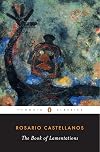
"Mexican history could be represented by the gradual expansion of a circle: that of the owners of wealth. From the conquistadores to the monks to the Spanish colonists to the criollos, ... there was still a long way to go before that wealth would reach the humble masses of the population. Considerable interests were opposed to the unfolding of this process; thus, every new expansion of the circle had been achieved at the cost of drowning the country in rivers of blood ... " (p. 185)
The Book show more of Lamentations chronicles the struggle between rural native people, descended from Mayans, in the Mexican state of Chiapas, and the wealthy, land-owning, city-dwelling "Ladino" population. Castellanos fills the story with a myriad of characters representing several factions. The characters' lives intertwine when Fernando Ulloa, a government civil servant, embarks on an initiative to redefine property boundaries and restore land rights to the native people. There are obvious parallels to westward expansion in the United States, and numerous other examples of European conquest and colonization.
Through various female characters, Castellanos also expresses her dissatisfaction with the role of women in Mexican society: "She was one of those women for whom the world, her own destiny and even her personality do not reveal themselves or take on definite shape except through amorous contact with a man." (p. 131) Castellanos herself was quite a pioneer, being the first woman from Chiapas to pursue a career as a writer. The very act of writing was subversive, and for a woman to do so was all the more outrageous.
This was an interesting book for its historical context, about which I knew very little, and for exposure to another country's literature. Unfortunately, the novel's pace ebbs and flows, with only brief periods of intense interest. The sheer number of characters makes for an unnecessarily complicated plot, and no single character was developed fully enough for my liking. show less
The Book show more of Lamentations chronicles the struggle between rural native people, descended from Mayans, in the Mexican state of Chiapas, and the wealthy, land-owning, city-dwelling "Ladino" population. Castellanos fills the story with a myriad of characters representing several factions. The characters' lives intertwine when Fernando Ulloa, a government civil servant, embarks on an initiative to redefine property boundaries and restore land rights to the native people. There are obvious parallels to westward expansion in the United States, and numerous other examples of European conquest and colonization.
Through various female characters, Castellanos also expresses her dissatisfaction with the role of women in Mexican society: "She was one of those women for whom the world, her own destiny and even her personality do not reveal themselves or take on definite shape except through amorous contact with a man." (p. 131) Castellanos herself was quite a pioneer, being the first woman from Chiapas to pursue a career as a writer. The very act of writing was subversive, and for a woman to do so was all the more outrageous.
This was an interesting book for its historical context, about which I knew very little, and for exposure to another country's literature. Unfortunately, the novel's pace ebbs and flows, with only brief periods of intense interest. The sheer number of characters makes for an unnecessarily complicated plot, and no single character was developed fully enough for my liking. show less
Published in 1962, The book of Lamentations is a fictional story set in the 1930s; it is loosely based on a Mayan uprising that took place in the Mexican state of Chiapas in the mid-19th century.
Even more than a fictionalized account of a true story, the book is a devastating indictment of the Ladino oppression of the native Mayans; the brutal treatment of the Mayans as much less than human beings, the casual, common rape of the Mayan women, the lies by which the Mayans are enlisted into show more virtual slavery on the large haciendas.
However, Castellanos is unsparing of the Mayans as well, remorselessly describing the passivity, the drunkenness, the superstitions by which, in her eyes, the Mayans buy into their own oppression and continue it from one generation to the next.
The central (historical) act of the story is a horrifying one that, once it takes place, seems inevitable from the remorseless dynamics that drive events.
Although told in the third person from multiple points of view, two people stand out as the major protagonists, one from each culture: Lenoardo Cifuentes, nouveau riche, who desperately wants to be a part of High Society, represented by the old landowning families, of Ciudad Real, and Catalina Díaz Puiljá, an ilol (shaman or seer) of the Chamula tribe of Mayans, who is the most well-developed and the most powerful character in the novel. The beauty of Castellanos’ narrative is that the story can be read on many levels, and one of them is the lengths to which the need for acceptance will drive people. Cifuentes craves acceptance from the Old Families; Catalina, a barren woman, needs the security of acceptance from her tribe. Both as a result lust for power. The outcome is appalling.
Castellanos herself belonged to one of the old landowning families of Chiapas, and had intimate knowledge of that society and its undercurrents. Her ambition was to show both cultures as they really were, not as some romantic idealization, particularly of the Mayans.
The end of the story is heart-breaking, but given the realities, there can be no happy ending. The last word, the last commentary is a tale woven by a Mayan woman, a nana to the daughter of the Cifeuntes household. Caught up in the myth is a sense that there is no salvation possible in the world, struggle as we might against the forces which oppress us. There is just survival, which we achieve by inventing, if we must, myths that allow us to accept our fate. show less
Even more than a fictionalized account of a true story, the book is a devastating indictment of the Ladino oppression of the native Mayans; the brutal treatment of the Mayans as much less than human beings, the casual, common rape of the Mayan women, the lies by which the Mayans are enlisted into show more virtual slavery on the large haciendas.
However, Castellanos is unsparing of the Mayans as well, remorselessly describing the passivity, the drunkenness, the superstitions by which, in her eyes, the Mayans buy into their own oppression and continue it from one generation to the next.
The central (historical) act of the story is a horrifying one that, once it takes place, seems inevitable from the remorseless dynamics that drive events.
Although told in the third person from multiple points of view, two people stand out as the major protagonists, one from each culture: Lenoardo Cifuentes, nouveau riche, who desperately wants to be a part of High Society, represented by the old landowning families, of Ciudad Real, and Catalina Díaz Puiljá, an ilol (shaman or seer) of the Chamula tribe of Mayans, who is the most well-developed and the most powerful character in the novel. The beauty of Castellanos’ narrative is that the story can be read on many levels, and one of them is the lengths to which the need for acceptance will drive people. Cifuentes craves acceptance from the Old Families; Catalina, a barren woman, needs the security of acceptance from her tribe. Both as a result lust for power. The outcome is appalling.
Castellanos herself belonged to one of the old landowning families of Chiapas, and had intimate knowledge of that society and its undercurrents. Her ambition was to show both cultures as they really were, not as some romantic idealization, particularly of the Mayans.
The end of the story is heart-breaking, but given the realities, there can be no happy ending. The last word, the last commentary is a tale woven by a Mayan woman, a nana to the daughter of the Cifeuntes household. Caught up in the myth is a sense that there is no salvation possible in the world, struggle as we might against the forces which oppress us. There is just survival, which we achieve by inventing, if we must, myths that allow us to accept our fate. show less
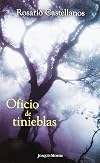
Complex inter-woven exploration of cultural conflict in Chiapas, brilliantly written (even if a tough challenge for my spanish). Presages the uprising in the early 1990s, when the Maya finally had more of an organising idea beyond crucifying one of their community as a Christ they could own.
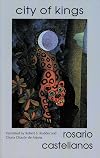
Written in 1960, Castellanos wrote these stories to show what life was often like for Mayan descendants in Chiapas. This translation is from 1993. This short story collection is
Most of the stories focus on a Tzotzile character or community, and Castellanos shows how they are treated by the Ladinos--as peons they are employed but not paid (essentially enslaved); how they "know their place", staying off sidewalks and out of stores; how they expect nothing but poor treatment. One story focuses show more on an orphaned young Ladino woman who comes from Mexico City for a job at a clinic and is horrified by what she sees; the longest and last story focuses on the jostling for position between the Catholic church and American Protestant missionaries--both supposedly serving the natives, but really they only serve themselves and their employees.
The introduction to this book describes Castellanos as a Ladina who had a "[painful] self conscious awareness of her own acts of cultural interpretation". This book is certainly interesting and this is not a topic--the 20th century history of the Mayan descendants--that I know much about and is definitely something I would like to read more on, especially from within that community. I do know that many people from Chiapas and Central America still do not speak only their mnative Mayan-related language and not Spanish, as it is a continuing issue in my local school district. show less
Most of the stories focus on a Tzotzile character or community, and Castellanos shows how they are treated by the Ladinos--as peons they are employed but not paid (essentially enslaved); how they "know their place", staying off sidewalks and out of stores; how they expect nothing but poor treatment. One story focuses show more on an orphaned young Ladino woman who comes from Mexico City for a job at a clinic and is horrified by what she sees; the longest and last story focuses on the jostling for position between the Catholic church and American Protestant missionaries--both supposedly serving the natives, but really they only serve themselves and their employees.
The introduction to this book describes Castellanos as a Ladina who had a "[painful] self conscious awareness of her own acts of cultural interpretation". This book is certainly interesting and this is not a topic--the 20th century history of the Mayan descendants--that I know much about and is definitely something I would like to read more on, especially from within that community. I do know that many people from Chiapas and Central America still do not speak only their mnative Mayan-related language and not Spanish, as it is a continuing issue in my local school district. show less
Lists
Awards


You May Also Like


Associated Authors
Statistics
- Works
- 64
- Also by
- 17
- Members
- 1,158
- Popularity
- #22,186
- Rating
- 3.9
- Reviews
- 15
- ISBNs
- 126
- Languages
- 6
- Favorited
- 6
