
Elena Poniatowska
Author of Here's to You, Jesusa!
About the Author
Elena Poniatowska is the author of more than forty works, including the classic Massacre in Mexico and the novels Dear Diego and Tinisima (FSG, 1996). She lives in Mexico City. (Bowker Author Biography)
Image credit: Elena Poniatowska
Series
Works by Elena Poniatowska
El burro que metio la pata/ The Donkey Who Put his Foot in his Mouth (Spanish Edition) (2007) 4 copies
La Casa en Mango Street 3 copies
Una charla con la escritora Elena Poniatowska — Author — 2 copies
Todo México Tomo I 1 copy
PIEL DEL CIELO, LA 1 copy
Lilus Kikus 1 copy
Poesía no completa: 1 1 copy
MATERIAL DE LECTURA 10 1 copy
Prvo prolazi voz 1 copy
Jesusa se fue a la bola 1 copy
Park Cinema 1 copy
Universo de Frida 1 copy
Associated Works
Underground River and Other Stories (Latin American Women Writers) (1986) — Foreword, some editions — 56 copies, 2 reviews
How I Learned English: 55 Accomplished Latinos Recall Lessons in Language and Life (2007) — Contributor — 54 copies, 4 reviews
Daughters of Latin America: An International Anthology of Writing by Latine Women (2023) — Contributor — 40 copies, 1 review
Introducción a la literatura hispanoamericana : de la conquista al siglo XX (1997) — Contributor — 23 copies
Tagged
Common Knowledge
- Canonical name
- Poniatowska, Elena
- Legal name
- Amor, Princess Hélène Elizabeth Louise Amélie Paula Dolores Poniatowska
- Birthdate
- 1932-05-19
- Gender
- female
- Education
- Vouvray on the Loire
Liceo Franco-Mexicano
Eden Hall - Occupations
- journalist (Excélsior)
short story writer
essayist
novelist - Awards and honors
- Cervantes-Literaturpreis (2013)
Rómulo Gallegos Prize, 2007
Miguel de Cervantes Prize, 2013
Mazatlan Literature Prize (Premio Mazatlán de Literatura), 1971
first woman to win Mexico's National Journalism Prize (Premio Nacional de Periodismo), 1979
José Fuentes Mares National Prize for Literature in 2001 (show all 9)
Alfaguara Novel Prize
International Women's Media Foundation gave her the Lifetime Achievement Award in 2006
Premio Iberoamericano, 2007 - Agent
- Susan Bergholz Literary Services
- Relationships
- Amor, Guadalupe (aunt)
Haro, Guillermo (m. 1968–1981)
Haro Poniatowski, Emmanuel (child)
Haro Poniatowski, Felipe (child)
Haro Poniatowska, Paula (child)
Poniatowski, Jean Joseph Évremond Sperry (father) (show all 8)
Amor Yturbe, María Dolores Paulette (mother)
Amor, Pita (aunt, poet) - Nationality
- France (birth)
Mexico - Birthplace
- Paris, France
- Places of residence
- Mexico City, Mexico
- Map Location
- Mexico
Members
Reviews
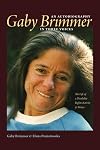
Can there be spoilers? This is certainly an interesting book. There is a lot of documentation: several introductions and a footnote-filled afterword. In between is autobiographical fragments by Gaby Brimmer, and her mother, and her caregiver. The introduction(s) point out that Poniatowska added herself to the story (not as a character but her style & viewpoint.) Gaby had cerebral palsy & pretty much just used her left foot, and she wrote a lot, and she helped start the Disability Rights show more movement in Mexico. It isn't clear if she could have had more physical ability if she had focused on that instead of studying, and it also isn't clear how different things would have been for her if she had been in the US. But she writes clearly & honestly about her life, and things like sex and desire and other people; and it is definitely worth reading. What is a little weird is the personal interplay among the 3 women. I sort of wandered between total sympathy for Gaby & feeling like she was spoiled & overindulged -- but how can that be? She seems to have had complete attention from her caregiver until she adopted a baby who the caregiver then took care of. Gaby is pretty blunt about criticizing the caregiver for how she acted when she took Gaby to school; and she is really blunt in criticizing her mother & her mother just seems to agree with the criticisms. It is a weird dynamic. show less
 This review was written for LibraryThing Early Reviewers.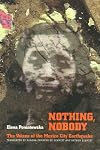
What a disturbing, difficult book to read. Nothing, Nobody doesn't try to give you the background or the whole picture of the 1985 earthquakes that devastated parts of the Federal District of Mexico, Mexico City. It was originally written for Mexicans who would've read much in the papers or seen much in the news. Nothing, Nobody isn't interested in telling us what is commonly known about the earthquake, that it was of great magnitude and particularly effective at causing destruction because show more the Federal District is built on the ruins of Tenochtitlan, the Aztec capital city that was built on a swamp in the mountains. Mexico City was a city that was always settling as the water in the aquifers went down or the sandy earth became more compact. If you were going to choose a site for one of the largest cities in the world using safety as a high criteria, this site wouldn't be it.
Instead, Poniatowska gives voice to the average citizen of the city, especially the ones who either lost loved ones or who rushed to the places where buildings had collapsed and began digging with whatever they could find to get the people out. She tells of a lot of anger. The government's response was odd, and ineffectual if you're in a mood to be generous toward President de Madrid and others in power. de Madrid stayed out of the city, and the main response was to send the army out with guns to "guard" the zones with the most damage. Volunteers said the obvious - why are they here with guns and not shovels. Foreign aid was at first refused. When it was accepted, equipment was sometimes held up in customs. Sometimes the foreign rescuers were wined and dined when all they really wanted to do was to start digging while there was still a chance that someone could be brought out alive. Looting or misappropriation was happening, but not by the general public.
The anger is strong, but even stronger in this book is the struggle to survive and continue living. Many people trapped in buildings saw light and did their best to dig their way out. Families died together, the father on top to protect the others. Volunteer rescue workers went in through small tunnels, liable to collapse, carrying oxygen for the people trapped inside, sometimes to have their person or group of people die in the process of rescue. I could go on, but what Poniatowska has recorded is unimaginable. I can not do justice to the stories. If you have the stomach for it, read it and honor the bravery of the people who grouped together to help each other the best they could. show less
Instead, Poniatowska gives voice to the average citizen of the city, especially the ones who either lost loved ones or who rushed to the places where buildings had collapsed and began digging with whatever they could find to get the people out. She tells of a lot of anger. The government's response was odd, and ineffectual if you're in a mood to be generous toward President de Madrid and others in power. de Madrid stayed out of the city, and the main response was to send the army out with guns to "guard" the zones with the most damage. Volunteers said the obvious - why are they here with guns and not shovels. Foreign aid was at first refused. When it was accepted, equipment was sometimes held up in customs. Sometimes the foreign rescuers were wined and dined when all they really wanted to do was to start digging while there was still a chance that someone could be brought out alive. Looting or misappropriation was happening, but not by the general public.
The anger is strong, but even stronger in this book is the struggle to survive and continue living. Many people trapped in buildings saw light and did their best to dig their way out. Families died together, the father on top to protect the others. Volunteer rescue workers went in through small tunnels, liable to collapse, carrying oxygen for the people trapped inside, sometimes to have their person or group of people die in the process of rescue. I could go on, but what Poniatowska has recorded is unimaginable. I can not do justice to the stories. If you have the stomach for it, read it and honor the bravery of the people who grouped together to help each other the best they could. show less
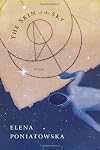
The Skin of the Sky, is, in my opinion, weakened by its singular focus on Lorenzo de Tena, a relentless workaholic and essentially self-educated astronomer who proves to be an all around difficult man to be around. Over the course of the novel, many intriguing characters are introduced (along with much fascinating information about astronomy and Mexican education, history, science, politics and gender relations) but all is subsumed by the monomaniacal de Tena, a brilliant scientist but also show more a damaged (and damaging) human being. Multiple points of view might have allowed more insight into his character and made him both more interesting and more sympathetic. That said, the novel is more a depiction of Mexico, struggling to integrate a luminous pre-colonial past into a not at all certain post-colonial future, than it is the story of one man. show less
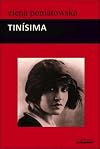
Un travail de recherche titanesque qui ne peut qu'impressionner, et l'on ne peut que saluer l'engagement total de l'auteure dans son œuvre. La vie passionnante de Tina Modotti prend vie dans ces pages et la forme romancée permet d'accéder très facilement à toute la richesse de cette époque. On reprochera cependant les nombreuses distractions et digressions dans cette biographie, qui sous guise de fournir plus de contexte historique et politique finissent par rajouter des longueurs show more inutiles - ce qui ralentit le rythme d'un roman qui compte déjà plus de 800 pages. show less
Lists
Awards


You May Also Like


Associated Authors
Statistics
- Works
- 95
- Also by
- 21
- Members
- 2,290
- Popularity
- #11,214
- Rating
- 3.8
- Reviews
- 53
- ISBNs
- 311
- Languages
- 9
- Favorited
- 1


