
Mariano Azuela (1873–1952)
Author of The Underdogs
About the Author
Mariano Azuela is a Mexican writer born in 1873. After receiving a degree in medicine, he returned to poor districts in his home state to practice madicine, a manifestation of his lifelong concern for the pueblo of Mexico. During the Mexican Revolution, Azuela joined the forces of Francisco Villa show more and became director of public education in Jalisco under the Villa government. When that government fell, he served as doctor to Villa's men during their retreat northward. From Azuela's war experiences came his novel The Underdogs, which he published in installments in a newspaper after fleeing to Texas in 1915. The novel Torres-Rioseco which has been called an epic poem in prose of the Mexican Revolution deals with the revolution from the point of view of the humble soldiers, examining the circumstances that keep them in poverty, the brutality of the fighting, and the opportunism and betrayal of the revolution. An admirer of Emile Zola, Azuela stressed the effect of environment on character in many of his novels. (Bowker Author Biography) show less
Image credit: wikipedia
Works by Mariano Azuela
Tres novelas de Mariano Azuela : La Malhora, El desquite, La luciérnaga (Spanish Edition) (1958) 18 copies, 1 review
Two Novels of the Mexican Revolution: The trials of a respectable family and The underdogs (1963) 3 copies
LA MUJER DOMADA 3 copies
Obras completas de Mariano Azuela I 2 copies
OBRAS ESCOGIDAS 2 copies
Demetrio : (ti zdola) 1 copy
Azuela vs. Azuela 1 copy
Sendas perdidas 1 copy
The Flies 1 copy
Azuela Mariano 1 copy
Obras Completas de Mariano Azuela, Vol. 2 (Volume 2, Novelas, Novelas Cortas, Cuentos, Relatos y Sucedidos) (1958) 1 copy
Fondo de Cultura Económica 1 copy
Associated Works
Introducción a la literatura hispanoamericana : de la conquista al siglo XX (1997) — Contributor — 23 copies
Tagged
Common Knowledge
- Canonical name
- Azuela, Mariano
- Other names
- Azuela González, Mariano
- Birthdate
- 1873-01-01
- Date of death
- 1952-03-01
- Gender
- male
- Occupations
- physician
writer - Organizations
- Colegio Nacional (founding member)
- Awards and honors
- Mexican National Prize for Literature (1942)
Mexican National Prize for Arts and Sciences (1949) - Nationality
- Mexico
- Birthplace
- Lagos de Moreno, Jalisco, Mexico
- Places of residence
- Lagos de Moreno, Jalisco, Mexico
El Paso, Texas, USA
Mexico City, Mexico - Place of death
- Mexico City, Mexico
- Burial location
- Rotonda de las Personas Ilustres, Panteón Civil de Dolores, Mexico City, Mexico
- Associated Place (for map)
- Mexico City, Mexico
Members
Reviews

“I love the revolution like a volcano in eruption; I love the volcano because it’s a volcano, the revolution because it’s the revolution! What do I care about the stones left above or below after the cataclysm? What are they to me?”
Set in 1910-1915, this story follows protagonist Demetrio Macías, a peasant who becomes involved in the Mexican Revolution after a disagreement with a local landowner. He forms and leads a band of outcasts as they travel the country, committing random show more acts of violence in support of the cause. They do not seem to understand exactly what or for whom they are fighting. Pancho Villa and other historic figures are mentioned but are not the focus.
My favorite part is the way the author portrays the mental and behavioral changes exhibited by the outcasts. It portrays how the oppressed become the oppressors. The novel feels rather fragmented, which could be due to the translation. Published in 1916, it is short and worth reading solely for the historical context and the fact that the author experienced the Mexican Revolution first-hand. show less
Set in 1910-1915, this story follows protagonist Demetrio Macías, a peasant who becomes involved in the Mexican Revolution after a disagreement with a local landowner. He forms and leads a band of outcasts as they travel the country, committing random show more acts of violence in support of the cause. They do not seem to understand exactly what or for whom they are fighting. Pancho Villa and other historic figures are mentioned but are not the focus.
My favorite part is the way the author portrays the mental and behavioral changes exhibited by the outcasts. It portrays how the oppressed become the oppressors. The novel feels rather fragmented, which could be due to the translation. Published in 1916, it is short and worth reading solely for the historical context and the fact that the author experienced the Mexican Revolution first-hand. show less
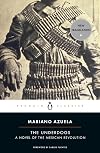
If this didn’t influence Cormac McCarthy’s Border Trilogy, I’d be surprised. Azuela’s sparse prose and depiction of individuals caught up in events and landscape that they have little control over gives us a raw novel inspired by events the author witnessed.
The narration begins with the peasant Demetrio as he starts to participate in what would become the Mexican Revolutionary War. He barely understands what he is doing as events carry him along with an array of characters who show more eventually form his army.
While there are moments when Demetrio and his compatriots believe they know what they are fighting for, the novel ends in disillusionment and confusion. Throughout, Azuela writes with irony if not outright satire to give us a view of revolution that is realistic and therefore shorn of any ideologies or heroes.
For that, it’s important. The fact that it’s written in Latin America makes it all the more important: noone does revolutionary ideology or heroism like our fellow Latinos. To show that this particular emperor wears no clothes was daring and as one of the first Latin American novels to be published in English, it was very influential. show less
The narration begins with the peasant Demetrio as he starts to participate in what would become the Mexican Revolutionary War. He barely understands what he is doing as events carry him along with an array of characters who show more eventually form his army.
While there are moments when Demetrio and his compatriots believe they know what they are fighting for, the novel ends in disillusionment and confusion. Throughout, Azuela writes with irony if not outright satire to give us a view of revolution that is realistic and therefore shorn of any ideologies or heroes.
For that, it’s important. The fact that it’s written in Latin America makes it all the more important: noone does revolutionary ideology or heroism like our fellow Latinos. To show that this particular emperor wears no clothes was daring and as one of the first Latin American novels to be published in English, it was very influential. show less
Me sorprendió. Azuela es un tremendo novelista. No glorifica ni justifica a nadie, la Revolución como un baño de sangre en el que, muchas veces, nadie sabía de qué lado peleaba. El triunfo de cualquiera de los bandos resultaba en la adicción al poder de sus dirigentes. Y el círculo de violencia sigue hasta nuestros días...
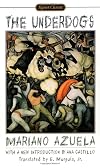
An interesting novel that isn't completely novel-like, this would be such an interesting book to read in a class on Mexican history or literature.
Demetrio Macias, who becomes a general amongst the rebels, really joined because he had to. He would rather be at home on his farm with his wife and child. But he turns out to be a decent military leader. But with continual losses among the rebels, the constantly changing leadership, to looting of even the poor by his ill-disciplined troops (men show more just like him, for the most part), and the female hangers-on (often essentially kidnapped by the men)--he is losing control, and losing patience, and wondering what they are really hoping to accomplish. show less
Demetrio Macias, who becomes a general amongst the rebels, really joined because he had to. He would rather be at home on his farm with his wife and child. But he turns out to be a decent military leader. But with continual losses among the rebels, the constantly changing leadership, to looting of even the poor by his ill-disciplined troops (men show more just like him, for the most part), and the female hangers-on (often essentially kidnapped by the men)--he is losing control, and losing patience, and wondering what they are really hoping to accomplish. show less
Lists
My TBR (1)
Awards


You May Also Like


Associated Authors
Statistics
- Works
- 51
- Also by
- 2
- Members
- 1,838
- Popularity
- #14,002
- Rating
- 3.5
- Reviews
- 45
- ISBNs
- 154
- Languages
- 7
- Favorited
- 2