
Fernando del Paso (1935–2018)
Author of News from the Empire
About the Author
Fernando del Paso Morante was born in Mexico City, Mexico on April 1, 1935. He worked as a diplomat, journalist, and advertising copywriter. As a writer, he published novels, volumes of essays, and volumes of poetry. His novels included José Trigo, Palinuro of Mexico, and News from the Empire. His show more collection of sonnets was entitled Sonetos de lo Diario. In 2015, he won the Miguel de Cervantes Prize. He died on November 14, 2018 at the age of 83. (Bowker Author Biography) show less
Series
Works by Fernando del Paso
Obras III. Ensayo y obra periodística (Letras Mexicanas) (Spanish Edition) (2002) 7 copies, 1 review
Bajo la sombra de la historia - ensayos sobre el islam y el judaismo (Historia (fce)) (2012) 6 copies, 1 review
Castillos en el aire. Fragmentos y anticipaciones. Homenaje a Maurits Cornelis Escher (Coleccion Tezontle) (Spanish Edition) (2002) 5 copies
Bajo la sombra de la historia. Ensayos sobre el islam y el judaísmo. Vol. I (Spanish Edition) (2011) 5 copies
Palinurus van Mexico. Dl. 1 4 copies
Vesti iz carstva 1 copy
De aquí, allá y acullá 1 copy
PAS Noticias del imperio 1 copy
Palinuro en la escalera 1 copy
No des paso, sin Del Paso 1 copy
Los colores y el sueño 1 copy
Noticias del Imperio (I) 1 copy
Noticias del Imperio (II) 1 copy
Tagged
Common Knowledge
- Legal name
- del Paso, Fernando
- Other names
- Fernando del Paso Morante
- Birthdate
- 1935-04-01
- Date of death
- 2018-11-14
- Gender
- male
- Education
- National Autonomous University of Mexico
- Occupations
- novelist
essayist
poet - Organizations
- University of Guadalajara
- Awards and honors
- Cervantes-Literaturpreis (2015)
- Nationality
- Mexico
- Birthplace
- Mexico City, Mexico
- Places of residence
- London, England, UK
France - Place of death
- Guadalajara, Mexico
- Associated Place (for map)
- Mexico
Members
Reviews
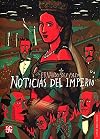
No sé qué podría decir de esta novela que no se haya dicho ya. No me siento a la altura. De todas formas, intentaré escribir algo coherente.
Pasé casi dos meses y medio leyendo esta obra maestra. Noticias del Imperio es, tal vez, la mejor novela escrita por un mexicano desde Pedro Páramo. La experimentación del lenguaje, de estructura, de expresión y de poesía es de las mejores que he podido encontrar en libro alguno. La dificultad que pudo haberse encontrado Fernando del Paso al show more escribir sobre personajes históricos es la de cómo exhibir a un traidor patrio sin demonizarlo, a un prócer sin convertirlo en un dios. Del Paso no nos da una visión maniquea de ningún personaje, pero tampoco les niega su importancia ni su valor humano.
Los monólogos de Carlota son ya famosos, pero experimentar su calidad de primera mano es una experiencia única.
Eso sí, el único pero que podría ponerle al libro es que es extensísimo (en mi edición, 708 páginas sin contar la cronología del final), y la sintaxis que usa del Paso en gran parte de los capítulos hace que la lectura sea muy pesada (al hacer párrafos larguísimos y oraciones muy extensas). Aún así, no podría imaginarme esta historia escrita de otra manera: la visión del autor lo requiere, su lenguaje propio hace de la extensión casi exagerada algo indispensable.
Las influencias, bastante claras: una sintaxis semejante a la de Carpentier, visiones rulfianas, dimensiones rabelaisianas y ambiciones cervantinas. Libro indispensable para la literatura mexicana, latinoamericana y (ojalá algún día) universal.
Sólo espero que del Paso gane el Nobel este año. show less
Pasé casi dos meses y medio leyendo esta obra maestra. Noticias del Imperio es, tal vez, la mejor novela escrita por un mexicano desde Pedro Páramo. La experimentación del lenguaje, de estructura, de expresión y de poesía es de las mejores que he podido encontrar en libro alguno. La dificultad que pudo haberse encontrado Fernando del Paso al show more escribir sobre personajes históricos es la de cómo exhibir a un traidor patrio sin demonizarlo, a un prócer sin convertirlo en un dios. Del Paso no nos da una visión maniquea de ningún personaje, pero tampoco les niega su importancia ni su valor humano.
Los monólogos de Carlota son ya famosos, pero experimentar su calidad de primera mano es una experiencia única.
Eso sí, el único pero que podría ponerle al libro es que es extensísimo (en mi edición, 708 páginas sin contar la cronología del final), y la sintaxis que usa del Paso en gran parte de los capítulos hace que la lectura sea muy pesada (al hacer párrafos larguísimos y oraciones muy extensas). Aún así, no podría imaginarme esta historia escrita de otra manera: la visión del autor lo requiere, su lenguaje propio hace de la extensión casi exagerada algo indispensable.
Las influencias, bastante claras: una sintaxis semejante a la de Carpentier, visiones rulfianas, dimensiones rabelaisianas y ambiciones cervantinas. Libro indispensable para la literatura mexicana, latinoamericana y (ojalá algún día) universal.
Sólo espero que del Paso gane el Nobel este año. show less
And Loyal Heart told Eagle Head who told the stuffed crow on his staff who told Robinson Crusoe who told Man Friday who told the Man who was Thursday.
I stole the above from Nathan's review who pinched it from Cervantes who purloined such from Pierre Menard, that sneaky bastard. I think I'll pocket another quote --this one deftly cited by Megha:
...and I vowed that the book which I would write someday would be as sickly, fragile and defective as the human organism and also, if possible (which show more it isn't), equally intricate and magnificent.
I noted early on that because of other stresses and fissures, Palinuro of Mexico had become an early morning reprieve. Much like Doctor Johnson on Burton's Anatomy, I leaped from bed to clutch this messy beast to my breast and allowed my daimon, my delightful imp to rent and rave, all in a snug enclosure of my own imagination. It is about love/lust, medicine, smut and drunkenness. There's incest and pathology and more stabs at advertising than an Ides of March on Cielo Drive. Then there's a compendium of jokes regarding flatulence. Just offstage is the Tlatelolco massacre.
What did I hear while reading:
birdsong
our dehumidifier in the basement
our wind chimes on the porch
the clunk a trailer makes when hauled down the perpendicular street
the bump-bump of someone's woofer
What did I listen to (or what was playing during my reading)?
Mavis Staples
Tom Waits
Manu Chao
John Coltrane
Dawn Upshaw interpreting Golijov
Van Morrison
Alfred Brendel interpreting Beethoven
Alfred Brendel interpreting Beethoven
Alfred Brendel interpreting Beethoven
My wife majored in Spanish Literature and asked about the novel. I told her it was either Renaissance or 18th Century literature and had nil to do with Boom. I feel confident in that.
This is worth people's time. show less
I stole the above from Nathan's review who pinched it from Cervantes who purloined such from Pierre Menard, that sneaky bastard. I think I'll pocket another quote --this one deftly cited by Megha:
...and I vowed that the book which I would write someday would be as sickly, fragile and defective as the human organism and also, if possible (which show more it isn't), equally intricate and magnificent.
I noted early on that because of other stresses and fissures, Palinuro of Mexico had become an early morning reprieve. Much like Doctor Johnson on Burton's Anatomy, I leaped from bed to clutch this messy beast to my breast and allowed my daimon, my delightful imp to rent and rave, all in a snug enclosure of my own imagination. It is about love/lust, medicine, smut and drunkenness. There's incest and pathology and more stabs at advertising than an Ides of March on Cielo Drive. Then there's a compendium of jokes regarding flatulence. Just offstage is the Tlatelolco massacre.
What did I hear while reading:
birdsong
our dehumidifier in the basement
our wind chimes on the porch
the clunk a trailer makes when hauled down the perpendicular street
the bump-bump of someone's woofer
What did I listen to (or what was playing during my reading)?
Mavis Staples
Tom Waits
Manu Chao
John Coltrane
Dawn Upshaw interpreting Golijov
Van Morrison
Alfred Brendel interpreting Beethoven
Alfred Brendel interpreting Beethoven
Alfred Brendel interpreting Beethoven
My wife majored in Spanish Literature and asked about the novel. I told her it was either Renaissance or 18th Century literature and had nil to do with Boom. I feel confident in that.
This is worth people's time. show less
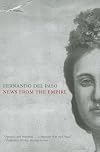
I've been reading this remarkable and complex book since September, and am somewhat at a loss about what to say about it. On the surface, it is the story of Maximilian and Carlota who were placed on the throne of Mexico as emperor and empress by the French: how that came about and what happened during their short-lived reign. So in that sense, "news from the empire" is news from the brief span of the Mexican empire. But the book is so much more: it spans the empires of Europe -- their pasts show more and their ends, their ruling families and their secrets -- as well.
Del Paso deluges the reader with the perspectives of dozens of participants and witnesses to the events of the 1860s, interspersed with the often crazy but equally often perceptive ravings of Carlota, who returned to Europe before Maximilian was killed, went mad (maybe was poisoned), was locked up in a castle, and lived another 60 years until 1927. Depending on whose story is being told, del Paso's language can be straight-forward, but more often than not consists of words piled on words, phrases piled on phrases, sentences piled on sentences. He is an amazing writer.
Maximilian was the brother of Franz Joseph, the ruler of the Austrian-Hungarian empire (although it was rumored his father was really Napoleon's son, the "king of Rome"), and Carlota (née Charlotte) was the daughter of Leopold of Belgium. For a complicated series of reasons, ostensibly involving debts of the Mexican government to several European countries and a desire to thwart the growing hemispheric interests of the United States, but really involving a grab for power, prestige, and empire, the French, under Louis Napoleon, decided to send troops to Mexico, make it an empire, and place Maximilian and Carlota on the throne. Needless to say, the Mexicans under Benito Juarez are not enamored of this plan, and continued to fight against the French, ultimately capturing Maximilian and sentencing him to death.
Who are some of the people who offer their perspectives? Emperors and empresses (Louis Napoleon and his wife Eugenie), aides to Maximilian, military officers (including a particularly vicious one), priests (including one obsessed with sex), a Mexican spy, a military man writing home to his brother who is more of a free thinker, those concerned with imperial protocol, and many many more. It takes a while sometimes to figure out who is "talking" and what his (usually his, not her) connection to the story is. But the star of the novel is Carlota, locked up in Bouchout Castle in Belgium, obsessing 60 years after Maximilian was killed about her love for Maximilian, her hatred for Maximilian, her belief that he is still alive, her knowledge that he is dead, and about the history of many of the European empires and the behavior of the families who led them -- and about what has happened in those 60 years, including many inventions (such as the typewriter and the airplane), many wars, most notably World War I, and the ends of several empires.
Towards the end of this 704-page tome, when del Paso has switched to some more strictly historical sections, he writes:
". . . one can always -- with talent -- push history to the side and, based on an event or some historical characters, construct a self-sufficient novelistic or dramatic world. The allegory, the absurd, the farce are some of the possible modes available to an author for creating such a world: everything is possible in literature, so long as you aren't pretending to adhere to history. But what happens when an author can't escape history? When an author can't consciously forget what has been learned. Or, better yet, when an author doesn't see fit to ignore the overwhelming mass of facts available on a subject -- crucial in terms of their influence over the lives, the deaths, the destinies of the characters in his tragedy, a tragedy of his own? In other words, what happens -- what can you do-- when you don't want to avoid history, but do want to achieve poetry? Perhaps the solution is . . . to try and reconcile everything that might be true in history using the exactitude available to invention. In other words, instead of pushing history to the side, place it alongside invention, alongside allegory, and even mix it together with some wild fantasy. . . . our poetic reinvention would go hand in hand with history: a history, however, whose authenticity -- as we must warn the reader -- as I must warn the reader -- cannot be guaranteed, except on the level of the symbolic." p. 676
How nice of him to tell the reader what he has been doing for the past 675 pages!
History is definitely one of the themes of this novel, and not just history but how the history of one place interacts with the history of another and with people's characters and actions -- how all this is interwoven.
At times I was overwhelmed by the density of del Paso's language, and at times I thought I would never finish this book, but by the end I was entranced by the world del Paso had created and in awe of his inventiveness and creativity, as well as his writing ability. As I said at the beginning, this is a remarkable book. show less
Del Paso deluges the reader with the perspectives of dozens of participants and witnesses to the events of the 1860s, interspersed with the often crazy but equally often perceptive ravings of Carlota, who returned to Europe before Maximilian was killed, went mad (maybe was poisoned), was locked up in a castle, and lived another 60 years until 1927. Depending on whose story is being told, del Paso's language can be straight-forward, but more often than not consists of words piled on words, phrases piled on phrases, sentences piled on sentences. He is an amazing writer.
Maximilian was the brother of Franz Joseph, the ruler of the Austrian-Hungarian empire (although it was rumored his father was really Napoleon's son, the "king of Rome"), and Carlota (née Charlotte) was the daughter of Leopold of Belgium. For a complicated series of reasons, ostensibly involving debts of the Mexican government to several European countries and a desire to thwart the growing hemispheric interests of the United States, but really involving a grab for power, prestige, and empire, the French, under Louis Napoleon, decided to send troops to Mexico, make it an empire, and place Maximilian and Carlota on the throne. Needless to say, the Mexicans under Benito Juarez are not enamored of this plan, and continued to fight against the French, ultimately capturing Maximilian and sentencing him to death.
Who are some of the people who offer their perspectives? Emperors and empresses (Louis Napoleon and his wife Eugenie), aides to Maximilian, military officers (including a particularly vicious one), priests (including one obsessed with sex), a Mexican spy, a military man writing home to his brother who is more of a free thinker, those concerned with imperial protocol, and many many more. It takes a while sometimes to figure out who is "talking" and what his (usually his, not her) connection to the story is. But the star of the novel is Carlota, locked up in Bouchout Castle in Belgium, obsessing 60 years after Maximilian was killed about her love for Maximilian, her hatred for Maximilian, her belief that he is still alive, her knowledge that he is dead, and about the history of many of the European empires and the behavior of the families who led them -- and about what has happened in those 60 years, including many inventions (such as the typewriter and the airplane), many wars, most notably World War I, and the ends of several empires.
Towards the end of this 704-page tome, when del Paso has switched to some more strictly historical sections, he writes:
". . . one can always -- with talent -- push history to the side and, based on an event or some historical characters, construct a self-sufficient novelistic or dramatic world. The allegory, the absurd, the farce are some of the possible modes available to an author for creating such a world: everything is possible in literature, so long as you aren't pretending to adhere to history. But what happens when an author can't escape history? When an author can't consciously forget what has been learned. Or, better yet, when an author doesn't see fit to ignore the overwhelming mass of facts available on a subject -- crucial in terms of their influence over the lives, the deaths, the destinies of the characters in his tragedy, a tragedy of his own? In other words, what happens -- what can you do-- when you don't want to avoid history, but do want to achieve poetry? Perhaps the solution is . . . to try and reconcile everything that might be true in history using the exactitude available to invention. In other words, instead of pushing history to the side, place it alongside invention, alongside allegory, and even mix it together with some wild fantasy. . . . our poetic reinvention would go hand in hand with history: a history, however, whose authenticity -- as we must warn the reader -- as I must warn the reader -- cannot be guaranteed, except on the level of the symbolic." p. 676
How nice of him to tell the reader what he has been doing for the past 675 pages!
History is definitely one of the themes of this novel, and not just history but how the history of one place interacts with the history of another and with people's characters and actions -- how all this is interwoven.
At times I was overwhelmed by the density of del Paso's language, and at times I thought I would never finish this book, but by the end I was entranced by the world del Paso had created and in awe of his inventiveness and creativity, as well as his writing ability. As I said at the beginning, this is a remarkable book. show less

Muy bueno, no tanto la historia policiaca como el despliegue de conocimientos de todo tipo que hace el autor: botánica, arte, gastronomía... Y, sobre todo, de la psicología humana y de la pérdida de la inocencia que es, en último término, lo que nos queda de poso.
Lists
Awards


You May Also Like


Associated Authors
Statistics
- Works
- 44
- Members
- 809
- Popularity
- #31,537
- Rating
- 4.2
- Reviews
- 26
- ISBNs
- 94
- Languages
- 5
- Favorited
- 2