
Camilla Sten
Author of The Lost Village
Series
Works by Camilla Sten
Julfesten 1 copy
Associated Works
The Minotaur Sampler, Volume 4: New Books to Make Your Heart Race (2021) — Contributor — 5 copies, 2 reviews
Tagged
Common Knowledge
- Birthdate
- 1992
- Gender
- female
- Relationships
- Sten, Viveca (mother)
- Nationality
- Sweden
- Birthplace
- Sweden
- Associated Place (for map)
- Sweden
Members
Reviews
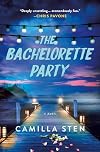
Four best friends — Tilly, Anna, Linnea, and Evelina — have been meeting every year on a remote, uninhabited island off the coast of Sweden since they were teenagers. The island belongs to one of their fathers. The location is a secret known only to them. One night of beer, dancing by the water, sharing things they can't say anywhere else, and then back to their ordinary lives. Until one year when they don't come back. All four women vanish without a trace, and nobody ever finds out what show more happened.
Ten years later, Tessa Nilsson has built her entire life around trying to solve that mystery. Her true crime podcast The Witching Hour made her a name in Scandinavian crime circles, but it crashed and burned before she ever got her answers. Now her best friend Anneliese — yes, the same Anneliese who has a connection to the original case that makes Tessa's neck prickle — wants to throw a bachelorette weekend at Baltic Vinyasa, a sleek new yoga retreat that has just been built on a small island off the Baltic coast. An island with unsettling similarities to the one where the four women disappeared. The plan: cava, sunrise yoga, digital detox — phones surrendered at arrival — and a final chance for the girls to bond with the bride. For Tessa, it's something else entirely: her last shot at the truth. But someone else has been waiting for this opportunity too — and they're not interested in answers. They want revenge. Daughter of Swedish crime writer Viveca Sten.
[May contain spoilers]
Carl — a man who had been secretly sleeping with Evelina — killed all four women in 2014, murdering the others to cover up the first death. Anneliese, who was secretly having an affair with Carl, gave him a false alibi, which is what allowed him to escape accountability. The revenge plot at the bachelorette party is masterminded by Irene, Tilly's sister, and Adam, Linnea's boyfriend — both of them survivors of the original tragedy who have spent years engineering this moment. Irene targets Caroline specifically at the party, and the weekend escalates into violence. The digital detox and island isolation mean nobody can call for help.
What I think: This is Camilla Sten in her atmospheric locked-island element — the dual timeline structure, the claustrophobic setting, the female friendship dynamics under pressure, and the revenge plot giving it an edge The Guest List only partly achieved. It's fun, propulsive, properly creepy, and the twist connections between the two timelines are satisfying. Compared to The Lost Village it's slightly lighter, but it moves beautifully. Probably a 3.5 to 4 from you — you've shown solid tolerance for this kind of genre fun. show less
Ten years later, Tessa Nilsson has built her entire life around trying to solve that mystery. Her true crime podcast The Witching Hour made her a name in Scandinavian crime circles, but it crashed and burned before she ever got her answers. Now her best friend Anneliese — yes, the same Anneliese who has a connection to the original case that makes Tessa's neck prickle — wants to throw a bachelorette weekend at Baltic Vinyasa, a sleek new yoga retreat that has just been built on a small island off the Baltic coast. An island with unsettling similarities to the one where the four women disappeared. The plan: cava, sunrise yoga, digital detox — phones surrendered at arrival — and a final chance for the girls to bond with the bride. For Tessa, it's something else entirely: her last shot at the truth. But someone else has been waiting for this opportunity too — and they're not interested in answers. They want revenge. Daughter of Swedish crime writer Viveca Sten.
[May contain spoilers]
Carl — a man who had been secretly sleeping with Evelina — killed all four women in 2014, murdering the others to cover up the first death. Anneliese, who was secretly having an affair with Carl, gave him a false alibi, which is what allowed him to escape accountability. The revenge plot at the bachelorette party is masterminded by Irene, Tilly's sister, and Adam, Linnea's boyfriend — both of them survivors of the original tragedy who have spent years engineering this moment. Irene targets Caroline specifically at the party, and the weekend escalates into violence. The digital detox and island isolation mean nobody can call for help.
What I think: This is Camilla Sten in her atmospheric locked-island element — the dual timeline structure, the claustrophobic setting, the female friendship dynamics under pressure, and the revenge plot giving it an edge The Guest List only partly achieved. It's fun, propulsive, properly creepy, and the twist connections between the two timelines are satisfying. Compared to The Lost Village it's slightly lighter, but it moves beautifully. Probably a 3.5 to 4 from you — you've shown solid tolerance for this kind of genre fun. show less
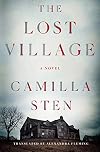
The Publisher Says: The Blair Witch Project meets Midsommar in this brilliantly disturbing thriller from Camilla Sten, an electrifying new voice in suspense.
Documentary filmmaker Alice Lindstedt has been obsessed with the vanishing residents of the old mining town, dubbed “The Lost Village,” since she was a little girl. In 1959, her grandmother’s entire family disappeared in this mysterious tragedy, and ever since, the unanswered questions surrounding the only two people who were show more left—a woman stoned to death in the town center and an abandoned newborn—have plagued her. She’s gathered a small crew of friends in the remote village to make a film about what really happened.
But there will be no turning back.
Not long after they’ve set up camp, mysterious things begin to happen. Equipment is destroyed. People go missing. As doubt breeds fear and their very minds begin to crack, one thing becomes startlingly clear to Alice:
They are not alone.
They’re looking for the truth...
But what if it finds them first?
I RECEIVED A DRC FROM THE PUBLISHER VIA NETGALLEY. THANK YOU.
My Review: Author Camilla is a Force. Her storytelling chops, in this her debut novel!, are truly impressive. Usually split timelines, here denoted by labeling chapters "Now" and "Then", give me pause. It so seldom adds impetus to the natural pace of the story. In Author Sten's case she overcame this. By itself that merits praise...but to use it, as here, in setting a perceptual "trap" for her readers, is extraordinarily tough to pull off.
The framing device that threatened, at first, to derail my enjoyment of the story was also the biggest surprise to me: A long stretch of "Now" spent reading letters discovered in the Lost Village. While that by itself isn't bad, so very often it is a deus ex machina and so feels like a cheat to me. I re-read parts of the section to see if I could find the seams but I couldn't...I kept running across images I lingered over (eg doubts creeping up on a character like "stinging little devils") and action I wanted to follow right now. That's good horror writing...good writing, period.
Much of the seemingly inevitable comparison-to-known-things marketing has borne down hard on Midsommar, a stunningly beautiful folk-horror film whose story is stretched to the point of snapping in order to make its beautiful scenes...seriously, go look at it, the stills should be sold as art!...work. Also harked back to is The Blair Witch Project, whose shakycam found-footage horror story was, to put it mildly, a farrago but whose fascinating editing (predictable and pedestrian aren't necessarily ineffective in horror storytelling) has deeply influenced the entire field of visual horror storytelling. This comparison is, to me, fair and reasonable; the Midsommar one is a stretch and honestly a disservice to the story here told.
This is folk horror as only a Swede setting her story in Sweden would, possibly could, produce. But it's much, much more unnerving to me, more frightening, than Midsommar because this story is about the intersection of mental illness and religious fanaticism that is its own form of mental illness...but grounded in a solid, meaningful, and thoughtful take-down of capitalism and patriarchy.
Author Sten is singin' my song; Translator Fleming is wrapping it in stylish English.
Several friends of mine who read and reviewed the book, all of them women, weren't impressed with the author's feminist take as presented, and to a woman they were dismissive of the "folk horror" trappings the US publisher wrapped around the story. In that latter I hesitantly join them, but as a man I felt the feminist, or more accurately anti-patriarchal, views the author quite clearly espouses by way of contrast to the "Then" action and more clearly espouses in the "Now" if via a dark means, rang me like a bell.
Permaybehaps I'm settling, in the sense that it might not be as clear to the women because it's not enough of a feminist standpoint. I can't say; I can say that, to me, this read bound together creepy, scary real-life threats and challenges with a social and political slant I am in sympathy with. You should give Author Camilla Sten a shot, see what you think. show less
Documentary filmmaker Alice Lindstedt has been obsessed with the vanishing residents of the old mining town, dubbed “The Lost Village,” since she was a little girl. In 1959, her grandmother’s entire family disappeared in this mysterious tragedy, and ever since, the unanswered questions surrounding the only two people who were show more left—a woman stoned to death in the town center and an abandoned newborn—have plagued her. She’s gathered a small crew of friends in the remote village to make a film about what really happened.
But there will be no turning back.
Not long after they’ve set up camp, mysterious things begin to happen. Equipment is destroyed. People go missing. As doubt breeds fear and their very minds begin to crack, one thing becomes startlingly clear to Alice:
They are not alone.
They’re looking for the truth...
But what if it finds them first?
I RECEIVED A DRC FROM THE PUBLISHER VIA NETGALLEY. THANK YOU.
My Review: Author Camilla is a Force. Her storytelling chops, in this her debut novel!, are truly impressive. Usually split timelines, here denoted by labeling chapters "Now" and "Then", give me pause. It so seldom adds impetus to the natural pace of the story. In Author Sten's case she overcame this. By itself that merits praise...but to use it, as here, in setting a perceptual "trap" for her readers, is extraordinarily tough to pull off.
The framing device that threatened, at first, to derail my enjoyment of the story was also the biggest surprise to me: A long stretch of "Now" spent reading letters discovered in the Lost Village. While that by itself isn't bad, so very often it is a deus ex machina and so feels like a cheat to me. I re-read parts of the section to see if I could find the seams but I couldn't...I kept running across images I lingered over (eg doubts creeping up on a character like "stinging little devils") and action I wanted to follow right now. That's good horror writing...good writing, period.
Much of the seemingly inevitable comparison-to-known-things marketing has borne down hard on Midsommar, a stunningly beautiful folk-horror film whose story is stretched to the point of snapping in order to make its beautiful scenes...seriously, go look at it, the stills should be sold as art!...work. Also harked back to is The Blair Witch Project, whose shakycam found-footage horror story was, to put it mildly, a farrago but whose fascinating editing (predictable and pedestrian aren't necessarily ineffective in horror storytelling) has deeply influenced the entire field of visual horror storytelling. This comparison is, to me, fair and reasonable; the Midsommar one is a stretch and honestly a disservice to the story here told.
This is folk horror as only a Swede setting her story in Sweden would, possibly could, produce. But it's much, much more unnerving to me, more frightening, than Midsommar because this story is about the intersection of mental illness and religious fanaticism that is its own form of mental illness...but grounded in a solid, meaningful, and thoughtful take-down of capitalism and patriarchy.
We perceive women suffering from mental illness with a sort of paradoxical double-sidedness; both victims and monsters, simultaneously infantilized and feared. A certain level of dysfunction is accepted—after all, women who are suffering mild depression and starving themselves aren’t going to leave their husbands or start revolutions, which is very practical indeed.
–and–
We view a depressed upper-class woman from a stable family background dealing with depression as “having the blues,” while the homeless woman on the street corner battling auditory hallucinations is a thing to be feared, a threatening monster. Not a person in need of help. Not someone with thoughts, dreams, fears, and needs of their own. Not a fully formed human being with agency and identity, suffering from an illness and doing their best to function as well as they can.
Author Sten is singin' my song; Translator Fleming is wrapping it in stylish English.
Several friends of mine who read and reviewed the book, all of them women, weren't impressed with the author's feminist take as presented, and to a woman they were dismissive of the "folk horror" trappings the US publisher wrapped around the story. In that latter I hesitantly join them, but as a man I felt the feminist, or more accurately anti-patriarchal, views the author quite clearly espouses by way of contrast to the "Then" action and more clearly espouses in the "Now" if via a dark means, rang me like a bell.
Permaybehaps I'm settling, in the sense that it might not be as clear to the women because it's not enough of a feminist standpoint. I can't say; I can say that, to me, this read bound together creepy, scary real-life threats and challenges with a social and political slant I am in sympathy with. You should give Author Camilla Sten a shot, see what you think. show less
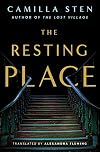
The Publisher Says: A spine-chilling, propulsive psychological suspense from international sensation Camilla Sten.
The medical term is prosopagnosia. The average person calls it face blindness—the inability to recognize a familiar person’s face, even the faces of those closest to you.
When Eleanor walked in on the scene of her capriciously cruel grandmother, Vivianne’s, murder, she came face to face with the killer—a maddening expression that means nothing to someone like her. With show more each passing day, her anxiety mounts. The dark feelings of having brushed by a killer, yet not know who could do this—or if they’d be back—overtakes both her dreams and her waking moments, thwarting her perception of reality.
Then a lawyer calls. Vivianne has left her a house—a looming estate tucked away in the Swedish woods. The place her grandfather died, suddenly. A place that has housed a dark past for over fifty years.
Eleanor. Her steadfast boyfriend, Sebastian. Her reckless aunt, Veronika. The lawyer. All will go to this house of secrets, looking for answers. But as they get closer to bringing the truth to light, they’ll wish they had never come to disturb what rests there.
A heart-thumping, relentless thriller that will shake you to your core, The Resting Place is an unforgettable novel of horror and suspense.
I RECEIVED A DRC FROM THE PUBLISHER VIA NETGALLEY. THANK YOU.
My Review: I've known someone with prosopagnosia well, and for a lot longer than I have known the word or the condition existed. It's one of the reasons I was really eager to get this book's DRC and devour it. I was so happy to see this under-represented and misunderstood disability represented at all. I hoped, of course, to see it represented well.
It was. The condition of "face-blindness" was truly well established, in a complex and multivalent way; it was also chillingly effectively woven into a deeply unsettling, even unnerving, plot.
What happens, as you've seen in the book description, is a scene of brutal violence that simply can't be forgotten by anyone who's experienced anything remotely close to it. But, in Eleanor's case, it's a scene that lacks a very important resonance. She's seen a murder, and a murderer, and she can't forget it but can't process it, can't help assign guilt to the guilty because she is biomechanically incapable of the necessary function. And then what happens? She inherits the house her grandmother failed to tell her that she owned. Way to lard the stress into the liver of the story...another set of unknown people, faces ever unknown to her and markers to somehow fasten onto their identities.
From that point on, I was so very sold on this read. I could not WAIT to see how this awful psychological double bind would resolve.
The things I liked were, like the things I liked in The Lost Village, the ones that brought the character to life:
They're present, they're satisfyingly numerous, but in the end the thing that will make or break the read is one's response to the ending. The entire book is a set-up to the set-piece in the last, say, thirtyish pages. It's a big ask from a sophmore novelist. I was rewarded by it because its resolution was so very timely and so personal to me. I can't say more because the Spoiler Stasi will descend on me with malice and fury. This post will clue you in to the direction we're heading if you care to be enlightened.
I thought the use of a big, old, dark manor house in the country was going to be a silly distraction, a gewgaw meant to distract me from something...it wasn't, and it was; the big winter storm, another gothic-storytelling staple, was similarly used. These weren't my favorite moments in the book. I will say they didn't "ruin" my experience of the story as can happen with such inessentials. The nature of the story is so basically well-crafted that Author Sten could've chosen any one of an array of settings and accomplished her task.
I confess that, as I read along and Eleanor kept doing her Eleanor thing, I was half-dreading the need to slap an "ableism" content warning on the review. I was so relieved that I did not feel Author Sten had crossed my own mental threshhold for use of a disability shading into the old, dark "crippled" territory I've still been hit with in the twenty-first century.
I'm going to leave the last words to Eleanor, via Author Sten. I think they say more about what I derived from this read than I can.
The medical term is prosopagnosia. The average person calls it face blindness—the inability to recognize a familiar person’s face, even the faces of those closest to you.
When Eleanor walked in on the scene of her capriciously cruel grandmother, Vivianne’s, murder, she came face to face with the killer—a maddening expression that means nothing to someone like her. With show more each passing day, her anxiety mounts. The dark feelings of having brushed by a killer, yet not know who could do this—or if they’d be back—overtakes both her dreams and her waking moments, thwarting her perception of reality.
Then a lawyer calls. Vivianne has left her a house—a looming estate tucked away in the Swedish woods. The place her grandfather died, suddenly. A place that has housed a dark past for over fifty years.
Eleanor. Her steadfast boyfriend, Sebastian. Her reckless aunt, Veronika. The lawyer. All will go to this house of secrets, looking for answers. But as they get closer to bringing the truth to light, they’ll wish they had never come to disturb what rests there.
A heart-thumping, relentless thriller that will shake you to your core, The Resting Place is an unforgettable novel of horror and suspense.
I RECEIVED A DRC FROM THE PUBLISHER VIA NETGALLEY. THANK YOU.
My Review: I've known someone with prosopagnosia well, and for a lot longer than I have known the word or the condition existed. It's one of the reasons I was really eager to get this book's DRC and devour it. I was so happy to see this under-represented and misunderstood disability represented at all. I hoped, of course, to see it represented well.
It was. The condition of "face-blindness" was truly well established, in a complex and multivalent way; it was also chillingly effectively woven into a deeply unsettling, even unnerving, plot.
Prosopagnosia, face blindness. It means my brain doesn’t process human faces the same way others’ do. I can’t recognize faces, so have to memorize distinguishing features instead.
What happens, as you've seen in the book description, is a scene of brutal violence that simply can't be forgotten by anyone who's experienced anything remotely close to it. But, in Eleanor's case, it's a scene that lacks a very important resonance. She's seen a murder, and a murderer, and she can't forget it but can't process it, can't help assign guilt to the guilty because she is biomechanically incapable of the necessary function. And then what happens? She inherits the house her grandmother failed to tell her that she owned. Way to lard the stress into the liver of the story...another set of unknown people, faces ever unknown to her and markers to somehow fasten onto their identities.
From that point on, I was so very sold on this read. I could not WAIT to see how this awful psychological double bind would resolve.
The things I liked were, like the things I liked in The Lost Village, the ones that brought the character to life:
...it’s the body that panics first, the brain that follows. If I can just keep my breaths slow and force myself to relax then I can trick my mind into calm.
–and–
“Your fear is valid, but that doesn’t make it real. The fear may be true, but it doesn’t have to be your truth.”
They're present, they're satisfyingly numerous, but in the end the thing that will make or break the read is one's response to the ending. The entire book is a set-up to the set-piece in the last, say, thirtyish pages. It's a big ask from a sophmore novelist. I was rewarded by it because its resolution was so very timely and so personal to me. I can't say more because the Spoiler Stasi will descend on me with malice and fury. This post will clue you in to the direction we're heading if you care to be enlightened.
I thought the use of a big, old, dark manor house in the country was going to be a silly distraction, a gewgaw meant to distract me from something...it wasn't, and it was; the big winter storm, another gothic-storytelling staple, was similarly used. These weren't my favorite moments in the book. I will say they didn't "ruin" my experience of the story as can happen with such inessentials. The nature of the story is so basically well-crafted that Author Sten could've chosen any one of an array of settings and accomplished her task.
I confess that, as I read along and Eleanor kept doing her Eleanor thing, I was half-dreading the need to slap an "ableism" content warning on the review. I was so relieved that I did not feel Author Sten had crossed my own mental threshhold for use of a disability shading into the old, dark "crippled" territory I've still been hit with in the twenty-first century.
I'm going to leave the last words to Eleanor, via Author Sten. I think they say more about what I derived from this read than I can.
She says that wounds can leave scars on our souls just like on our bodies, and that we have to learn to live with them rather than try to rid ourselves of them completely.show less
When I first saw this title offered, I thought of Roanoke. The tagline for it was for Midsommer and Blair Witch Project. I have also been trying to read books written by authors from around the world. All that convinced me that I needed to read this book.
The book goes between two time settings, 1959 and present day, (titled as “then” and “now”). It takes places in a ghost town called Silvertjärn, Sweden. In 1959, this small mining town had one child found alive, one woman found show more murdered and the rest of the villagers, gone. Disappeared. Vanished. Over 900 people never heard from or seen again. The child is found, placed in a new home and name. All that is left are ruins of a decaying village and rumors. Present day, Alice Lindstedt is a young filmmaker. She grew up hearing about Silvertjärn from her grandmother. The grandmother grew up in the village, moving to Stockholm after she married. She had been getting letters from her mother and sister until the discovery of the missing. Alice is making a documentary about the disappearances. She hopes to solve the mystery. She has the idea to start a Kickstarter to get the funding. To do that she convinces four others to join her on a preliminary look at the village to get photos and make a short film. She and one of the others have a secret, though. The other person wanting to make this project with her is the daughter of the surviving child. Alice had tracked her down. From the first day there things went wrong. At first they tried to come up with excuses or just ignore it. Was it the girls doing those things? Was someone there trying to sabotage the documentary? Or is the place just evil?
I loved reading this book! It was tremendously atmospheric. Camilla Sten created a realistic feel to the creepy tale. All of the characters were well written. Flawed and relatable you could easily imagine knowing them. The descriptions of the houses, church and school placed you in the village. The weather touched it with a gray moodiness that added to the chill. In case you are wondering if the dual time and narrators work out, the answer is a resounding yes! This author pulled the tension tight cohesively. Many times I get annoyed while reading books set in two different times with different narrators. Not so with this story. My heart would be racing in the now only to be calmed switching to then just to have my heart racing again. I was being well played and I loved it. If you are looking for a book that will bring shivers, put this one on your to be read list.
I received an advanced review copy of this book from Minotaur, an imprint of St Martin Publishing Group, through NetGalley. My review is honest and voluntary. I read and reviewed this book during the local library summer reading program and I really hope the library chooses to get this one when it comes up. It is a book I plan to read again, in the fall or perhaps on a dark cold winter night. I honestly can’t wait until I can buy a copy. show less
The book goes between two time settings, 1959 and present day, (titled as “then” and “now”). It takes places in a ghost town called Silvertjärn, Sweden. In 1959, this small mining town had one child found alive, one woman found show more murdered and the rest of the villagers, gone. Disappeared. Vanished. Over 900 people never heard from or seen again. The child is found, placed in a new home and name. All that is left are ruins of a decaying village and rumors. Present day, Alice Lindstedt is a young filmmaker. She grew up hearing about Silvertjärn from her grandmother. The grandmother grew up in the village, moving to Stockholm after she married. She had been getting letters from her mother and sister until the discovery of the missing. Alice is making a documentary about the disappearances. She hopes to solve the mystery. She has the idea to start a Kickstarter to get the funding. To do that she convinces four others to join her on a preliminary look at the village to get photos and make a short film. She and one of the others have a secret, though. The other person wanting to make this project with her is the daughter of the surviving child. Alice had tracked her down. From the first day there things went wrong. At first they tried to come up with excuses or just ignore it. Was it the girls doing those things? Was someone there trying to sabotage the documentary? Or is the place just evil?
I loved reading this book! It was tremendously atmospheric. Camilla Sten created a realistic feel to the creepy tale. All of the characters were well written. Flawed and relatable you could easily imagine knowing them. The descriptions of the houses, church and school placed you in the village. The weather touched it with a gray moodiness that added to the chill. In case you are wondering if the dual time and narrators work out, the answer is a resounding yes! This author pulled the tension tight cohesively. Many times I get annoyed while reading books set in two different times with different narrators. Not so with this story. My heart would be racing in the now only to be calmed switching to then just to have my heart racing again. I was being well played and I loved it. If you are looking for a book that will bring shivers, put this one on your to be read list.
I received an advanced review copy of this book from Minotaur, an imprint of St Martin Publishing Group, through NetGalley. My review is honest and voluntary. I read and reviewed this book during the local library summer reading program and I really hope the library chooses to get this one when it comes up. It is a book I plan to read again, in the fall or perhaps on a dark cold winter night. I honestly can’t wait until I can buy a copy. show less
Lists
Awards


You May Also Like


Associated Authors
Statistics
- Works
- 15
- Also by
- 1
- Members
- 1,657
- Popularity
- #15,508
- Rating
- 3.5
- Reviews
- 99
- ISBNs
- 61
- Languages
- 8