
George Müller (1805–1898)
Author of The Autobiography of George Müller
About the Author
George Mueller (1805-1898) was born in Prussia. He became an evangelist and the director of the Ashley Down Orphanage in Bristol, England, where he cared for more than 10,000 orphans during his life. He provided shelter, clothing, food, and an education for each of his orphans. He also established show more 117 schools, which offered Christians education to over 120,000 children. A great man of faith, he never appealed for funds, but simply asked God to supply the needs, which the Lord faithfully did. show less
Image credit: Image from The life of George Müller : a record of faith triumphant (1914) by William Henry Harding
Works by George Müller
The Life of Trust: Being a Narrative of the Lord's Dealings with George Müller (2004) 44 copies, 2 reviews
Yours Affectionately George Muller, Valuable Selections From the Writings of George Muller (2009) 31 copies
A Narrative of some of the Lord's Dealings with George Müller Written by Himself. Second Part (2009) 11 copies
A Narrative of Some of the Lord's Dealings with George Mueller Written by Himself, Volumes I-IV (2008) 7 copies
GEORGE MULLER COLLECTION (5-in-1): Biography, Autobiography, Answers to Prayer, Counsel to Christians, Preaching Tours and Missionary Labours (2011) 4 copies
Un millon y medio de oraciones contestadas - Vol. 2: La autobiografia de George Müller (Spanish Edition) (2022) 3 copies
Un millon y medio de oraciones contestadas - Vol. 1: La autobiografia de George Müller (Spanish Edition) (2021) 3 copies
Soul nourishment first 3 copies
Delighted in God 2 copies
Real Faith [article] 2 copies
George Muller 2 copies
Lobo, H. P. de Castro 1 copy
God Answers Prayer 1 copy
The Life of Christ 1 copy
Sermons and Addresses 1 copy
A narrative of some of the Lord's dealings, with George Muller, written by himself, sixth part. 1 copy
Counsel to Christians 1 copy
How to live a happy life 1 copy
Exploits for God 1 copy
Îndrăzneala credinței 1 copy
God Answers Prayer 1 copy
Address to young Convert 1 copy
Associated Works
Tagged
Common Knowledge
- Other names
- Müller, Johann Georg Ferdinand
Mueller, George - Birthdate
- 1805-09-27
- Date of death
- 1898-03-10
- Gender
- male
- Education
- University of Halle (Divinity)
- Occupations
- evangelist
missionary
administrator of orphanages - Organizations
- London Missionary Society
Scripture Knowledge Institution for Home and Abroad
Open Brethren (Founding Member) - Nationality
- Prussia (birth)
UK - Birthplace
- Kroppenstedt, Prussia
- Places of residence
- London, England, UK
Devon, England, UK
Bristol, Gloucestershire, England, UK
Ashley Down, Bristol, Gloucestershire, England, UK - Place of death
- Bristol, Gloucestershire, England, UK
- Associated Place (for map)
- England, UK
Members
Reviews
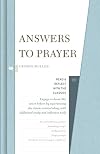
Answers to Prayer by George Müller is part of the Read & Reflect With the Classics Series (I am reviewing the hardcover version) which provides thought provoking questions and also prayers at the end of each chapter. Müller's book details various accounts of God's all sufficient grace in the works that God had prepared for him to do.
The way that Mueller approached the ministries that God graciously gave him is very unique compared to most present day Christian ministries (and perhaps most show more ministries in Müller's day as well). Ministries today are very focused and reliant upon, money. They hold fundraising drives, have commercials on the radio asking for people's support, and some will send tons of letters and emails begging for monetary help. I think of one ministry in particular, which, although its founders believe in God's absolute sovereignty, they contradict their belief by implying that their ministry cannot continue without the help of people, that "your support makes ministry happen".
Many ministries act as if they are the most important ministry in God's Kingdom and that if you do not give money and they expire, that God's Word will not be given out any more. Muller did not act like that. He knew that God did not need human beings in order to get His work done.
Müller took a more faith-based approach, relying upon God rather than upon people for help. He would not ask people for help with ministries, he asked God, period. And God provided. "Never since the Orphan work has been in existence have I asked one single human being for any help for this work; and yet, unasked for, simply in answer to prayer, from so many parts of the world, as has been stated, the donations have come in, and that very frequently at a time of the greatest need."
He also came to the conclusion that one should not rely on people's promises to give money and that one should not even think about those promises: "Now this morning it came to my mind, that such promises ought to be valued, in a certain sense, as nothing, i.e., that the mind ought never for a moment to be directed to them, but to the living God, and to the living God only. I saw that such promises ought not to be of the value of one farthing, so far as it regards to thinking about them for help." This is quite a contrast to ministries who beg for pledges of money, and put large or regular donors names up on plaques. They make more of the people, more of the tools, that God uses than the Supplier Himself! God is the One who supplies all our need, and though he may use people to do it, they are but channels (think "Channels Only"). God doesn't need people, or their money, AT ALL in order to supply our needs!
As Müller puts it, "Earthly friends may lose their ability to help us, however much they desire so to do; but He remains throughout eternity the Infinitely Rich One. Earthly friends may have their minds after a time diverted to other objects, and, as they cannot help everywhere, much as they may desire it, they may, though reluctantly, have to discontinue to help us; but He is able, in all directions, though the requirements were multiplied a million times, to supply all that can possibly be needed, and does it with delight, where His work is carried on, and where He is confided in. Earthly friends may be removed by death, and thus we may lose their help, but He lives forever, He cannot die. In this latter point of view, I have especially, during the past 40 years, in connection with this Institution, seen the blessedness of trusting in the Living God alone. Not one nor two, nor even five nor ten, but many more, who once helped me much with their means, have been removed by death; but have the operations of the Institution been stopped on that account? No. And how came this? Because I trusted in God, and in God alone."
Müller would at times give updates on God's provision for the ministries in times of great need, but this was to encourage Christians in the faith, not to work on their emotions to make them feel compelled to give supplies. At least one time Muller and his fellow workers put off giving an update because at the time they were, from a human perspective, in desperate straits, and they did not want other people to know it, wanting to rely solely on God for help.
Many ministries want God to give them a yearly supply rather than just their daily bread. The ministries that God gave Müller charge over lived day by day in reliance upon God's supply, many times literally being given the means for their daily needs DAILY on the day they were needed, rather than in advance.
I really liked this book. The only thing that I didn't quite like were the prayers that were added at the end of each chapter. I would rather that they have been commentary rather than prewritten ways that we can use to talk to God. Yes, we do not know how to pray as we ought, but neither does the person who wrote those prayers. Though I don't think that using other people's prayers is necessarily wrong, Christians ought not to rely upon other Christians to write their prayers for them, we have the best Helper of all in the Holy Spirit who is our Interceder in our prayers (Romans 8:26-27). There are good concepts in them though, "You provide what I need, and if I don't have it, I can absolutely trust that I don't need it. "
Before I end, and I really need to end because this is quite long, at the end of the book there is an appendix containing an article by Muller on "The Careful and Consecutive Reading of the Holy Scriptures". It is an excellent read, and describes Muller's goal in writing this book. He advocates the consistent daily reading of the Scriptures, over and above any other book. He describes how he once slacked in that area and how he had gotten into the habit of reading other books, including Christian ones, instead of the Scripture. "…thus, like many believers, I practically preferred, for the first four years of my divine life, the works of uninspired men to the oracles of the living God." As he put it, "God himself has condescended to become an author" and this is the "book of books" containing all that we ought to know! We should not value Christian books (including this one) above the Scriptures, the Scriptures themselves should be our delight.
Many thanks to the folks at B&H Publishers for sending me a free review copy of this book (My review did not have to be favorable). show less
The way that Mueller approached the ministries that God graciously gave him is very unique compared to most present day Christian ministries (and perhaps most show more ministries in Müller's day as well). Ministries today are very focused and reliant upon, money. They hold fundraising drives, have commercials on the radio asking for people's support, and some will send tons of letters and emails begging for monetary help. I think of one ministry in particular, which, although its founders believe in God's absolute sovereignty, they contradict their belief by implying that their ministry cannot continue without the help of people, that "your support makes ministry happen".
Many ministries act as if they are the most important ministry in God's Kingdom and that if you do not give money and they expire, that God's Word will not be given out any more. Muller did not act like that. He knew that God did not need human beings in order to get His work done.
Müller took a more faith-based approach, relying upon God rather than upon people for help. He would not ask people for help with ministries, he asked God, period. And God provided. "Never since the Orphan work has been in existence have I asked one single human being for any help for this work; and yet, unasked for, simply in answer to prayer, from so many parts of the world, as has been stated, the donations have come in, and that very frequently at a time of the greatest need."
He also came to the conclusion that one should not rely on people's promises to give money and that one should not even think about those promises: "Now this morning it came to my mind, that such promises ought to be valued, in a certain sense, as nothing, i.e., that the mind ought never for a moment to be directed to them, but to the living God, and to the living God only. I saw that such promises ought not to be of the value of one farthing, so far as it regards to thinking about them for help." This is quite a contrast to ministries who beg for pledges of money, and put large or regular donors names up on plaques. They make more of the people, more of the tools, that God uses than the Supplier Himself! God is the One who supplies all our need, and though he may use people to do it, they are but channels (think "Channels Only"). God doesn't need people, or their money, AT ALL in order to supply our needs!
As Müller puts it, "Earthly friends may lose their ability to help us, however much they desire so to do; but He remains throughout eternity the Infinitely Rich One. Earthly friends may have their minds after a time diverted to other objects, and, as they cannot help everywhere, much as they may desire it, they may, though reluctantly, have to discontinue to help us; but He is able, in all directions, though the requirements were multiplied a million times, to supply all that can possibly be needed, and does it with delight, where His work is carried on, and where He is confided in. Earthly friends may be removed by death, and thus we may lose their help, but He lives forever, He cannot die. In this latter point of view, I have especially, during the past 40 years, in connection with this Institution, seen the blessedness of trusting in the Living God alone. Not one nor two, nor even five nor ten, but many more, who once helped me much with their means, have been removed by death; but have the operations of the Institution been stopped on that account? No. And how came this? Because I trusted in God, and in God alone."
Müller would at times give updates on God's provision for the ministries in times of great need, but this was to encourage Christians in the faith, not to work on their emotions to make them feel compelled to give supplies. At least one time Muller and his fellow workers put off giving an update because at the time they were, from a human perspective, in desperate straits, and they did not want other people to know it, wanting to rely solely on God for help.
Many ministries want God to give them a yearly supply rather than just their daily bread. The ministries that God gave Müller charge over lived day by day in reliance upon God's supply, many times literally being given the means for their daily needs DAILY on the day they were needed, rather than in advance.
I really liked this book. The only thing that I didn't quite like were the prayers that were added at the end of each chapter. I would rather that they have been commentary rather than prewritten ways that we can use to talk to God. Yes, we do not know how to pray as we ought, but neither does the person who wrote those prayers. Though I don't think that using other people's prayers is necessarily wrong, Christians ought not to rely upon other Christians to write their prayers for them, we have the best Helper of all in the Holy Spirit who is our Interceder in our prayers (Romans 8:26-27). There are good concepts in them though, "You provide what I need, and if I don't have it, I can absolutely trust that I don't need it. "
Before I end, and I really need to end because this is quite long, at the end of the book there is an appendix containing an article by Muller on "The Careful and Consecutive Reading of the Holy Scriptures". It is an excellent read, and describes Muller's goal in writing this book. He advocates the consistent daily reading of the Scriptures, over and above any other book. He describes how he once slacked in that area and how he had gotten into the habit of reading other books, including Christian ones, instead of the Scripture. "…thus, like many believers, I practically preferred, for the first four years of my divine life, the works of uninspired men to the oracles of the living God." As he put it, "God himself has condescended to become an author" and this is the "book of books" containing all that we ought to know! We should not value Christian books (including this one) above the Scriptures, the Scriptures themselves should be our delight.
Many thanks to the folks at B&H Publishers for sending me a free review copy of this book (My review did not have to be favorable). show less

This is essentially the diary of George Mueller up to 1860, with some autobiographical notes at the start and a few digressions in the text. Mueller was a most remarkable man, who started a number of orphanages in the west of England in the 19th century whilst refusing to take any salary, and living each day by faith that God would provide his financial needs. Remarkably time and again, this is exactly what happens, and his work grows - but all the time with him refusing to benefit show more personally in any way.
Mueller's story is remarkable and uplifting. However, this book would be hard going for many readers because - being a diary format - it goes over and over the same issues: Short of money - spent the day in earnest prayer - money arrived just in time. Many people will prefer the shorter biographical works which pick a few of these occasions, and make the point that it happened time and time again.
In the other hand, reading the full diary just shows how often this happened.
The text also contains some poignant moments. The loss of his son, the woman who gave all she had but never wanted when she was herself in need, the orphan who gave sixpence towards the building of a new orphanage.
It was also good to see the book reach its climax in converging on the 1859 revivals in Ireland, Wales and elsewhere, and to read of their own revival amongst the orphans.
All in all a worthwhile book to read, but shorter biographies would suit many readers. show less
Mueller's story is remarkable and uplifting. However, this book would be hard going for many readers because - being a diary format - it goes over and over the same issues: Short of money - spent the day in earnest prayer - money arrived just in time. Many people will prefer the shorter biographical works which pick a few of these occasions, and make the point that it happened time and time again.
In the other hand, reading the full diary just shows how often this happened.
The text also contains some poignant moments. The loss of his son, the woman who gave all she had but never wanted when she was herself in need, the orphan who gave sixpence towards the building of a new orphanage.
It was also good to see the book reach its climax in converging on the 1859 revivals in Ireland, Wales and elsewhere, and to read of their own revival amongst the orphans.
All in all a worthwhile book to read, but shorter biographies would suit many readers. show less

Here in this book are the documented results of thousands of answer to earnest prayer.
When George Mueller could not get it out of his mind to open a house for orphans in late 1835, he purposed to do so "that God might be magnified by the fact that the orphans under my care are provided with all they need, only by prayer and faith. For over sixty years George Mueller wrote down the details of the Lord's provision. Thousands of orphans depended solely on Mueller, and Mueller, in turn, depended show more solely on the Lord. Prayer is an urgent matter that always yields crucial results. show less
When George Mueller could not get it out of his mind to open a house for orphans in late 1835, he purposed to do so "that God might be magnified by the fact that the orphans under my care are provided with all they need, only by prayer and faith. For over sixty years George Mueller wrote down the details of the Lord's provision. Thousands of orphans depended solely on Mueller, and Mueller, in turn, depended show more solely on the Lord. Prayer is an urgent matter that always yields crucial results. show less

Tremendous stories of faith. George was a strong advocate that the only way to increase your faith was to exercise it. Lots of excellent principles to build your prayer and Bible study life. He truly wanted folk to be transformed and pointed to Christ by reading this book.
Also great stories of God repeatedly gave the orphans monies just when it was need, literally not a minute before.
The only thing I struggled with is the old school British currency system and trying to figure out what a show more late nineteenth century pound or shilling was worth in modern currency. show less
Also great stories of God repeatedly gave the orphans monies just when it was need, literally not a minute before.
The only thing I struggled with is the old school British currency system and trying to figure out what a show more late nineteenth century pound or shilling was worth in modern currency. show less
Lists
You May Also Like


Associated Authors
Statistics
- Works
- 75
- Also by
- 1
- Members
- 2,547
- Popularity
- #10,087
- Rating
- 4.1
- Reviews
- 18
- ISBNs
- 104
- Languages
- 5
