
Margot Bennett (1912–1980)
Author of Alfred Hitchcock Presents: Stories Not for the Nervous
About the Author
Series
Works by Margot Bennett
Associated Works
The Edinburgh Mystery: And Other Tales of Scottish Crime (2022) — Contributor — 127 copies, 7 reviews
Tagged
Common Knowledge
- Canonical name
- Bennett, Margot
- Other names
- Miller, Margot
Mitchell, Margot - Birthdate
- 1912-01-19
- Date of death
- 1980-12-06
- Gender
- female
- Occupations
- crime writer
screenwriter
thriller writer
science fiction writer
journalist
humanitarian aid worker - Short biography
- Margot Bennett, née Mitchell or Miller, was born in Lenzie, Dunbartonshire, Scotland. She was educated in Scotland and Australia, and worked as an advertising copywriter in Sydney and London. During the Spanish Civil War, she worked as a nurse, translator, and broadcaster for the Spanish Medical Aid Committee assisting the Republicans in the fight against fascism. During the war, she broke her arm when a truck overturned, and she was shot in both ankles.
In 1938, she married Richard Lawrence Bennett, an English journalist and writer who had served in the Spanish Republican Army since 1936 and written broadcasts for Radio Catalan. They had four children together. Back in the UK, Bennett became a regular writer for Lilliput magazine from 1943 to 1950. However, she is best remembered for her crime fiction, thrillers, and science fiction published from the 1940s to the 1960s, including The Long Way Back (1955) and The Man Who Didn't Fly (1955).
Her detective novel Someone from the Past (1958) won the Gold Dagger Award from the Crime Writers' Association. Bennett also wrote some scripts for television, including episodes for the series Maigret, Emergency-Ward 10, Market in Honey Lane, and Quick Before They Catch Us. She wrote the screenplays for two films adapted from her books, The Man Who Liked Funerals (1959) and The Crowning Touch (1959).
Bennett was a supporter of left-wing causes, including the Campaign for Nuclear Disarmament, and wrote The Intelligent Woman's Guide to Atomic Radiation (1964). - Nationality
- UK
- Birthplace
- Lenzie, Dunbartonshire, Scotland, UK
- Places of residence
- London, Middlesex, England, UK
- Place of death
- London, Middlesex, England, UK
- Map Location
- Scotland, UK
- Associated Place (for map)
- England, UK
Members
Reviews
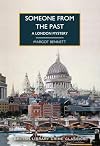
I'm going to spoil the ending of this one to some degree. I'll try to say some general things first, so you can tell whether you care about the spoiling.
This is another novel reissued as a British Library Crime Classic—just this past year, 2023. Margot Bennett was the first woman to win the Gold Dagger (though there was at least one woman on the shortlist every previous year). She never wrote another crime novel after this one, mostly turning instead to writing for television. Did she quit show more on a high?
In some ways, yes. The book is a fairly successful marriage of the classic form of the whodunnit with some then-contemporary psychological content. As in the previous winner, the psychologies of the main characters are foregrounded and examined as putative explanations for their actions—murder is more than base motive. But, unlike with the previous winner, there is a genuine, well-executed mystery at the core of the novel: which among four suspects, all complete shits of varying consistency, murdered the protagonist's friend?
The protagonist is a youngish woman, Nancy, who is a writer for magazines. Her dead friend is Sarah. The four suspects are all terrible, terrible men with whom Nancy, Sarah, or both have romantic pasts or presents. I say "romantic". This feels like a euphemism here, since none of the relationships described are obviously loving, in the sense we should hope to use that word.
The book works, insofar as it does, because the four male suspects are all convincingly bad. One of them is actively trying to frame Nancy for Sarah's death, and going some way to succeeding. She doesn't know which of them it is, and the police are on to her (not without reason—she doesn't always help herself). Meanwhile, all four terrible men take turns at being personally horrible to Nancy, each in their own entirely believable way. So we believe that any of them could be capable of the crime, and we don't know which it is until the last few pages. This engaging, well-wrought plot is written up tightly enough to create tension, with adept use of flashback to fill in the characters. It's all helped along by snappy, funny dialogue; the introduction by Martin Edwards speculates that Bennett identified with Nancy, and she certainly gets all the very best lines.
There are two reasons why I'm not entirely sold on this book. The first is that it is so appallingly, irredeemably squalid. Perhaps this is exactly as it was for young women writers in the 1950s, but oh dear, the grime and the stink and the horrible, horrible men make you itch as you read. And this brings me to the second reason, and the spoiler. After the mystery is solved, after all is settled, after we know which of the shits is a murderer, after we and Nancy know they are all shits: after all that, she falls swooning into the arms of the worst of the shits, the one who has treated her most appallingly, whose only positive quality appears to be his innocence of murder.
Now, there is a question of how seriously this ending should be taken. It's possible that Bennett meant it as a sort of tragic coda—that she sees the obvious problems with the proposition, and sees Nancy as deserving of them, as no better than she ought to be. But I don't think this is so. I think this is meant to be a consummate, cheering resolution. To modern sensibilities, it is certainly not cheering, and really not believable—in fact, close to incomprehensible. It mars what is otherwise a very fine book, worth reading for its plot, its dialogue, and its itchy squalor. show less
This is another novel reissued as a British Library Crime Classic—just this past year, 2023. Margot Bennett was the first woman to win the Gold Dagger (though there was at least one woman on the shortlist every previous year). She never wrote another crime novel after this one, mostly turning instead to writing for television. Did she quit show more on a high?
In some ways, yes. The book is a fairly successful marriage of the classic form of the whodunnit with some then-contemporary psychological content. As in the previous winner, the psychologies of the main characters are foregrounded and examined as putative explanations for their actions—murder is more than base motive. But, unlike with the previous winner, there is a genuine, well-executed mystery at the core of the novel: which among four suspects, all complete shits of varying consistency, murdered the protagonist's friend?
The protagonist is a youngish woman, Nancy, who is a writer for magazines. Her dead friend is Sarah. The four suspects are all terrible, terrible men with whom Nancy, Sarah, or both have romantic pasts or presents. I say "romantic". This feels like a euphemism here, since none of the relationships described are obviously loving, in the sense we should hope to use that word.
The book works, insofar as it does, because the four male suspects are all convincingly bad. One of them is actively trying to frame Nancy for Sarah's death, and going some way to succeeding. She doesn't know which of them it is, and the police are on to her (not without reason—she doesn't always help herself). Meanwhile, all four terrible men take turns at being personally horrible to Nancy, each in their own entirely believable way. So we believe that any of them could be capable of the crime, and we don't know which it is until the last few pages. This engaging, well-wrought plot is written up tightly enough to create tension, with adept use of flashback to fill in the characters. It's all helped along by snappy, funny dialogue; the introduction by Martin Edwards speculates that Bennett identified with Nancy, and she certainly gets all the very best lines.
There are two reasons why I'm not entirely sold on this book. The first is that it is so appallingly, irredeemably squalid. Perhaps this is exactly as it was for young women writers in the 1950s, but oh dear, the grime and the stink and the horrible, horrible men make you itch as you read. And this brings me to the second reason, and the spoiler. After the mystery is solved, after all is settled, after we know which of the shits is a murderer, after we and Nancy know they are all shits: after all that, she falls swooning into the arms of the worst of the shits, the one who has treated her most appallingly, whose only positive quality appears to be his innocence of murder.
Now, there is a question of how seriously this ending should be taken. It's possible that Bennett meant it as a sort of tragic coda—that she sees the obvious problems with the proposition, and sees Nancy as deserving of them, as no better than she ought to be. But I don't think this is so. I think this is meant to be a consummate, cheering resolution. To modern sensibilities, it is certainly not cheering, and really not believable—in fact, close to incomprehensible. It mars what is otherwise a very fine book, worth reading for its plot, its dialogue, and its itchy squalor. show less
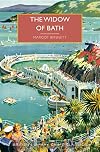
Everton used to work for the foreign office but after a liaison with the beautiful, amoral Lucy Bath, wife of a retired judge, he barely survived an attempted murder and was jailed for fraud. Now he is working for an organisation that rates third-rate hotels and has run into Lucy again. When Lucy invites him to her home for drinks, he ignores his misgivings and goes, to be caught up in a murder.
Mostly I was amused by Everton's humorous, sardonic observations, particularly of third-rate show more hotels, but sometimes the defeatism became too much. However, Everton manages to rise above his cynicism and investigate the crime, revealing the well-meaning, kind-hearted man who had been ruthlessly exploited by the conscienceless Lucy.
There are many plot strands and numerous twists, probably too many. The book was published in 1952, when there was money to be made smuggling criminals out of Europe, and food was still rationed in Britain. I was amused by the emphasis on food, which is common to other books from the same period. E C R Lorac springs to mind.
I quite liked The Widow of Bath and would recommend it as an oddity. show less
Mostly I was amused by Everton's humorous, sardonic observations, particularly of third-rate show more hotels, but sometimes the defeatism became too much. However, Everton manages to rise above his cynicism and investigate the crime, revealing the well-meaning, kind-hearted man who had been ruthlessly exploited by the conscienceless Lucy.
There are many plot strands and numerous twists, probably too many. The book was published in 1952, when there was money to be made smuggling criminals out of Europe, and food was still rationed in Britain. I was amused by the emphasis on food, which is common to other books from the same period. E C R Lorac springs to mind.
I quite liked The Widow of Bath and would recommend it as an oddity. show less

A solid collection of stories that perhaps had slightly misleading cover art and blurbs. Not that there is anything wrong with the cover: it's actually pretty great, featuring Hitchcock surrounded by various monsters, vampires and aliens. And Hitchcock's introduction is suitably suspenseful, warning against the perils of these stories for people who jump when a door slams or screech when someone shouts "Boo!" in their ear. (Guilty on both counts.) But the stories in this collection, while show more being weird and consistently interesting, are not really as scary as the cover would have you believe.
There's a fairly diverse group of authors and subject matter represented in this collection: Dorothy L. Sayers and Carter Dickson (aka John Dickson Carr) each contribute more mysterious sorts of stories, while Ray Bradbury and Julian May have more science fiction covered. The other stories fall toward one end or another of the mystery/sci-fi spectrum and seemed to be organized fairly well -- the long stories weren't all grouped together, and the subjects were different enough to distinguish neighbouring stories from each other. My personal favourites were probably "The Dog Died First", "The Twenty Friends of William Shaw" and "Don't Look Behind You", which frankly made me glad that I was reading with my back to the wall. I also enjoyed the Sayers novelette, "The Man With the Copper Fingers".
Overall I would recommend this collection to fans of quick, unusual short stories -- but you can probably read them at night with no fear. show less
There's a fairly diverse group of authors and subject matter represented in this collection: Dorothy L. Sayers and Carter Dickson (aka John Dickson Carr) each contribute more mysterious sorts of stories, while Ray Bradbury and Julian May have more science fiction covered. The other stories fall toward one end or another of the mystery/sci-fi spectrum and seemed to be organized fairly well -- the long stories weren't all grouped together, and the subjects were different enough to distinguish neighbouring stories from each other. My personal favourites were probably "The Dog Died First", "The Twenty Friends of William Shaw" and "Don't Look Behind You", which frankly made me glad that I was reading with my back to the wall. I also enjoyed the Sayers novelette, "The Man With the Copper Fingers".
Overall I would recommend this collection to fans of quick, unusual short stories -- but you can probably read them at night with no fear. show less

African researchers visit Britain to find out about the primitive, stone-age natives and perhaps discover a lost golden city.
This 1950s novel is a bit disappointing. The "Africans" all act and sound like stereotypical white Brits, the term "Africa" is used throughout as if to describe a country instead of a vast continent, the whole thing seems like typical western parochialism.
Most of the characters are male; the only female with a speaking part is officious, incompetent, and of course show more falls in love with the protagonist (sigh). It's not sharp enough to be satire, nor well-imagined enough to be interesting science-fiction. show less
This 1950s novel is a bit disappointing. The "Africans" all act and sound like stereotypical white Brits, the term "Africa" is used throughout as if to describe a country instead of a vast continent, the whole thing seems like typical western parochialism.
Most of the characters are male; the only female with a speaking part is officious, incompetent, and of course show more falls in love with the protagonist (sigh). It's not sharp enough to be satire, nor well-imagined enough to be interesting science-fiction. show less
Lists
Awards


You May Also Like


Associated Authors
Statistics
- Works
- 18
- Also by
- 5
- Members
- 662
- Popularity
- #38,093
- Rating
- 3.2
- Reviews
- 16
- ISBNs
- 35
- Languages
- 1