
E.C.R. Lorac (1894–1958)
Author of Bats in the Belfry
About the Author
Disambiguation Notice:
Edith Caroline Rivett used the pseudonyms E.C.R. Lorac and Carol Carnac. There is also a French writer named Carol Carnac, author of l'Astrologie Celtique. Therefore, the "Carol Carnac" author page should not be combined with this page.
Series
Works by E.C.R. Lorac
Associated Works
Bodies from the Library 2: Forgotten Stories of Mystery and Suspense by the Queens of Crime and other Masters of Golden Age Detection (2019) — Contributor — 96 copies, 3 reviews
The Bahamas Murder Case | I Could Murder Her | Good Luck to the Corpse (1952) — Contributor — 2 copies
The Case of the Screaming Woman | The Late Miss Trimming | Death of an Old Sinner (1957) — Contributor — 1 copy
The Listening Walls | A Policeman at the Door | Man in Ambush — Contributor — 1 copy
With a Bare Bodkin | Sight of Death | The Burning Question — Contributor — 1 copy
Tagged
Common Knowledge
- Canonical name
- Lorac, E.C.R.
- Legal name
- Rivett, Edith Caroline
- Other names
- Carnac, Carol
Lorac, E. C. R.
Le Bourne, Mary
Rivett, Carol - Birthdate
- 1894-05-06
- Date of death
- 1958-07-02
- Gender
- female
- Occupations
- author
- Organizations
- British Detection Club
- Short biography
- ECR Lorac and Carol Carnac are the pseudonyms of Edith Caroline Rivett-Carnac. There seems to be little known of her life, other than that she was born in London in 1894 and attended the School of Arts and Crafts, also in London.
- Nationality
- UK
- Birthplace
- Hendon, Middlesex, England, UK
- Places of residence
- Australia
London, Middlesex, England, UK
Lonsdale, Lancashire, England, UK - Place of death
- Caton-with-Littledale, Lancashire, England, UK
- Burial location
- St. Saviour's Church, Aughton, Lancashire, England, UK
- Disambiguation notice
- Edith Caroline Rivett used the pseudonyms E.C.R. Lorac and Carol Carnac. There is also a French writer named Carol Carnac, author of l'Astrologie Celtique. Therefore, the "Carol Carnac" author page should not be combined with this page.
- Associated Place (for map)
- England, UK
Members
Reviews
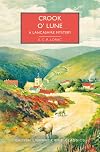
Once again, I thoroughly enjoyed an E.C.R. Lorac book from the Golden Age of Mysteries, especially for its use of sheep country in Lancashire as a key component of the story.
Chief Inspector MacDonald is visiting friends and considering perhaps purchasing a farm for his retirement years when he gets involved in investigating a residential arson which resulted in a death and sheep stealing.
This is a book with tremendous (and beautiful) description and a leisurely pace (and I don't mean this show more as a criticism, it's one of the book's strengths). A Lorac book is always a treasure, a book to be savored. I'm so thankful that the British Library Crime Classics brings back such excellent old mysteries.
Highly recommended!!
(I received a copy of the book from the publisher, via Net Galley, in exchange for a fair and honest review.) show less
Chief Inspector MacDonald is visiting friends and considering perhaps purchasing a farm for his retirement years when he gets involved in investigating a residential arson which resulted in a death and sheep stealing.
This is a book with tremendous (and beautiful) description and a leisurely pace (and I don't mean this show more as a criticism, it's one of the book's strengths). A Lorac book is always a treasure, a book to be savored. I'm so thankful that the British Library Crime Classics brings back such excellent old mysteries.
Highly recommended!!
(I received a copy of the book from the publisher, via Net Galley, in exchange for a fair and honest review.) show less

This is my favorite novel thus far by E.C.R. Lorac (the pen name for Edith Caroline Rivett), and that’s saying something! After all, I enjoyed Fire in the Thatch and loved Murder by Matchlight even more.
Initially published as Speak Justly for the Dead in America, Murder in the Mill-Race, first published in 1952, Monica Torrington — self-styled as Sister Monica — has run an orphanage for 3- to 5-year-olds for 30 years in the isolated village of Milham in the Moor in Devonshire. Tall, show more dressed in a nun’s habit and domineering, Sister Monica has been bullying the toddlers and villagers for much of that time. When the formidable woman ends up dead in the stream next to a bridge, the village wants to declare the death an accident and move on. However, when the intrepid, by-the-book Inspector Robert MacDonald gets called in, you can be sure there will be no chance of a cover-up.
The 36th book in this series includes an undercurrent of the misuses of religion that will entrance thoughtful readers, and Lorac includes lots of twists and turns while always playing fair with the reader. A wonderful read, whether for Lorac fans or those new to the series. show less
Initially published as Speak Justly for the Dead in America, Murder in the Mill-Race, first published in 1952, Monica Torrington — self-styled as Sister Monica — has run an orphanage for 3- to 5-year-olds for 30 years in the isolated village of Milham in the Moor in Devonshire. Tall, show more dressed in a nun’s habit and domineering, Sister Monica has been bullying the toddlers and villagers for much of that time. When the formidable woman ends up dead in the stream next to a bridge, the village wants to declare the death an accident and move on. However, when the intrepid, by-the-book Inspector Robert MacDonald gets called in, you can be sure there will be no chance of a cover-up.
The 36th book in this series includes an undercurrent of the misuses of religion that will entrance thoughtful readers, and Lorac includes lots of twists and turns while always playing fair with the reader. A wonderful read, whether for Lorac fans or those new to the series. show less
The Theft of the Iron Dogs: A Lancashire Mystery: 118 (British Library Crime Classics) by E.C.R. Lorac
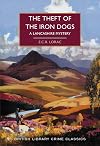
In The Theft of the Iron Dogs, Giles Hoggett is unsettled by the notion that someone’s been hiding out in one of the more remote cottages without proper permission. Things are left just a bit wrong and just a bit out of place. As it happens, Inspector Macdonald is visiting the region, following up on a member of what appears to be a crime syndicate out of London. The agricultural community is disgruntled in part by the disruptions of wartime regulations, but more by those who might be show more “just travelin through”. It’s a slow start – no dead body appears until about 100 pages in – but the descriptions and the characterizations make that slow pace thoroughly enjoyable. The reader is just as annoyed as the unhappy farmers over the disruption that suddenly draws attention away from their daily occupations. It’s fun seeing Macdonald’s London-bred cockney assistant arrive in the area and find his own way of connecting with the locals. Underneath everything, the people who live here are good. That outlook on humanity is what makes Lorac’s crime novels so appealing and enjoyable. show less
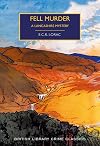
Fell Murder is set in 1943-44 wartime Britain. Those working in agricultural settings in Lancashire are hemmed about by a lack of manpower, government regulations, rationing, and bureaucratic oversight of how all resources are being used. The work is both essential and hard, but those used to it understand the cyclical nature of weather and livestock. They understand the need for neighbors to work cooperatively and not just as part of the war effort. Lorac saw both the beauty of the show more Lancashire landscape as well as the quality of the people living there. Her respect and affection come across in her prose.
We begin in a physical setting that is “half great house, half farmhouse”, owned by an unpleasantly obdurate man of 80 who is still in command of his senses and who runs his land and tenants as he’s always done. He battles with his 45 year old daughter, Marian, who is eager to try new methods; they’re both devoted to the country life. Also in the house is one son who was driven out of his Asian business by the war in the Pacific and a much younger son – an underweight teenage boy who writes poetry. Both sons appear to be under-valued by the father. Also in the house is a Land Girl, Elizabeth, working hard on the farm. She’s as practical and as intelligent as Marian. Elsewhere is the eldest son, Richard, heir to it all. In the immediate vicinity of the house, Garthmere, are villagers and tenants, each of whom carry long memories of individual grievances.
One of these individuals is murdered. The local constabulary is buried under wartime concerns and, for a variety of reasons, the case requires a diplomatic skill lacking in the current force. Scotland Yard is encouraged to become involved, hence the arrival of Chief Inspector Robert Macdonald. Once he arrives, the action picks up as Macdonald studies who of the available suspects would be most likely to kill.
What makes this Golden Age mystery most enjoyable in my view are the descriptions Lorac includes of the landscape, the daily chores and of the family hearth. She clearly watched those working the land during wartime and sympathized with the effort needed in keeping livestock and harvesting crops amidst the vagaries of the weather and war. A reader will pick up on the loyalty of the local populace and how that populace appears when seen through the eyes of those who deemed as outsiders. show less
We begin in a physical setting that is “half great house, half farmhouse”, owned by an unpleasantly obdurate man of 80 who is still in command of his senses and who runs his land and tenants as he’s always done. He battles with his 45 year old daughter, Marian, who is eager to try new methods; they’re both devoted to the country life. Also in the house is one son who was driven out of his Asian business by the war in the Pacific and a much younger son – an underweight teenage boy who writes poetry. Both sons appear to be under-valued by the father. Also in the house is a Land Girl, Elizabeth, working hard on the farm. She’s as practical and as intelligent as Marian. Elsewhere is the eldest son, Richard, heir to it all. In the immediate vicinity of the house, Garthmere, are villagers and tenants, each of whom carry long memories of individual grievances.
One of these individuals is murdered. The local constabulary is buried under wartime concerns and, for a variety of reasons, the case requires a diplomatic skill lacking in the current force. Scotland Yard is encouraged to become involved, hence the arrival of Chief Inspector Robert Macdonald. Once he arrives, the action picks up as Macdonald studies who of the available suspects would be most likely to kill.
What makes this Golden Age mystery most enjoyable in my view are the descriptions Lorac includes of the landscape, the daily chores and of the family hearth. She clearly watched those working the land during wartime and sympathized with the effort needed in keeping livestock and harvesting crops amidst the vagaries of the weather and war. A reader will pick up on the loyalty of the local populace and how that populace appears when seen through the eyes of those who deemed as outsiders. show less
Lists
British Mystery (3)
Next in Series (1)
Awards


You May Also Like


Associated Authors
Statistics
- Works
- 77
- Also by
- 15
- Members
- 3,387
- Popularity
- #7,528
- Rating
- 4.0
- Reviews
- 159
- ISBNs
- 190
- Languages
- 3
- Favorited
- 6