
Freeman Wills Crofts (1879–1957)
Author of The Hog's Back Mystery
About the Author
Series
Works by Freeman Wills Crofts
British Library Crime Classics Collection 10 Books Bundle (Death of a Busybody,Mystery in the Channel,The Methods of Sergeant Cluff,The Cheltenham Square Murder,The 12.30 from… (2016) — Contributor — 7 copies
The Mad Hatter Mystery 3 copies
The Freeman Wills Crofts Omnibus: The Cask, The Groote Park Murder, The Pit-Prop Syndicate, The Ponson Case (2020) 2 copies
To Wake the Dead 1 copy
The Waxworks Murder 1 copy
The 950 express 1 copy
Juvelkuppen 1 copy
Mord i mörker 1 copy
Vem var det? 1 copy
Diamantrovet 1 copy
London Murder Mysteries - Boxed Set: The Cask, The Ponson Case & The Pit-Prop Syndicate (2020) 1 copy
East Wind [short story] 1 copy
il morto del taxi 1 copy
Associated Works
The Case of the Drowning Duck | Fear Comes to Chalfont | Mystery in the Woodshed — Contributor — 1 copy
Tagged
Common Knowledge
- Birthdate
- 1879-06-01
- Date of death
- 1957-04-11
- Gender
- male
- Education
- Methodist College, Belfast
Campbell College, Belfast - Occupations
- railway engineer
writer - Organizations
- The Detection Club
- Awards and honors
- Royal Society of Arts (Fellow, 1939)
- Short biography
- Freeman Wills Crofts, the ‘King of Detective Story Writers’, was one of the pre-eminent writers in the golden age of British crime fiction. Acclaimed by his contemporaries, Agatha Christie and Raymond Chandler, he wrote more than 30 detective novels and was a founder member of the hugely influential DETECTIVE CLUB. Crofts’s most famous creation was Scotland Yard detective, Inspector French (‘As near the real thing as any sleuth in fiction’ THE SUNDAY TIMES).
Born in Dublin, Crofts became an engineer and wrote his debut novel, THE CASK: A DETECTIVE STORY (‘An imaginatively ingenious mystery’ THE EVENING STANDARD) in 1919 during a long absence from work due to illness. He became a full-time writer in 1929 and moved to England with his wife Mary to live in Guildford. He died in 1957. - Nationality
- UK
- Birthplace
- Dublin, County Dublin, Ireland
- Places of residence
- Blackheath, Guildford, Surrey, UK
- Place of death
- Worthing, Sussex, England, UK
- Associated Place (for map)
- UK
Members
Discussions
Collection as part of a Publishers Series? in Librarything Series (October 2021)
Reviews

You might think a murder on a plane, read by someone who has a phobia about flying, while on a plane is an odd combination. But it's not a plane crash, and Ryanair don't provide dinner, so we're fine. It makes for a nice diverting plane book - engaging while not too heavy. It's also told from back to front, we know the murderer and the means of the murder so it becomes a tale of will he get away with it rather than who did it. Which might not be uncommon now, but seems to have been a show more remarkable turn about for the time. It's well told and engaging enough. show less
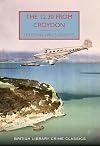
Andrew Crowther, a retired manufacturer, flies from Croydon to Paris with his son-in-law, granddaughter, and personal attendant to visit his daughter. He is dead on arrival in Paris. Was it accident, suicide, or murder? Actually, we find out very quickly that it’s murder, and we find out whodunnit, flashing back to the planning and observing how the murderer falls apart with the stress and strain of covering up his crime.
I picked this up mainly because there was a gorgeous airplane on the show more cover of the British Library Crime Classics edition, and I was hoping for some good airplane bits. The book duly delivered at the beginning—I love stories set during the early days of passenger flight. There wasn’t much airplane after that, but that was OK. The rest of the story was well constructed and would have been quite unconventional at the time the book was first published (1934). I was kept in suspense throughout and appreciated the chapters at the end where Inspector French explains how he solved the case.
I also liked the little nods to other detective fiction of the period: one of the police inspectors on the case initially is named Appleby, and at one point the murderer makes a reference to the works of R. Austin Freeman.
This is definitely worth picking up if you’re interested in the golden age of detective fiction. show less
I picked this up mainly because there was a gorgeous airplane on the show more cover of the British Library Crime Classics edition, and I was hoping for some good airplane bits. The book duly delivered at the beginning—I love stories set during the early days of passenger flight. There wasn’t much airplane after that, but that was OK. The rest of the story was well constructed and would have been quite unconventional at the time the book was first published (1934). I was kept in suspense throughout and appreciated the chapters at the end where Inspector French explains how he solved the case.
I also liked the little nods to other detective fiction of the period: one of the police inspectors on the case initially is named Appleby, and at one point the murderer makes a reference to the works of R. Austin Freeman.
This is definitely worth picking up if you’re interested in the golden age of detective fiction. show less
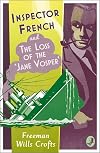
The cargo ship Jane Vosper is sunk one day on its usual run between London and Buenos Aires. Sabotage is suspected, possibly for the insurance money. Naturally, the insurance firm wants to exhaust all avenues before paying up, so they hire an investigator to look into the matter. But then the investigator disappears. Enter Inspector French…
I thoroughly enjoyed this installment in the French series. Granted, I am rather nerdy about boats *and* insurance, so this ticked two major boxes for show more me. Readers who like lots of car chases or thrilling set pieces may find this book rather slow for their tastes. Other readers who appreciate seeing real police work—methodically following up on each lead, continually challenging one’s assumptions and research—will find this book interesting and possibly even soothing in its way. This may be my favourite French so far.
For those who are concerned about series order: the book does make reference to a few previous cases, but does not give away the identities of criminals in previous books, as far as I can tell. So you could read out of order (which is what I’m doing, honestly). show less
I thoroughly enjoyed this installment in the French series. Granted, I am rather nerdy about boats *and* insurance, so this ticked two major boxes for show more me. Readers who like lots of car chases or thrilling set pieces may find this book rather slow for their tastes. Other readers who appreciate seeing real police work—methodically following up on each lead, continually challenging one’s assumptions and research—will find this book interesting and possibly even soothing in its way. This may be my favourite French so far.
For those who are concerned about series order: the book does make reference to a few previous cases, but does not give away the identities of criminals in previous books, as far as I can tell. So you could read out of order (which is what I’m doing, honestly). show less
I had read Mystery in the Channel from this series as a British Library Crime Classic several years ago and had liked it, so I had planned to explore that series further. However, I did not enjoy this book at all and abandoned it after 89 pages/33%.
The beginning was good and I was interested in the case, but I was increasingly bored because nothing really happened in the investigation. Moreover, both Inspector French and his subordinate are insufferable, especially when it comes to their show more behavior towards women. Flirting with a young, inexperienced woman, inviting her on a date and getting her drunk, just to gain a little bit of information about her employer, is a strategy that seems totally appropriate to these men. And don't get me started on Inspector French's attitude towards his wife.
There was a lack of women in Mystery in the Channel and I criticized this in my review, but it might have been merciful because it spared me from things like those mentioned above. No more Inspector French for me. show less
The beginning was good and I was interested in the case, but I was increasingly bored because nothing really happened in the investigation. Moreover, both Inspector French and his subordinate are insufferable, especially when it comes to their show more behavior towards women. Flirting with a young, inexperienced woman, inviting her on a date and getting her drunk, just to gain a little bit of information about her employer, is a strategy that seems totally appropriate to these men. And don't get me started on Inspector French's attitude towards his wife.
There was a lack of women in Mystery in the Channel and I criticized this in my review, but it might have been merciful because it spared me from things like those mentioned above. No more Inspector French for me. show less
Lists
Awards


You May Also Like


Associated Authors
Statistics
- Works
- 67
- Also by
- 51
- Members
- 3,392
- Popularity
- #7,514
- Rating
- 3.5
- Reviews
- 88
- ISBNs
- 323
- Languages
- 8
- Favorited
- 7
