
John Bude (1901–1957)
Author of The Cornish Coast Murder
About the Author
Series
Works by John Bude
British Library Crime Classics Collection 10 Books Bundle (Death of a Busybody,Mystery in the Channel,The Methods of Sergeant Cluff,The Cheltenham Square Murder,The 12.30 from… (2016) — Contributor — 7 copies
Associated Works
Bodies from the Library 5: Forgotten Stories of Mystery and Suspense from the Golden Age of Detection (2022) — Contributor — 46 copies, 1 review
Tagged
Common Knowledge
- Legal name
- Elmore, Ernest Carpenter
- Other names
- Bude, John
- Birthdate
- 1901-11-04
- Date of death
- 1957-11-08
- Gender
- male
- Occupations
- novelist
actor
Ran local Home Guard in WW2
Games master in a school
theater producer
theater director - Organizations
- Crime Writers’ Association
- Short biography
- [from Promoting Crime Fiction blog]
John Bude was the pseudonym of Ernest Elmore (1901-1957). He was born in Maidstone Kent. He attended Mill Hill School until 1919, where he was a boarder. He attended a secretarial college in Cheltenham before becoming Games master at St Christopher Scool, Letchworth. While there he also assisted with the school's dramatic activities. His interest in dramatics led him to join the Lena Ashwell Players as stage manager, touring the country. Much of Elmore's early writing took place in dressing rooms during his spare time. He met his wife Betty in Maidstone. They married in 1933 and moved to Sussex, where he became a full-time author. Other John Bude crime titles available as British Library Crime Classics include The Cornish Coast Murder, The Lake District Murder, The Sussex Downs Murder, and Death on the Riviera. - Nationality
- UK
- Birthplace
- Maidstone, Kent, England, UK
- Places of residence
- Loose, Kent, England, UK
Beckley, Sussex, England, UK - Place of death
- Hastings, Sussex, England, UK
- Associated Place (for map)
- England, UK
Members
Discussions
Authors in Crime, Thriller & Mystery (August 2023)
Collection as part of a Publishers Series? in Librarything Series (October 2021)
Reviews
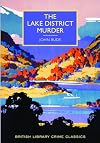
Warning: this review contains spoilers.
****
Inspector Meredith of the Keswick police has been given a case that keeps on giving. It begins with a suicide in a garage. The occupant has succumbed to carbon monoxide poisoning. But has he? Could it be murder? And if it is murder, why? These questions keep Meredith and other police departments within the Lake District busy for almost 300 pages, with plenty of twists and turns. It's all a bit bonkers by the end, but overall I enjoyed the ride. Set show more as it is in the beautiful Lake District, with great descriptions of the scenery, it made a pleasant diversion for a couple of days. I also appreciated how economically Meredith would summarize developments for his superiors when briefing them on the progress of the investigation: he would not provide an exact copy of what had just been said, but rephrase it succinctly in a way that helped the reader keep the important questions in mind. The investigation also explores the world of weights and measures in slightly geeky detail that I enjoyed.
I would recommend this book for fans of the Golden Age mystery and those who have a particular fondness for the Lake District. And for those who simply enjoy having nice books around, the British Library Crime Classics edition of this book is a handsome volume indeed. show less
****
Inspector Meredith of the Keswick police has been given a case that keeps on giving. It begins with a suicide in a garage. The occupant has succumbed to carbon monoxide poisoning. But has he? Could it be murder? And if it is murder, why? These questions keep Meredith and other police departments within the Lake District busy for almost 300 pages, with plenty of twists and turns. It's all a bit bonkers by the end, but overall I enjoyed the ride. Set show more as it is in the beautiful Lake District, with great descriptions of the scenery, it made a pleasant diversion for a couple of days. I also appreciated how economically Meredith would summarize developments for his superiors when briefing them on the progress of the investigation: he would not provide an exact copy of what had just been said, but rephrase it succinctly in a way that helped the reader keep the important questions in mind. The investigation also explores the world of weights and measures in slightly geeky detail that I enjoyed.
I would recommend this book for fans of the Golden Age mystery and those who have a particular fondness for the Lake District. And for those who simply enjoy having nice books around, the British Library Crime Classics edition of this book is a handsome volume indeed. show less

You wouldn’t expect a novel issued in 1947 to be such a page-turner! Granted, I am a diehard fan of author John Bude and his detective, Superintendent William Meredith; however, here’s the greatest testimonial I can give. Meredith doesn’t even show up until halfway through the book, and I didn’t care! I still couldn’t put it down! Such a delay is usually the kiss of death (e.g., Georges Simenon’s The Dancer at the Gai-Moulin and Agatha Christie’s novels that delay the show more appearance of Hercules Poirot).
The first half is a satiric look at addlepated cults, which show up in England as well as the United States. A dithering fellow named Eustace K. Mildmann (who lives up to his name) founds a religion that embraces the Egyptian gods as well as vegetarianism and temperance. Somehow Mildmann’s cockamamie religion, called the Children of Osiris (COO), attracts Alicia Hagge-Smith whose forcefulness is only matched by her funds; she spends freely enough to attract 10,000 followers to Coo-ism, as it’s known. While not laugh-out-loud funny, the depiction was pretty amusing!
But just as the Garden of Eden had its serpent, so does the Children of Osiris: one Peta Penpeti, a swarthy bearded fellow with a fez who claims to be the reincarnation of an Egyptian priest from Thebes. Early on, it’s revealed he’s something to hide. But what? And are there other nefarious goings-on in Coo-ism? Like me, readers will devour this novel to find out!
In the spirit of full disclosure, I received this book free from NetGalley, Poison Pen Press, and British Library Publishing in return for an honest review. And I especially thank them for reissuing John Bude’s wonderful and woefully overlooked novels. show less
The first half is a satiric look at addlepated cults, which show up in England as well as the United States. A dithering fellow named Eustace K. Mildmann (who lives up to his name) founds a religion that embraces the Egyptian gods as well as vegetarianism and temperance. Somehow Mildmann’s cockamamie religion, called the Children of Osiris (COO), attracts Alicia Hagge-Smith whose forcefulness is only matched by her funds; she spends freely enough to attract 10,000 followers to Coo-ism, as it’s known. While not laugh-out-loud funny, the depiction was pretty amusing!
But just as the Garden of Eden had its serpent, so does the Children of Osiris: one Peta Penpeti, a swarthy bearded fellow with a fez who claims to be the reincarnation of an Egyptian priest from Thebes. Early on, it’s revealed he’s something to hide. But what? And are there other nefarious goings-on in Coo-ism? Like me, readers will devour this novel to find out!
In the spirit of full disclosure, I received this book free from NetGalley, Poison Pen Press, and British Library Publishing in return for an honest review. And I especially thank them for reissuing John Bude’s wonderful and woefully overlooked novels. show less
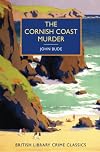
‘’It was raining fitfully and gusts of wind from off the Atlantic rattles the window-frames and sought dismally among the sprinkling of gaunt pipers which surrounded the Vicarage. It was a threatening night. No moon. But a lowering bank of cloud rested far away on the horizon of the sea, dark against the departing daylight.’’
The Reverend Dodd, the vicar of Boscawen, a lovely village in Cornwall, is a marvellous oddball. A fervent lover of detective stories, he finds himself actively show more involved in one when the local magistrate is found dead. The clues are rather enticing. Three bullets that have passed through the window, drawn curtains and a peculiar trace of footprints. Add a rather intriguing Inspector and a pair of star-crossed young lovers and you’ll get one of the finest and most entertaining mysteries of the Golden Age of Crime.
‘’The wind had died down and the air, though fresh and salty, was no longer damp-laden. It was obvious that the rain had spent itself with the storm, for the sky had cleared and a crescent moon shed a ghostly glitter over the dark swell of the Atlantic. Under the brief cliff, the waves were chopping and slapping, but beyond that, the night was profoundly still.’’
This is a mystery that can easily walk hand-in-hand with Agatha Christie’s creations. Lively plot, engaging writing, the beautiful and mysterious Cornish scenery that adds a special touch to the case, exciting characters (I adored Inspector Bigswell), red herrings, complex paths that we must follow and a rather effective use of the eternal question: to what extent can murder be justified? A theme that is prominent in British Crime and thoroughly poignant. Once more, corruption and deceit are the forces of Evil.
As always, beautiful Introduction by Martin Edwards and a wonderful addition to the series.
‘’A steamer was ploughing along about a couple of miles from the land, with a tattered smudge of smoke clinging about her funnel. Over-head the gulls cried mournfully or circled down to brush their breasts against the surface of the water, lifting and bobbing on the creamy swell like white corks. It was a scene, deep and tranquil, far removed from the ominous and ugly atmosphere which shrouded the grey house standing out on the blunt views behind him.’’
My reviews can also be found on https://theopinionatedreaderblog.wordpress.com/ show less
The Reverend Dodd, the vicar of Boscawen, a lovely village in Cornwall, is a marvellous oddball. A fervent lover of detective stories, he finds himself actively show more involved in one when the local magistrate is found dead. The clues are rather enticing. Three bullets that have passed through the window, drawn curtains and a peculiar trace of footprints. Add a rather intriguing Inspector and a pair of star-crossed young lovers and you’ll get one of the finest and most entertaining mysteries of the Golden Age of Crime.
‘’The wind had died down and the air, though fresh and salty, was no longer damp-laden. It was obvious that the rain had spent itself with the storm, for the sky had cleared and a crescent moon shed a ghostly glitter over the dark swell of the Atlantic. Under the brief cliff, the waves were chopping and slapping, but beyond that, the night was profoundly still.’’
This is a mystery that can easily walk hand-in-hand with Agatha Christie’s creations. Lively plot, engaging writing, the beautiful and mysterious Cornish scenery that adds a special touch to the case, exciting characters (I adored Inspector Bigswell), red herrings, complex paths that we must follow and a rather effective use of the eternal question: to what extent can murder be justified? A theme that is prominent in British Crime and thoroughly poignant. Once more, corruption and deceit are the forces of Evil.
As always, beautiful Introduction by Martin Edwards and a wonderful addition to the series.
‘’A steamer was ploughing along about a couple of miles from the land, with a tattered smudge of smoke clinging about her funnel. Over-head the gulls cried mournfully or circled down to brush their breasts against the surface of the water, lifting and bobbing on the creamy swell like white corks. It was a scene, deep and tranquil, far removed from the ominous and ugly atmosphere which shrouded the grey house standing out on the blunt views behind him.’’
My reviews can also be found on https://theopinionatedreaderblog.wordpress.com/ show less
I simply adore Golden Age British cozies: Dame Agatha Christie, of course; Gladys Mitchell’s Mrs. Bradley; Dorothy L. Sayers’ Lord Peter Wimsey; Patricia Wentworth’s Miss Silver; Anthony Berkeley’s Roger Sheringham; Margery Allingham’s Albert Campion; Josephine Tey’s Alan Grant; Ngaio Marsh’s Roderick Allen.
Now I can add John Bude’s Inspector William Meredith to the list.
I’m ashamed to say that I had never heard of Bude nor his dogged, insightful creation, but Inspector show more Meredith of the Cumberland County Constabulary comes up trumps in this tale of murder disguised as suicide. Jack Clayton, co-owner of the Derwent garage, may appear to have committed suicide using a hosepipe and carbon monoxide from the tailpipe of a car, but Meredith almost immediately realizes that too many discrepancies undermine such a verdict.
I don’t know if Bude invented the police procedural, but he certainly was a pioneer at a time when the mystery landscape was littered with house-party murders, genteel poisonings, titled blackmailers, and amateur sleuths taking on criminal masterminds. [I’m talking about you, Moriarty (Sir [author:Arthur Conan Doyle|2448]) and Simister (Margery Allingham)!] Not handsome, upper-crust, eccentric, or roguish in the least, Meredith goes about his investigation relying on logic and good, hard police work — in other words, like a meticulous plod — but the novel is never plodding. Despite the arch language common to the 1930s, the tenacious Meredith remains quite likeable to 21st century sensibilities, and, whereas police officers in modern-day novels quite often are at odds with their superiors, the camaraderie between Inspector Meredith and his superiors, Superintendent Thompson and the Deputy Constable, Colonel Hardwick, struck me as quite refreshing.
Lovers of 1920s and 1930s British cozies won’t want to miss the beginning of a beautiful reading love affair with Bude’s Inspector Meredith series. Thank you so much, British Library Publishing, for re-releasing this gem of a mystery novel and its sequel, The Sussex Downs Murder. show less
Now I can add John Bude’s Inspector William Meredith to the list.
I’m ashamed to say that I had never heard of Bude nor his dogged, insightful creation, but Inspector show more Meredith of the Cumberland County Constabulary comes up trumps in this tale of murder disguised as suicide. Jack Clayton, co-owner of the Derwent garage, may appear to have committed suicide using a hosepipe and carbon monoxide from the tailpipe of a car, but Meredith almost immediately realizes that too many discrepancies undermine such a verdict.
I don’t know if Bude invented the police procedural, but he certainly was a pioneer at a time when the mystery landscape was littered with house-party murders, genteel poisonings, titled blackmailers, and amateur sleuths taking on criminal masterminds. [I’m talking about you, Moriarty (Sir [author:Arthur Conan Doyle|2448]) and Simister (Margery Allingham)!] Not handsome, upper-crust, eccentric, or roguish in the least, Meredith goes about his investigation relying on logic and good, hard police work — in other words, like a meticulous plod — but the novel is never plodding. Despite the arch language common to the 1930s, the tenacious Meredith remains quite likeable to 21st century sensibilities, and, whereas police officers in modern-day novels quite often are at odds with their superiors, the camaraderie between Inspector Meredith and his superiors, Superintendent Thompson and the Deputy Constable, Colonel Hardwick, struck me as quite refreshing.
Lovers of 1920s and 1930s British cozies won’t want to miss the beginning of a beautiful reading love affair with Bude’s Inspector Meredith series. Thank you so much, British Library Publishing, for re-releasing this gem of a mystery novel and its sequel, The Sussex Downs Murder. show less
Lists
You May Also Like


Associated Authors
Statistics
- Works
- 32
- Also by
- 2
- Members
- 1,903
- Popularity
- #13,526
- Rating
- 3.4
- Reviews
- 90
- ISBNs
- 92
- Languages
- 4
- Favorited
- 2