
Mavis Doriel Hay (1894–1979)
Author of The Santa Klaus Murder
About the Author
Disambiguation Notice:
Published three crime novels in the 1930s as Mavis Doriel Hay. Later published books on crafts as Mavis Fitzrandolph (her married name).
Works by Mavis Doriel Hay
Tagged
Common Knowledge
- Legal name
- Fitzrandolph, Mavis Doriel (married name)
- Birthdate
- 1894
- Date of death
- 1979
- Gender
- female
- Nationality
- UK
- Birthplace
- Potters Bar, Middlesex, England, UK
- Places of residence
- Epping, Essex, England
Belsize Lane, Hampstead, London, UK - Place of death
- Box, Gloucestershire, England, UK
- Disambiguation notice
- Published three crime novels in the 1930s as Mavis Doriel Hay. Later published books on crafts as Mavis Fitzrandolph (her married name).
- Associated Place (for map)
- UK
Members
Reviews
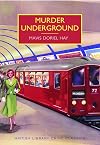
The residents of the Frampton boarding house are shocked to hear that one of their fellow tenants, Euphemia Pongleton (what a name!), has been found dead in Belsize Park tube station. What's more, she's been strangled by a dog leash. Now she may not have been the most popular of the Frampton residents, but that's no excuse to murder her in the Underground. Who could have done the deed and why? Some of the residents take up their own extracurricular investigations.
I very nearly put this book show more down after the first couple of chapters because I could not stand the pompous, odious Mr. Slocomb, who tries to run the investigation like he knows everything. I didn't want to have to deal with a whole book full of people like that. Fortunately, I persevered, and the book ended up being fairly likeable as far as Golden Age mysteries go. The victim's nephew is an upper-class twit straight out of Wodehouse, there's dialect everywhere among the servants, and the police are afflicted with officious tunnel vision. Oh and of course there are a couple of love stories for good measure. It can be slightly bonkers, but Betty, the nephew's love interest, proves a capable sleuth. Worth checking out if you like mysteries set during the interwar years. (Also, once again the British Library adorns it with a very handsome cover for its Crime Classics imprint.) show less
I very nearly put this book show more down after the first couple of chapters because I could not stand the pompous, odious Mr. Slocomb, who tries to run the investigation like he knows everything. I didn't want to have to deal with a whole book full of people like that. Fortunately, I persevered, and the book ended up being fairly likeable as far as Golden Age mysteries go. The victim's nephew is an upper-class twit straight out of Wodehouse, there's dialect everywhere among the servants, and the police are afflicted with officious tunnel vision. Oh and of course there are a couple of love stories for good measure. It can be slightly bonkers, but Betty, the nephew's love interest, proves a capable sleuth. Worth checking out if you like mysteries set during the interwar years. (Also, once again the British Library adorns it with a very handsome cover for its Crime Classics imprint.) show less
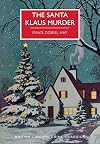
Well that was surprisingly excellent. A real puzzle which I was thoroughly absorbed in, even though I was never really able to piece it together myself (the answer wasn't obscure though which is what made it even better). I really would have benefitted from making notes along the way as it was simply a wonderfully complex little puzzle, full of false trails and blind alleys, but with only one correct solution - which was summed up in an "evidence table" at the end which I really show more appreciated.
I have to say, I am really getting into these golden age whodunnits - especially these upper class English Manor House ones. This in particular had a motley assortment of toffs who seemed to lie and obfuscate at every opportunity, oblivious that they were unintentionally hindering the investigation from a team of mostly competent police and detectives who I felt a great deal of sympathy for.
I also love how they often waste no words and set ups. Everything is said or told with intent and reason and I'm finding this genre to be replete with tighly controlled writing which is refreshing to see compared to the more indulgent writing in modern works I see in other genres, especially given the number of characters and sub-plots often involved - as is the case here. There's some definite lessons to learn for budding writers.
A rare example of a festival themed story really shining due to its well crafted plot. I will be tracking down more of her works show less
I have to say, I am really getting into these golden age whodunnits - especially these upper class English Manor House ones. This in particular had a motley assortment of toffs who seemed to lie and obfuscate at every opportunity, oblivious that they were unintentionally hindering the investigation from a team of mostly competent police and detectives who I felt a great deal of sympathy for.
I also love how they often waste no words and set ups. Everything is said or told with intent and reason and I'm finding this genre to be replete with tighly controlled writing which is refreshing to see compared to the more indulgent writing in modern works I see in other genres, especially given the number of characters and sub-plots often involved - as is the case here. There's some definite lessons to learn for budding writers.
A rare example of a festival themed story really shining due to its well crafted plot. I will be tracking down more of her works show less
The Santa Klaus Murder: A Christmas Murder Mystery (British Library Crime Classics) by Mavis Doriel Hay
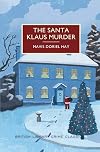
In '30s England, an aristocratic family gathers for the holidays—only for their domineering, purse-string-wielding patriarch to be found dead in his locked study on Christmas Day. Suicide or murder, and if the latter could someone dressed as Santa Claus truly have done it? It's readable and atmospheric, for sure—you've got your slightly caddish suitors, your neurotic maiden aunts, your beautiful and resolved but impoverished youngest daughter, your English country pile with halls decked, show more etc. But the ratio of events/detecting to length is off (even though this is far from a very long book), there are the period-predictable levels of classism, and the ending is a bit deflating and doesn't really make much sense. Not the worst thing I've ever read, but I finished the book about half an hour ago and am already struggling to remember the names of the main characters. show less
This book had quite a few problems, although it was enjoyable enough just to breeze through.
1) Way too many characters. The front page of the book has a list of them with a very short description which is very handy but made less useful by the fact that each character is referred to in multiple different ways that require you to check through the opening list. This makes it very hard to keep track of each character's motivations, movements etc and means only a few get much interesting show more characterisation. In general a lot of the characters are extraneous - for example, there are 4 kids in this book, only 1 of whom ever does anything even vaguely relevant - and some of the characters totally disappear after a certain point. This makes the impact of any particular clue a lot less because you had to try and remember everyone involved.
2) Strange way of revealing information. There was very little police work done and so many of the revelations came from characters giving a new statement and saying their old one was total lies or just that they missed out something major. Often this isn't really provoked by anything, they just do. Other clues aren't resolved for ages because the police simply don't question people properly. This also leads to a lot of trouble keeping straight what the current story is - multiple people apparently kept pacts to lie for each other for very little reason and so after one person gives their story they've often contradicted the other person's. It's not super confusing but it does leave you feeling like you're not really following a process of investigation, just waiting it out. It's also notable that the book opens with multiple chapters from different characters' points of view but it turns out they're documents that exist within the story, but they only make an appearance 2/3rds of the way through - and the main character takes ages to read them even then! So he makes multiple claims which you know are untrue but aren't hidden, which is confusing. And again it'd have been avoided if the people involved had actually said everything they'd experienced.
3) The ending doesn't solve anything! This is the most important point, probably. Everything gets wrapped up in 3-4 pages and it doesn't explain some really major things, most notably why the Santa Claus costume was adopted as part of the murder in the first place! It also doesn't really give conclusions for many of the characters. The book is *full* of red herrings and then the ending just ties together a bunch of obscure stuff. Massive ending spoilers follow.Part of the assumption was that the second Santa Claus handed out crackers to mask a shot. Yet it's also described that he *pulled the crackers* with them while he was there. It seems a massive stroke of luck for nobody, not even those with the crackers, to notice a shot, or not to think "wow that cracker noise happened while we weren't pulling crackers". They didn't have infinite crackers. It's also noted that nobody was expecting the crackers to be pulled that day. All it would have taken was one person to say "hey what the heck are the crackers for" or even just to speak to the guy *at all* and his entire disguise would have been ruined. Hell, even *looking closely* at him would have done it. Not a single point in the ending touches on how the murder was achieved. His alibi was also incredibly shoddy and would have fallen apart without a lucky meeting of other characters AND them totally lying about their positions! It's also notable that ALL the evidence against him is circumstantial. The only solid thing they have to pin on him is that he lied to the old chauffeur to try and get him to take the blame. Yet there was absolutely no reason for him to even have done that, and anyway that doesn't prove murder. I also found it ridiculous to think that *straight* after the murder he'd just be like "oh hey want to marry me" straight away and someone just go "oh yeah sure".
It's weird because it wasn't unenjoyable and I did have some fun for what it was. But there are plenty better stories and that ending was just naff. show less
1) Way too many characters. The front page of the book has a list of them with a very short description which is very handy but made less useful by the fact that each character is referred to in multiple different ways that require you to check through the opening list. This makes it very hard to keep track of each character's motivations, movements etc and means only a few get much interesting show more characterisation. In general a lot of the characters are extraneous - for example, there are 4 kids in this book, only 1 of whom ever does anything even vaguely relevant - and some of the characters totally disappear after a certain point. This makes the impact of any particular clue a lot less because you had to try and remember everyone involved.
2) Strange way of revealing information. There was very little police work done and so many of the revelations came from characters giving a new statement and saying their old one was total lies or just that they missed out something major. Often this isn't really provoked by anything, they just do. Other clues aren't resolved for ages because the police simply don't question people properly. This also leads to a lot of trouble keeping straight what the current story is - multiple people apparently kept pacts to lie for each other for very little reason and so after one person gives their story they've often contradicted the other person's. It's not super confusing but it does leave you feeling like you're not really following a process of investigation, just waiting it out. It's also notable that the book opens with multiple chapters from different characters' points of view but it turns out they're documents that exist within the story, but they only make an appearance 2/3rds of the way through - and the main character takes ages to read them even then! So he makes multiple claims which you know are untrue but aren't hidden, which is confusing. And again it'd have been avoided if the people involved had actually said everything they'd experienced.
3) The ending doesn't solve anything! This is the most important point, probably. Everything gets wrapped up in 3-4 pages and it doesn't explain some really major things, most notably why the Santa Claus costume was adopted as part of the murder in the first place! It also doesn't really give conclusions for many of the characters. The book is *full* of red herrings and then the ending just ties together a bunch of obscure stuff. Massive ending spoilers follow.
It's weird because it wasn't unenjoyable and I did have some fun for what it was. But there are plenty better stories and that ending was just naff. show less
Lists
You May Also Like


Associated Authors
Statistics
- Works
- 9
- Members
- 1,208
- Popularity
- #21,257
- Rating
- 3.3
- Reviews
- 73
- ISBNs
- 50
- Languages
- 3