
Works by James Victore
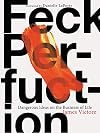
Feck Perfuction: Dangerous Ideas on the Business of Life (Business Books, Graphic Design Books, Books on Success) (2019) 79 copies, 13 reviews
Happy Birthday July 5 1 copy
Happy Birthday December 7 1 copy
Your Birthday May 19: Interesting Facts, Historical Events, Trivia & Other Great People Sharing Your Birthday, Printed 1990 (1900) 1 copy
Your Birthday January 29: Interesting Facts, Historical Events, Trivia & Other Great People Sharing Your Birthday 1990 (1900) 1 copy
Associated Works
Design Culture: An Anthology of Writing from the AIGA Journal of Graphic Design (1997) — Contributor — 45 copies
Tagged
Common Knowledge
- Gender
- male
Members
Reviews
In life, every once in a while, you do something smart. My most recent (rare) wise decision was to wait on reviewing James Victore’s book, giving it a second chance.
Good idea.
Every book needs its own state of mind for reading. Any book, movie, television show, photograph, essay, any art of any kind asks the participant to approach with both an open mind and a mind attuned to what is being said. In some cases, no matter how open or attuned the mind, the product being ingested turns out not show more to have been worth the time or effort involved. And sometimes, if the participant manages to momentarily be self-aware enough, that participant realizes that he or she didn’t approach it correctly, takes a moment (an hour, a day, a month, a lifetime) and then comes back to try again.
My first read through Victore’s book left me cold. I felt I was wasting my time on cliched platitudes and hackneyed ideas I had seen many times before. Yet, I was concerned that the fault (dear Brutus) lay with myself rather than the book. That was based on the idea that this is the type of book I generally enjoy – even if I am not a raving fan, I am usually not a rabid hater. And when I finished my first run through of the book (lo, those many months ago) I found myself to be more rabid than raver.
And so I waited. And it was a good idea.
I am partway through my second try and I am now a fan of the book. Yes, there are a lot of things many of us have seen before. But there is much that is reframed, much that is fresh, and much that should make anybody think. And that means it is a book worth having, reading, and rereading.
Let me provide just one example (a part that I just read.) It is titled “Your ego can’t dance.” Yes, we all know “Dance like nobody is watching” and the fact that we hide behind the need to not look foolish. But Victore talks about the concept in a different enough way that it made me start thinking of the issue in different ways (and, in the process, helped me come up with some new approaches in the way I write and speak about the subject.) Let me quote. “…the music builds and there’s a cue: ‘Everybody dance now!” But, not everybody dances…cuz it’s a test. It’s a test of how comfortable you are in your own skin.”
A test. What a great, fresh way to look at the concept.
Anyone looking for insights in how to change, be better, and be innovative should take a look at this book. And, this is not just for artists; every business person should be doubly encouraged to read it. This speaks to the kind of innovation any organization, company, or individual needs to succeed in the constantly evolving world. show less
Good idea.
Every book needs its own state of mind for reading. Any book, movie, television show, photograph, essay, any art of any kind asks the participant to approach with both an open mind and a mind attuned to what is being said. In some cases, no matter how open or attuned the mind, the product being ingested turns out not show more to have been worth the time or effort involved. And sometimes, if the participant manages to momentarily be self-aware enough, that participant realizes that he or she didn’t approach it correctly, takes a moment (an hour, a day, a month, a lifetime) and then comes back to try again.
My first read through Victore’s book left me cold. I felt I was wasting my time on cliched platitudes and hackneyed ideas I had seen many times before. Yet, I was concerned that the fault (dear Brutus) lay with myself rather than the book. That was based on the idea that this is the type of book I generally enjoy – even if I am not a raving fan, I am usually not a rabid hater. And when I finished my first run through of the book (lo, those many months ago) I found myself to be more rabid than raver.
And so I waited. And it was a good idea.
I am partway through my second try and I am now a fan of the book. Yes, there are a lot of things many of us have seen before. But there is much that is reframed, much that is fresh, and much that should make anybody think. And that means it is a book worth having, reading, and rereading.
Let me provide just one example (a part that I just read.) It is titled “Your ego can’t dance.” Yes, we all know “Dance like nobody is watching” and the fact that we hide behind the need to not look foolish. But Victore talks about the concept in a different enough way that it made me start thinking of the issue in different ways (and, in the process, helped me come up with some new approaches in the way I write and speak about the subject.) Let me quote. “…the music builds and there’s a cue: ‘Everybody dance now!” But, not everybody dances…cuz it’s a test. It’s a test of how comfortable you are in your own skin.”
A test. What a great, fresh way to look at the concept.
Anyone looking for insights in how to change, be better, and be innovative should take a look at this book. And, this is not just for artists; every business person should be doubly encouraged to read it. This speaks to the kind of innovation any organization, company, or individual needs to succeed in the constantly evolving world. show less
 This review was written for LibraryThing Early Reviewers.
Despite being someone who is vocally disparaging of self-help books I seem to have become rather well-read in the genre of ‘self-help books that don’t think they are self-help books but, really, they are’. James Victore’s book Feck Perfuction is the latest addition to this collection, and while it’s difficult to say that he has anything new to add, it’s certainly a more accessible read than most.
The book consists of 77 points of wisdom, divided into 6 chapters: Voice, Fear, show more Start, Action, Habits and Purpose. Each point is about a paragraph long and they are arranged on separate pages, interspersed with appealing visuals and slogans produced by Victore, who is a professional artist. This is a sensible setup, and avoids the worthless padding of ideas which is so endemic within the self-help (or pretending not to be self-help) genre. Changing your behaviour and habits is hard, and a self-help book has a much greater chance of encouraging you to make a change if you are able to flick through it quickly for inspiration and reference.
Some of the points made have been said before, in one way or another: ‘You become who you pretend to be’, ‘Confidence is sexy’, ‘Kill your phone’. However, Victore knows this, and part of the point of the book is simply to remind you of them. Often I found myself thinking 'yeah yeah' before realising that although I believed the idea, I rarely actually put it into practice. Points like ‘Have a damn opinion’ and ‘Just start’ are easy to agree with in theory, but in practice it’s easier to stay quiet, inoffensive and doing the same old things.
Victore has zero sympathy for excuses. To one unfortunate student he said: “… here’s your tombstone: ‘Here lies Thomas. He would have done great work, but he had to pay the rent.’” This seems unreasonably harsh, as presumably Victore doesn’t think that Thomas should actually become homeless and starve to death, but assumes that Thomas will get handouts, or rely on the charity of friends and family. A third way, consisting of living cheaply and working part time, is not considered but seems a more morally upstanding solution (as well as providing the life experience Victore advocates in point 70).
This ruthlessness in the pursuit of art and advocacy for believing in yourself are themes throughout the book. Victore advises doing art you believe in rather than art that pays well, not asking others their opinion of your work, and making yourself happy first. These are excellent pieces of advice when it all works out, but I’m sure that for every successful artist that writes a (disguised) self-help book there are several more who followed those same steps and got no money or recognition. Some of them might be okay with that, but personally I would happily sell out and get an office job if it meant I didn’t have to eat peanut butter on toast for every meal.
The general principle behind the book is that of Nike – Just Do It. This idea is broken down into inspirational and very readable chunks that make you wonder whether the life you are living now is exactly how you want it to be. It encourages you to think, ‘Do I define myself by my job?’ and, ‘Am I tying myself down by buying things I don’t really need?’ and this self-reflection is no bad thing. But it implies there’s no halfway, that creativity is all in or all out. This is unrealistic, and probably wrong, but the ideas are interesting, and I guess having a damn opinion is what it’s all about.
Reviewed after receiving a free copy as part of LibraryThing's Early Reviewers program. show less
The book consists of 77 points of wisdom, divided into 6 chapters: Voice, Fear, show more Start, Action, Habits and Purpose. Each point is about a paragraph long and they are arranged on separate pages, interspersed with appealing visuals and slogans produced by Victore, who is a professional artist. This is a sensible setup, and avoids the worthless padding of ideas which is so endemic within the self-help (or pretending not to be self-help) genre. Changing your behaviour and habits is hard, and a self-help book has a much greater chance of encouraging you to make a change if you are able to flick through it quickly for inspiration and reference.
Some of the points made have been said before, in one way or another: ‘You become who you pretend to be’, ‘Confidence is sexy’, ‘Kill your phone’. However, Victore knows this, and part of the point of the book is simply to remind you of them. Often I found myself thinking 'yeah yeah' before realising that although I believed the idea, I rarely actually put it into practice. Points like ‘Have a damn opinion’ and ‘Just start’ are easy to agree with in theory, but in practice it’s easier to stay quiet, inoffensive and doing the same old things.
Victore has zero sympathy for excuses. To one unfortunate student he said: “… here’s your tombstone: ‘Here lies Thomas. He would have done great work, but he had to pay the rent.’” This seems unreasonably harsh, as presumably Victore doesn’t think that Thomas should actually become homeless and starve to death, but assumes that Thomas will get handouts, or rely on the charity of friends and family. A third way, consisting of living cheaply and working part time, is not considered but seems a more morally upstanding solution (as well as providing the life experience Victore advocates in point 70).
This ruthlessness in the pursuit of art and advocacy for believing in yourself are themes throughout the book. Victore advises doing art you believe in rather than art that pays well, not asking others their opinion of your work, and making yourself happy first. These are excellent pieces of advice when it all works out, but I’m sure that for every successful artist that writes a (disguised) self-help book there are several more who followed those same steps and got no money or recognition. Some of them might be okay with that, but personally I would happily sell out and get an office job if it meant I didn’t have to eat peanut butter on toast for every meal.
The general principle behind the book is that of Nike – Just Do It. This idea is broken down into inspirational and very readable chunks that make you wonder whether the life you are living now is exactly how you want it to be. It encourages you to think, ‘Do I define myself by my job?’ and, ‘Am I tying myself down by buying things I don’t really need?’ and this self-reflection is no bad thing. But it implies there’s no halfway, that creativity is all in or all out. This is unrealistic, and probably wrong, but the ideas are interesting, and I guess having a damn opinion is what it’s all about.
Reviewed after receiving a free copy as part of LibraryThing's Early Reviewers program. show less
This review was written for LibraryThing Early Reviewers.Inspiration meets design in this wild little book. James Victore covers every excuse I have for not taking crazy risks. Some of it is a little over the top (kill your phone) but I get the message! As a diehard perfectionist and pleaser, I need a corrective kick in the pants once in a while and this book really delivers. I'm sure other authors have encouraged me to embrace my unique weirdness and told me that I have only me to bring to the world, after all (I don't have anybody else), but show more Victore really got the message across. The art is disruptive. The advice is disruptive. I enjoyed the disruption, stuffed the chapters full of Post-Its with arrows saying "THIS" and "WOW" and plan to keep this book forever as a life coaching ready reference.
I received a free copy of this book from the publisher in exchange for an honest review. show less
I received a free copy of this book from the publisher in exchange for an honest review. show less
This review was written for LibraryThing Early Reviewers.Mostly positive feels about this book. Although it has a gift-y quality to it, it's not quite right for a new graduate type. You need a little grit from life experience to get the most value from this book, but not so much life experience that you're jaded.
Recommended for the person starting their second job or changing jobs/careers - someone at a crossroads of sorts.
Not surprisingly since Victore is a designer, it's laid out in an interesting visual way. It's not boring to read, even show more though it's really a series of short lectures. Tonally, the lessons are imparted as straight talk, like you might get from a big brother type serving you some life lessons over a beer. The point is to shake you from your complacency, encourage you to stretch your creative wings, and jolt you into GTD and making a big change by starting with a few smart, small decisions.
There are some solid, counterintuitive gems of advice. Some of my favorites:
success comes in hindsight
let the money follow you
you're a teacher whether you like it or not
find your strengths by owning your flaws
learn to accept less to get more from life
always shoot for progress over perfection
In short, for being a quick read, it's chock-full of a lot of usable value and it's a call to action to tapping your potential and making something from it. show less
Recommended for the person starting their second job or changing jobs/careers - someone at a crossroads of sorts.
Not surprisingly since Victore is a designer, it's laid out in an interesting visual way. It's not boring to read, even show more though it's really a series of short lectures. Tonally, the lessons are imparted as straight talk, like you might get from a big brother type serving you some life lessons over a beer. The point is to shake you from your complacency, encourage you to stretch your creative wings, and jolt you into GTD and making a big change by starting with a few smart, small decisions.
There are some solid, counterintuitive gems of advice. Some of my favorites:
success comes in hindsight
let the money follow you
you're a teacher whether you like it or not
find your strengths by owning your flaws
learn to accept less to get more from life
always shoot for progress over perfection
In short, for being a quick read, it's chock-full of a lot of usable value and it's a call to action to tapping your potential and making something from it. show less
This review was written for LibraryThing Early Reviewers.You May Also Like
Associated Authors
Statistics
- Works
- 11
- Also by
- 2
- Members
- 122
- Popularity
- #163,288
- Rating
- 3.8
- Reviews
- 13
- ISBNs
- 6
