
Arnold Schwarzenegger
Author of Total Recall: My Unbelievably True Life Story
About the Author
Arnold Schwarzenegger was born in Thal, Austria, in 1947, in a small village bordering the Styrian capital Graz. Schwarzenegger served in the Austrian Army in 1965 to fulfill the one year of service required at the time of all 18-year-old Austrian males. During his army service, he won the Junior show more Mr. Europe contest. In 1967, Schwarzenegger won the title of Mr. Universe for the first time, becoming the youngest ever Mr. Universe at the age of 20. He would go on to win the title three more times. Schwarzanegger moved to the U.S. in 1968 at the age of 21. In 1970, at age 23, he captured his first Mr. Olympia title in New York, and would go on to win the title a total of seven times. Schwarzenegger is considered among the most important figures in the history of bodybuilding, and his legacy is commemorated in the Arnold Classic annual bodybuilding competition. For many years, he wrote a monthly column for the bodybuilding magazines Muscle & Fitness and Flex. Shortly after being elected Governor, he was appointed executive editor of both magazines, in a largely symbolic capacity. The magazines agreed to donate $250,000 a year to the Governor's various physical fitness initiatives. The magazine MuscleMag International has a monthly two-page article on him, and refers to him as "The King". Aside from bodybuilding, Schwarzenegger has been a successful actor, businessman, investor, and politician. He served as the 38th Governor of California from 2003 until 2011. Among his titles are: "Arnie": Schwarzenegger and the Movies, Governor Arnold: A Photodiary of His First 100 Days in Office, and Total Recall: My Unbelievably True Life Story which made The New York Times Best Seller List for 2012. (Bowker Author Biography) show less
Image credit: Courtesy of the NYPL Digital Gallery (image use requires permission from the New York Public Library)
Works by Arnold Schwarzenegger
The New Encyclopedia of Modern Bodybuilding: The Bible of Bodybuilding, Fully Updated and Revised (1999) 549 copies, 2 reviews
TERMINATOR 2 (EXTREME EDITION) 49 copies
Terminator 6-Film Collection 21 copies
Jumeaux 1 copy
Predator Collection 1 copy
Un flic à la maternelle 1 copy
Kalidor 1 copy
Le Dernier rempart 1 copy
Una Promessa E' Una Promessa 1 copy
Terminator 3 1 copy
Associated Works
Tools of Titans: The Tactics, Routines, and Habits of Billionaires, Icons, and World-Class Performers (2016) — Foreword — 1,830 copies, 19 reviews
A Patriot's Handbook: Songs, Poems, Stories, and Speeches Celebrating the Land We Love (2003) — some editions — 567 copies, 5 reviews
Batman Collection (Batman / Batman Forever / Batman and Robin / Batman Returns) (1989) — Actor — 359 copies, 1 review
Man 2.0 Engineering the Alpha: A Real World Guide to an Unreal Life: Build More Muscle. Burn More Fat. Have More Sex (2013) — Foreword — 69 copies, 5 reviews
4 Film Favorites: Extreme Action — Actor — 16 copies
4 Movie Marathon Comedy Favorites Collection — Actor — 10 copies
Family Comedy Pack Quadruple Feature (Kindergarten Cop / Problem Child / Kicking and Screaming / Major Payne) (2014) — Actor — 4 copies
Maximum Overdrive [and] Raw Deal (Double Feature Video) — Actor — 4 copies
Schwarzenegger Collection: Total Recall / Red Heat / Raw Deal — Actor — 3 copies
Schwarzenegger Collection: Commando / Predator / The Terminator — Actor — 2 copies
Twins / Kindergarten Cop / True Lies — Actor — 1 copy
Tagged
Common Knowledge
- Canonical name
- Schwarzenegger, Arnold
- Legal name
- Schwarzenegger, Arnold Alois
- Birthdate
- 1947-07-30
- Gender
- male
- Education
- University of Wisconsin-Superior
- Occupations
- Governor of California (2003-2011|Republican)
bodybuilder
actor
politician - Relationships
- Shriver, Maria (wife)
Schwarzenegger, Katherine (daughter)
Shriver, Sargent (father-in-law)
Kennedy, Eunice (mother-in-law)
Columbu, Franco (colleague)
Weider, Joe (impressario) - Nationality
- Austria (birth, retains Austrian citizenship)
USA (naturalized ∙ 1983) - Birthplace
- Thal, Austria
- Places of residence
- Los Angeles, California, USA
- Associated Place (for map)
- Los Angeles, California, USA
Members
Reviews
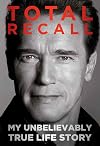
Arnold should have picked another of his film titles for his autobiography: True Lies. His total recall is a faulty recall at best. His Borat rendering of his upbringing in Austria might be appreciated by gullible Americans. The German translation justly fails to include many of the atrocious statements in Arnold's account. For the record, around 12 percent of Austrians work for the government and not as Arnold claims 70 percent. Arnold grew up in the rural village of Thal which happens to show more be only 6 miles distant from the city center of Austria's second largest city. Similar to Walden Pond in Concord near Boston, MA, this is rural life by choice. His home has been turned into a museum recently and it is a splendid house indeed (and not the home of a poor family). Arnold's account has to be taken with a large grain of salt.
What the book (understandably) fails to fully discuss, is the family's Nazi connection. He mentions that his father was a party member but as a sergeant small fry. He fails to mention that Graz was named a Hochburg des Nationalsozialismus (a center of national-socialism) and the Styrian police filled with Nazis. Arnold's father as soldier and policeman didn't participate in atrocities mostly because Graz was declared "judenrein" from a very early date. Given the reluctance his parents showed when forced to relinquish Arnold's Nazi propaganda children books many years after the war during Austria's mild denazification period, their world view must have influential on young Arnold. The similarities between the upbringing of Arnold and Adolf Hitler are striking: Both had an alcoholic, violent elderly father working in government security and a weak young mother who let the child grow up without supervision. The difference between Arnold and Adolf was Arnold's persistent luck to find mentors who gave inspiration and direction to the lost youth.
Arnold's two main qualities are his willingness of working harder (going the extra mile, lifting the extra pound) and cheating. As he himself gloats in the book, his victories are often the result of small cheats and the opposite of fair-play. As a true Republican, rules are not deemed to apply to him - which he lists under "Arnold's rules" in the rape-y "When someone tells you no, you should hear yes". The book more or less minimizes his groping and sexual peccadilloes. The saddest part, however, is how he excludes his wife from important life decisions. She is only allowed to acknowledge his setting up a heart operation or starting his political campaign. This Conan approach does not fit into the 21st century as does his inordinate fondness of crooks (Richard Nixon, Kurt Waldheim, ...).
His affinity to crooks and his ability as a snake-oil salesman helped him tremendously in Hollywood. Schwarzenegger went there to make money, lots of money and even more money. Money is the yardstick he measures everything with. A movie's or a partnership's worth is determined how much it earns - for him. When others or his partners lose money, it is their fault. Perhaps the most atrocious example of this is poor newly arrived Arnold's early car accident which injured others. He neither paid for their injuries nor paid the bill for those repairs. A gentleman would at least now seek to pay for the damages he caused, given all his wealth. He didn't and he doesn't feel such an obligation. This "I've got mine" approach is especially sad as his career was based on many a kindness of strangers who helped the poor kid along (which doesn't fit into Arnold's Social Darwinist world view).
A remarkable career by a man who preserved the small-minded, patriarchal world-view of a provincial policeman's son is told in this partial recall that would benefit from an annotated edition. show less
What the book (understandably) fails to fully discuss, is the family's Nazi connection. He mentions that his father was a party member but as a sergeant small fry. He fails to mention that Graz was named a Hochburg des Nationalsozialismus (a center of national-socialism) and the Styrian police filled with Nazis. Arnold's father as soldier and policeman didn't participate in atrocities mostly because Graz was declared "judenrein" from a very early date. Given the reluctance his parents showed when forced to relinquish Arnold's Nazi propaganda children books many years after the war during Austria's mild denazification period, their world view must have influential on young Arnold. The similarities between the upbringing of Arnold and Adolf Hitler are striking: Both had an alcoholic, violent elderly father working in government security and a weak young mother who let the child grow up without supervision. The difference between Arnold and Adolf was Arnold's persistent luck to find mentors who gave inspiration and direction to the lost youth.
Arnold's two main qualities are his willingness of working harder (going the extra mile, lifting the extra pound) and cheating. As he himself gloats in the book, his victories are often the result of small cheats and the opposite of fair-play. As a true Republican, rules are not deemed to apply to him - which he lists under "Arnold's rules" in the rape-y "When someone tells you no, you should hear yes". The book more or less minimizes his groping and sexual peccadilloes. The saddest part, however, is how he excludes his wife from important life decisions. She is only allowed to acknowledge his setting up a heart operation or starting his political campaign. This Conan approach does not fit into the 21st century as does his inordinate fondness of crooks (Richard Nixon, Kurt Waldheim, ...).
His affinity to crooks and his ability as a snake-oil salesman helped him tremendously in Hollywood. Schwarzenegger went there to make money, lots of money and even more money. Money is the yardstick he measures everything with. A movie's or a partnership's worth is determined how much it earns - for him. When others or his partners lose money, it is their fault. Perhaps the most atrocious example of this is poor newly arrived Arnold's early car accident which injured others. He neither paid for their injuries nor paid the bill for those repairs. A gentleman would at least now seek to pay for the damages he caused, given all his wealth. He didn't and he doesn't feel such an obligation. This "I've got mine" approach is especially sad as his career was based on many a kindness of strangers who helped the poor kid along (which doesn't fit into Arnold's Social Darwinist world view).
A remarkable career by a man who preserved the small-minded, patriarchal world-view of a provincial policeman's son is told in this partial recall that would benefit from an annotated edition. show less

I had an epiphany while I was reading this book regarding my thoughts on biographies: I much prefer biographies on sports people to biographies of rockstars (or possibly movie stars). Because I do not enjoy long descriptions of drug and alcohol use and excessive partying. If you're a high performing athlete, you can't go out partying all night, but if you're a rockstar you HAVE to do it to keep up your rockstar image. So, I'd rather read descriptions of intense workouts than descriptions of show more drug use and orgies.
Now, Arnold can hardly be described only with the words "sports personality", but that is definitely where he starts, but even when his movie career takes off, it's never really about parties and alcohol and sex, it's almost constantly about money and getting famous. He's weirdly obsessed with money, and how important it is to make your own and never have to ask other people for it. This is of course why he's a republican, because he loes that whole American Dream ideal (and also doesn't like Unions). Apart from that it sounds like he's way more democrat than he's willing to admit.
I read this book in three days and that meant each day dealt more or less with one of his three careers: as a body builder, as a movie star, and as the Governator. All of them were interesting in their different ways, even though the political part got a bit tedious. I just don't care that much about Californian politics, being from Sweden. BUt it was fun to see what Arnold did all those years when he wasn't making movies.
Obviously Arnold wants to prove that he's way smarter than people give him credit for (alwas a problem with these action stars: it doesn't matter how many times you point out that Sly Stallone wrote the script for Rocky or that Dolph Lundgren has a degree in chemical engineering, ppl don't want to see them as anything but dumb muscles), but he almost over-corrects and comes off as rather smug at some points. It's always "I knew this would work" or "I knew this was stupid but I never said anything", making it sound like luck had nothing do with how his life turned out. Then again, he does admit when he has been wrong: like how he wanted the line to be "I will be back" rather than "I'll be back", and says it's proof James Cameron knew exactly what he was doing with that movie. Still, there's some smugness there that can't be ignored, even if he has good reasons for it.
All in all I liked the book, but I'm not sure I agree with Arnold's entire philosophy, especially not the idea that you have to work 12 hours per day and get by on 6 hours of sleep. I would personally rather have it the other way around, but maybe that's just me .... show less
Now, Arnold can hardly be described only with the words "sports personality", but that is definitely where he starts, but even when his movie career takes off, it's never really about parties and alcohol and sex, it's almost constantly about money and getting famous. He's weirdly obsessed with money, and how important it is to make your own and never have to ask other people for it. This is of course why he's a republican, because he loes that whole American Dream ideal (and also doesn't like Unions). Apart from that it sounds like he's way more democrat than he's willing to admit.
I read this book in three days and that meant each day dealt more or less with one of his three careers: as a body builder, as a movie star, and as the Governator. All of them were interesting in their different ways, even though the political part got a bit tedious. I just don't care that much about Californian politics, being from Sweden. BUt it was fun to see what Arnold did all those years when he wasn't making movies.
Obviously Arnold wants to prove that he's way smarter than people give him credit for (alwas a problem with these action stars: it doesn't matter how many times you point out that Sly Stallone wrote the script for Rocky or that Dolph Lundgren has a degree in chemical engineering, ppl don't want to see them as anything but dumb muscles), but he almost over-corrects and comes off as rather smug at some points. It's always "I knew this would work" or "I knew this was stupid but I never said anything", making it sound like luck had nothing do with how his life turned out. Then again, he does admit when he has been wrong: like how he wanted the line to be "I will be back" rather than "I'll be back", and says it's proof James Cameron knew exactly what he was doing with that movie. Still, there's some smugness there that can't be ignored, even if he has good reasons for it.
All in all I liked the book, but I'm not sure I agree with Arnold's entire philosophy, especially not the idea that you have to work 12 hours per day and get by on 6 hours of sleep. I would personally rather have it the other way around, but maybe that's just me .... show less
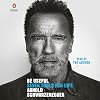
I’ve realized that self-help books aren’t for me. This was packed with motivational advice aimed at helping readers improve their lives in every way, but I found it boring and filled with clichés. Arnold's delivery felt genuine, and he came across as a caring person, but the content felt pandering. The humble reflections weren’t enough to make this an engaging listen. I enjoyed his intro and outro, unfortunately, this wasn’t the book for me.
I really, really LOVED this book. Note that I listened to the audiobook rather than read the book. As full disclosure, it should be stated that I am predisposed to liking Arnold Schwarzenegger’s stories. When I'm in the gym, I listen to motivational speeches including those of David Goggins, Steve Harvey and Arnold. I especially LOVE when Arnold talks about having a vision, big dreams, setting goals, his rules for success and working your butt off toward something. And so, I just knew that show more I HAD to get his autobiography.
I was listening to the audiobook and the first thing you’ll notice is that it is HUGE! 1400 minutes long!! Seriously!! Especially when a “regular” audiobook is around 600-800 minutes. I think that should set the tone for how BIG Arnold likes to think. It’s well written and does well to describe Arnold’s life, struggles and successes. Although, I found some sections a bit too descriptive and they might bore you if you’re not into it. Like for example, I found the politics part of the book a bit boring, since I’m not from America and don’t care much about being a governor, debating with the legislature or running ballots.
For those interested, this book is essentially divided into 5 sections:
- Childhood
- Developing a body for Competing
- Getting Americanized
- Movie life
- Governorship
Interspersed through these subjects, you’ll also find a couple of other themes playing out. Learning the ropes in America, Real estate, building connections, Falling in love with Maria.
Here’s what I absolutely loved about the audiobook:-
1. The first and last chapters are actually read by Arnold himself – that was really refreshing because his tonality and masculinity come through in his way of talking. And it’s way more interesting than Stephen Lang’s voice. All these make for an interesting listen
2. Arnold is really, really clumsy and funny! I mean like seriously – when in army school he drove his tank through a wall because he forgot to remove out the handbrake. Or the time that he went drag racing in his tank and some other members from his unit were hanging on for dear life! Or when he first met Younis Kennedy (his future MIL), he remarked to her that her daughter has a great ass! He even mentioned that pumping up the muscles was better than sex! This guy was absolutely outrageous and I loved it!! It really appealed to me – it’s very similar to the craziness that Steve Jobs had in him.
3. Utmost, Utmost, Utmost, Utmost belief in himself (Yes, there’s a reason that I typed in that word 4 times). There is this part in the audiobook which happens around 130 minutes, where Arnold talks about his first Mr. Universe and how he only signed up for the competition so that he could see where he stood amongst the rest. He assumed he’d end up in 6th or 7th place, but instead placed 2nd, behind Chet Yorton. The surprising part was what Arnold thought about it afterwards. Rather than be happy that he placed higher than he’d thought he would, be felt he undersold himself by only believing he would land up 6th. As he says, “What if I had gone to that competition with the intention of winning? What if I told myself that I was going to win? If you tuned into my thoughts before any competition, you’d probably hear, ‘Just move out of the fucking way and give me that trophy already’”.
Another story regarding his belief system was when he wanted to get into movies and he went to different agents and they all told him that his body was too monstrous or that nobody would understand his accent or that his name was unpronounceable. They said they’d help him to set up a local gym instead. But Arnold would have none of that. He believed that he could make it as an actor. So, he went to night school, acting school, speech school, accent school, started a construction business while training 5hrs a day! The key point is that he believed that he could make it. He didn’t think of giving up on his dreams because the experts (the agents) told him it was impossible. HE BELIEVED in himself. Or like the time he was offered $200,000 to manage a gym, the audiobook mentions that he turned it down because that would take him away from his goal of getting into movies and he would just become a manager, even though the money was unbelievable ($200,000 in the 1970’s would have been phenomenal).
Another key story was when he was working as a trainer in a gym in Munich and most of the enrollments were police officers, construction workers or travelling wrestlers. The wrestlers saw his size and offered to help him train as a wrestler. But Arnold didn’t want that life – even though he had a body for it, and bodybuilding was an obscure sport with no money involved, he BELIEVED that he could make it to America and that being a wrestler would have just made him ‘common’. A wrestler would have been right up his alley, but not up his dreams.
4. Risk – As I listened to the book, I started comparing myself to Arnold and realized that I don’t even come close to the amount of risk that he took. Like the story above, where he didn’t want to become a wrestler. He chose the riskier path of “trying” his hand at bodybuilding.
I was amazed with the story of how once in America, he purchased an apartment complex worth $200,000, when most other immigrants were happy simply renting out an apartment. He had $27,000 of his own which he managed to save, and borrowed $10,000 from Joe Weider. His friend Arty was shocked when he heard that Arnold purchased a complex rather than just settle on a single apartment! “But Arnold, you have to go collect the rent from each of the tenants, and what if there is some accident and you get sued, you know how things are here in America. What about plumbing and heat and if there are some issues with the complex, then you will have to keep running about trying to fix it. Why do you want to take those chances, I NEVER WANT that- it’s way too much of a hassle.” When I heard this story, I remember thinking I would have done was Arty suggested because that was the sane thing and made more logical sense. I wouldn’t even bother asking someone else to loan me $10000 – what if the apartment deal didn’t work out and I ended up owing the $10,000 – how long would that have taken me to pay back? But Arnold went in naïve and took the plunge. As you go through the book, there are a multitude of stories that show the amount of risk Arnold took.
5. Luck – Now as much as I would like to believe that Arnold got everything he wanted in life due to his sheer hard work, perseverance, persistence and determination; the truth is that as you read his autobiography or listen to the audiobook, you'll realize that he had much luck to go along with it. Now, I’d like to believe that the luck was an outcome of him having worked hard, though others might think otherwise. But there was MANY INSTANCES where luck played a huge role in Arnold’s future.
For instance, if you look at how Arnold came to America in the first place, was because after having won Mr. Universe for the 2nd time, he came back to his hotel and discovered that Joe Weider (the biggest promoter of bodybuilding magazines and supplements) had randomly sent him a telegram inviting him to come to America for a competition. Or what about the incident when post losing that competition (he came in 2nd to Frank Zayne, although Arnold lambasted himself later on saying that Joe Weider put so much faith in me and my abilities and I let him down), when he was wondering how he’d get airfare to go back home because he only came to America with one small gym bag, Joe Weider told him, “I want you to stay back in America for a year and you'll be much better for the competition next year. I’ll pay you a stipend and cover your staying expenses.” Aren’t these two examples a sign of pure luck?
The incident of how Arnold first got into movies also struck me as being lucky! He randomly managed to meet photographer / writers George Butler and Charles Gaines while in the city. They collaborated with Arnold on films such as Stay Hungry / Pumping Iron and introduced him to other directors too. The audiobook also talks about how he didn’t want to do small time roles in movies, even though he wasn’t a big name. Most others of his level didn’t mind doing small parts in movies - whereas Arnold waited for a bigger role to come along. And then surprise, surprise, one director came along searching for someone exactly of his build – that’s how Arnold got his breakthrough role of Conan the Barbarian. Arnold didn’t go apply or search for the script, the script came to him. I think that’s a classic example of dumb luck working in his favour.
6. Personality – This one is HUGE. It never struck me until one day while listening, I started to keep track of the number of times Arnold’s personality is mentioned. When Arnold decided to give up professional competition so that he would focus on working as an actor, George Butler finally managed to get funding for Pumping Iron and wanted to cast him. But Arnold flatly refused saying that he was done being a bodybuilder and had shifted his vision toward acting and being less muscular and leaner, to which Butler replied, “if you don’t act, the movie won’t go ahead. You are the only one who has the personality for the role.”
Or the incident where small time bodybuilders would get small parts in TV as bouncers or muscle men, Arnold would refuse since he didn’t want to do these small roles and those hiring would say, “But you have the biggest body and the personality compared to everyone...”
Once when competing against Sergio Olivia, after defeating him, Arnold played mind games by remarking that He’d lost because he looked too thin. As a result, Sergio piled on 10lbs for the next competition… and as Arnold said, “No one can pile on 10lbs of pure muscle in 2 weeks. That’s why I won the next competition as well.”
There are numerous other incidents where his personality, fun loving nature came to the forefront.
7. Have some sort of an idea of what he wanted to do – I’ve always wondered why it was that Arnold was so successful in bodybuilding. There were others who trained as hard as him, and by the 4th competition onwards, they should have already understood his training regime, tactics, posing forms, methods and so on. So why was it that Arnold still had the edge? I honestly believe it was that he had some sort of a clue who he wanted to become or where he wanted to go. This is something he normally always talks about in his YouTube videos too. He saw a magazine in Gratz and knew he wanted to become like Reg Park. He saw a Hercules movie and knew he wanted to become an actor, he saw that poster of Ronald Regan and knew he wanted to become Republican.
Well, there you have it, an extra long review of the entire book. Hope you liked it! If you’re still on the fence on whether to get this one or not, please do – it’s a real motivator booster to show how one person can achieve so much.
I’ll end with this – Arnold, you’re a real inspiration to me. Thank you for sharing your story. show less
I was listening to the audiobook and the first thing you’ll notice is that it is HUGE! 1400 minutes long!! Seriously!! Especially when a “regular” audiobook is around 600-800 minutes. I think that should set the tone for how BIG Arnold likes to think. It’s well written and does well to describe Arnold’s life, struggles and successes. Although, I found some sections a bit too descriptive and they might bore you if you’re not into it. Like for example, I found the politics part of the book a bit boring, since I’m not from America and don’t care much about being a governor, debating with the legislature or running ballots.
For those interested, this book is essentially divided into 5 sections:
- Childhood
- Developing a body for Competing
- Getting Americanized
- Movie life
- Governorship
Interspersed through these subjects, you’ll also find a couple of other themes playing out. Learning the ropes in America, Real estate, building connections, Falling in love with Maria.
Here’s what I absolutely loved about the audiobook:-
1. The first and last chapters are actually read by Arnold himself – that was really refreshing because his tonality and masculinity come through in his way of talking. And it’s way more interesting than Stephen Lang’s voice. All these make for an interesting listen
2. Arnold is really, really clumsy and funny! I mean like seriously – when in army school he drove his tank through a wall because he forgot to remove out the handbrake. Or the time that he went drag racing in his tank and some other members from his unit were hanging on for dear life! Or when he first met Younis Kennedy (his future MIL), he remarked to her that her daughter has a great ass! He even mentioned that pumping up the muscles was better than sex! This guy was absolutely outrageous and I loved it!! It really appealed to me – it’s very similar to the craziness that Steve Jobs had in him.
3. Utmost, Utmost, Utmost, Utmost belief in himself (Yes, there’s a reason that I typed in that word 4 times). There is this part in the audiobook which happens around 130 minutes, where Arnold talks about his first Mr. Universe and how he only signed up for the competition so that he could see where he stood amongst the rest. He assumed he’d end up in 6th or 7th place, but instead placed 2nd, behind Chet Yorton. The surprising part was what Arnold thought about it afterwards. Rather than be happy that he placed higher than he’d thought he would, be felt he undersold himself by only believing he would land up 6th. As he says, “What if I had gone to that competition with the intention of winning? What if I told myself that I was going to win? If you tuned into my thoughts before any competition, you’d probably hear, ‘Just move out of the fucking way and give me that trophy already’”.
Another story regarding his belief system was when he wanted to get into movies and he went to different agents and they all told him that his body was too monstrous or that nobody would understand his accent or that his name was unpronounceable. They said they’d help him to set up a local gym instead. But Arnold would have none of that. He believed that he could make it as an actor. So, he went to night school, acting school, speech school, accent school, started a construction business while training 5hrs a day! The key point is that he believed that he could make it. He didn’t think of giving up on his dreams because the experts (the agents) told him it was impossible. HE BELIEVED in himself. Or like the time he was offered $200,000 to manage a gym, the audiobook mentions that he turned it down because that would take him away from his goal of getting into movies and he would just become a manager, even though the money was unbelievable ($200,000 in the 1970’s would have been phenomenal).
Another key story was when he was working as a trainer in a gym in Munich and most of the enrollments were police officers, construction workers or travelling wrestlers. The wrestlers saw his size and offered to help him train as a wrestler. But Arnold didn’t want that life – even though he had a body for it, and bodybuilding was an obscure sport with no money involved, he BELIEVED that he could make it to America and that being a wrestler would have just made him ‘common’. A wrestler would have been right up his alley, but not up his dreams.
4. Risk – As I listened to the book, I started comparing myself to Arnold and realized that I don’t even come close to the amount of risk that he took. Like the story above, where he didn’t want to become a wrestler. He chose the riskier path of “trying” his hand at bodybuilding.
I was amazed with the story of how once in America, he purchased an apartment complex worth $200,000, when most other immigrants were happy simply renting out an apartment. He had $27,000 of his own which he managed to save, and borrowed $10,000 from Joe Weider. His friend Arty was shocked when he heard that Arnold purchased a complex rather than just settle on a single apartment! “But Arnold, you have to go collect the rent from each of the tenants, and what if there is some accident and you get sued, you know how things are here in America. What about plumbing and heat and if there are some issues with the complex, then you will have to keep running about trying to fix it. Why do you want to take those chances, I NEVER WANT that- it’s way too much of a hassle.” When I heard this story, I remember thinking I would have done was Arty suggested because that was the sane thing and made more logical sense. I wouldn’t even bother asking someone else to loan me $10000 – what if the apartment deal didn’t work out and I ended up owing the $10,000 – how long would that have taken me to pay back? But Arnold went in naïve and took the plunge. As you go through the book, there are a multitude of stories that show the amount of risk Arnold took.
5. Luck – Now as much as I would like to believe that Arnold got everything he wanted in life due to his sheer hard work, perseverance, persistence and determination; the truth is that as you read his autobiography or listen to the audiobook, you'll realize that he had much luck to go along with it. Now, I’d like to believe that the luck was an outcome of him having worked hard, though others might think otherwise. But there was MANY INSTANCES where luck played a huge role in Arnold’s future.
For instance, if you look at how Arnold came to America in the first place, was because after having won Mr. Universe for the 2nd time, he came back to his hotel and discovered that Joe Weider (the biggest promoter of bodybuilding magazines and supplements) had randomly sent him a telegram inviting him to come to America for a competition. Or what about the incident when post losing that competition (he came in 2nd to Frank Zayne, although Arnold lambasted himself later on saying that Joe Weider put so much faith in me and my abilities and I let him down), when he was wondering how he’d get airfare to go back home because he only came to America with one small gym bag, Joe Weider told him, “I want you to stay back in America for a year and you'll be much better for the competition next year. I’ll pay you a stipend and cover your staying expenses.” Aren’t these two examples a sign of pure luck?
The incident of how Arnold first got into movies also struck me as being lucky! He randomly managed to meet photographer / writers George Butler and Charles Gaines while in the city. They collaborated with Arnold on films such as Stay Hungry / Pumping Iron and introduced him to other directors too. The audiobook also talks about how he didn’t want to do small time roles in movies, even though he wasn’t a big name. Most others of his level didn’t mind doing small parts in movies - whereas Arnold waited for a bigger role to come along. And then surprise, surprise, one director came along searching for someone exactly of his build – that’s how Arnold got his breakthrough role of Conan the Barbarian. Arnold didn’t go apply or search for the script, the script came to him. I think that’s a classic example of dumb luck working in his favour.
6. Personality – This one is HUGE. It never struck me until one day while listening, I started to keep track of the number of times Arnold’s personality is mentioned. When Arnold decided to give up professional competition so that he would focus on working as an actor, George Butler finally managed to get funding for Pumping Iron and wanted to cast him. But Arnold flatly refused saying that he was done being a bodybuilder and had shifted his vision toward acting and being less muscular and leaner, to which Butler replied, “if you don’t act, the movie won’t go ahead. You are the only one who has the personality for the role.”
Or the incident where small time bodybuilders would get small parts in TV as bouncers or muscle men, Arnold would refuse since he didn’t want to do these small roles and those hiring would say, “But you have the biggest body and the personality compared to everyone...”
Once when competing against Sergio Olivia, after defeating him, Arnold played mind games by remarking that He’d lost because he looked too thin. As a result, Sergio piled on 10lbs for the next competition… and as Arnold said, “No one can pile on 10lbs of pure muscle in 2 weeks. That’s why I won the next competition as well.”
There are numerous other incidents where his personality, fun loving nature came to the forefront.
7. Have some sort of an idea of what he wanted to do – I’ve always wondered why it was that Arnold was so successful in bodybuilding. There were others who trained as hard as him, and by the 4th competition onwards, they should have already understood his training regime, tactics, posing forms, methods and so on. So why was it that Arnold still had the edge? I honestly believe it was that he had some sort of a clue who he wanted to become or where he wanted to go. This is something he normally always talks about in his YouTube videos too. He saw a magazine in Gratz and knew he wanted to become like Reg Park. He saw a Hercules movie and knew he wanted to become an actor, he saw that poster of Ronald Regan and knew he wanted to become Republican.
Well, there you have it, an extra long review of the entire book. Hope you liked it! If you’re still on the fence on whether to get this one or not, please do – it’s a real motivator booster to show how one person can achieve so much.
I’ll end with this – Arnold, you’re a real inspiration to me. Thank you for sharing your story. show less
Lists
Awards


You May Also Like


Associated Authors
Statistics
- Works
- 49
- Also by
- 66
- Members
- 3,083
- Popularity
- #8,282
- Rating
- 3.8
- Reviews
- 57
- ISBNs
- 137
- Languages
- 13
- Favorited
- 1

