
Jessica Reisman
Author of Subversion: Science Fiction & Fantasy Tales of Challenging the Norm
Works by Jessica Reisman
Subversion: Science Fiction & Fantasy Tales of Challenging the Norm (2011) — Contributor — 47 copies, 12 reviews
Boy Twelve 2 copies
The Girl Who Ate Garbage 1 copy
Threads 1 copy
The Blue Parallel 1 copy
Brilliance 1 copy
Boneshadow [short story] 1 copy
When the Ice Goes Out [short story] — Author — 1 copy
Associated Works
Other Covenants: Alternate Histories of the Jewish People (2020) — Contributor — 29 copies, 1 review
Tagged
Common Knowledge
- Gender
- female
- Organizations
- Science Fiction and Fantasy Writers of America
Members
Reviews
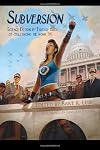
I received this book through the LibraryThing Early Reviewers program. Also to note: my work has appeared in past issues of Crossed Genres Magazine, by the same publisher, though I have no work in this anthology.
The theme of this book is unique. By "challenging the norm," characters in very different settings fight for their lives, their people, and their sanity. My initial concern was that the book would be very dark. Indeed, some of the stories do dwell on darkness, but not all. Subversion show more doesn't have to mean inciting a rebellion. Many of the tales are more subtle, such as Cat Rambo's story "Flicka," where a human boy strikes up a friendship with a girl genetically-modified to be equine. One of the lightest stories in the group is "The Hero Industry" by Jean Johnson, where the power of a wise strategy for a rebellion creates an enterprise. "The Red Dybbuk" by Barbara Krasnoff and "To Sleep with Pachamama" by Caleb Jordan Schulz are fascinating because of how they utilize Jewish and Quechan cultures, respectively, creating stories with a fresh perspective.
As for the genres, the anthology has the full gamut. Fantasy, science fiction, dystopia, urban fantasy... it's all in here.
A lot of times I read anthologies and have a few favorites, but most of the stories are forgettable. Here, probably half of the stories resounded for me, and even the ones I didn't quite connect with were well-done. show less
The theme of this book is unique. By "challenging the norm," characters in very different settings fight for their lives, their people, and their sanity. My initial concern was that the book would be very dark. Indeed, some of the stories do dwell on darkness, but not all. Subversion show more doesn't have to mean inciting a rebellion. Many of the tales are more subtle, such as Cat Rambo's story "Flicka," where a human boy strikes up a friendship with a girl genetically-modified to be equine. One of the lightest stories in the group is "The Hero Industry" by Jean Johnson, where the power of a wise strategy for a rebellion creates an enterprise. "The Red Dybbuk" by Barbara Krasnoff and "To Sleep with Pachamama" by Caleb Jordan Schulz are fascinating because of how they utilize Jewish and Quechan cultures, respectively, creating stories with a fresh perspective.
As for the genres, the anthology has the full gamut. Fantasy, science fiction, dystopia, urban fantasy... it's all in here.
A lot of times I read anthologies and have a few favorites, but most of the stories are forgettable. Here, probably half of the stories resounded for me, and even the ones I didn't quite connect with were well-done. show less
 This review was written for LibraryThing Early Reviewers.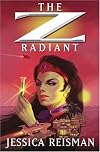
Developing and exploring completely alien worlds has been a mainstay of science fiction literature since Camille Flammarion's Lumen was published in 1887. With her first novel, The Z Radiant, Austinite Jessica Reisman continues the tradition.
Accessible only via a wormhole, Nentesh is located in an isolated section of space. Every 20 years, apparently angelic visitors from the other end of the wormhole arrive with technological advancements from the rest of the universe. During the Ingress show more Festival, the Nenteshi celebration for this generational event, some of the Nenteshi leave with the visitors, while some of the people from the outsystem remain.
Swan, settler from the outsystem; her lover, Ula, a refugee from the Nentesh nomadic desert people; Aren, abandoned on Nentesh during the last Ingress; and Ninuel, a disenfranchised member of an influential Nentesh family, each must come to terms with their identities and the changing circumstances of their worlds before and during the festival. Reisman expands the boundaries of traditional science fiction tropes with explorations into gender issues, sexuality, and the mysterious existence-morphing drug "Z."
Within the Austin science-fiction community, Reisman is known as a writer of powerful, thought-provoking stories. In The Z Radiant, mixed within her expressive prose, there are some odd word choices and occasionally distracting dialogue, but the author easily justifies her reputation with this intelligent, absorbing debut.
(This review originally appeared in The Austin Chronicle, May 28, 2004.)
Link: http://www.austinchronicle.com/gyrobase/Issue/story?oid=oid:212913 show less
Accessible only via a wormhole, Nentesh is located in an isolated section of space. Every 20 years, apparently angelic visitors from the other end of the wormhole arrive with technological advancements from the rest of the universe. During the Ingress show more Festival, the Nenteshi celebration for this generational event, some of the Nenteshi leave with the visitors, while some of the people from the outsystem remain.
Swan, settler from the outsystem; her lover, Ula, a refugee from the Nentesh nomadic desert people; Aren, abandoned on Nentesh during the last Ingress; and Ninuel, a disenfranchised member of an influential Nentesh family, each must come to terms with their identities and the changing circumstances of their worlds before and during the festival. Reisman expands the boundaries of traditional science fiction tropes with explorations into gender issues, sexuality, and the mysterious existence-morphing drug "Z."
Within the Austin science-fiction community, Reisman is known as a writer of powerful, thought-provoking stories. In The Z Radiant, mixed within her expressive prose, there are some odd word choices and occasionally distracting dialogue, but the author easily justifies her reputation with this intelligent, absorbing debut.
(This review originally appeared in The Austin Chronicle, May 28, 2004.)
Link: http://www.austinchronicle.com/gyrobase/Issue/story?oid=oid:212913 show less
This is definitely an anthology theme to get behind: the authors collected here cover a wide range of sub-genres, and the editor has done a great job of avoiding stories with too similar 'shapes' - an unfortunate flaw in many themed anthologies.
A Thousand Wings of Luck by Jessica Reisman starts the collection with beautifully detailed world building, that could have sustained a novel, and a genuine feeling of uncertainty about the decisions the main character would make, and the effect they show more would have.
Seed by Shanna Germain does a similarly meticulous job of world building, managing the difficult task of packing in a alien society's world view, and the critique there of into a short wordcount, with lots of interesting angles on gender, sex, and food to consider.
Received Without Content by Timothy T. Murphy and Parent Hack by Kay T. Holt are both near-future tales of teenage rebellion - both excellent, but otherwise so different in flavour and shape.
Scrapheap Angel by RJ Astruc & Deirdre M. Murphy and The Hero Industry by Jean Johnson might be said to form a similar pair around adult job roles - how much changes, when so much stays the same.
Phantom Overload by Daniel José Older and The Red Dybbuk by Barbara Krasnoff both mix a strong sense of location and identity with the paranormal end of the genre mix. Again - two strong stories with some surface similarities, but utterly different reading experiences.
To Sleep With Pachamama by Caleb Jordan Schulz takes us to a post-earth end-of-the-line to finish out the anthology - a very fitting grace note of hope and possibility.
Not every story spoke to me, and the overall collection is maybe less subversive than the title might suggest, but there are a lot of very strong stories here - certainly more to recommend than to not. show less
A Thousand Wings of Luck by Jessica Reisman starts the collection with beautifully detailed world building, that could have sustained a novel, and a genuine feeling of uncertainty about the decisions the main character would make, and the effect they show more would have.
Seed by Shanna Germain does a similarly meticulous job of world building, managing the difficult task of packing in a alien society's world view, and the critique there of into a short wordcount, with lots of interesting angles on gender, sex, and food to consider.
Received Without Content by Timothy T. Murphy and Parent Hack by Kay T. Holt are both near-future tales of teenage rebellion - both excellent, but otherwise so different in flavour and shape.
Scrapheap Angel by RJ Astruc & Deirdre M. Murphy and The Hero Industry by Jean Johnson might be said to form a similar pair around adult job roles - how much changes, when so much stays the same.
Phantom Overload by Daniel José Older and The Red Dybbuk by Barbara Krasnoff both mix a strong sense of location and identity with the paranormal end of the genre mix. Again - two strong stories with some surface similarities, but utterly different reading experiences.
To Sleep With Pachamama by Caleb Jordan Schulz takes us to a post-earth end-of-the-line to finish out the anthology - a very fitting grace note of hope and possibility.
Not every story spoke to me, and the overall collection is maybe less subversive than the title might suggest, but there are a lot of very strong stories here - certainly more to recommend than to not. show less
This review was written for LibraryThing Early Reviewers.A fine collection of short stories, mostly written by female authors, in some part of the science fiction or fantasy genres, all of which feature in some way or another Subversion against the existing authority. Sometimes itt works out for the hero (or heroine) and sometimes it is less clear. But they are all well written.
As alwas with such a collection some are much better than others, but there were none at all that I disliked - which is particularly noteworthy. The opening story A show more thousand Wings of Luck was particularly good, about superstition on a world where Luck might be embodied as a physical entity. One girl takes a chance to explore the consequences. Another impressive fantasy offering - Pushing Paper - explores a Guard captain mired in burocracy, who breaks free with a little help. Parent hack is a more science fiction based story about two dissaffected youths shackled by robotic guardians, but even the hacker they contact is not without respect for the laws.
Just good writing througout, tales to make you think and ponder, just liek all good SF their are many obvious and less obvious, references to society today. show less
As alwas with such a collection some are much better than others, but there were none at all that I disliked - which is particularly noteworthy. The opening story A show more thousand Wings of Luck was particularly good, about superstition on a world where Luck might be embodied as a physical entity. One girl takes a chance to explore the consequences. Another impressive fantasy offering - Pushing Paper - explores a Guard captain mired in burocracy, who breaks free with a little help. Parent hack is a more science fiction based story about two dissaffected youths shackled by robotic guardians, but even the hacker they contact is not without respect for the laws.
Just good writing througout, tales to make you think and ponder, just liek all good SF their are many obvious and less obvious, references to society today. show less
This review was written for LibraryThing Early Reviewers.You May Also Like
Associated Authors
Statistics
- Works
- 14
- Also by
- 10
- Members
- 100
- Popularity
- #190,119
- Rating
- 3.7
- Reviews
- 13
- ISBNs
- 8
