
Tom Doyle (3)
Author of Man on the Run: Paul McCartney in the 1970s
For other authors named Tom Doyle, see the disambiguation page.
Works by Tom Doyle
Tagged
Common Knowledge
There is no Common Knowledge data for this author yet. You can help.
Members
Reviews

As a culture we tend to focus on the high points of achievement, the deeds that make a person’s reputation. We rarely reflect enough on what comes next, the fallout from those events, how people cope with the consequences. We get ‘where are they now’ articles 20-30 years later and express astonishment about what’s happened since. But if you’re interested in the people at the heart of events, rather than the abstraction of the events themselves, what happens next is always more show more fascinating. Because you tend to learn more about people by how they cope in the aftermath of crisis points than you do about how they react in the moment.
There are few bands as well documented as The Beatles – band biographies tend to the ludicrously comprehensive (the official biography by Hunter Davies clocks in at a mere 500 pages and the first volume of Mark Lewisohn’s All These Years comes in at a lean 900 pages or in a 1700 page extended version). Beatles books are clearly the prog rock of band biographies. It’s such well-covered territory that major revelations are unlikely, even the diligent biographer being limited to shading in unknown and/or peripheral details. How much is there left to say about such scrutinised events fifty years on, with so many of the participants now dead too? What’s left to learn?
The answer to that question comes in the post-Fab decades. Lennon’s time is almost as well documented as his time in the Beatles – his emigration to New York, confessional albums, bile spewing interviews with Rolling Stone, the Lost Weekend… his assassination in December 1980 means books could be closed and his life assessed. McCartney made that harder by always carrying on. Man On The Run is the story of Paul McCartney’s post-Beatles decade. It begins in the acrimony and bile of the last days of the Beatles, McCartney becoming increasingly isolated from his bandmates over business matters, and it ends with his extended reaction to Lennon’s assassination. It takes in his early solo efforts, his time in Wings and ends with him solo once more, this time permanently. It takes in their retreat to the country, the post-Beatles relations of the Fabs and doesn’t shy away from the recreational use of drugs, including his infamous drugs bust in Japan. It’s a breezily chronological approach, the story shaped by time and events rather than dramatic licence.
Where it scores above normal rock chronologies is in the input it has – as the fore and afterwords make clear, Doyle has built up a rapport with McCartney and the interviews with him provide crucial inside perspective on his motivations. There’s also a wealth of key personnel interviewed to provide alternate views, so hagiography is neatly sidestepped. What emerges is the human being at the heart of events, we don’t get the parodic wacky thumbs-aloft McCartney persona. The revelation is how much of McCartney’s career is shaped on the fly, on spur of the moment actions. What might be widely read as calculating moves are just something he fancied doing. Consciously or subconsciously, it’s clear the decade was essentially spent casting around for a post-Beatles direction.
The other thing that comes across is McCartney’s musical tendency that marks him out from fellow musicians. His instinctive populism and openness to all musical forms provides the creative tension in his two major bands, neatly balancing Lennon’s acid tongue and later experimental leanings and playing against the professional musicians who passed through the various incarnations of Wings. It’s difficult to think of another musician who’d move from the acme of cool that was the Beatles to releasing a version of Mary Had A Little Lamb, a Bond theme and (eventually) The Frog Chorus whilst also being open to modern musical trends (the synth of McCartney II, even the penning of a punk parody). That family entertainer streak might keep him from ever being regarded as cool as Lennon, but does mean he’s been able to sustain his popularity over the decades. Cool’s a temporary glory, a common touch means sustainable success.
A welcome retelling of a great rock story that’s always been lost in the shadows of the achievements of his previous decade. show less
There are few bands as well documented as The Beatles – band biographies tend to the ludicrously comprehensive (the official biography by Hunter Davies clocks in at a mere 500 pages and the first volume of Mark Lewisohn’s All These Years comes in at a lean 900 pages or in a 1700 page extended version). Beatles books are clearly the prog rock of band biographies. It’s such well-covered territory that major revelations are unlikely, even the diligent biographer being limited to shading in unknown and/or peripheral details. How much is there left to say about such scrutinised events fifty years on, with so many of the participants now dead too? What’s left to learn?
The answer to that question comes in the post-Fab decades. Lennon’s time is almost as well documented as his time in the Beatles – his emigration to New York, confessional albums, bile spewing interviews with Rolling Stone, the Lost Weekend… his assassination in December 1980 means books could be closed and his life assessed. McCartney made that harder by always carrying on. Man On The Run is the story of Paul McCartney’s post-Beatles decade. It begins in the acrimony and bile of the last days of the Beatles, McCartney becoming increasingly isolated from his bandmates over business matters, and it ends with his extended reaction to Lennon’s assassination. It takes in his early solo efforts, his time in Wings and ends with him solo once more, this time permanently. It takes in their retreat to the country, the post-Beatles relations of the Fabs and doesn’t shy away from the recreational use of drugs, including his infamous drugs bust in Japan. It’s a breezily chronological approach, the story shaped by time and events rather than dramatic licence.
Where it scores above normal rock chronologies is in the input it has – as the fore and afterwords make clear, Doyle has built up a rapport with McCartney and the interviews with him provide crucial inside perspective on his motivations. There’s also a wealth of key personnel interviewed to provide alternate views, so hagiography is neatly sidestepped. What emerges is the human being at the heart of events, we don’t get the parodic wacky thumbs-aloft McCartney persona. The revelation is how much of McCartney’s career is shaped on the fly, on spur of the moment actions. What might be widely read as calculating moves are just something he fancied doing. Consciously or subconsciously, it’s clear the decade was essentially spent casting around for a post-Beatles direction.
The other thing that comes across is McCartney’s musical tendency that marks him out from fellow musicians. His instinctive populism and openness to all musical forms provides the creative tension in his two major bands, neatly balancing Lennon’s acid tongue and later experimental leanings and playing against the professional musicians who passed through the various incarnations of Wings. It’s difficult to think of another musician who’d move from the acme of cool that was the Beatles to releasing a version of Mary Had A Little Lamb, a Bond theme and (eventually) The Frog Chorus whilst also being open to modern musical trends (the synth of McCartney II, even the penning of a punk parody). That family entertainer streak might keep him from ever being regarded as cool as Lennon, but does mean he’s been able to sustain his popularity over the decades. Cool’s a temporary glory, a common touch means sustainable success.
A welcome retelling of a great rock story that’s always been lost in the shadows of the achievements of his previous decade. show less
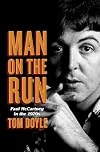
Man on the Run by Tom Doyle is a 2014 Ballantine publication.
Maybe I’m amazed…
Much has been written about the Fab Four as evidenced by the recent Disney Plus documentary, the group still draws mass audiences today. They seem endlessly fascinating, and I admit that every time I see a new book about the Beatles my ‘one-click’ finger itches.
While, John, understandably has been the Beatle whose life has been examined every which way, I think we might be doing Paul a disservice on that show more front, especially after having read this book.
While the book is confined to the 70s decade where Paul was all over the place there for a while, I could see a fighting spirit in him that was smarter than people realized at the time. He stood alone against the crowd and now people are glad that he did, because in essence, he saved the Beatles legacy- though I’m not sure he ever got public credit for that.
The hippie lifestyle described in the book is almost un-relatable now, but it was a fun reminder of the past. Occasionally, I do have daydreams of living off grid like that, I must admit. It was probably cathartic though, for Paul, who was going through a deep depression coming down from the incredibly intense high of the Beatles success, to find it all coming to very ugly, contentious end.
This book chronicles Paul’s rise, with the help of his wife, and family, out of his depression and back to writing songs, to the formation of a new band, while he fought through the last days of the Beatles that ended in a nasty legal battle.
While the process wasn’t necessarily pretty, McCartney, managed to re-invent himself. 'Wings' went on the win numerous awards, including several Grammy Awards.
I didn’t know much about this time in Paul’s life and didn’t realize, despite having read so much about the Beatles over the years, how awful and messy dismantling the group was and how McCartney became the villain.
The book also touches on the aftermath of Wings, briefly, and the book gives Paul a chance to set the record straight about a few unfortunate decisions and remarks and defend poor Linda, who was often battered by critics due to her lack of natural musical talent- and I agree with Paul- it really was cruel.
He also gets a chance to reflect on this period in his life- the good, bad and ugly of it all, as well as make a few more contemporary remarks about John and Linda’s deaths.
Overall, a very interesting piece of history, with a big of nostalgia, and lots of insights into Paul’s life during this transitional period in his life.
While, of course, one can’t put Wings in the same category as the Beatles- I think this world could really use a lot more of those ‘silly love songs’ right now! show less
Maybe I’m amazed…
Much has been written about the Fab Four as evidenced by the recent Disney Plus documentary, the group still draws mass audiences today. They seem endlessly fascinating, and I admit that every time I see a new book about the Beatles my ‘one-click’ finger itches.
While, John, understandably has been the Beatle whose life has been examined every which way, I think we might be doing Paul a disservice on that show more front, especially after having read this book.
While the book is confined to the 70s decade where Paul was all over the place there for a while, I could see a fighting spirit in him that was smarter than people realized at the time. He stood alone against the crowd and now people are glad that he did, because in essence, he saved the Beatles legacy- though I’m not sure he ever got public credit for that.
The hippie lifestyle described in the book is almost un-relatable now, but it was a fun reminder of the past. Occasionally, I do have daydreams of living off grid like that, I must admit. It was probably cathartic though, for Paul, who was going through a deep depression coming down from the incredibly intense high of the Beatles success, to find it all coming to very ugly, contentious end.
This book chronicles Paul’s rise, with the help of his wife, and family, out of his depression and back to writing songs, to the formation of a new band, while he fought through the last days of the Beatles that ended in a nasty legal battle.
While the process wasn’t necessarily pretty, McCartney, managed to re-invent himself. 'Wings' went on the win numerous awards, including several Grammy Awards.
I didn’t know much about this time in Paul’s life and didn’t realize, despite having read so much about the Beatles over the years, how awful and messy dismantling the group was and how McCartney became the villain.
The book also touches on the aftermath of Wings, briefly, and the book gives Paul a chance to set the record straight about a few unfortunate decisions and remarks and defend poor Linda, who was often battered by critics due to her lack of natural musical talent- and I agree with Paul- it really was cruel.
He also gets a chance to reflect on this period in his life- the good, bad and ugly of it all, as well as make a few more contemporary remarks about John and Linda’s deaths.
Overall, a very interesting piece of history, with a big of nostalgia, and lots of insights into Paul’s life during this transitional period in his life.
While, of course, one can’t put Wings in the same category as the Beatles- I think this world could really use a lot more of those ‘silly love songs’ right now! show less
Right off the bat, you'll have to be a big McCartney/Wings fan to care, but if you do, this is a fascinating book of post-Beatle hangover.
You start at the moment the Beatles call it quits, and it ends as Wings calls it quits a decade later. In between, Paul McCartney is devastated by doubt, derailed by drug arrests, subjected to infighting and devastated again by John Lennon's murder.
Some great music came from McCartney during this era, such as My Love, Listen to What The Man Said, Uncle show more Albert/Admiral Halsey - but he also penned such trifles as Mary Had A Little Lamb.
McCartney begins the decade wondering if he will ever regain his groove, and he does find it with a new band of convenience, Wings. As he hits the top again, he's proved to himself he's still got it - and then loses interest in the whole hitmaking machine again.
The author had access to McCartney himself and a lot of the anecdotes come from Paul's own memories, which makes this a stronger book than another rehash of clippings.
Worthwhile if you're into the Beatles, Macca himself or just good pop-rock music. show less
You start at the moment the Beatles call it quits, and it ends as Wings calls it quits a decade later. In between, Paul McCartney is devastated by doubt, derailed by drug arrests, subjected to infighting and devastated again by John Lennon's murder.
Some great music came from McCartney during this era, such as My Love, Listen to What The Man Said, Uncle show more Albert/Admiral Halsey - but he also penned such trifles as Mary Had A Little Lamb.
McCartney begins the decade wondering if he will ever regain his groove, and he does find it with a new band of convenience, Wings. As he hits the top again, he's proved to himself he's still got it - and then loses interest in the whole hitmaking machine again.
The author had access to McCartney himself and a lot of the anecdotes come from Paul's own memories, which makes this a stronger book than another rehash of clippings.
Worthwhile if you're into the Beatles, Macca himself or just good pop-rock music. show less
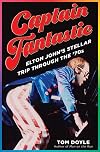
Elton John was a global phenomenon during the seventies--at one point the author points out that one of every fifty albums sold during 1975 was an Elton John record. The book is a compulsively readable account of Elton's journey from balladeer to glam rocker and back again. The author liberally uses interviews both from the period and from recent ones he conducted with the singer (as well as with lyricist Bernie Taupin, who becomes a much more completely drawn figure than usual in the book). show more The author tells the story almost perfectly, although I didn't much care for his critical appraisals of the music; his idea of a great song is not the same as mine, and he ridicules some perfectly reasonable interpretations (indeed, in one case the only reasonable interpretation) of the lyrics. The book's major sin, though, is one of omission; since it includes a fairly thorough account of Elton's early years and a rushed summary of his life and career post-1980, it would have been great to have made this a full biography. This interesting, reasonably short book could have easily borne another hundred pages or so to finish the story. show less
Lists
Music (1)
Statistics
- Works
- 4
- Members
- 199
- Popularity
- #110,456
- Rating
- 3.9
- Reviews
- 6
- ISBNs
- 87
- Languages
- 6