
Ramakrishna (1836–1886)
Author of The Gospel of Sri Ramakrishna: Abridged Edition
About the Author
Image credit: Keshab Chandra Sen (taken 1879)
Works by Ramakrishna
The Gospel of Sri Ramakrishna -- Translated Into English with an Introduction by Swami Nikhilananda (1952) 4 copies
Practical geography 3 copies
Paths of Meditation 2 copies
Thus Spake the Holy Mother 2 copies
Sri Ramakrishna. Setze Gott keine Grenzen. Gespräche des indischen Heiligen mit seinen Schülern. (1995) 2 copies
social studies 2 copies
This Spake ZARATHUSHTRA 1 copy
Thus Spake SRI KRISHNA 1 copy
Voice Of Vivekananda 1 copy
Srjmad Bhagavata volume 3 1 copy
Srjmad Bhagavata volume 1 1 copy
Srjmad Bhagavata volume 2 1 copy
Pictorial - Sri Ramakrishna 1 copy
Ramakrishnas samtal 1 copy
Role of spinning apparatus in non orb-weaving and orb-weaving spiders from India (Records of the Zoological Survey of India) (1988) 1 copy
NO ONE IS A STRANGER - Dynamics of Nurturing Inter-Personal Relationships with Spiritual Values 1 copy
Prasnottara Ratna-Malika 1 copy
Srjmad Bhagavata volume 4 1 copy
Associated Works
God Makes the Rivers To Flow: Sacred Literature of the World (1982) — Contributor — 230 copies, 2 reviews
Sources of Indian Tradition, Volume II: Modern India and Pakistan (1958) — Contributor — 185 copies, 1 review
Tagged
Common Knowledge
- Canonical name
- Ramakrishna
- Legal name
- Chattopadhyay, Gadadhar
- Other names
- Sri Ramakrishna Paramahamsa
- Birthdate
- 1836-02-18
- Date of death
- 1886-08-16
- Gender
- male
- Occupations
- Hindu mystic
Hindu priest - Relationships
- Vivekananda (disciple)
Gupta, Mahendranath (disciple) - Short biography
- Ramakrishna a été au XIXe siècle le sage de l’Inde le plus connu en Occident. Il est né en 1836 au Bengale dans une famille de brahmanes au service d’un grand propriétaire terrien. Vers l’âge de sept ans, il connaît ses premiers transports extatiques dans lesquels il reste pendant des heures. Son père meurt, plongeant sa famille dans de grandes difficultés économiques, puis son frère, prêtre dans un temple dédié à la déesse Kali, auquel il succède dans cette fonction. Il a alors vingt ans et une obsession : vivre dans la fusion avec Dieu. Une femme gourou lui enseigne la philosophie tantrique, puis un maître brahmane le Védanta. Il parvient alors à l’union avec l’énergie pure, ce Dieu qu’il vénère. Il étudie successivement les dogmes musulmans, puis chrétiens, et prêche la tolérance. Pour lui, la réalisation spirituelle est plus importante que le culte. En 1897, il crée un ashram, à Dakineswar, sur les bords du Gange, près de Calcutta. Il s’y installe avec son épouse : il a été marié à l’âge de cinq ans selon la coutume indienne, mais s’il vécut plus tard avec sa femme en parfaite communion d’esprit, ce fut toujours dans une complète chasteté. Il devient un véritable saint aux yeux de ses adeptes. Il reçoit pèlerins et visiteurs sans distinction de castes ou de religions. Sa doctrine restera orale. Les écrits qui la transmettent en français sont dus à Jean Herbert (L’Enseignement de Ramakrishna, Albin Michel) ou à Romain Rolland qui a rédigé sa biographie (La Vie de Ramakrishna, Stock). Il est mort en 1886, à cinquante ans. Vivekananda (12 janvier 1863-4 juillet 1902) a poursuivi son œuvre.
- Nationality
- India
- Places of residence
- Kamarpukur, West Bengal, India (birth)
Calcutta, India
Cossipore, India (death) - Associated Place (for map)
- India
Members
Reviews
I can say without any hesitation that this book is the book closest to my heart. When asked the common question, ‘which is your favorite book’, most people who want to give an honest answer would be mildly taken aback and also perhaps irritated as they go mentally over the books they have loved, which are all possibly ‘favorite books’ in different ways.
But in this, I have an advantage over most people in that I can say straight out, ‘this (the present book) is my favorite show more book’.
This has always been a book that has always had a deep influence on me. I would keep the book beside me, on my bedside, and from time to time open at any page randomly and read a few passages. The simplicity of the message always got to me without fail. For a few moments at least, I would be transported from my world of hectic work and money to a world where all this did not matter, where only the love of god mattered and where to love god and be immersed in Him were not a philosophy to be discussed but something which was entirely real and a way of life.
Ramakrishna is the living proof that men even in this world, men who are not historical legends but who are almost within our reach in time, can still ‘touch’ God, have mystical experience of oneness with God.
Ramakrishna's religion was love, love of god. It seemed almost immaterial to him which God it was. He deliberately set out to explore different religions and by turns worshipped Jesus and also in the Islamic way. He found the mystical experience through all religions and thus was able to declare them true. Moreover, he experienced oneness not just with the dualistic Gods of different religions but also the Absolute of Advaita. His words therefore spring from a deep well of wisdom, and they resonate with a clearness and lucidity which will touch the hearts of all. His simple words
M (Mahendra Gupta) was a lay devotee, that is, a householder devotee. But there is almost nothing about him in the book, it is all about the Master. It is rare for anyone to be able to efface himself so completely and bring to life the subject only. The translation is excellent, although the English translations of Bengali songs can be awkward at times, but this rather adds to the enchanted nature of the book.
Going through the book for writing this review, I rediscovered once more the earthy humor, the simple examples and fables, the wisdom of each and every word of this Master. This is a book that I would recommend to everyone who is searching for a genuine word of a man of God. This is the word from such a man, not someone lost in history but someone comparatively recent. I can give my word that if you have an open heart and mind, these are words that will touch you deeply. show less
But in this, I have an advantage over most people in that I can say straight out, ‘this (the present book) is my favorite show more book’.
This has always been a book that has always had a deep influence on me. I would keep the book beside me, on my bedside, and from time to time open at any page randomly and read a few passages. The simplicity of the message always got to me without fail. For a few moments at least, I would be transported from my world of hectic work and money to a world where all this did not matter, where only the love of god mattered and where to love god and be immersed in Him were not a philosophy to be discussed but something which was entirely real and a way of life.
Ramakrishna is the living proof that men even in this world, men who are not historical legends but who are almost within our reach in time, can still ‘touch’ God, have mystical experience of oneness with God.
Ramakrishna's religion was love, love of god. It seemed almost immaterial to him which God it was. He deliberately set out to explore different religions and by turns worshipped Jesus and also in the Islamic way. He found the mystical experience through all religions and thus was able to declare them true. Moreover, he experienced oneness not just with the dualistic Gods of different religions but also the Absolute of Advaita. His words therefore spring from a deep well of wisdom, and they resonate with a clearness and lucidity which will touch the hearts of all. His simple words
M (Mahendra Gupta) was a lay devotee, that is, a householder devotee. But there is almost nothing about him in the book, it is all about the Master. It is rare for anyone to be able to efface himself so completely and bring to life the subject only. The translation is excellent, although the English translations of Bengali songs can be awkward at times, but this rather adds to the enchanted nature of the book.
Going through the book for writing this review, I rediscovered once more the earthy humor, the simple examples and fables, the wisdom of each and every word of this Master. This is a book that I would recommend to everyone who is searching for a genuine word of a man of God. This is the word from such a man, not someone lost in history but someone comparatively recent. I can give my word that if you have an open heart and mind, these are words that will touch you deeply. show less

This book is a jewel. For anyone seeking to increase their bhakti (devotion, love of God), this book is the medicine you seek. It is sweet, moving, profound, and it gently weaves together every Vedantic philosophy and every spiritual path on earth into one radiant Love.
The truth is not about characterization and physical identification. This book simply simplifies the experience of truth by a true yogi.Mr M simply records. He doesn't have any idea or belief. He simply writes his Master's life and interactions with people. That is amazing. Because if you start identifying, characterizing and defining truth you miss the point. You live truth. That is the best you can do. This book simply without saying that says that. It is sad the world still has not woken show more up to Ramakrishna. show less
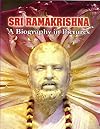
True to its title, Sri Ramakrishna: A Biography in Pictures is a biography of the God-Man, Sri Ramakrishna told in pictures assisted by written text.
Sri Ramakrishna Paramahamsa (February 18, 1836 - August 16, 1886), born Gadadhar Chattopadhyay, was a famous mystic of 19th-century India. His religious school of thought led to the formation of the Ramakrishna Mission by his chief disciple Swami Vivekananda - both were influential figures in the Bengali Renaissance as well as the Hindu show more renaissance during the 19th and 20th centuries. Many of his disciples and devotees believe he was an avatar or incarnation of God. show less
Sri Ramakrishna Paramahamsa (February 18, 1836 - August 16, 1886), born Gadadhar Chattopadhyay, was a famous mystic of 19th-century India. His religious school of thought led to the formation of the Ramakrishna Mission by his chief disciple Swami Vivekananda - both were influential figures in the Bengali Renaissance as well as the Hindu show more renaissance during the 19th and 20th centuries. Many of his disciples and devotees believe he was an avatar or incarnation of God. show less
Awards

You May Also Like


Associated Authors
Statistics
- Works
- 57
- Also by
- 5
- Members
- 479
- Popularity
- #51,491
- Rating
- 4.3
- Reviews
- 8
- ISBNs
- 48
- Languages
- 8