
Veda Vyasa
Author of The Bhagavad Gita
About the Author
Image credit: Sculpture of Vyasa. Photograph by Yogesa / Wikimedia.
Series
Works by Veda Vyasa
The Ramayana and Mahabharata Condensed into English Verse (1910) — Attributed Author — 159 copies, 2 reviews
Mahabharata Book Two: The Great Hall 9 copies
Uddhava-gītā 3 copies
Nrsimha Purana 1 copy
Harivamsa Purana Vol. 4 1 copy
Maha-bhrata Book Eight (Volume 2): Karna (Clay Sanskrit Library) by Vyasa (2008-02-01) (1638) 1 copy
Anugita 1 copy
Associated Works
The Graphic Canon, Vol. 1: From the Epic of Gilgamesh to Shakespeare to Dangerous Liaisons (2012) — Contributor — 300 copies, 7 reviews
Tagged
Common Knowledge
- Other names
- Veda Vyasa
Vedavyasa
Krishna Dvaipayan
Krishna-Dwaipayana Vyasa - Birthdate
- c. 1500 BCE
- Date of death
- unknown
- Gender
- male
- Short biography
- Legendary Indian sage credited with either composing or collecting the Mahabharata. Vyasa is a Sanskrit word for arranger or compiler.
- Nationality
- India
- Associated Place (for map)
- India
Members
Discussions
Bhagavad Gita - LIMITED EDITIONS CLUB 1964 in George Macy devotees (September 2024)
Reviews
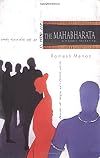
Mernon’s lively paraphrase relies on two previous English translations of the third century Sanskrit epic poem by Vyāsa. It is a lively retelling of the events leading up to and following a war of succession between rival cousins which occurred in a time so ancient that gods and humans freely moved between heaven and earth. In this the tale resembles the Greek Iliad, although Mernon notes that the 100,000 couplets of the original are “seven times as long as the Iliad and the Odyssey show more combined.” his version runs to two volumes of 1606 pages
when added together.
It is a long read, but an exciting one of wonders, God, gods, miraculous occurrences, court intrigues, visits to heavenly realms, jungles filled with gigantic demons, and heroic actions. The book is as action filled as a superhero movie with dramatic scenes of long smoldering emotions bursting into flame. At the end of volume one the five Pandava brothers (the good guys) and their wife have ended their thirteen-year exile and humiliated their demonic cousin Duryodhana and his army. All ancient India stands on the brink of a war that will end the era and usher in a new age.
Volume 2 is the war itself told in gruesome detail followed more briefly by its aftermath and consequences. In addition to many fantastic duels between combatants in their chariots and, incidentally, the casual slaughter of thousands of their supporting foot soldiers.
Just before it begins, there is a profound revelation of divine wisdom. Krishna, a cousin of the Pandavas and their opponents, has vowed not to fight in the war. But he does volunteer to drive the chariot of Arjuna, the most skilled archer and fighter of the brothers. Just before the battle starts, Arjuna, after pausing for prayer, begins to tremble. Shaking, he drops his bow (a supernatural weapon) and bewails the prospect of this internecine battle with his kin. Krishna then reveals himself as an avatar (a divine incarnation) and expounds at length on why Arjuna as a kshatriya (a member of the hereditary military caste) must do his duty, the larger significance of this war, and the vast scope of cosmic reality, of which this is a small part. Cosmology, time, fate, the interconnectedness of all, and Hindu ethics are detailed. This section is known as the Bhagavad Gita (in English, “The Song of God”). It is often published separately and considered sacred scripture by Hindus.
Immediately following this sublime episode, the bloodshed begins. Eighteen days and a night of heroic duels, vengeance, and horrific slaughter between sworn enemies and bitter rivals in a civil war that nearly extinguishes the kshatriya caste entirely. Only enough survive to carry out a few equally gruesome vendettas before peace is truly established. But by then the age has ended. The rest of the epic continues until the death of the principal characters and the reader sees them in their place of eternal rest.
Mernon uses Sanskrit terms throughout that are translated into English in glossaries appended to each volume. This gives his version an authentic voice, which he enhances by his extensive English vocabulary to add color, especially when describing the appearance of a supernatural being. For example, in volume one he describes the appearance of the sun god Surya as “the coruscant Deva.” Later when Bheema, another Pandava brother, suddenly finds himself in the clutch of an immense demon snake, “moist, mottled, yellow and green,” the author writes, “The cold dampness and purulence of those coils were more than he could bear.” My dictionary and the Internet got a good workout, but it was always rewarding. I learned that coruscant is not just the capital of the Evil Empire in Star Wars; it’s an adjective that means glittering or sparkling and that purulence means foaming pus. show less
when added together.
It is a long read, but an exciting one of wonders, God, gods, miraculous occurrences, court intrigues, visits to heavenly realms, jungles filled with gigantic demons, and heroic actions. The book is as action filled as a superhero movie with dramatic scenes of long smoldering emotions bursting into flame. At the end of volume one the five Pandava brothers (the good guys) and their wife have ended their thirteen-year exile and humiliated their demonic cousin Duryodhana and his army. All ancient India stands on the brink of a war that will end the era and usher in a new age.
Volume 2 is the war itself told in gruesome detail followed more briefly by its aftermath and consequences. In addition to many fantastic duels between combatants in their chariots and, incidentally, the casual slaughter of thousands of their supporting foot soldiers.
Just before it begins, there is a profound revelation of divine wisdom. Krishna, a cousin of the Pandavas and their opponents, has vowed not to fight in the war. But he does volunteer to drive the chariot of Arjuna, the most skilled archer and fighter of the brothers. Just before the battle starts, Arjuna, after pausing for prayer, begins to tremble. Shaking, he drops his bow (a supernatural weapon) and bewails the prospect of this internecine battle with his kin. Krishna then reveals himself as an avatar (a divine incarnation) and expounds at length on why Arjuna as a kshatriya (a member of the hereditary military caste) must do his duty, the larger significance of this war, and the vast scope of cosmic reality, of which this is a small part. Cosmology, time, fate, the interconnectedness of all, and Hindu ethics are detailed. This section is known as the Bhagavad Gita (in English, “The Song of God”). It is often published separately and considered sacred scripture by Hindus.
Immediately following this sublime episode, the bloodshed begins. Eighteen days and a night of heroic duels, vengeance, and horrific slaughter between sworn enemies and bitter rivals in a civil war that nearly extinguishes the kshatriya caste entirely. Only enough survive to carry out a few equally gruesome vendettas before peace is truly established. But by then the age has ended. The rest of the epic continues until the death of the principal characters and the reader sees them in their place of eternal rest.
Mernon uses Sanskrit terms throughout that are translated into English in glossaries appended to each volume. This gives his version an authentic voice, which he enhances by his extensive English vocabulary to add color, especially when describing the appearance of a supernatural being. For example, in volume one he describes the appearance of the sun god Surya as “the coruscant Deva.” Later when Bheema, another Pandava brother, suddenly finds himself in the clutch of an immense demon snake, “moist, mottled, yellow and green,” the author writes, “The cold dampness and purulence of those coils were more than he could bear.” My dictionary and the Internet got a good workout, but it was always rewarding. I learned that coruscant is not just the capital of the Evil Empire in Star Wars; it’s an adjective that means glittering or sparkling and that purulence means foaming pus. show less
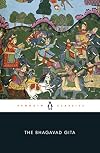
Well, I’ve seen the movie and I’ve read the “book” some time in the past. I remember buying the book at Tyrell’s Bookshop on George Street Sydney in 1958...one of my first purchases of “serious books” and I did read it then. But it absolutely went over my head. Yes, I got the battlefield stuff but not the mystical dimensions of the conversation ...even though I was into mysticism at that stage. And, to be clear, this is a review of the Blinkist summary of the Bhagavada-gita. show more I’m not reviewing the full book. But I’ve found these Blinkist summaries to be exceptionally good at extracting the main essence of a book.
What jumped out at me from my reading this time is the blatant way that duty to the secular powers is emphasised over duty to family. And my reaction was : “Well the ruling elite would say that wouldn’t they?”
I get the feeling that our fairy stories in the western tradition, and many similar cultural traditions in other regions are very much about cementing the position of the elite and keeping the workers from getting “ideas above their station”. Anyway, I’ve extracted a few segments that encapsulate the story, below: “
The battlefield that Arjuna surveys at the beginning of the Bhagavad Gita is called Kurukshetra, about a hundred miles north of today’s New Delhi.....The work recounts one episode of a larger story. That story is told in the 200,000-verse epic known as the Mahabharata, which recounts the civil war in the ancient kingdom of Bharata in today’s northern India......It starts with the death of Bharata’s king. Two camps form around his potential successors. On one side is the king’s younger brother, Pandu; on the other, his older brother, Dhritarashtra,
Both camps rush to assemble allies across India, and both court Krishna, the ruler of a kingdom with links to both sides.....Ajuna recruits Krishna as his charioteer but when he sees the opposing ranks of soldiers, Arjuna loses all appetite for battle. A wave of despair sweeps over him and he casts his famous bow to one side. It’s at this point that one of the most important dialogues in the religious and philosophical history of India–and the world–begins. It falls to Arjuna’s charioteer, Krishna, to persuade Arjuna to overcome his doubts.
Krishna, though, is an incarnation of the Supreme Lord.....What he tells Arjuna goes to the heart of what it means to live and die–and the truth of the universe.
Arjuna never doubted the righteousness of the Pandavas’ cause–until the day of the battle.
“Oh, what a crime we are about to commit,” he says, “from our desire to enjoy kingship, we are ready to kill our kinsmen.”.....His taste for battle gone, he throws aside his bow and slumps into the chariot.....If the Pandavas are to triumph, they need Arjuna, so Krishna tries to persuade him to take up his arms again..He succeeds:
But the hundreds of lines of verse spoken by Krishna before that add up to much more than an ad-hoc pep talk for a doubtful soldier. “What is the reason for your distress?” asks Krishna.......Arjuna's mind is spinning and his body trembles, but he's able to formulate an answer.....He identifies two causes. The first is psychological: he's overcome by horror and grief.....The second is moral: Arjuna doesn't understand how to fulfill his duties.......It's his duty to engage in battle. But he's also obliged to protect his family......Krishna's answer
A learned person, he says, "does not grieve over those who are dead......the dead do not cease to exist. Our essential spirits-our souls-exist before we are born and continue existing after we die.....The warrior only extinguishes the bodies of the men he kills in battle-their souls remain untouched.....[This is always a comforting thought ..and we carry the same sort of tradition in Christian society when we talk of the soul living on in heaven (hopefully) after death...and being able to “catch-up” when we are reunited in heaven. Seems rather dodgy idea to me]. ....Arjuna's duty as a male member of the warrior class to fight in righteous battle trumps his obligations to his family.
Buddhism, Jainism, and Hinduism-the three great religious offshoots of this intellectual tradition-don't see the cycle of birth, death, and rebirth in positive terms.....For these religions, the material world is illusory......The aim of existence is to achieve a form of consciousness that penetrates divine and eternal truths-truths transcending this world.
How, the Bhagavad Gita asks, can we relate to the divine?.....It is contained in a single Sanskrit word: bhakti, which means,,,,"devotion."....The path of devotion, Krishna tells Arjuna, is selfless: the devotee's obligation is to the act of devotion, not its fruits....[It sounds very much like the local elite ..especially the king wold be very supportive of this view]. Over the course of the dialogue contained in the Bhagavad Gita, it becomes clear that Krishna is that worthy recipient......The revelation of Krishna's divinity begins when Krishna tells his unsuspecting friend that he has taught everything he is about to teach Arjuna many times before......Many eons ago, he says, he taught them to the Sun, the first man, and the first king of the solar dynasty.......Both Krishna and Arjuna have "gone through many births,"
Krishna, by contrast, chooses to enter into this cycle. He can do this, we learn, because he is divine.....a manifestation of a deity in bodily form on Earth.[sound very like the idea of Christ being divine and human]....He is the Supreme Being.
How does one devote oneself to such a god?.....The discipline of devotion, Krishna answers, involves both action and knowledge.....It isn't the action that's important, but the mindset of the person performing it....."If a person sees me in everything, and sees everything in me," Krishna tells Arjuna, "I will not disappear from that person”.....[It also sounds like the ultimate escape clause....because if the God doesn’t grant you your wishes, then, clearly, you had the wrong attitude].
The destroyer of worlds....Arjuna sees Krishna as an infinite assemblage of arms and eyes, bellies and mouths, stretching out in all directions to fill the whole universe......But the vision isn't over. As Arjuna trembles, Krishna morphs into a world-destroying fire.....Arjuna now sees all the sons and soldiers of Dhritarashtra and Pandu, the two leaders of the armies assembled on the plains of Kurukshetra, rushing headlong into Krishna's infinite mouth.....like moths rush into blazing fire........Arjuna cries out: What kind of God is this? "I am Time," says Krishna,......"powerful destroyer of worlds, [the phrase immortalised by Oppenheimer when the first atomic bomb was exploded]...... grown immense here to annihilate these men."
Krishna is absolute in two senses: he is the creator and the annihilator of all life....It is the Supreme Lord, not the contending armies of Dhritarashtra and Pandu, who will decide the outcome of the battle.......Krishna now commands Arjuna: go and conquer your enemies
Understanding that he is nothing but an instrument of divine will, Arjuna picks up his bow and resolves to fight. Everything has already been decided; all he can do is his duty. [In Christian/Muslim terms this is predestination..... God has already determined all the outcomes].
Final summary: One of Hinduism's most important texts centres on a dialogue between the warrior Arjuna and the god Krishna, who serves as his charioteer.
On the battlefield, Arjuna experiences a moral crisis about fighting in the war. Krishna imparts spiritual wisdom and guidance on duty, righteousness, and the nature of the self, ultimately revealing his divine form, and emphasizing the importance of selfless action and devotion.
What’s my final take on the book. Well, I’m really impressed with the Blinkist summary. I think they do a remarkable job of condensation and extraction of the main messages. But have great reservations about the “truth” of the message, I have the uncomfortable feeling that it’s like many of the other myths and teachings around the world. They seem to always re-enforce the position of the elites and lock the peasants into doing their duty to the local king.....where duty means paying taxes and dying in wars of succession etc.
Five stars from me. show less
What jumped out at me from my reading this time is the blatant way that duty to the secular powers is emphasised over duty to family. And my reaction was : “Well the ruling elite would say that wouldn’t they?”
I get the feeling that our fairy stories in the western tradition, and many similar cultural traditions in other regions are very much about cementing the position of the elite and keeping the workers from getting “ideas above their station”. Anyway, I’ve extracted a few segments that encapsulate the story, below: “
The battlefield that Arjuna surveys at the beginning of the Bhagavad Gita is called Kurukshetra, about a hundred miles north of today’s New Delhi.....The work recounts one episode of a larger story. That story is told in the 200,000-verse epic known as the Mahabharata, which recounts the civil war in the ancient kingdom of Bharata in today’s northern India......It starts with the death of Bharata’s king. Two camps form around his potential successors. On one side is the king’s younger brother, Pandu; on the other, his older brother, Dhritarashtra,
Both camps rush to assemble allies across India, and both court Krishna, the ruler of a kingdom with links to both sides.....Ajuna recruits Krishna as his charioteer but when he sees the opposing ranks of soldiers, Arjuna loses all appetite for battle. A wave of despair sweeps over him and he casts his famous bow to one side. It’s at this point that one of the most important dialogues in the religious and philosophical history of India–and the world–begins. It falls to Arjuna’s charioteer, Krishna, to persuade Arjuna to overcome his doubts.
Krishna, though, is an incarnation of the Supreme Lord.....What he tells Arjuna goes to the heart of what it means to live and die–and the truth of the universe.
Arjuna never doubted the righteousness of the Pandavas’ cause–until the day of the battle.
“Oh, what a crime we are about to commit,” he says, “from our desire to enjoy kingship, we are ready to kill our kinsmen.”.....His taste for battle gone, he throws aside his bow and slumps into the chariot.....If the Pandavas are to triumph, they need Arjuna, so Krishna tries to persuade him to take up his arms again..He succeeds:
But the hundreds of lines of verse spoken by Krishna before that add up to much more than an ad-hoc pep talk for a doubtful soldier. “What is the reason for your distress?” asks Krishna.......Arjuna's mind is spinning and his body trembles, but he's able to formulate an answer.....He identifies two causes. The first is psychological: he's overcome by horror and grief.....The second is moral: Arjuna doesn't understand how to fulfill his duties.......It's his duty to engage in battle. But he's also obliged to protect his family......Krishna's answer
A learned person, he says, "does not grieve over those who are dead......the dead do not cease to exist. Our essential spirits-our souls-exist before we are born and continue existing after we die.....The warrior only extinguishes the bodies of the men he kills in battle-their souls remain untouched.....[This is always a comforting thought ..and we carry the same sort of tradition in Christian society when we talk of the soul living on in heaven (hopefully) after death...and being able to “catch-up” when we are reunited in heaven. Seems rather dodgy idea to me]. ....Arjuna's duty as a male member of the warrior class to fight in righteous battle trumps his obligations to his family.
Buddhism, Jainism, and Hinduism-the three great religious offshoots of this intellectual tradition-don't see the cycle of birth, death, and rebirth in positive terms.....For these religions, the material world is illusory......The aim of existence is to achieve a form of consciousness that penetrates divine and eternal truths-truths transcending this world.
How, the Bhagavad Gita asks, can we relate to the divine?.....It is contained in a single Sanskrit word: bhakti, which means,,,,"devotion."....The path of devotion, Krishna tells Arjuna, is selfless: the devotee's obligation is to the act of devotion, not its fruits....[It sounds very much like the local elite ..especially the king wold be very supportive of this view]. Over the course of the dialogue contained in the Bhagavad Gita, it becomes clear that Krishna is that worthy recipient......The revelation of Krishna's divinity begins when Krishna tells his unsuspecting friend that he has taught everything he is about to teach Arjuna many times before......Many eons ago, he says, he taught them to the Sun, the first man, and the first king of the solar dynasty.......Both Krishna and Arjuna have "gone through many births,"
Krishna, by contrast, chooses to enter into this cycle. He can do this, we learn, because he is divine.....a manifestation of a deity in bodily form on Earth.[sound very like the idea of Christ being divine and human]....He is the Supreme Being.
How does one devote oneself to such a god?.....The discipline of devotion, Krishna answers, involves both action and knowledge.....It isn't the action that's important, but the mindset of the person performing it....."If a person sees me in everything, and sees everything in me," Krishna tells Arjuna, "I will not disappear from that person”.....[It also sounds like the ultimate escape clause....because if the God doesn’t grant you your wishes, then, clearly, you had the wrong attitude].
The destroyer of worlds....Arjuna sees Krishna as an infinite assemblage of arms and eyes, bellies and mouths, stretching out in all directions to fill the whole universe......But the vision isn't over. As Arjuna trembles, Krishna morphs into a world-destroying fire.....Arjuna now sees all the sons and soldiers of Dhritarashtra and Pandu, the two leaders of the armies assembled on the plains of Kurukshetra, rushing headlong into Krishna's infinite mouth.....like moths rush into blazing fire........Arjuna cries out: What kind of God is this? "I am Time," says Krishna,......"powerful destroyer of worlds, [the phrase immortalised by Oppenheimer when the first atomic bomb was exploded]...... grown immense here to annihilate these men."
Krishna is absolute in two senses: he is the creator and the annihilator of all life....It is the Supreme Lord, not the contending armies of Dhritarashtra and Pandu, who will decide the outcome of the battle.......Krishna now commands Arjuna: go and conquer your enemies
Understanding that he is nothing but an instrument of divine will, Arjuna picks up his bow and resolves to fight. Everything has already been decided; all he can do is his duty. [In Christian/Muslim terms this is predestination..... God has already determined all the outcomes].
Final summary: One of Hinduism's most important texts centres on a dialogue between the warrior Arjuna and the god Krishna, who serves as his charioteer.
On the battlefield, Arjuna experiences a moral crisis about fighting in the war. Krishna imparts spiritual wisdom and guidance on duty, righteousness, and the nature of the self, ultimately revealing his divine form, and emphasizing the importance of selfless action and devotion.
What’s my final take on the book. Well, I’m really impressed with the Blinkist summary. I think they do a remarkable job of condensation and extraction of the main messages. But have great reservations about the “truth” of the message, I have the uncomfortable feeling that it’s like many of the other myths and teachings around the world. They seem to always re-enforce the position of the elites and lock the peasants into doing their duty to the local king.....where duty means paying taxes and dying in wars of succession etc.
Five stars from me. show less
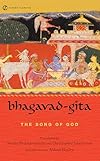
Inspiring and disturbing. There are passages of beauty and insight. There are long descriptions of an obscure cosmology. And there are passages whose purpose seems to be social control: the perpetuation of a culture of war and exploitation. Consider these lines, from Krishna's side of the dialogue: "but he whose mind dwells beyond attachment...though he slay these thousands, he is no slayer" and "if I did not continue to work untiringly as I do...The result would be caste-mixture and show more universal destruction."
I understand that the Gita has been interpreted as an allegory. In such interpretations, the battlefield represents the struggle in the mind between good and evil, and the castes aren't the basis of a rigid social system, just inherent abilities. But after reading the Gita myself, those interpretations are hard to accept as the original intent of this work. show less
I understand that the Gita has been interpreted as an allegory. In such interpretations, the battlefield represents the struggle in the mind between good and evil, and the castes aren't the basis of a rigid social system, just inherent abilities. But after reading the Gita myself, those interpretations are hard to accept as the original intent of this work. show less
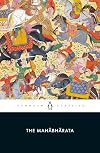
If you ever start to feel like there's something special or unique about the Western literary tradition, here's a nice reminder that "our" background is kind of like the poor, illiterate, brutish cousin of a sophisticated, knowledgeable, emotionally wealthy woman. I'd read retellings of the M, but they conveyed nothing of the sheer joy of the whole; this, John D. Smith's translation/abridgement/retelling, manages to make clear just how amazing the whole thing must be, without actually giving show more you the experience of reading the whole thing. Instead, he translates sizable chunks, then summarises the rest--everything. The summaries are quite exhaustive and, particularly in the great battle scenes, exhaustingly dull. But hey, it's ancient literature. They cared about who killed whom and how.
Other thoughts that I had while reading this:
* why are there eighteen hundred translations of 1001 Nights, but only two complete English renderings of this poem, which is far more interesting from a narrative/structural level (storytellers telling stories that they heard from this guy who was told it in this fashion at this event--digression into that event, and the genealogies of participants in it usw), as well as having far more interesting individual tales embedded in it?
* why are there a similarly large number of translations of the Bhagavad Gita, but so few of Bhishma's far more interesting deathbed sermon? (summarized, rather than translated, here: it might get pretty boring if it were 1000 pages long, I guess).
* why do so many men in this poem spontaneously ejaculate when they witness a beautiful woman? Why is there always a goddess, or woman, or animal, or river on hand to collect up the spilled seed and turn it into children?
* This is the coolest thing I've ever read.
The problem I was left with was: I want to read lots of M, not necessarily the battle bits, but all the philosophy and tales and genealogies and so on. And there's no complete translation that seems readable and reliable. That said, I'm very keen to read all of book 3, and books 11-13. The former is available in the U of Chicago Press edition; the latter in the Clay Sanskrit Library.
Another problem, and a warning--I can't imagine this would be useful as a first approach to the M. But it was perfect for me. For the record, before starting it I'd read one of the short retellings (which cut out all the digressions, genealogies, philosophy and tales, i.e., the good stuff), the Bhagavad Gita, and the Oxford World's Classics translation of book 10. They're all short, and all approachable. show less
Other thoughts that I had while reading this:
* why are there eighteen hundred translations of 1001 Nights, but only two complete English renderings of this poem, which is far more interesting from a narrative/structural level (storytellers telling stories that they heard from this guy who was told it in this fashion at this event--digression into that event, and the genealogies of participants in it usw), as well as having far more interesting individual tales embedded in it?
* why are there a similarly large number of translations of the Bhagavad Gita, but so few of Bhishma's far more interesting deathbed sermon? (summarized, rather than translated, here: it might get pretty boring if it were 1000 pages long, I guess).
* why do so many men in this poem spontaneously ejaculate when they witness a beautiful woman? Why is there always a goddess, or woman, or animal, or river on hand to collect up the spilled seed and turn it into children?
* This is the coolest thing I've ever read.
The problem I was left with was: I want to read lots of M, not necessarily the battle bits, but all the philosophy and tales and genealogies and so on. And there's no complete translation that seems readable and reliable. That said, I'm very keen to read all of book 3, and books 11-13. The former is available in the U of Chicago Press edition; the latter in the Clay Sanskrit Library.
Another problem, and a warning--I can't imagine this would be useful as a first approach to the M. But it was perfect for me. For the record, before starting it I'd read one of the short retellings (which cut out all the digressions, genealogies, philosophy and tales, i.e., the good stuff), the Bhagavad Gita, and the Oxford World's Classics translation of book 10. They're all short, and all approachable. show less
Lists
Awards


You May Also Like


Associated Authors
Statistics
- Works
- 72
- Also by
- 2
- Members
- 13,472
- Popularity
- #1,721
- Rating
- 4.0
- Reviews
- 142
- ISBNs
- 456
- Languages
- 22
- Favorited
- 5

