
Devdutt Pattanaik
Author of Jaya: An Illustrated Retelling of the Mahabharata
About the Author
Works by Devdutt Pattanaik
99 Thoughts On Ganesha/Stories,Symbols and Rituals of India's beloved elephant-headed deity (2011) 53 copies
The Man Who Was a Woman and Other Queer Tales from Hindu Lore (Haworth Gay & Lesbian Studies) (2001) 47 copies
I Am Divine. So Are You: How Buddhism, Jainism, Sikhism and Hinduism Affirm the Dignity of Queer Identities and Sexualities (2017) 26 copies
The Girl Who Chose: A New Way Of Narrating The Ramayana [Paperback] [Jun 27, 2016] Devdutt Pattanaik (2016) 19 copies
Success Sutra An Indian Approach to Weal [Hardcover] [Jan 01, 2012] DEVDUTT PATTANAIK (2015) 17 copies
Behold, I Make All Things New: How Judaism, Christianity and Islam affirm the dignity of queer identities and sexualities (2020) 7 copies
Sati Savitri 5 copies
Ram's Secret 1 copy
Yama: Heaven And Hell 1 copy
Associated Works
Tagged
Common Knowledge
- Birthdate
- 1970-12-11
- Gender
- male
- Education
- Mumbai University (MBBS)
Mumbai University (Postgraduate Diploma Comparative Mythology ) - Occupations
- physician
mythologist
writer
columnist - Nationality
- India
- Birthplace
- Mumbai, India
Bombay, India - Associated Place (for map)
- India
Members
Reviews
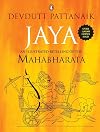
I found this interpretation of the Mahabharata to be a bit more realistic than the whitewashed mythology that we've been raised up on. Gods and men aren't chaste and de-sexualised, and Krishna is far more humane, albeit biased and cunning, than what we're accustomed to.
The author does not try to extol God or preach virtues, instead he presents the story as it is and lets the reader make his own decisions. It forces the reader to think and introspect, and in doing so, maybe helps the reader show more to understand himself as much as the story.
I personally enjoyed the historical facts that are included at the end of every chapter, which give the impression that mythology is just history that has been corrupted by the passage of time.
All in all, a very good read. show less
The author does not try to extol God or preach virtues, instead he presents the story as it is and lets the reader make his own decisions. It forces the reader to think and introspect, and in doing so, maybe helps the reader show more to understand himself as much as the story.
I personally enjoyed the historical facts that are included at the end of every chapter, which give the impression that mythology is just history that has been corrupted by the passage of time.
All in all, a very good read. show less
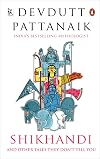
This is a wonderful collection of stories, most of which you’ll be aware of if you have extensively read various versions of our Hindu epics. What changes is the perspective that the author offers, looking at these stories from a queer perspective - how gender and sexuality were quite fluid in ancient times and it’s only through the passage of time and influence of other cultures that has made our culture now more rigid and intolerant of anyone who don’t confirm to the gender and show more sexual binaries.
This book definitely made me wonder how easy it has always been for me to accept the queer undertones of these stories without ever acknowledging it and just attributing it to the actions of gods. Wish life were that simple and there was widespread acceptance of everyone irrespective of their identity in our world.
Definitely give this book a try because it offers a very different approach to interpreting our traditional stories and might just open your eyes a little more.
And I leave you with this last one from the book —
“Krishna shows his cosmic form to Arjuna and says, ‘I am all there is, was and will be.’ In Hinduism, the world is not distinct from God. The world is God. God contains everything. The queer is not excluded.” show less
This book definitely made me wonder how easy it has always been for me to accept the queer undertones of these stories without ever acknowledging it and just attributing it to the actions of gods. Wish life were that simple and there was widespread acceptance of everyone irrespective of their identity in our world.
Definitely give this book a try because it offers a very different approach to interpreting our traditional stories and might just open your eyes a little more.
And I leave you with this last one from the book —
“Krishna shows his cosmic form to Arjuna and says, ‘I am all there is, was and will be.’ In Hinduism, the world is not distinct from God. The world is God. God contains everything. The queer is not excluded.” show less
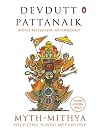
Pattanaik's Myth=Mithya approaches Hinduism from an interestingly rational standpoint. This was one of the first things that struck me about the book. Normally, books about God(s) tend to be pretty partisan in their world-view. Religion in general feeds into the overwhelming human urge to explain everything with one grand all-encompassing sentence or formula. A theological 42, if you will. Myth=mithya on the other hand, approaches the world with the same rational show more observation-theory-hypothesis method that I would expect from a scientific paper. It makes no arrogant claims to authority, nor does it even pretend to be the be-all/end-all as far as Hindu Mythology goes. It simply states cases from Hindu Mythology and then draws correlations to different aspects of Hindu philosophy as opposed to religion. What makes it all the more interesting, and why I refer to it as theology is- Hindu Mythology is still a very integral part of Indian culture (and by stating this, I dont intend to undermine Muslim and Mughal influences on Indian culture in any way). While Greek, Roman and Egyptian myths are arguably more popular, globally; and are definitely studied/analyzed to a far greater degree, they are artifacts of now-defunct religions. Hinduism and the Hindu pantheon are still very much practiced and believed in, respectively. No scholar of Greek Myth actually believes that Aphrodite was born from Ouranos' genitals, but you try to tell my grandmum that Brahma was not born from a lotus that grew out of Narayana's navel while Narayana reclined on a thousand-headed serpent that floated on an infinite ocean of milk and I guarantee you that you are in for a bit of an argument.
As a consequence of Hindu Mythology being a popular belief in Hindu society, any discussion of Hindu Mythology has a lot of theological implications to weigh it down. To analyze and dissect the myth of the birth of Brahma or the nature of Rama's betrayal of Sita is to analyze and dissect Hinduism itself. With verbal dexterity that verges on magic, Pattanaik neatly sidesteps any large theological implication and simply discusses the Myth for what it is: a popular story that attempts to explain and justify the world-view of a largish group of people.
You can clearly see the Pattanaik loves and respects Hinduism. He presents Hinduism as it is and does not pretend that it is THE way or THE truth like some ridiculous religious fanatic. His humility, and the fact that you are not assaulted with religious propaganda make this book all the more enjoyable. (This review is by Arnand Bhadwaj on amazon.com). show less
As a consequence of Hindu Mythology being a popular belief in Hindu society, any discussion of Hindu Mythology has a lot of theological implications to weigh it down. To analyze and dissect the myth of the birth of Brahma or the nature of Rama's betrayal of Sita is to analyze and dissect Hinduism itself. With verbal dexterity that verges on magic, Pattanaik neatly sidesteps any large theological implication and simply discusses the Myth for what it is: a popular story that attempts to explain and justify the world-view of a largish group of people.
You can clearly see the Pattanaik loves and respects Hinduism. He presents Hinduism as it is and does not pretend that it is THE way or THE truth like some ridiculous religious fanatic. His humility, and the fact that you are not assaulted with religious propaganda make this book all the more enjoyable. (This review is by Arnand Bhadwaj on amazon.com). show less

The Hindu epic, Mahabharata, written over 2000 years ago, narrates the tale of one Yuvanashva, a childless king, who accidentally drinks the magic potion meant to make his queens pregnant. The child thus conceived in and delivered from his body grows up to be Mandhata, a ruler of great repute.
What does the son call Yuvanashva? Father or mother? Can mothers be kings? Can kings be mothers? In the ancient epic, and the sacred chronicles known as the Puranas, which hurry through this slip of a show more tale, nobody raises these uncomfortable questions. They do so in this book.
And so a new narrative emerges: a fiction fashioned out of mythological and imaginary tales where lines are blurred between men and women, sons and daughters, husbands and wives, fathers and mothers.
There is Pruthalashva, who must be father because he is a man, and Shilavati, who cannot be king because she is a woman. There is Sthunakarna, a Yaksha, who forsakes his manhood to make Shikhandi a husband and then reclaims it to make Somavat a wife. There is Arjuna, a great warrior with many wives, who is forced to masquerade as a woman after being castrated by a nymph. There is Ileshwar Mahadev, god on full moon days and goddess of new moon nights and Adi-Natha, the teacher of teachers, worshipped as a hermit by Yaja and an enchantress by Upayaja. And finally there is Yuvanashva, the hero, king of Vallabhi, who after marrying three times to three very different women, creates a life within him, as mothers do, and then a life outside him, as fathers do, and wonders if he is either, neither or both.
If biology is destiny, if gender is a cornerstone of dharma, then how does Yuvanashva make room for such disruptions in order? For a good king, who wants to be great, must be fair to all: those here, those there and all those in between. show less
What does the son call Yuvanashva? Father or mother? Can mothers be kings? Can kings be mothers? In the ancient epic, and the sacred chronicles known as the Puranas, which hurry through this slip of a show more tale, nobody raises these uncomfortable questions. They do so in this book.
And so a new narrative emerges: a fiction fashioned out of mythological and imaginary tales where lines are blurred between men and women, sons and daughters, husbands and wives, fathers and mothers.
There is Pruthalashva, who must be father because he is a man, and Shilavati, who cannot be king because she is a woman. There is Sthunakarna, a Yaksha, who forsakes his manhood to make Shikhandi a husband and then reclaims it to make Somavat a wife. There is Arjuna, a great warrior with many wives, who is forced to masquerade as a woman after being castrated by a nymph. There is Ileshwar Mahadev, god on full moon days and goddess of new moon nights and Adi-Natha, the teacher of teachers, worshipped as a hermit by Yaja and an enchantress by Upayaja. And finally there is Yuvanashva, the hero, king of Vallabhi, who after marrying three times to three very different women, creates a life within him, as mothers do, and then a life outside him, as fathers do, and wonders if he is either, neither or both.
If biology is destiny, if gender is a cornerstone of dharma, then how does Yuvanashva make room for such disruptions in order? For a good king, who wants to be great, must be fair to all: those here, those there and all those in between. show less
Lists
Awards

You May Also Like


Associated Authors
Statistics
- Works
- 115
- Also by
- 1
- Members
- 2,646
- Popularity
- #9,705
- Rating
- 3.9
- Reviews
- 25
- ISBNs
- 171
- Languages
- 7