
Shashi Tharoor
Author of The Great Indian Novel
About the Author
Image credit: photo:jeanlouisaubert
Works by Shashi Tharoor
Associated Works
Writers on Writing, 2: More Collected Essays from the New York Times (2003) — Contributor — 200 copies, 3 reviews
Tagged
Common Knowledge
- Canonical name
- Tharoor, Shashi
- Birthdate
- 1956-03-09
- Gender
- male
- Education
- St. Stephen's College, Delhi (BA)
- Occupations
- author
politician
minister
diplomat
Under Secretary General of the United Nations for Communications and Public Information (2002-2007)
Member of the Lok Sabha of India (2009- ) (show all 8)
Indian Minister of Human Resource Development (2012-2014)
Indian Minister of External Affairs (2009-2010) - Organizations
- United Nations
Chandran Tharoor Foundation (managing trustee)
Indian National Congress - Awards and honors
- Commonwealth Writers' Prize (1991)
Sahitya Akademi Award (2019) - Agent
- Mary Evans
Deborah Rogers - Nationality
- India
- Birthplace
- London, England, UK
- Places of residence
- Palakkad, Kerala State, India
New York, New York, USA
Members
Reviews
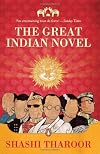
Part two of my recently read trilogy of alt-mythologies is Shashi Tharoor's The Great Indian Novel. This is actually something of a mashup, the characters and happenings of the Sanskrit epic The Mahabharata neatly meshed with Indian politics leading up to independence and onwards to the 1970s.
The story is told as if narrated by one of the central-but-never-too-involved characters late in his life to a gruff younger man. This conceit works in the novel's favour, as the narrator is happy to show more digress, apologise, digress again, and then, when the story's perspective seems to lift to an omniscient third person view beyond any mortal sights, he'll respond to his typist's incredulous eyebrows with a pithy explanation of how he knows what he's narrating.
The Mahabharata was written around two thousand years ago, and the story it tells probably pre-dates that by another millennium. So it's not surprising that the characters and occurrences in the poem don't match up perfectly with the key figures and goings-on of twentieth century Indian politics. And yet, fittingly given the book's cyclic themes, these temporally disparate stories do match up just enough that a skilled weaver of tales could create something magnificent from their blend. And Shashi Tharoor has some mad weaving skills.
There's a catch, of course. Isn't there always when you're faced with a brilliant story, brilliantly told? I know just enough about Indian politics around the independence-era to avoid looking like a dolt when talking to my Indian friends, but I'd never even heard of The Mahabharata until I picked up this novel. The story itself is probably worth reading without knowing any of these things. But I found it ever more fascinating, and was better able to appreciate Shashi Tharoor's accomplishment, when I badgered my Indian chums (and Wikipedia) for the details of The Mahabharata and the intricacies of the Indian independence movement. If you know the poem, the history, and the country, then read this book. If you don't then kidnap an Indian who knows all these things, and then read this book. show less
The story is told as if narrated by one of the central-but-never-too-involved characters late in his life to a gruff younger man. This conceit works in the novel's favour, as the narrator is happy to show more digress, apologise, digress again, and then, when the story's perspective seems to lift to an omniscient third person view beyond any mortal sights, he'll respond to his typist's incredulous eyebrows with a pithy explanation of how he knows what he's narrating.
The Mahabharata was written around two thousand years ago, and the story it tells probably pre-dates that by another millennium. So it's not surprising that the characters and occurrences in the poem don't match up perfectly with the key figures and goings-on of twentieth century Indian politics. And yet, fittingly given the book's cyclic themes, these temporally disparate stories do match up just enough that a skilled weaver of tales could create something magnificent from their blend. And Shashi Tharoor has some mad weaving skills.
There's a catch, of course. Isn't there always when you're faced with a brilliant story, brilliantly told? I know just enough about Indian politics around the independence-era to avoid looking like a dolt when talking to my Indian friends, but I'd never even heard of The Mahabharata until I picked up this novel. The story itself is probably worth reading without knowing any of these things. But I found it ever more fascinating, and was better able to appreciate Shashi Tharoor's accomplishment, when I badgered my Indian chums (and Wikipedia) for the details of The Mahabharata and the intricacies of the Indian independence movement. If you know the poem, the history, and the country, then read this book. If you don't then kidnap an Indian who knows all these things, and then read this book. show less
"Divide and rule," "The Raj, " "indentured servitude." If you're of Indian descent, you've probably heard your older family mutter these words with disdain yet never really grasped the sheer horror of British terror that informed their disgust.
There is a rising tide of apologia for colonialism. The ilk of Niall Ferguson sincerely believe that it wasn't all that bad--and they'd be right if all you had to go on were their fantasies of colonial uplift. This is where Shashi Tharoor shines. He show more simply lays out the best possible excuses for defenders of Britain's treatment of India and then demolishes each nostalgic delusion with historical context, records and facts.
Ultimately, Tharoor's positive argument is pretty simple when you get past all the Imperial gloss: Indians were people. Their lives mattered just as much as yours and mine--but this could never be the case during British rule in India. show less
There is a rising tide of apologia for colonialism. The ilk of Niall Ferguson sincerely believe that it wasn't all that bad--and they'd be right if all you had to go on were their fantasies of colonial uplift. This is where Shashi Tharoor shines. He show more simply lays out the best possible excuses for defenders of Britain's treatment of India and then demolishes each nostalgic delusion with historical context, records and facts.
Ultimately, Tharoor's positive argument is pretty simple when you get past all the Imperial gloss: Indians were people. Their lives mattered just as much as yours and mine--but this could never be the case during British rule in India. show less
[By Shashi Tharoor] Inglorious Empire: What the British Did to India (Hardcover)【2017】by Shashi Tharoor (Author) [1879] by Shashi Tharoor
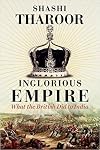
The Empire Strikes Out
The plight of India under British rule is not as common a body of knowledge as it should be. Worse, the British continue to insist they were not merely benign, but actually enlightened colonizers. Inglorious Empire exposes the rather more harsh truth. In outrage after outrage, Shashi Tharoor explores the social, political and economic facets of 200-350 years of abuse that left India a third world country. When the British arrived, India was enjoying a quarter to a third show more of world trade. It had an effective and comprehensive education system. Hindus and Muslims worked together. By independence in 1947, it was battlefield basket case. In a 150 year period, British GDP increased 347%, while India’s rose 14%. This is far worse than benign neglect. This is world class looting and pillaging.
By the early 1800s, India had been reduced from a land of “artisans, traders, warriors and merchants, functioning and thriving in complex and commercial networks, into an agrarian society of peasants and moneylenders. Extensive scholarship has shown how the British created the phenomenon of landlessness, turned self-reliant cultivators into tenants, employees and bondsmen, transformed social relations and as a result, undermined agrarian growth and development ... There are no victimless colonial actions. Everything the British did echoes down the ages,” Tharoor says. Not to put too fine a point on it, they chopped off the thumbs of weavers so the British could rule the textile trade and made India an importer instead of the lead exporter.
Tharoor also shows the difference a country can make. France, a monarchy, indoctrinated it colonies in its language and culture, seeking to include them and spread its influence. Britain, a democracy, sought to crush its colonies, destroying their self-sufficiency, extorting their wealth, and keeping the colonists separate from them, out of government, out of business and out of education. The British took a loosely unified country and split it as many ways as possible to keep it subservient. They specified religions and castes, and prevented citizens from crossing faint lines between them. Certain occupations could only be performed by certain castes. Armed forces units were caste-pure. Using Brahmins to translate documents into English, the British allowed that caste to write its own ticket. They promptly promoted themselves into the civil service and built a dominating and domineering status for themselves in Indian society, which they did not have before the British improved things.
The British formula could also be seen in Ireland, where the Irish were kept out of office and business. Divide and Rule was the British modus operandi. It led to absurd situations where Indian divisions were sent to Poland by the British, to defend democracy against the fascist invaders. There is a special place in Hell for Winston Churchill, whose intolerance, racism and apparent hatred of all things Indian was a continuous stab in the back to the whole nation. (One example: during a 1943 famine, he ordered Indian foodstuffs be diverted to British soldiers, already well fed, and to top up stockpiles in eastern Europe, while also turning down offers of aid from the US and Canada for starving Indians.) Rather than elevating India to a functioning democracy, as the British like to claim, they created so many cultural, religious and geographic conflicts and obstacles that India was a time-bomb that went off at independence.
Even as India exported its grain to Britain in the 1800s, 17 million died in famines back home. Compare this to the estimated war dead of five million worldwide during the entire 19th century. (This too was no different than the way the enlightened British treated the Irish.) During Indian famines, it became illegal to lower food prices, illegal to offer charity, and taxes were raised even higher. For relief, the British created workhouses that paid less than the slave labor at Buchenwald. Women sold their children for a single meal. Farmers sold their cattle (from 5 million annually to 115 million), destroying their ability to be self-sufficient. So while there was never a shortage of food in India, Indians couldn’t afford it and died by the millions. Much like the nonsense we hear now, the British claimed the market had to be free to find its own level, with no help of any kind to anyone. Except of course, that Britain stacked the deck on behalf of its businesses, especially the East India Company. Because India was not taken over by the British government; it was taken over by a public company. Members of Parliament and Lords were prominent stockholders, and the government gave the company the right to govern, the soldiers to back it up, and the tariffs to ensure success.
This is the same gang that leveled Indian forests to grow poppies, then went to war to force the Chinese to import the resulting opium and cocaine. Twice. The British government itself ran 7000 cocaine shops in India.
Tharoor tells the story patiently, calmly and almost dispassionately, in classic Indian demeanor. The book is thoroughly documented and recounts the litany of horrors as if it were simple history. But it isn’t of course. As Tharoor himself points out, there are still millions of Indians who lived it, and the country has yet to fully recover and take its former position in the ranks of the greatest. Inglorious Empire puts the British in their place as horrific managers, greedy, prejudiced and bloodthirsty as any in history. And that makes this an important book.
David Wineberg show less
The plight of India under British rule is not as common a body of knowledge as it should be. Worse, the British continue to insist they were not merely benign, but actually enlightened colonizers. Inglorious Empire exposes the rather more harsh truth. In outrage after outrage, Shashi Tharoor explores the social, political and economic facets of 200-350 years of abuse that left India a third world country. When the British arrived, India was enjoying a quarter to a third show more of world trade. It had an effective and comprehensive education system. Hindus and Muslims worked together. By independence in 1947, it was battlefield basket case. In a 150 year period, British GDP increased 347%, while India’s rose 14%. This is far worse than benign neglect. This is world class looting and pillaging.
By the early 1800s, India had been reduced from a land of “artisans, traders, warriors and merchants, functioning and thriving in complex and commercial networks, into an agrarian society of peasants and moneylenders. Extensive scholarship has shown how the British created the phenomenon of landlessness, turned self-reliant cultivators into tenants, employees and bondsmen, transformed social relations and as a result, undermined agrarian growth and development ... There are no victimless colonial actions. Everything the British did echoes down the ages,” Tharoor says. Not to put too fine a point on it, they chopped off the thumbs of weavers so the British could rule the textile trade and made India an importer instead of the lead exporter.
Tharoor also shows the difference a country can make. France, a monarchy, indoctrinated it colonies in its language and culture, seeking to include them and spread its influence. Britain, a democracy, sought to crush its colonies, destroying their self-sufficiency, extorting their wealth, and keeping the colonists separate from them, out of government, out of business and out of education. The British took a loosely unified country and split it as many ways as possible to keep it subservient. They specified religions and castes, and prevented citizens from crossing faint lines between them. Certain occupations could only be performed by certain castes. Armed forces units were caste-pure. Using Brahmins to translate documents into English, the British allowed that caste to write its own ticket. They promptly promoted themselves into the civil service and built a dominating and domineering status for themselves in Indian society, which they did not have before the British improved things.
The British formula could also be seen in Ireland, where the Irish were kept out of office and business. Divide and Rule was the British modus operandi. It led to absurd situations where Indian divisions were sent to Poland by the British, to defend democracy against the fascist invaders. There is a special place in Hell for Winston Churchill, whose intolerance, racism and apparent hatred of all things Indian was a continuous stab in the back to the whole nation. (One example: during a 1943 famine, he ordered Indian foodstuffs be diverted to British soldiers, already well fed, and to top up stockpiles in eastern Europe, while also turning down offers of aid from the US and Canada for starving Indians.) Rather than elevating India to a functioning democracy, as the British like to claim, they created so many cultural, religious and geographic conflicts and obstacles that India was a time-bomb that went off at independence.
Even as India exported its grain to Britain in the 1800s, 17 million died in famines back home. Compare this to the estimated war dead of five million worldwide during the entire 19th century. (This too was no different than the way the enlightened British treated the Irish.) During Indian famines, it became illegal to lower food prices, illegal to offer charity, and taxes were raised even higher. For relief, the British created workhouses that paid less than the slave labor at Buchenwald. Women sold their children for a single meal. Farmers sold their cattle (from 5 million annually to 115 million), destroying their ability to be self-sufficient. So while there was never a shortage of food in India, Indians couldn’t afford it and died by the millions. Much like the nonsense we hear now, the British claimed the market had to be free to find its own level, with no help of any kind to anyone. Except of course, that Britain stacked the deck on behalf of its businesses, especially the East India Company. Because India was not taken over by the British government; it was taken over by a public company. Members of Parliament and Lords were prominent stockholders, and the government gave the company the right to govern, the soldiers to back it up, and the tariffs to ensure success.
This is the same gang that leveled Indian forests to grow poppies, then went to war to force the Chinese to import the resulting opium and cocaine. Twice. The British government itself ran 7000 cocaine shops in India.
Tharoor tells the story patiently, calmly and almost dispassionately, in classic Indian demeanor. The book is thoroughly documented and recounts the litany of horrors as if it were simple history. But it isn’t of course. As Tharoor himself points out, there are still millions of Indians who lived it, and the country has yet to fully recover and take its former position in the ranks of the greatest. Inglorious Empire puts the British in their place as horrific managers, greedy, prejudiced and bloodthirsty as any in history. And that makes this an important book.
David Wineberg show less
Another good read from Tharoor. This one is mainly focused on Reading, the author's rabid love for books, on Authors he is partial to and other Bookwormish proclivities.
This guy is great. His polite yet visceral dissection of petty minded imperial racists like Winston Churchill and Nirad Chaudri is so eloquent in it's totality. Putting them in their place and giving them the respect they deserve (which is very little, I must say).
This well read gentleman has profiled not only his reading show more habits but famous literary figures like Pablo Neruda, Tagore, R.K. Narayan, P.G. Wodehouse and many others. He has taken great pains to give respect where it is long overdue and at the same time offer some constructive criticism of points that we might otherwise have missed like not seeing the forest for the trees.
Some interesting titbits that go to suggest that India put the melting in melting pot. The arabs were trading with Kerala as early as the 9th century and Islam arrived (peacefully) to these shores. The first jews also settled in Kerala (Cochin) around 2500 years ago. The Parsis settled in Gujarat as early as the 8th century. So long before these communities spread out to Europe or other parts, they were accepted by the local population.
What Rembrandt and Van Gogh achieved through masterful brushstrokes, Tharoor manages to do with mellifluous prose. All his books (non-fiction) are on my must read list. show less
This guy is great. His polite yet visceral dissection of petty minded imperial racists like Winston Churchill and Nirad Chaudri is so eloquent in it's totality. Putting them in their place and giving them the respect they deserve (which is very little, I must say).
This well read gentleman has profiled not only his reading show more habits but famous literary figures like Pablo Neruda, Tagore, R.K. Narayan, P.G. Wodehouse and many others. He has taken great pains to give respect where it is long overdue and at the same time offer some constructive criticism of points that we might otherwise have missed like not seeing the forest for the trees.
Some interesting titbits that go to suggest that India put the melting in melting pot. The arabs were trading with Kerala as early as the 9th century and Islam arrived (peacefully) to these shores. The first jews also settled in Kerala (Cochin) around 2500 years ago. The Parsis settled in Gujarat as early as the 8th century. So long before these communities spread out to Europe or other parts, they were accepted by the local population.
What Rembrandt and Van Gogh achieved through masterful brushstrokes, Tharoor manages to do with mellifluous prose. All his books (non-fiction) are on my must read list. show less
Lists
All Things India (2)
Best Biographies (1)
Awards


You May Also Like


Associated Authors
Statistics
- Works
- 42
- Also by
- 4
- Members
- 3,420
- Popularity
- #7,443
- Rating
- 3.6
- Reviews
- 67
- ISBNs
- 147
- Languages
- 5
- Favorited
- 4
