
Khushwant Singh (1915–2014)
Author of Train to Pakistan
About the Author
Khushwant Singh was born on February 2, 1915 in the village of Hadali in what is now the Punjab province of Pakistan. He attended St. Stephen's College in Delhi, Government College in Lahore, and King's College London. In 1947, he worked for India's ministry of external affairs and served as press show more officer in Ottawa and London. From 1980 to 1986, he was a member of the upper house of the Indian parliament. He was an author and journalist. His newspaper column, With Malice Towards One and All, was syndicated all over India. During his lifetime, he wrote more than 100 novels and short-story collections including Train to Pakistan, I Shall Not Hear the Nightingale, Delhi: A Novel, The Company of Women, and The Sunset Club. He also wrote a two-volume History of the Sikhs, an autobiography entitled Truth, Love and a Little Malice, and a book of biographical profiles entitled The Good, the Bad and the Ridiculous. He died on March 20, 2014 at the age of 99. (Bowker Author Biography) show less
Series
Works by Khushwant Singh
The Collected Novels Train to Pakistan, I Shall Not Hear the Nightingale, Delhi (1996) 20 copies, 1 review
Portrait of a Serial Killer: Uncollected Writings: Uncollected Writings: Khushwant Singh (2015) 3 copies
Uma Esposa para o sahib 2 copies
I believe 1 copy
Auraten, Sex, Love Aur Lust 1 copy
I accuse 1 copy
On Women, Sex, Love and Lust 1 copy
MERA LHULUHAN PUNJAB 1 copy
Women, Sex, Love and Lust 1 copy
Indira Gandhi returns 1 copy
Oru Thuranna Pusthakam 1 copy
The Princess Of Kahin Nahin 1 copy
Homage to Guru Gobind Singh 1 copy
Death Comes To Daulat Ram 1 copy
Good people, bad people 1 copy
MERA BHARAT 1 copy
Azadi 1 copy
Karma 1 copy
විහඟ ගීතය 1 copy
Kushwant Singh's Joke Book 1 copy
Writing in modern India — Author — 1 copy
India 1 copy
සොඳුරු ළඳුන් ඇසුරේ 1 copy
Associated Works
Other Voices, Other Vistas: Short Stories from Africa, China, India, Japan, and Latin America (1992) — Contributor — 213 copies, 2 reviews
Toleranz im Weltkontext Geschichten - Erscheinungsformen - Neue Entwicklungen (2012) — Contributor — 6 copies
A Very Indian Christmas: The Greatest Indian Holiday Stories of All Time (2024) — Contributor — 4 copies
Ethik im Weltkontext Geschichten - Erscheinungsformen - Neuere Konzepte (2014) — Contributor — 1 copy
Tagged
Common Knowledge
- Birthdate
- 1915-02-02
- Date of death
- 2014-03-20
- Gender
- male
- Education
- Government College, Lahore
King's College, London - Occupations
- columnist
lawyer
novelist
author
writer
Member of Parliament, India (1980-1986) - Organizations
- Indian Foreign Service
Illustrated Weekly of India
Hindustan Times - Awards and honors
- Padma Vibhushan (2007)
- Cause of death
- natural causes
- Nationality
- India
- Birthplace
- Hadali, India
- Places of residence
- Hadali, India
- Place of death
- New Delhi, India
- Associated Place (for map)
- Hadali, India
Members
Reviews
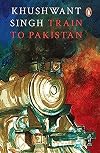
Train To Pakistan by Khushwant Singh is set in 1947, a turbulent time in India as the British Raj ends, and the Partition of Pakistan from India takes place. Although inequality was a way of life in India with their caste system and the various religions, the violence that came about as Muslims were forced to flee east to Pakistan and Hindu’s west toward India was unprecedented. The province of Punjab was nestled up against this new border. In the small rural village of Mano Majra Muslims, show more Sikhs and Hindus had lived in harmony for generations, but when a train arrives from Pakistan full of dead Hindus it proves to be the spark that leads to the clash of these religions. Outside agitators, even the local police help to stir up emotions. The Muslims of the village are removed to a refugee camp with plans for them to put on a train to Pakistan. Meanwhile as another trainload of dead Hindus arrive in the village plans are being made to attack the next train heading west to Pakistan.
Train to Pakistan is a tight, taunt story that captures the feelings and flavor of India at the time of partition. Records now show that over ten million people were displaced and made homeless, while one million were slain during this period. The author himself says he thinks of this, his first novel, as more of a documentary, written in part to ease his mind over the impact that these chaotic events had for him. What the author achieved was to put faces on these Sikhs, Hindus and Muslims and through this one small story bring the larger picture into focus. Train to Pakistan is a book that I will long remember for it’s believability and story-telling. show less
Train to Pakistan is a tight, taunt story that captures the feelings and flavor of India at the time of partition. Records now show that over ten million people were displaced and made homeless, while one million were slain during this period. The author himself says he thinks of this, his first novel, as more of a documentary, written in part to ease his mind over the impact that these chaotic events had for him. What the author achieved was to put faces on these Sikhs, Hindus and Muslims and through this one small story bring the larger picture into focus. Train to Pakistan is a book that I will long remember for it’s believability and story-telling. show less
TRAIN TO PAKISTAN, by Khushwant Singh, first published in 1956, is something of a classic in India, but I ran across it quite by accident. I'm glad I did, as it offers a quick and surprisingly entertaining - and educational - glimpse of the bloody civil war that erupted between the Hindus, Sikhs and Muslims in 1947 during the partition of a newly independent India. During this time distrust, fear and hatred ran rampant, causing formerly peaceful neighbors to betray and even murder each other show more over religious and political differences. Singh used the tiny, remote village of Mano Majra, situated near the border of the newly created state of Pakistan to illustrate how quickly things could change. The author's famously agnostic views play a prominent part in his story, particularly represented by Iqbal, the "stranger in town," an educated "social worker" whose questionable religious /ethnic identity leads to his arrest following a murder in the town. There is also an understated "love story" between Jugga, a Sikh petty criminal, and the daughter of the local Imam, which figures in. Singh's feelings about organized religion are stated thusly -
"India is constipated with a lot of humbug. Take religion. For the Hindu, it means little besides caste and cow-protection. For the Muslim, circumcision and kosher meat. For the Sikh, long hair and hatred of the Muslim."
And he has more to say - about Christians, ethics, philosophy ("muddleheadedness"), Yoga, reincarnation, etc. But you get the idea. There are generous helpings of sly humor and sarcasm here too in its portrayals of minor officials and religious clerics. But what takes center stage by story's end is the wholesale butchery and horror of this awful conflict, with its trains full of bodies going both ways across the border in those early days of the partition.I
TRAIN TO PAKISTAN is Singh's best known book, and was also successfully adapted to the screen. It is a powerful little novel, no question. Very highly recommended.
- Tim Bazzett, author of the memoir, BOOKLOVER show less
"India is constipated with a lot of humbug. Take religion. For the Hindu, it means little besides caste and cow-protection. For the Muslim, circumcision and kosher meat. For the Sikh, long hair and hatred of the Muslim."
And he has more to say - about Christians, ethics, philosophy ("muddleheadedness"), Yoga, reincarnation, etc. But you get the idea. There are generous helpings of sly humor and sarcasm here too in its portrayals of minor officials and religious clerics. But what takes center stage by story's end is the wholesale butchery and horror of this awful conflict, with its trains full of bodies going both ways across the border in those early days of the partition.I
TRAIN TO PAKISTAN is Singh's best known book, and was also successfully adapted to the screen. It is a powerful little novel, no question. Very highly recommended.
- Tim Bazzett, author of the memoir, BOOKLOVER show less
This will be one of the few times I complain that a book wasn't long enough. A breezy read, and Singh portrays an absolutely heartbreaking, gorgeous picture of small-village living India during the partition. It didn't quite go where I was expecting, or perhaps where I wanted it to. In the end, I was left wanting more; I wanted to learn more about the details of it, the major players that were responsible and a more sweeping epic. I've rarely read a historical fiction novel about a subject show more that only made me want to learn even more, so for that I give it 4 stars.
The final 30 pages completely ramp up everything; the tension, the dialogue, the hate and the horror. Some of the images depicted are so vile and terrifying yet Singh only uses these passages sparingly, and to great effect. Terrific ending, one of my favorite in recent memory. I'm really glad I was recommended this one by a good friend. show less
The final 30 pages completely ramp up everything; the tension, the dialogue, the hate and the horror. Some of the images depicted are so vile and terrifying yet Singh only uses these passages sparingly, and to great effect. Terrific ending, one of my favorite in recent memory. I'm really glad I was recommended this one by a good friend. show less
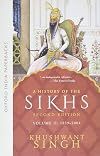
In the second volume of his history, Khushwant Singh takes us on a more complex journey. Following the death of Maharaja Ranjit Singh and the conclusion of the Anglo-Sikh Wars, the Punjabis became ardent supporters of the British, siding with them during both the Great Uprising and the Anglo-Afghan Wars.
The Sikhs contributed most men to the British Army (from India) during the World Wars. However, the Sikhs began to oppose the British after the Jallianwala Bagh massacre.
Sikh history from show more the early part of the twentieth century to the Partition is confused, with many Sikhs jockeying for power. The Sikhs were insecure about how the new Republic would treat them, considering their minority status.
Khushwant Singh clearly explains the difference between the Hindu perception of the Sikhs (as a branch of Hinduism) and the self-perception of the Sikhs (as a distinct people).
I detected some emotion when the author wrote about the post-Partition events, and detected two competing, intertwined strands. One, the shoddy way Indian politicians treated Punjabis, denying them their demands; and two, the self-serving behavior of Punjabi/Sikh politicians.
The book ends with Indira Gandhi’s assassination and the events leading to her killing. His explanations are clear.
What lies next for Punjab? No one knows.
This book is excellent and is a superb companion to the first volume. show less
The Sikhs contributed most men to the British Army (from India) during the World Wars. However, the Sikhs began to oppose the British after the Jallianwala Bagh massacre.
Sikh history from show more the early part of the twentieth century to the Partition is confused, with many Sikhs jockeying for power. The Sikhs were insecure about how the new Republic would treat them, considering their minority status.
Khushwant Singh clearly explains the difference between the Hindu perception of the Sikhs (as a branch of Hinduism) and the self-perception of the Sikhs (as a distinct people).
I detected some emotion when the author wrote about the post-Partition events, and detected two competing, intertwined strands. One, the shoddy way Indian politicians treated Punjabis, denying them their demands; and two, the self-serving behavior of Punjabi/Sikh politicians.
The book ends with Indira Gandhi’s assassination and the events leading to her killing. His explanations are clear.
What lies next for Punjab? No one knows.
This book is excellent and is a superb companion to the first volume. show less
Lists
Schwob Nederland (1)
All Things India (1)
Awards


You May Also Like


Associated Authors
Statistics
- Works
- 173
- Also by
- 10
- Members
- 3,234
- Popularity
- #7,909
- Rating
- 3.7
- Reviews
- 72
- ISBNs
- 286
- Languages
- 13
- Favorited
- 4