
Amish Tripathi
Author of The Immortals of Meluha
About the Author
Series
Works by Amish Tripathi
The Shiva Triology Boxset of 3 Books: The Immortals of Meluha, The Secret of The Nagas and The Oath of The Vayuputras) (2022) 3 copies
The Shiva Triology: Boxset of 3 Books (The Immortals of Meluha, The Secret of The Nagas, The Oath of The Vayuputras) (2022) 2 copies
Amish Tripathi Ram Chandra Series 4 Books Collection Set (Ram, Sita, Raavan & War of Lanka) (2023) 2 copies
A Taste Of Shipshewana 1 copy
Splendor Of Silence (2006) 1 copy
Helium 1 copy
Tagged
Common Knowledge
- Birthdate
- 1974-10-18
- Gender
- male
- Nationality
- India
- Birthplace
- Mumbai, Maharashtra, India
- Associated Place (for map)
- Maharashtra, India
Members
Reviews
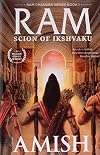
What I really like about Amish's books, or specifically, first-in-the-series books, is the way he humanizes the gods without degrading their divinity or nobility. It brings these mythological stories down to the common person and, if the reader is open-minded enough, it helps one understand the gods at a human level. Which is something modern India that's lost in its confusion and blind faith in mythology desperately needs.
The book was an interesting read (first-in-the-series) and brings show more forth a different view from what we have come to hear over our lives. It was a well-written story, albeit, a little too detailed (that I skip over rather than complaining). Amish has also done well to create plausible alternatives bringing otherwise unbelievable myths down to at best science-fiction rather than leaving them as supernatural or metaphysical.
The characters are strongly developed and even a devout follower of Ram could relate to the human aspects portrayed. The essence of Ram as the "best amongst men" (purshottam) and "law giver" has not been lost which is critical to the stories of Ram. Lakshman's admiration, Sita's love, etc. are portrayed in a way one can understand them without needing to see a ripped heart.
What I hope from his second (and third) book is better performance than what he showed with the 2nd and 3rd books of the Shiva trilogy. Hope he stays true to his style and more importantly to the characters of the book rather than giving into commercial demands of making them more exciting and exhilarating for readers. show less
The book was an interesting read (first-in-the-series) and brings show more forth a different view from what we have come to hear over our lives. It was a well-written story, albeit, a little too detailed (that I skip over rather than complaining). Amish has also done well to create plausible alternatives bringing otherwise unbelievable myths down to at best science-fiction rather than leaving them as supernatural or metaphysical.
The characters are strongly developed and even a devout follower of Ram could relate to the human aspects portrayed. The essence of Ram as the "best amongst men" (purshottam) and "law giver" has not been lost which is critical to the stories of Ram. Lakshman's admiration, Sita's love, etc. are portrayed in a way one can understand them without needing to see a ripped heart.
What I hope from his second (and third) book is better performance than what he showed with the 2nd and 3rd books of the Shiva trilogy. Hope he stays true to his style and more importantly to the characters of the book rather than giving into commercial demands of making them more exciting and exhilarating for readers. show less
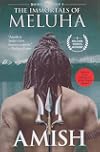
I picked up the Immortals of Meluha at Delhi airport last year. I think it cost just shy of 3€. At the time, this was a huge bestseller in India, with the third volume being at the top of the bestseller list and the two earlier ones still in top ten.
The blurbs on the cover compare the author, Amish Tripathi, to everyone from Tolkien to Paulo Coehlo and even promise that it "uncovers the deepest recesses of the soul", a pompous and hollow statement made naturally by none other than that show more peddler of anything "spiritual", quasi-scientific and Indian, Deepak Chopra.
In reality, Immortals of Meluha is a sub-par fantasy novel by a banker turned novelist (which shows). It suffers from several specific problems, but even on overall is just plain too dull.
The story is a mythological and fictional account of how Shiva, one of the most important Hindu deities, walked the path from a mortal to a god. The setting is the so called (although apparently incorrectly) Indus Valley Civilization in Northern India, around 1900 BC. This has all the potential of being a interesting mix of history, mythology and religion. Unfortunately, Amish botches it up.
Shiva, a mere mortal for now, is apparently the most badass person ever imagined. He is the best at everything. The best fighter, the smartest person in the history of the world, the best military strategist and even the best dancer. Annoying in its own, but even more annoying is that every other character in the book loudly proclaims this at every chance they get, over and over and over again. Everyone is completely and utterly in love with Shiva, if not immediately upon meeting him, then five minutes later. Subtlety - not one of Amish's strengths.
A similar problem exists with the Meluhan civilization. In order for the author to establish how great that civilization is (and therefore possibly justify the rather fascist trumping of the neighboring civilization), everybody constantly proclaims the civilization's achievements to anyone who would listen. It gets even more ridiculous here, as the Suryavanshis apparently already have extensive knowledge of electromagnetic radiation, oxygen and free radicals. In 1900 BC, literally thousands of years before they had actually been discovered. Despite this incredible technological advancement, they still believe in a blue-throated Messiah that will deliver them from all their worldly problems, in the form of Shiva, a Tibetan tribal chief.
Comparable mental gymnastics are also in place when justification for Meluhan social systems is needed, such as the rigid caste system and the shunning of injured and afflicted people, although, to author's credit, Shiva is conflicted about this.
The writing style is also pretty awkward, with weird jokes that seem out of context for that time and place and incredibly corny moments, such as deathbed I wuv you proclamations better suited to a Mexican telenovella. In fact, I don't think Amish captured the spirit of time and place at all, since people talk and act like they would nowadays.
To top it all, the book ends on a complete cliff-hanger. I'm not talking about the main plots not being resolved, it literally ends in the middle of an action scene. The dude's got balls, is all I have to say.
A few brighter moments include Shiva's internal agonizing over his own merit to take on the role of the Messiah, and the injustices of Meluhan societal structure, and his eventual realization that the other civilization is not evil, but perhaps just different. In the end, though, this is not worth it at all, there's loads of better fantasy and historical fiction around. show less
The blurbs on the cover compare the author, Amish Tripathi, to everyone from Tolkien to Paulo Coehlo and even promise that it "uncovers the deepest recesses of the soul", a pompous and hollow statement made naturally by none other than that show more peddler of anything "spiritual", quasi-scientific and Indian, Deepak Chopra.
In reality, Immortals of Meluha is a sub-par fantasy novel by a banker turned novelist (which shows). It suffers from several specific problems, but even on overall is just plain too dull.
The story is a mythological and fictional account of how Shiva, one of the most important Hindu deities, walked the path from a mortal to a god. The setting is the so called (although apparently incorrectly) Indus Valley Civilization in Northern India, around 1900 BC. This has all the potential of being a interesting mix of history, mythology and religion. Unfortunately, Amish botches it up.
Shiva, a mere mortal for now, is apparently the most badass person ever imagined. He is the best at everything. The best fighter, the smartest person in the history of the world, the best military strategist and even the best dancer. Annoying in its own, but even more annoying is that every other character in the book loudly proclaims this at every chance they get, over and over and over again. Everyone is completely and utterly in love with Shiva, if not immediately upon meeting him, then five minutes later. Subtlety - not one of Amish's strengths.
A similar problem exists with the Meluhan civilization. In order for the author to establish how great that civilization is (and therefore possibly justify the rather fascist trumping of the neighboring civilization), everybody constantly proclaims the civilization's achievements to anyone who would listen. It gets even more ridiculous here, as the Suryavanshis apparently already have extensive knowledge of electromagnetic radiation, oxygen and free radicals. In 1900 BC, literally thousands of years before they had actually been discovered. Despite this incredible technological advancement, they still believe in a blue-throated Messiah that will deliver them from all their worldly problems, in the form of Shiva, a Tibetan tribal chief.
Comparable mental gymnastics are also in place when justification for Meluhan social systems is needed, such as the rigid caste system and the shunning of injured and afflicted people, although, to author's credit, Shiva is conflicted about this.
The writing style is also pretty awkward, with weird jokes that seem out of context for that time and place and incredibly corny moments, such as deathbed I wuv you proclamations better suited to a Mexican telenovella. In fact, I don't think Amish captured the spirit of time and place at all, since people talk and act like they would nowadays.
To top it all, the book ends on a complete cliff-hanger. I'm not talking about the main plots not being resolved, it literally ends in the middle of an action scene. The dude's got balls, is all I have to say.
A few brighter moments include Shiva's internal agonizing over his own merit to take on the role of the Messiah, and the injustices of Meluhan societal structure, and his eventual realization that the other civilization is not evil, but perhaps just different. In the end, though, this is not worth it at all, there's loads of better fantasy and historical fiction around. show less

I had completely forgotten this book was releasing last week until someone mentioned on a group chat, and I knew I had to read it immediately. I actually didn’t have a lot of expectations, just wanted it to be an engaging read, but this one turned out to be surprisingly very good.
It wasn’t until the second book of this series Sita did I realize it was going to be a multilinear narrative with the first three books following three different characters but merging at the same point towards show more the end. This made the experience of reading Sita a bit boring because the last third of the book felt very repetitive. I guess I went into this book feeling similarly, but Amish definitely did a great job of dispelling all my misconceptions. The writing is very engaging right from the get go, fast paced and entertaining while also not shying away from the philosophical and dharmic discussions that I’ve come to associate with Amish’s books. The entire reinterpretation of Raavan’s backstory, which we generally don’t know much about is done masterfully and I loved how much of emotion the author was able to evoke in us. I also really loved the whole theme of every hero needing a strong villain in their life to have a large scale impact on the minds of the people. I guess my only gripe was that because the book was covering a very long timeline, there were huge time jumps and we are only told about major events rather than showing them happen.
Raavan’s character is really a study in contrasts. He is knowledgeable, accomplished, intelligent and ruthless but on the other hand loves his brother Kumbhakarna to no end. He has his moments of humanity and just when you think he is capable of change, something happens that completely changes the trajectory of his life. The depiction of unrequited love and absolute grief is so utterly raw and gritty in this book that it really shook me. Kumbhakarna is a character whom we don’t much about at all in the original epic but he completely fascinated me here and I really liked him a lot. At his core, he is a kind and compassionate person who wants to be more dharmic, but his devotion to his brother is also complete which leads him onto paths he doesn’t necessarily want to embark on. I adored the interactions between the brothers - how they were able to show their vulnerabilities to each other made me very emotional and connected to their relationship, but also seeing it change gradually pained me. It’s definitely this relationship that carries the emotional weight of the story and is what made it such a wonderful read.
To finish, I just wanna say that if you are fan of Amish’s earlier works, you should definitely read this one because I thought it had a great balance of mythology, political machinations, mystery and emotion. It also ends on a very epic note and I’m already very excited to see how Amish is gonna interpret the rest of the epic. However, if you haven’t read any of the author’s books before, I would highly recommend to start with the Immortals of Meluha. While this Ram Chandra series is not exactly a spin-off of the Meluha trilogy, there are many interconnecting elements between the two that I feel can be enjoyed better if you have start at the beginning. show less
It wasn’t until the second book of this series Sita did I realize it was going to be a multilinear narrative with the first three books following three different characters but merging at the same point towards show more the end. This made the experience of reading Sita a bit boring because the last third of the book felt very repetitive. I guess I went into this book feeling similarly, but Amish definitely did a great job of dispelling all my misconceptions. The writing is very engaging right from the get go, fast paced and entertaining while also not shying away from the philosophical and dharmic discussions that I’ve come to associate with Amish’s books. The entire reinterpretation of Raavan’s backstory, which we generally don’t know much about is done masterfully and I loved how much of emotion the author was able to evoke in us. I also really loved the whole theme of every hero needing a strong villain in their life to have a large scale impact on the minds of the people. I guess my only gripe was that because the book was covering a very long timeline, there were huge time jumps and we are only told about major events rather than showing them happen.
Raavan’s character is really a study in contrasts. He is knowledgeable, accomplished, intelligent and ruthless but on the other hand loves his brother Kumbhakarna to no end. He has his moments of humanity and just when you think he is capable of change, something happens that completely changes the trajectory of his life. The depiction of unrequited love and absolute grief is so utterly raw and gritty in this book that it really shook me. Kumbhakarna is a character whom we don’t much about at all in the original epic but he completely fascinated me here and I really liked him a lot. At his core, he is a kind and compassionate person who wants to be more dharmic, but his devotion to his brother is also complete which leads him onto paths he doesn’t necessarily want to embark on. I adored the interactions between the brothers - how they were able to show their vulnerabilities to each other made me very emotional and connected to their relationship, but also seeing it change gradually pained me. It’s definitely this relationship that carries the emotional weight of the story and is what made it such a wonderful read.
To finish, I just wanna say that if you are fan of Amish’s earlier works, you should definitely read this one because I thought it had a great balance of mythology, political machinations, mystery and emotion. It also ends on a very epic note and I’m already very excited to see how Amish is gonna interpret the rest of the epic. However, if you haven’t read any of the author’s books before, I would highly recommend to start with the Immortals of Meluha. While this Ram Chandra series is not exactly a spin-off of the Meluha trilogy, there are many interconnecting elements between the two that I feel can be enjoyed better if you have start at the beginning. show less
The story focuses on Shiva, a twenty-one year old warrior who is living with his tribesmen in what is currently Tibet. He comes across a group of Meluhans (Meluha is what is now Western India & Pakistan) who are searching for something or someone. Shiva’s tribe is called the Gunas and another tribe called the Pakratis is hunting them. Shiva detests the needless violence and decides to follow the Meluhan party back to their land. Things seem troublesome in Meluha wherein the Suryavanshi show more kings (Descendants of the Sun) are the rulers and the people live by Suryavanshi standards. They are facing friction from their eastern neighbors, the land of Swadeep ruled by Chandravanshis (Descendants of the moon) as both sides are clueless in regards to the drying up of the Saraswati River and hence blame each other for their differences.
Shiva then meets Sati,the emperor's daughter and falls in love with her..and you can read the rest :P
Loved the book!I loved the plot but I don't know why something was missing.I loved the way he used the names..like Sati,Shiva,Nandi etc.The author is really creative..I just loved the way he talked about Ram and Lord Rudra and he made it easy to digest.Nice climax ,by the way.I loved the way he described the city of Meluha.I didn't like the way they swore..I mean.who said "Damn it!" in 1900 BC?I hated those parts..and during the war it was just boring at times you know..only that part..overall,the book was just beautiful..It reached my expectations!loved it :)It made understanding Hindu mythology easy! you guys should read it..totally! show less
Lists
Awards


You May Also Like


Statistics
- Works
- 47
- Members
- 3,545
- Popularity
- #7,162
- Rating
- 3.6
- Reviews
- 74
- ISBNs
- 102
- Languages
- 9