
Joachim Whaley
Author of Germany and the Holy Roman Empire. Volume 1: Maximilian I to the Peace of Westphalia, 1493-1648
Works by Joachim Whaley
Germany and the Holy Roman Empire. Volume 1: Maximilian I to the Peace of Westphalia, 1493-1648 (2012) 108 copies, 2 reviews
Germany and the Holy Roman Empire. Volume 2: The Peace of Westphalia to the Dissolution of the Reich, 1648-1806 (2012) 87 copies
The Holy Roman Empire: A Very Short Introduction (Very Short Introductions) (2018) 85 copies, 2 reviews
Associated Works
Desperta Ferro Moderna. La Guerra Franco-Prusiana ( I ): El ocaso de Napoleón III — Contributor — 2 copies
Tagged
Common Knowledge
Members
Reviews
Germany and the Holy Roman Empire: Volume I: Maximilian I to the Peace of Westphalia, 1493-1648 (Oxford History of Early Modern Europe) by Joachim Whaley
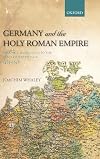
The first volume of Joachim Whaley's encyclopedic history of the Holy Roman Empire in early modern Europe covers its history from the start of the 16th century to the end of the Thirty Years' War. It's main theme is the impact of the Protestant Reformation upon the empire, which polarized it and ultimately led to one of the most destructive wars in European history. Yet Whaley shows that the polarization which caused so much conflict was only one dimension of what was a complex interaction. show more Just as the Reformation spread and developed under the protection of the legal protections provided by the complex institutions of the empire, the empire in turn was shaped by the political and legal struggles spawned by the Reformation, which encouraged the maintenance of the diverse political institutions in the face of efforts by the reigning Habsburg emperors to centralize power in their hands. Whaley's patient and thorough explanation of this intricate dynamic makes for a book that is indispensable reading for anyone interested in early modern Germany, or how the Reformation expanded and survived. show less
Germany and the Holy Roman Empire: Volume I: Maximilian I to the Peace of Westphalia, 1493-1648 (Oxford History of Early Modern Europe) by Joachim Whaley
This book is long and complicated! I was not ready for this book!
Joachim Whaley covers a numerous amount of topics and genres in this book: at one point its a biography of certain individuals such as Martin Luther and later it could be a case study on some niche court case. A general theme of the book is reassessment however. He's constantly mentioning historians from the 19th and 20th century who's opinions of the Holy Roman Empire are seen as outdated nowadays. As a result, if you don't show more know anything about the Peasants Revolt, you might be a bit confused. Although he explains topics in detail, it's important to understand the big broad picture first.
As a result, while this is an excellent book, currently it's only a 3/5 stars because, perhaps, I don't appreciate it enough. Maybe in the future when I'm more knowledgeable and wiser, I'll give it a higher rating. A word of caution is to read something more broad first! The Holy Roman Empire is complicated and Whaley explains everything, therefore, keeping the topic a complicated one. show less
Joachim Whaley covers a numerous amount of topics and genres in this book: at one point its a biography of certain individuals such as Martin Luther and later it could be a case study on some niche court case. A general theme of the book is reassessment however. He's constantly mentioning historians from the 19th and 20th century who's opinions of the Holy Roman Empire are seen as outdated nowadays. As a result, if you don't show more know anything about the Peasants Revolt, you might be a bit confused. Although he explains topics in detail, it's important to understand the big broad picture first.
As a result, while this is an excellent book, currently it's only a 3/5 stars because, perhaps, I don't appreciate it enough. Maybe in the future when I'm more knowledgeable and wiser, I'll give it a higher rating. A word of caution is to read something more broad first! The Holy Roman Empire is complicated and Whaley explains everything, therefore, keeping the topic a complicated one. show less
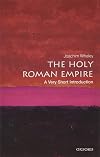
I found it to be okay. It's worthwhile reading to get information on the HRE and a general introduction to it. Although I still find myself questioning on what legacy the HRE left behind and I think the author failed to properly show this through the text. Perhaps it was not meant to be a study on the legacy of the HRE but rather an introduction. As a result, you most likely won't get much deep analysis or lasting ideas but mainly a decent introduction to basic history like who the Franks show more were, how the empire became German and the rise of Prussia.
The writing isn't too captivating but it is not dreadfully boring. The chapters and sub-chapters are short enough. Sure with 160 pages you could probably read it in a week or if you're being slow, two weeks. show less
The writing isn't too captivating but it is not dreadfully boring. The chapters and sub-chapters are short enough. Sure with 160 pages you could probably read it in a week or if you're being slow, two weeks. show less

Voltaire's description of the Holy Roman Empire as "neither holy, nor Roman, nor an empire" is often cited to underline its worthlessness. German historians traditionally despised it because it had allegedly impeded German unification. Since 1945 scholars have been more positive but the empire's history and significance is still largely misunderstood.
In this Very Short Introduction Joachim Whaley outlines the fascinating thousand-year history of the Holy Roman Empire. Founded in 800 on the show more basis of Charlemagne's Frankish kingdom, its imperial title went to the German monarchy which became established in the ninth and ten centuries. They claimed Charlemagne's legacy, including his role as protector of the papacy and guardian of the Church. Around 1500 the title Holy Roman Empire of the German Nation was adopted. An elective monarchy, the empire gradually developed from a feudal monarchy into a legal system that pacified the territories and cities of German-speaking Europe. By 1519 it had a supreme court and a regional enforcement system ended feuding. Throughout its lifetime, the empire's growth and history was shaped by the major developments in Europe, from the Reformation, to the Thirty Years War, to the French revolutionary wars, which led to Napoleon destroying the empire in 1806. The sense of a common history over a thousand years and the legal traditions established by the empire have shaped the history of German-speaking Europe ever since. Joachim Whaley analyzes the empire's crucial impact and role in the history of European power and politics, and shows that there has never been a more durable political system in German history. show less
In this Very Short Introduction Joachim Whaley outlines the fascinating thousand-year history of the Holy Roman Empire. Founded in 800 on the show more basis of Charlemagne's Frankish kingdom, its imperial title went to the German monarchy which became established in the ninth and ten centuries. They claimed Charlemagne's legacy, including his role as protector of the papacy and guardian of the Church. Around 1500 the title Holy Roman Empire of the German Nation was adopted. An elective monarchy, the empire gradually developed from a feudal monarchy into a legal system that pacified the territories and cities of German-speaking Europe. By 1519 it had a supreme court and a regional enforcement system ended feuding. Throughout its lifetime, the empire's growth and history was shaped by the major developments in Europe, from the Reformation, to the Thirty Years War, to the French revolutionary wars, which led to Napoleon destroying the empire in 1806. The sense of a common history over a thousand years and the legal traditions established by the empire have shaped the history of German-speaking Europe ever since. Joachim Whaley analyzes the empire's crucial impact and role in the history of European power and politics, and shows that there has never been a more durable political system in German history. show less
Lists
You May Also Like


Associated Authors
Statistics
- Works
- 7
- Also by
- 3
- Members
- 311
- Popularity
- #75,819
- Rating
- 3.9
- Reviews
- 4
- ISBNs
- 28
- Languages
- 1